
Why restraint is the ultimate competitive advantage in beauty branding
In a beauty industry obsessed with “more”—more products, more steps, more packaging, more noise—minimalist skincare brands have emerged as the quiet rebellion. These are brands that understand a fundamental truth: less is not about deprivation; it’s about intentionality.
But here’s the paradox that keeps minimalist founders awake at night: How do you scale a brand whose entire identity is built on restraint? How do you grow without adding complexity? How do you expand your product line without betraying the “less is more” philosophy that your customers fell in love with?
According to Grand View Research, the minimalist beauty segment is growing at 9.7% annually, outpacing the overall beauty market by 3x. Yet 68% of minimalist brands fail to scale beyond $5M in revenue because they can’t maintain aesthetic coherence while expanding.
This article reveals the strategic framework that allows minimalist skincare brands to scale sustainably—growing revenue without adding visual noise, expanding product lines without losing focus, and building marketing systems that honor restraint rather than resist it.
Understanding True Minimalism in Beauty
Before we discuss scaling, we need to clarify what “minimalist” actually means in the context of skincare branding. It’s not just about white packaging or sparse product lines. True minimalism in beauty encompasses four core principles:

1. Functional Purity
Every ingredient, every product, every design element serves a specific purpose. Nothing is decorative. Nothing is filler. If it doesn’t add functional value, it’s eliminated.
Example: Aesop’s products contain only essential active ingredients with proven efficacy. Their packaging is deliberately unadorned—the simplicity is the statement.
2. Visual Restraint
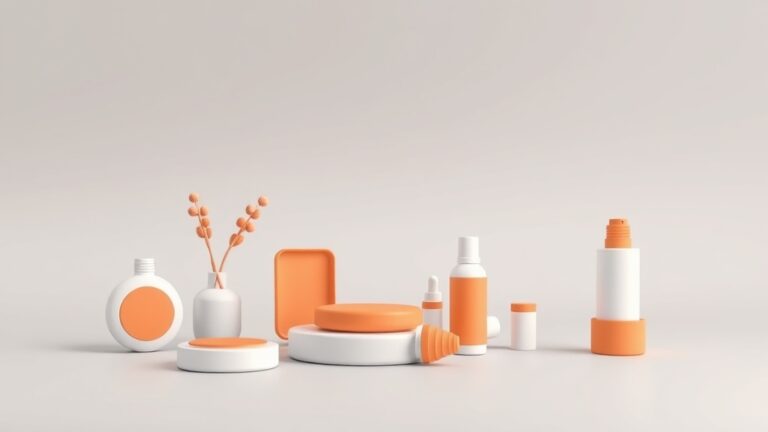
Minimalist aesthetics aren’t about being boring—they’re about creating space for the product to breathe. Limited color palettes (often monochromatic), clean typography, generous white space, and photography that showcases texture and form rather than lifestyle fantasy.
Example: The Ordinary’s clinical packaging and ingredient-first naming conventions strip away all aesthetic pretense, making the formulation the hero.
3. Transparent Simplicity
Minimalist brands communicate with clarity, not complexity. Short ingredient lists, straightforward product names, and honest marketing that doesn’t overpromise. The value proposition is immediately understandable.
Example: Drunk Elephant’s “Suspicious 6-Free” philosophy clearly states what they exclude and why, without jargon or greenwashing.
4. Sustainable Essentialism
True minimalism extends to environmental impact. Reduced packaging, refillable systems, and multi-use products that eliminate waste. Sustainability isn’t a marketing angle—it’s structurally embedded in the business model.
Example: Byredo’s refill program and Kjaer Weis’s luxury refillable compacts demonstrate that minimalism and premium positioning can coexist.
The Minimalist Scaling Paradox
Traditional growth strategies are fundamentally at odds with minimalist principles. Let’s examine the core tensions:
| Traditional Scaling | Minimalist Scaling |
|---|---|
| Add 20+ SKUs per year | Add 2-4 perfected products |
| Aggressive multi-channel advertising | Curated content + word-of-mouth |
| Broad demographic targeting | Narrow, values-aligned niche |
| Frequent limited editions | Permanent, timeless collection |
| Maximize packaging differentiation | Consistent, uniform aesthetic |
| Volume-based retail distribution | Selective partnerships only |
⚠️ Critical Insight: The brands that successfully scale minimalist aesthetics don’t compromise—they double down. They recognize that their restraint IS their competitive moat, not a limitation to overcome.
Five Strategic Pillars for Scaling Without Dilution
Vertical Product Expansion (Not Horizontal)
Instead of adding entirely new product categories, deepen within existing ones. If you make cleansers, develop a gel, oil, and balm version—all serving different skin types but maintaining category expertise.
Example: Rather than launching makeup, Le Labo expanded their fragrance line vertically with body products in the same scent families. Same aesthetic, deeper wallet share.
System-Based Selling
Create curated routines or systems that increase average order value without requiring new product development. Position products as interconnected rather than standalone purchases.
Example: Curology’s personalized formulation approach packages multiple actives into single systems, increasing perceived value while maintaining visual simplicity.
Tactical Application: Create “AM Essentials” and “PM Essentials” bundles at 15-20% discount. Position as complete routines, not individual products.
Format Innovation Within Constraints
Keep the aesthetic consistent but innovate on format. Solid cleansing bars, powder-to-foam cleansers, or waterless formulations offer novelty without visual chaos.
Example: Lush’s solid beauty bars maintain consistent branding across shampoos, conditioners, and cleansers. The format is different, but the aesthetic language remains unified.
Subscription as Aesthetic Commitment
Build recurring revenue through subscriptions that reinforce minimalism. Frame it as “your essentials, simplified” rather than “never run out.” The subscription model itself becomes part of the minimalist lifestyle promise.
Example: Function of Beauty’s personalized subscription model generates predictable revenue while maintaining individualized minimalism—each customer gets exactly what they need, nothing more.
Premium Positioning Through Scarcity
Scale revenue through price, not volume. Limited production runs, seasonal launches, and waitlists create perceived scarcity that justifies premium pricing without compromising aesthetic minimalism.
Example: Augustinus Bader’s limited SKU lineup at ultra-premium prices ($170-$265) generates $200M+ annually. According to Forbes, they’ve achieved this with just 10 products.
Visual Storytelling for Oil-Based Textures and Gender-Neutral Essentials

The challenge of marketing minimalist beauty products—particularly oil-based formulations and gender-neutral essentials—is that their simplicity can be mistaken for ordinariness. The visual storytelling must elevate the mundane into the essential, transforming daily rituals into meditative practices.
Capturing Oil-Based Textures: The Language of Luminosity
Oil-based skincare occupies a unique position in minimalist beauty. Unlike foaming cleansers or matte creams, oils demand a different visual vocabulary—one that communicates purity, richness, and transformation.
Photography Techniques for Oil Products
1. Macro Texture Shots
Extreme close-ups of oil droplets on skin showcase the product’s viscosity and light-refracting properties. Use natural lighting at golden hour to capture warmth and glow. Avoid harsh overhead lighting that flattens texture.
2. Layering and Absorption Sequences
Document the transformation: oil pooling on skin → spreading into translucent layer → full absorption. This visual progression tells a story of texture, penetration, and finish. Film these sequences in slow motion for social media content.
3. Negative Space as Context
Place oil products against minimal backgrounds—concrete, raw wood, stone, or simple linen. The emptiness around the product creates breathing room and focuses attention on the oil’s unique visual properties: translucency, color depth, and surface tension.
4. Hand-in-Frame Rituals
Show hands (diverse skin tones) performing the application ritual: warming oil between palms, pressing onto face, gentle massage techniques. This adds human connection while maintaining aesthetic restraint. No faces needed—hands tell the story.