Every day, beauty brands pour thousands of dollars into advertising campaigns that fail to deliver results. The difference between successful brands and those burning through budgets? Data-driven decision making through analytics.
If you’re running ads for your beauty brand without tracking the right metrics, you’re essentially throwing money into the wind and hoping something sticks. Let’s change that.
The True Cost of Ignoring Analytics
A mid-sized skincare brand recently shared their story: they spent $15,000 on Instagram ads over three months, only to realize their conversion tracking wasn’t properly set up. They had no idea which ads drove sales, which audiences responded best, or what their actual return on ad spend (ROAS) was. This scenario plays out more often than you’d think in the beauty industry.
Without analytics, you’re making decisions based on gut feelings rather than facts. You might love how an ad looks, but if it’s not converting, it’s costing you money.

Essential Metrics Every Beauty Brand Must Track
Conversion Rate: This tells you what percentage of people who click your ad actually make a purchase. For beauty brands, a good conversion rate typically ranges from 2-4%, though this varies by product type and price point.
Cost Per Acquisition (CPA): How much you’re spending to acquire each customer. If your CPA is $50 but your average order value is $45, you’re losing money on every sale.
Return on Ad Spend (ROAS): For every dollar you spend on advertising, how much revenue are you generating? Beauty brands should aim for a minimum ROAS of 3:1, though sustainable brands often achieve 4:1 or higher.
Customer Lifetime Value (CLV): This metric is particularly crucial for beauty brands because of the potential for repeat purchases. A customer might cost $40 to acquire, but if they’re worth $300 over their lifetime, that acquisition cost makes perfect sense.
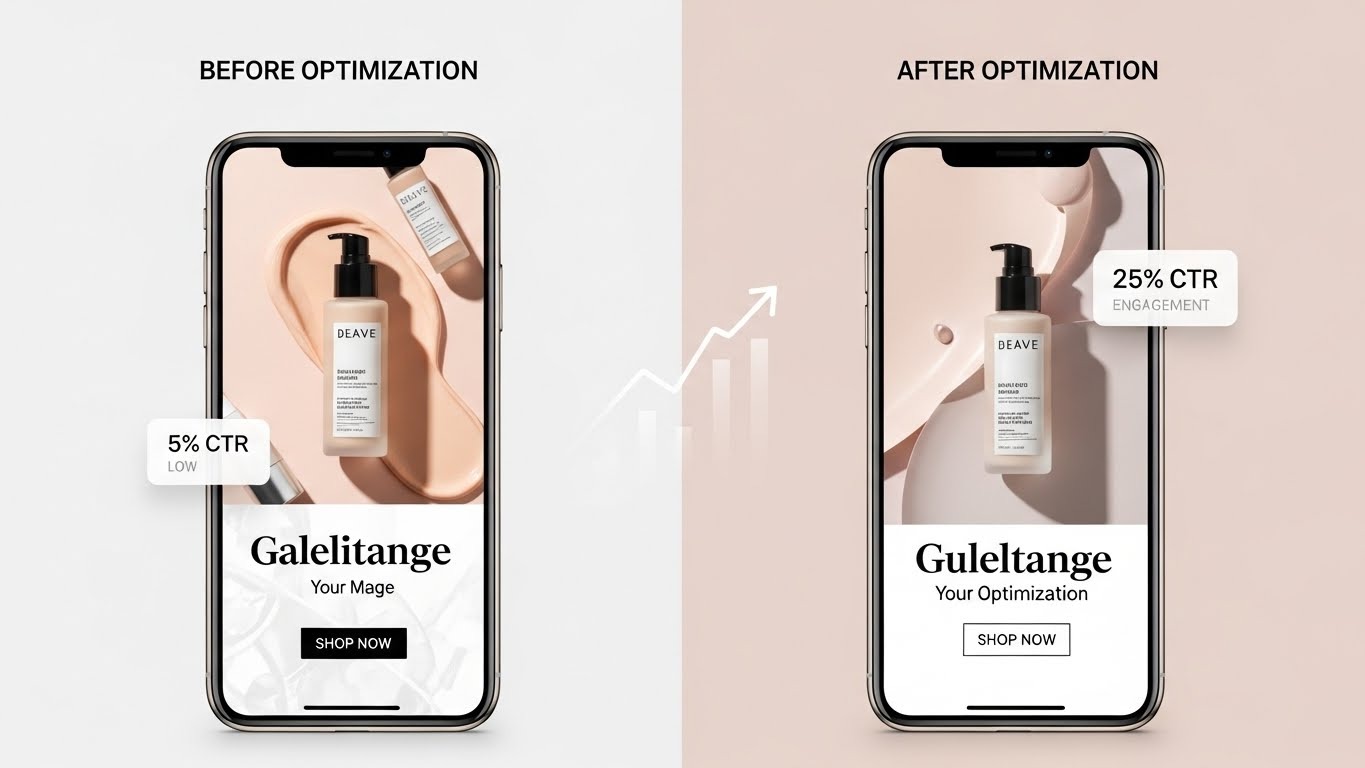
Click-Through Rate (CTR): Are people actually engaging with your ads? Low CTR means your creative or targeting needs work before you waste more money on impressions that go nowhere.
Setting Up Your Analytics Infrastructure
Before you can optimize anything, you need proper tracking in place. This means installing Facebook Pixel, Google Analytics, and conversion tracking across all your advertising platforms. Many beauty brands skip this crucial step and regret it later.
Your analytics setup should track the complete customer journey from first click to purchase and beyond. This includes understanding which touchpoints matter most in your customer’s decision-making process.
Reading the Data: What Your Numbers Are Really Telling You
High clicks but low conversions might indicate a disconnect between your ad promise and your landing page experience. Perhaps your ad showcases a specific shade of lipstick, but customers land on your general homepage instead of that product page.
High cost per click with low conversion rates often means your targeting is off. You might be reaching people interested in beauty content generally, but not people ready to buy your specific products.
If you’re seeing strong performance on certain ad sets but not others, that’s valuable information. Double down on what works rather than trying to fix what doesn’t.
Platform-Specific Analytics Strategies
Facebook and Instagram Ads Manager provides incredibly detailed breakdowns of performance by age, gender, placement, and time of day. Use this data to identify your most valuable audience segments and create lookalike audiences based on your best customers.
Google Analytics shows you the behavior of visitors after they click your ads. Are they browsing multiple products? Spending time reading about ingredients? This behavioral data helps you understand purchase intent and optimize accordingly.
TikTok Analytics reveals which content formats resonate with younger audiences. Beauty brands often find that educational content about skincare routines or makeup tutorials drives better results than traditional product-focused ads.
A/B Testing: The Secret Weapon of Successful Beauty Brands
Never run just one ad creative or target just one audience. Successful beauty brands constantly test different variables: headlines, images, ad copy, call-to-action buttons, and audience segments.
Test one variable at a time so you know exactly what’s driving performance changes. If you change both the image and the headline simultaneously, you won’t know which improvement made the difference.
The beauty industry moves fast, with trends changing seasonally or even monthly. What worked during summer might not resonate in fall. Continuous testing keeps your campaigns fresh and relevant.
Turning Insights Into Action
Analytics only matter if you act on what they tell you. If data shows your highest-converting audience is women aged 35-44 interested in clean beauty, allocate more budget there. If a particular ad creative is driving 80% of your conversions, create variations on that winning theme.
When you spot underperforming campaigns, don’t let them run indefinitely hoping they’ll improve. Set clear performance thresholds and pause campaigns that don’t meet them after a reasonable testing period.
Mastering Beauty Brand Marketing Through Education
Understanding analytics is just one component of building a successful beauty brand in today’s competitive landscape. From developing your brand positioning to creating compelling campaigns that actually convert, there’s a systematic approach that successful beauty entrepreneurs follow.
If you’re ready to stop guessing and start implementing proven strategies that maximize every advertising dollar, consider investing in comprehensive training. The Beauty Marketing Course provides step-by-step guidance on building, launching, and scaling a profitable beauty brand using data-driven marketing strategies that work in today’s market.

Common Analytics Mistakes Beauty Brands Make
Focusing only on vanity metrics like likes and followers while ignoring actual sales data is a costly mistake. Your engagement might look impressive, but if it’s not translating to revenue, it’s not building your business.
Many brands also fail to attribute sales correctly across multiple touchpoints. A customer might discover you through a Facebook ad, research on Google, and purchase days later through an Instagram ad. Understanding this journey requires proper attribution modeling.
Building a Sustainable Analytics Practice
Set aside time weekly to review your analytics dashboards. This shouldn’t be a quarterly activity when campaigns have already wasted thousands. Regular monitoring allows you to catch problems early and capitalize on opportunities quickly.
Create benchmarks based on your own historical data rather than industry averages alone. Your brand is unique, and what works for a luxury skincare line might not work for an affordable makeup brand.
The Future of Beauty Brand Analytics
Predictive analytics and AI-driven insights are becoming more accessible to smaller beauty brands. These tools can forecast trends, suggest optimal bid strategies, and even predict which products will resonate with specific audience segments.
The beauty brands that thrive in the coming years will be those that embrace data as a core part of their strategy, not an afterthought.
Your Next Steps
Start by auditing your current analytics setup. Ensure all tracking codes are properly installed and firing correctly. Review the last three months of campaign data and identify patterns in your best and worst performing efforts.
Set clear KPIs for every campaign before you launch it. Define what success looks like in concrete numbers, not vague goals like “increase brand awareness.”
Remember that analytics isn’t about collecting data for data’s sake. It’s about gaining actionable insights that help you spend your advertising budget wisely, scale what works, and eliminate what doesn’t. In an industry as competitive as beauty, this approach isn’t optional anymore—it’s essential for survival.
The beauty brands that succeed aren’t necessarily the ones with the biggest budgets. They’re the ones that use analytics to make every dollar work harder, converting data into decisions and insights into income.