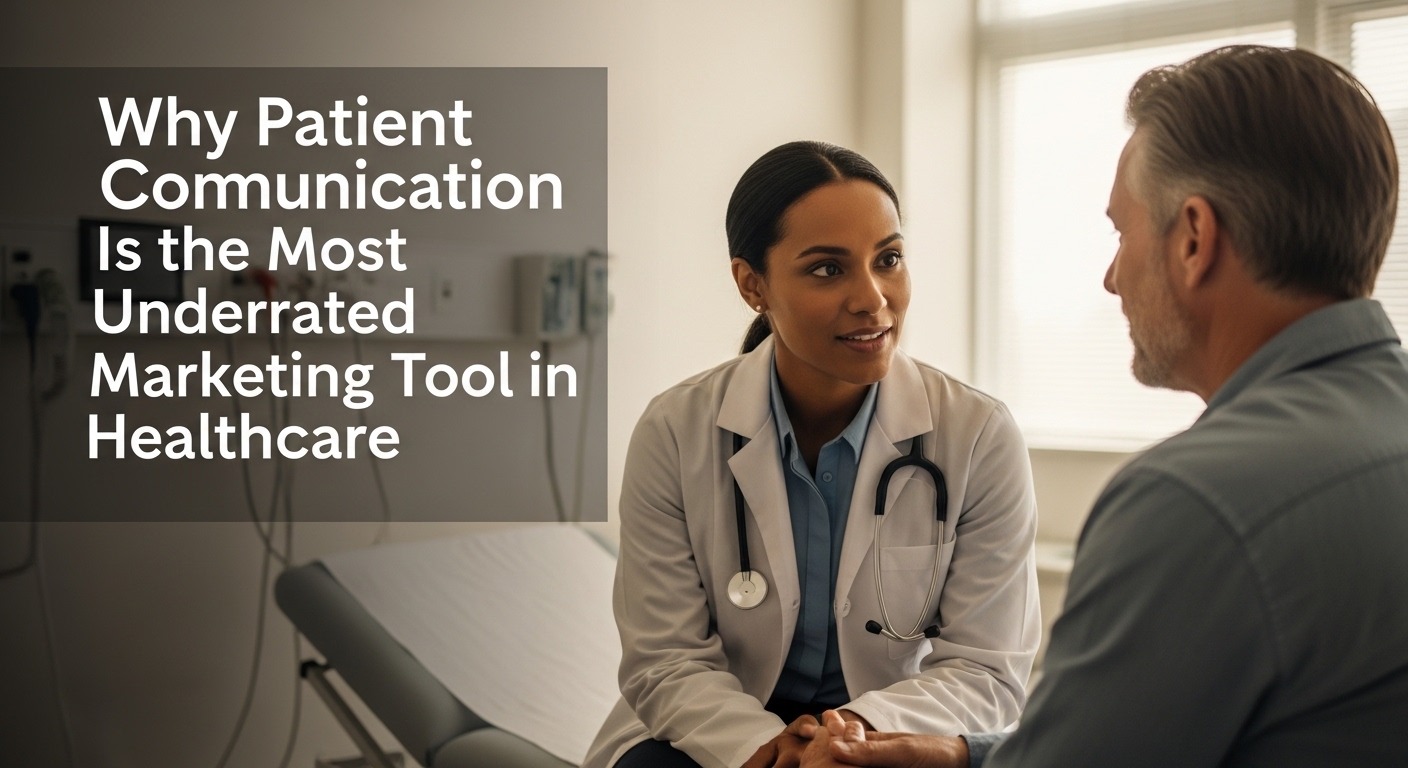

When healthcare professionals think about marketing, their minds jump to Google Ads, SEO, and social media campaigns. Yet right under their noses — in every exam room, every follow-up call, every discharge summary — sits a marketing tool that outperforms all of them combined: patient communication.
A well-communicated patient doesn’t just return. They refer family members, write five-star reviews, and become vocal advocates for your practice. This post unpacks why patient communication is the cornerstone of modern healthcare marketing — and how to use it strategically.
Patients who feel heard are 5x more likely to follow treatment plans and 3x more likely to recommend their provider to others.
— Journal of General Internal Medicine
📋 What You’ll Learn in This Article
- The Marketing Value Hidden in Every Patient Interaction
- How Poor Communication Kills Patient Retention
- The 5 Key Communication Touchpoints That Drive Growth
- Patient Communication vs. Traditional Healthcare Marketing
- Real-World Strategies You Can Implement Today
- The Digital Communication Revolution in Healthcare
- Take Your Healthcare Marketing to the Next Level
The Marketing Value Hidden in Every Patient Interaction
Every time a patient calls your front desk, receives a diagnosis, reads an appointment reminder, or speaks with a nurse post-discharge — a marketing moment is happening. Most healthcare providers don’t see it that way. They see it as administration. But patients see it as the brand experience.
According to PwC Health Research Institute, 73% of patients say communication quality directly influences their decision to stay with or leave a healthcare provider. That’s a bigger switching driver than price, convenience, or even clinical outcomes in consumer surveys.
🔁 The Patient Communication → Growth Loop
Clear Communication
Patient Trust & Satisfaction
Reviews & Referrals
Practice Growth
This cycle is self-reinforcing. Better communication compounds growth over time.
Think about it: a patient who truly understands their diagnosis, trusts their provider, and feels respected as a person will become your most powerful marketing asset — without a single dollar spent on advertising.
How Poor Communication Kills Patient Retention
Before exploring the opportunity, let’s understand the cost of failure. Poor patient communication doesn’t just create an uncomfortable appointment — it creates churn, negative reviews, and malpractice risk.
80%
of medical errors involve a communication failure between providers and patients
68%
of patients who switch providers cite feeling ignored or poorly communicated with as the reason
$1.7B
lost annually by U.S. healthcare practices due to preventable patient attrition from poor communication
The compounding effect is devastating: a dissatisfied patient doesn’t just leave — they tell 10–15 people about their negative experience, and in the age of Google reviews and Yelp, they tell thousands. Retention through communication isn’t just good ethics — it’s essential business strategy.
⚠️ Key Insight: Acquiring a new patient costs 5–7x more than retaining an existing one. Investing in communication quality is the highest-ROI marketing move available to most healthcare practices.
The 5 Key Communication Touchpoints That Drive Practice Growth
The patient journey has distinct moments where communication quality directly shapes outcomes — clinical and commercial. Mastering these five touchpoints transforms communication into a systematic growth engine.

① First Contact: The Phone or Booking Experience
Whether it’s a phone call or an online booking form, the first contact sets the emotional tone. Is your front desk warm, efficient, and reassuring? Does your booking system confirm clearly and reduce anxiety?
📌 Marketing impact: First impressions determine if a patient becomes a long-term advocate or a one-time visitor.
② In-Consultation Communication
The consultation is the most intimate marketing moment. Eye contact, plain-language explanations, asking “does that make sense?” — these micro-behaviors build profound trust. Research from NCBI shows that patients who feel their doctor listens to them have 19% better health outcomes.
📌 Marketing impact: Satisfied consultation = 5-star review potential + word-of-mouth referral.
③ Post-Visit Follow-Up
A simple follow-up SMS or email 48 hours after a visit — asking how the patient is doing and if they have questions — can increase patient retention by up to 27%. It’s unexpected, personal, and deeply human.
📌 Marketing impact: Patients who receive follow-up are 2x more likely to leave a positive online review.
④ Educational Content Delivery
Whether it’s a discharge pamphlet, a newsletter, or a YouTube explainer video, educational communication positions your practice as a trusted authority. Patients who receive health education are 40% more adherent to treatment and more likely to return for preventive care.
📌 Marketing impact: Educational content drives SEO, social sharing, and positions you as a thought leader.
⑤ Handling Complaints & Difficult Conversations
How you handle a complaint defines your brand more than any positive interaction. A patient who has a problem resolved respectfully and promptly is more loyal than one who never had a problem at all — a phenomenon called the Service Recovery Paradox.
📌 Marketing impact: Effective complaint handling converts detractors into promoters.
Patient Communication vs. Traditional Healthcare Marketing
Let’s put the two side-by-side. The data speaks for itself.
This doesn’t mean traditional marketing has no role. It means that without strong patient communication as the foundation, even the most sophisticated ad campaign will underperform. You can drive traffic to a leaky bucket all day — it’s still a leaky bucket.
Real-World Strategies You Can Implement Today

Here are actionable strategies any healthcare practice can implement immediately:
Train Staff in Health Literacy Communication
Use the “Teach-Back” method: ask patients to explain what they understood. Avoid medical jargon. Use plain language frameworks from AHRQ’s health literacy guidelines.
Automate Follow-Up Sequences
Use your EHR to send automated but personalized check-in messages at 24h, 48h, and 7 days post-visit. Tools like PatientPoint or Klara make this seamless.
Build a Review-Requesting Process
A simple follow-up email that says “We’d love your feedback” with a direct Google Review link can triple your online review volume. Timing matters — send within 24 hours of a positive encounter.
Create a Patient Education Newsletter
Monthly newsletters with health tips, seasonal advice, and practice news keep your brand top-of-mind and reduce the “out of sight, out of mind” patient drift. Use Mailchimp with HIPAA-compliant settings.
Produce Short “Meet the Team” Videos
A 60-second video of a doctor explaining their approach to patient care does more for trust than any billboard. Post on YouTube, your website, and social media. Authenticity beats polish every time.
Respond to Every Online Review
Responding to both positive and negative reviews signals to potential patients that you’re engaged, caring, and professional. According to BrightLocal, 89% of consumers read business responses to reviews.
The Digital Communication Revolution in Healthcare
The landscape has transformed. Patients today are digitally empowered — they research symptoms on WebMD, compare providers on Healthgrades, and schedule via apps. The communication strategy that wins in 2026 integrates digital channels seamlessly with human empathy.
📡 Where Modern Patients Engage With Healthcare Brands
Google Search
77% of patients
Online Reviews
72% use to decide
Patient Portal
64% prefer digital
Email & SMS
58% open rate
Video Content
54% watch health videos
Sources: Google/Ipsos Healthcare Survey, Software Advice, Healthgrades
The key insight: patients are already communicating about you — on review platforms, in Facebook groups, on Reddit. The question is whether your practice is shaping that conversation with proactive, intentional communication, or reacting to it.
✅ The Golden Rule of Healthcare Digital Communication:
Every digital touchpoint should feel as warm, clear, and human as a great in-person consultation. Technology amplifies communication quality — but it can never replace genuine care.
Final Thoughts: Your Patients Are Your Best Marketers
In a healthcare landscape crowded with look-alike clinics, identical insurance panels, and similar locations, the practices that win long-term are the ones patients feel something about. That feeling doesn’t come from logos or ad campaigns — it comes from every moment of human connection woven through the patient experience.
Patient communication is not a “soft skill” — it is a measurable, scalable, systematic business process that directly drives revenue, retention, and reputation. The healthcare marketers who understand this are building practices that compound in value year after year.
Start small: improve one touchpoint this week. Refine your follow-up message. Train front desk staff on empathetic language. Request one more review. These micro-improvements compound into extraordinary outcomes.
🔑 Key Takeaways
- Patient communication is the highest-ROI marketing investment available to healthcare providers
- Poor communication is the #1 driver of patient churn and negative reviews
- There are 5 critical touchpoints where communication quality drives practice growth
- Digital channels amplify communication — they don’t replace human empathy
- Systematic communication strategies can be trained, measured, and scaled
- The most successful healthcare practices treat every patient interaction as a brand moment
About the Author
Easy Marketing School
Helping healthcare professionals master modern marketing through practical, ethical, and evidence-based strategies. Visit Easy Marketing School →