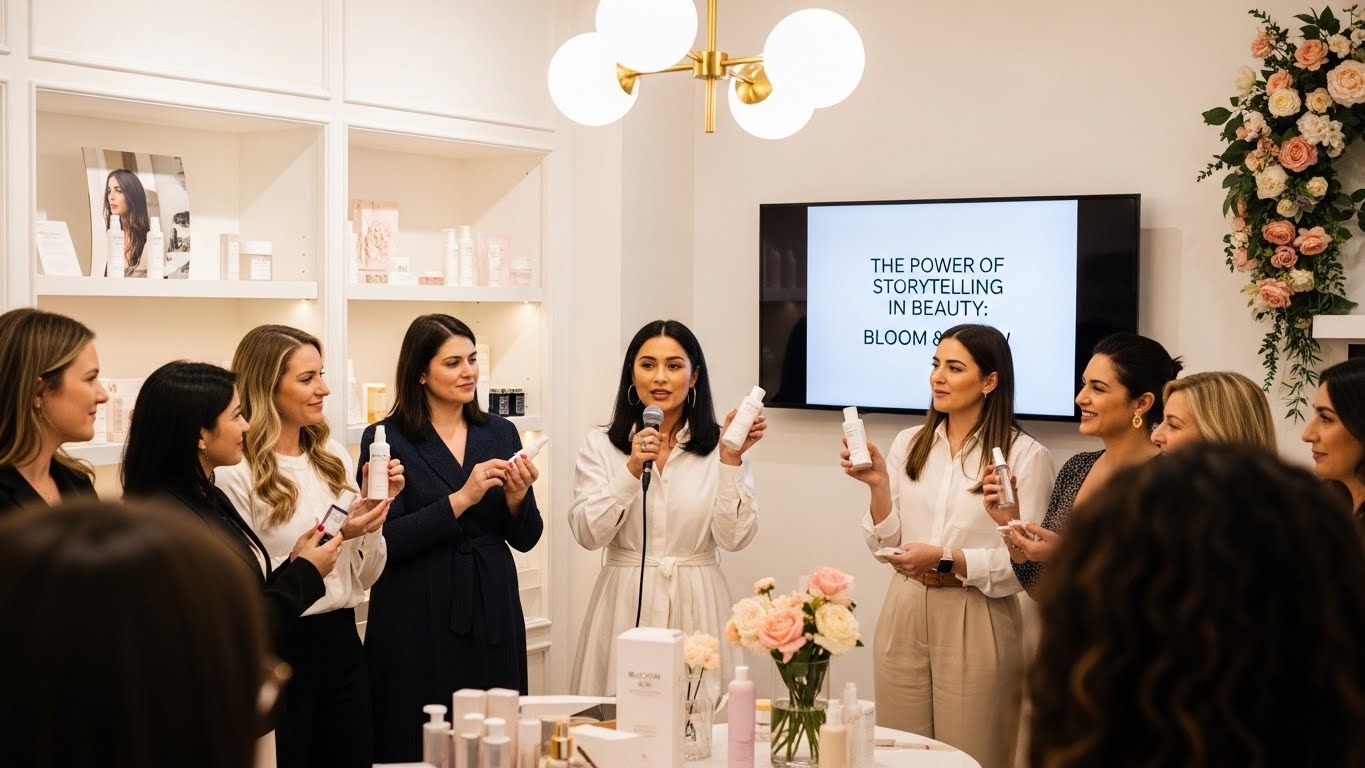
In a beauty industry saturated with products promising flawless skin and perfect lips, boutique cosmetics brands face a daunting challenge: how do you stand out when giants like Sephora and Ulta shelves are already overflowing? The answer isn’t louder advertising or deeper discounts. It’s storytelling.
The most successful boutique beauty brands today—from Glossier to Drunk Elephant to The Ordinary—didn’t win through traditional marketing. They won hearts, minds, and wallets by telling compelling stories that transformed customers into devoted community members. Content marketing powered by authentic storytelling is your secret weapon for building brand awareness without a Fortune 500 budget.
Why Storytelling Matters More in Beauty Than Almost Any Other Industry
Beauty products are deeply personal. They touch our skin, enhance our features, and impact how we feel about ourselves. When someone chooses your lipstick or serum, they’re not just buying ingredients in a package—they’re buying into a vision of who they could become.
Stories create emotional connections that ingredient lists and before-and-after photos simply cannot. When you share why you created your brand, the struggles that inspired your formulations, or the real women who use your products daily, you give potential customers something to believe in beyond the product itself.
Consider this: people forget facts and figures within hours, but they remember stories for years. A customer might not recall the percentage of hyaluronic acid in your serum, but she’ll remember the story of how you formulated it for your sister’s sensitive skin after years of frustration with harsh products.
The Foundation: Discovering Your Brand’s Authentic Story
Every boutique cosmetics line has a story, but many founders struggle to articulate it clearly. Your story isn’t marketing fluff—it’s the truth of why your brand exists and why it matters.
Finding your narrative core:
Start by answering these questions honestly. What problem were you solving when you created your first product? What makes your approach to beauty different from mainstream brands? What values drive your formulation and sourcing decisions? Who is your ideal customer, and what does she struggle with? If your brand were a person, what would she stand for?
The most powerful brand stories in beauty often emerge from personal frustration or discovery. Maybe you couldn’t find clean makeup that actually performed, so you created it. Perhaps you witnessed the beauty industry’s wasteful packaging and committed to sustainability. Or you saw women of color underserved by existing shade ranges and decided to change that.
Your story should be authentic, specific, and relevant to your target customer’s life. Generic stories about “empowering women” or “celebrating beauty” don’t differentiate you. Specific stories about real problems and genuine solutions do.
Content Marketing Strategies That Amplify Your Story
Once you’ve clarified your narrative, content marketing becomes the megaphone that broadcasts it across multiple channels. Unlike paid advertising that stops when your budget runs out, quality content continues attracting customers months and years after publication.
Behind-the-scenes content that builds trust:
Transparency is currency in today’s beauty market. Share your product development process from initial concept to final formulation. Show the testing phases, the reformulations, and even the failures along the way. Document your sourcing journey, whether that’s finding ethical mica suppliers or partnering with organic farms.
This type of content demystifies the beauty industry and positions your brand as honest and authentic. Customers increasingly want to know what goes into their products and who profits from their purchase. When you open your process to scrutiny, you earn trust that translates directly to sales.
Educational content that positions you as an expert:
Create content that teaches your audience something valuable, not just content that sells. Write blog posts about ingredient science, explaining what different botanical extracts actually do for skin. Produce videos demonstrating proper application techniques for your products. Share guides on building effective skincare routines or choosing the right makeup shades.
When you educate rather than just promote, potential customers see you as a helpful resource, not just another brand demanding their money. They’re more likely to follow your social channels, subscribe to your email list, and eventually make purchases because you’ve proven your expertise and earned their attention.
User-generated content that proves your impact:
Your customers’ stories are often more powerful than anything you could create yourself. Encourage buyers to share their experiences through reviews, photos, and testimonials. Feature real customers on your website and social media, telling their stories in their own words.
Create branded hashtags and actively reshare user content that showcases your products in real life. When potential customers see people like them using and loving your cosmetics, social proof removes purchase hesitation. These authentic stories from real users validate your brand’s promises in ways your own marketing never could.
Choosing the Right Content Channels for Maximum Impact
Not all content channels work equally well for boutique beauty brands. Your resources are limited, so focus on platforms where your target customers actually spend time and where visual storytelling thrives.
Instagram and visual storytelling:
Instagram remains the dominant platform for beauty brands, and for good reason. The visual nature of cosmetics makes Instagram ideal for showcasing products, textures, colors, and results. Use Instagram Stories to share daily behind-the-scenes moments, Instagram Reels for quick tutorials and transformations, and your feed for polished brand storytelling.
The key is consistency and authenticity. Overly edited, unrealistic photos no longer resonate with audiences tired of unattainable beauty standards. Show real skin textures, diverse faces, and honest lighting. Your followers will appreciate the realness and engage more actively with your content.
YouTube for deep-dive education:
YouTube allows for longer-form content where you can thoroughly educate your audience. Create detailed tutorials, ingredient deep-dives, or day-in-the-life videos from your business. YouTube content also has remarkable longevity—videos can attract new customers years after publication through search.
Consider partnering with micro-influencers who align with your brand values for honest reviews and tutorials. Smaller creators often have more engaged audiences and charge reasonable fees that fit boutique budgets.
Email newsletters for nurturing relationships:
Email remains one of the highest-converting channels because it’s permission-based and personal. Use email to share longer stories that wouldn’t fit on social media, offer exclusive insights into upcoming products, and create content that makes subscribers feel like insiders.
Your email list is an asset you own, unlike social media followers who could disappear if algorithms change. Invest in building this list through website opt-ins, purchase incentives, and valuable lead magnets like beauty guides or exclusive discounts.
Blogging for search visibility and authority:
A blog on your website serves multiple purposes. It improves your search engine visibility for beauty-related keywords, establishes your expertise in the industry, provides shareable content for social media, and gives potential customers reasons to return to your site beyond just shopping.
Write blogs that answer common beauty questions your target customers are searching for online. When someone googles “best natural foundation for oily skin” and finds your helpful, non-salesy article, you’ve created a potential customer relationship that began with value, not a sales pitch.
Measuring Success: Beyond Vanity Metrics
Content marketing’s impact isn’t always immediate or obvious. While follower counts and likes feel good, they don’t pay the bills. Focus on metrics that actually correlate with business growth.
Track website traffic from content channels, email list growth rate, engagement metrics like comments and shares, and most importantly, conversion rates from content to purchases. Use UTM codes to understand which specific pieces of content drive sales. Monitor how often customers mention discovering you through specific content pieces.
The most successful boutique beauty brands think long-term. A blog post might take six months to rank in search engines, but once it does, it can drive consistent traffic and sales for years. A YouTube tutorial might have modest views initially, but as your channel grows, older content gains new viewers continuously.
From Story to Strategy: Building Your Content Marketing System
Storytelling and content marketing work best when approached systematically rather than sporadically. Random posts whenever you remember won’t build meaningful brand awareness. You need a sustainable content strategy that consistently reinforces your story across channels.
Start by creating a content calendar that maps out themes, topics, and posts across all your channels for at least a month in advance. Batch create content when possible—film multiple videos in one session or write several blog posts in one sitting. This efficiency allows you to maintain consistency even during busy periods.
Repurpose content across multiple formats to maximize your effort. Turn a blog post into an Instagram carousel, a YouTube video into multiple short-form clips, or customer testimonials into social media posts. One core piece of content can fuel your marketing for weeks when strategically repurposed.
Mastering Beauty Marketing for Long-Term Success
Building brand awareness through content marketing and storytelling requires skills many cosmetics entrepreneurs never learned in product development. Understanding content strategy, social media algorithms, SEO, and brand positioning can feel overwhelming when you’re also managing formulations, inventory, and customer service.
For boutique beauty brand owners ready to transform their marketing from sporadic posts to strategic storytelling that actually drives sales, comprehensive education makes all the difference. The Beauty Marketing Course teaches you proven content marketing strategies specifically designed for beauty brands, helping you craft compelling stories, choose the right channels, and build authentic brand awareness that converts to revenue.
Your Story Deserves to Be Heard
The beauty industry doesn’t need more products—it needs more meaningful brands with authentic stories that resonate with real people. Your boutique cosmetics line has something unique to offer, but that value means nothing if your ideal customers never discover you.
Start telling your story today. Choose one content channel to focus on this month. Create one piece of authentic, educational, or inspiring content each week. Engage genuinely with your audience’s comments and questions. Track what resonates and do more of it.
Building brand awareness through storytelling isn’t about going viral or having millions of followers. It’s about creating genuine connections with people who share your values and believe in your vision of beauty. Those connections, nurtured through consistent, valuable content, transform strangers into customers and customers into advocates who spread your story far beyond what any advertising budget could achieve.
The most successful boutique beauty brands of the next decade will be those that master the art of storytelling through strategic content marketing. Your story is waiting to be told. The question is: are you ready to share it with the world?