Your beauty e-commerce store gets traffic. People browse your products, add items to their cart, and then… they disappear. Sound familiar? You’re not alone. The average cart abandonment rate for beauty and cosmetics hovers around 68%, meaning more than two-thirds of potential customers walk away without buying.
The problem isn’t your products or your prices. It’s your customer journey—the path someone takes from first discovering your brand to becoming a loyal repeat buyer. Most beauty brands focus obsessively on driving traffic while ignoring the critical experience that determines whether that traffic converts into revenue.
Building an intentional customer journey transforms casual browsers into committed buyers and one-time purchasers into repeat customers who fuel sustainable growth. Here’s exactly how to create that journey for your online beauty store.
Understanding the Beauty Customer Journey: More Than Just a Sales Funnel
The customer journey isn’t a straight line from discovery to purchase. It’s a winding path with multiple touchpoints, considerations, and decision-making moments unique to beauty products.
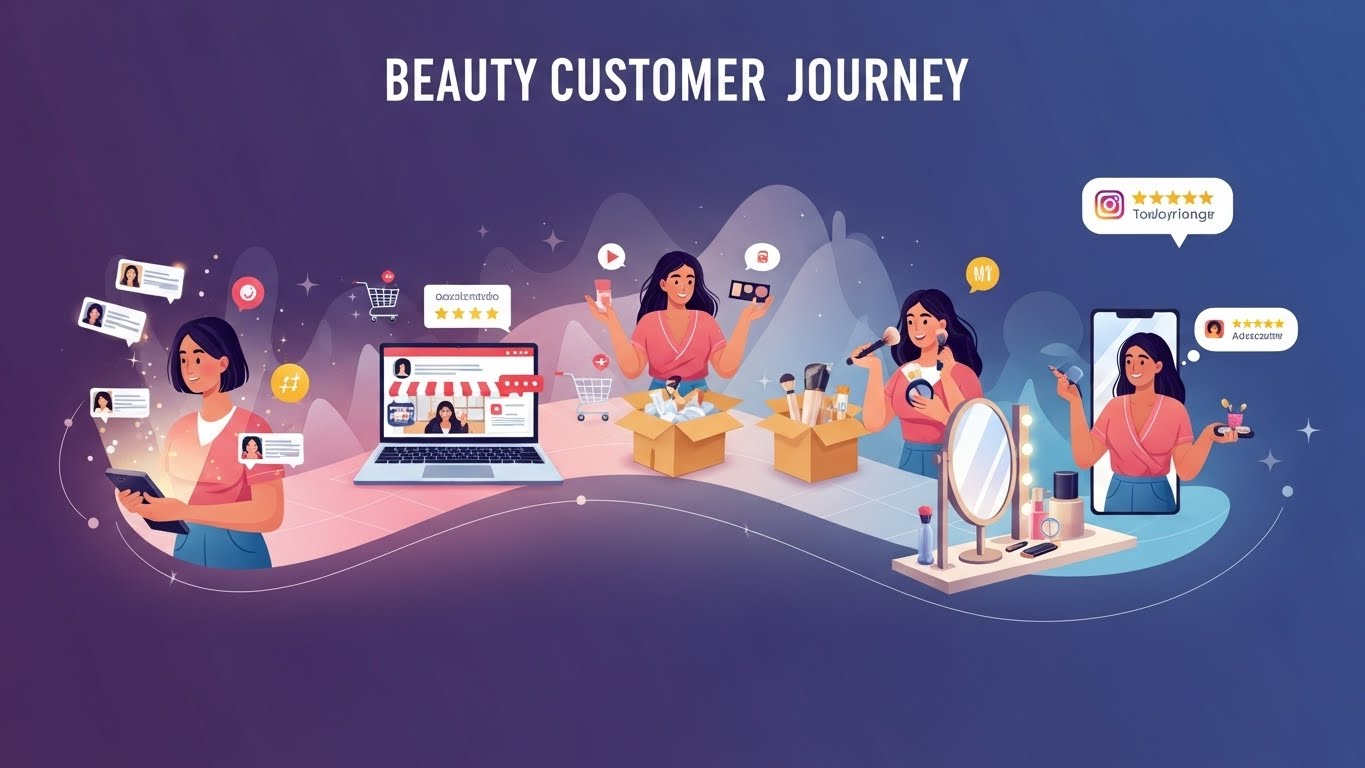
The five stages of the beauty customer journey:
Every customer moves through awareness, consideration, purchase, retention, and advocacy stages, though not always linearly. Someone might discover your brand on Instagram, research ingredients for weeks, make a small first purchase, receive the product and love it, then return for a larger order while recommending you to friends.
Beauty purchases carry higher emotional weight than most e-commerce categories. People worry about ingredients irritating their skin, shades not matching their undertones, or products not delivering promised results. Your customer journey must address these anxieties at every stage, building trust progressively until purchase feels like the obvious, safe choice.
Understanding this psychology is crucial. A customer researching anti-aging serums isn’t just comparing prices—she’s hoping to feel more confident, turn back time, or solve a problem that affects her self-image daily. Your journey should acknowledge these deeper motivations, not just showcase product features.
Stage 1: Awareness—Making Memorable First Impressions
The awareness stage begins the moment someone first encounters your brand, whether through social media, search engines, influencer mentions, or advertisements. Your goal isn’t immediate conversion—it’s creating enough intrigue to warrant further exploration.
Optimizing discovery touchpoints:
Ensure your brand presence across all channels tells a consistent, compelling story. Your Instagram aesthetic should match your website design and email tone. This consistency builds recognition and trust as customers encounter you across multiple platforms.
Create content that answers questions your ideal customer is already asking. If you sell clean beauty products, publish blog posts about ingredient safety, toxic chemicals to avoid, or how to build a non-toxic skincare routine. When someone searches these topics, your brand becomes their helpful guide, not just another retailer demanding their money.
Invest in high-quality product photography and lifestyle imagery that helps potential customers envision your products in their lives. Beauty is inherently visual, and mediocre photos signal mediocre products, regardless of your actual quality.
First website visit optimization:
Your homepage has seconds to communicate who you are, what you sell, and why visitors should care. Include a clear value proposition immediately visible without scrolling. Highlight what makes you different—whether that’s clean ingredients, inclusive shade ranges, sustainable packaging, or specific skin concerns you address.
Make navigation intuitive with clear product categories, prominent search functionality, and filters that help visitors quickly find products for their specific needs. Someone with oily, acne-prone skin should easily filter to see only products formulated for those concerns.
Offer a low-commitment way to stay connected for visitors not ready to purchase. A website pop-up offering 10% off their first order in exchange for email signup captures browsers who need more time to decide. Just ensure the pop-up appears after they’ve browsed for 30-60 seconds, not immediately upon arrival, which feels pushy and increases bounce rates.
Stage 2: Consideration—Building Trust Through Education and Social Proof
Once someone knows your brand exists, the consideration stage begins. They’re evaluating whether your products will actually work for them and whether your brand deserves their trust and money.
Product pages that convert:
Your product pages are silent salespeople that must answer every question and objection without human intervention. Include comprehensive descriptions covering what the product does, key ingredients and their benefits, who it’s ideal for (skin types, concerns, preferences), how to use it properly, and what results to expect and when.
High-quality images from multiple angles, texture shots, and swatch photos on diverse skin tones help customers understand exactly what they’re buying. For color cosmetics especially, shade accuracy is crucial—misleading photos guarantee returns and negative reviews.
Customer reviews are your most powerful conversion tool. Display them prominently on product pages, including both star ratings and written reviews. Encourage customers to upload photos of themselves using products, as user-generated content builds trust more effectively than any branded photography.
Address common concerns proactively. If customers frequently ask whether a product is vegan, cruelty-free, or safe for sensitive skin, answer these questions directly on the product page. Every unanswered question is a potential lost sale.
Content that nurtures consideration:
Create comparison guides helping customers choose between similar products in your line. Someone might know they need a moisturizer but feel overwhelmed choosing between your three options. A simple chart comparing texture, skin types, key ingredients, and best for scenarios removes decision paralysis.
Develop educational content around product categories you sell. If you offer retinol products, publish a complete guide to retinol for beginners covering what it does, how to start using it, and what to expect. This positions you as an expert while naturally showcasing your products as solutions.
Share founder stories, sourcing transparency, and behind-the-scenes content that humanizes your brand. When customers understand the people and values behind products, they’re more likely to choose you over faceless competitors with similar offerings.
Stage 3: Purchase—Removing Friction and Building Confidence
You’ve earned consideration. Now you must make purchasing as effortless as possible while reinforcing that they’re making the right decision.
Streamlined checkout experience:
Every additional step in your checkout process increases abandonment rates. Offer guest checkout so first-time buyers don’t need to create accounts. Enable autofill for addresses and payment information. Provide multiple payment options including credit cards, PayPal, Apple Pay, and buy-now-pay-later services like Afterpay or Klarna, which can increase beauty purchase conversion by 20-30%.
Display trust signals throughout checkout including security badges, return policy reminders, and customer service contact information. Anxiety peaks during payment entry, so visible reassurance that their information is secure and they can return products if needed reduces last-minute abandonment.
Show clear shipping costs and timelines early in the checkout process. Unexpected shipping fees at the final step are the leading cause of cart abandonment. If offering free shipping above a certain threshold, display progress toward that threshold in the cart to encourage additional purchases.
Strategic upselling and cross-selling:
The purchase stage is your opportunity to increase order value through relevant recommendations. If someone’s buying a cleanser, suggest your best-selling moisturizer or toner as complementary products. Use language like “Complete your routine” or “Customers also loved” rather than aggressive “You also need this” messaging.
Bundle offers work exceptionally well in beauty. Create starter kits, routine bundles, or value sets that offer slight discounts while introducing customers to multiple products. Someone purchasing a bundle is more likely to find something they love and return for full-size repurchases.
Offer samples or travel sizes as cart add-ons for a few dollars. This gives customers low-risk opportunities to try new products while increasing your average order value. Many will love the sample and return to purchase full sizes.
Stage 4: Retention—Transforming First-Time Buyers Into Repeat Customers
Acquiring a customer is expensive. Retaining them is where profitability happens. Most beauty brands obsess over acquisition while neglecting the retention strategies that actually build sustainable businesses.
Post-purchase experience that delights:
Send order confirmation emails immediately with clear information about what happens next. Include expected delivery dates, tracking links once shipped, and reminders about your return policy and customer service availability. This communication reduces anxiety and support inquiries.
The unboxing experience matters more in beauty than almost any other industry. Thoughtful packaging, handwritten thank-you notes, surprise samples, or small gifts create delight that customers share on social media and remember when considering future purchases. This doesn’t require huge budgets—even a beautiful tissue paper wrap or sticker adds memorable touches.
Follow up with an email 7-10 days after delivery asking about their experience and requesting a review. Offer a small incentive like points toward their next purchase or entry into a monthly giveaway. Reviews not only provide social proof for future customers but also give you valuable feedback about what’s working and what needs improvement.
Strategic replenishment and re-engagement:
Beauty products run out, creating natural repurchase cycles you should anticipate and leverage. If your serum typically lasts 60 days, send a reminder email at day 50 asking if they’re ready to reorder. Make reordering effortless with a direct link to add the same product to their cart.
Create subscription options for consumable products with incentives like 15-20% discounts or free shipping. Subscriptions provide predictable revenue while ensuring customers never run out of products they love, reducing the temptation to try competitors.
Segment customers by purchase behavior and send targeted campaigns. Someone who bought acne products needs different recommendations than someone who purchased anti-aging skincare. Personalized emails based on actual purchase history convert 6x higher than generic promotional blasts.
Stage 5: Advocacy—Turning Customers Into Brand Ambassadors
Your best marketing isn’t paid ads—it’s passionate customers who can’t stop talking about your products. The advocacy stage transforms satisfied buyers into vocal supporters who bring you new customers organically.
Building a referral engine:
Implement a referral program offering incentives to both the referrer and their friend. This could be discounts, free products, or store credit. Make sharing effortless with pre-written social media posts, email templates, and unique referral links customers can track.
Encourage and showcase user-generated content by creating branded hashtags and regularly featuring customer photos and testimonials on your social channels and website. When customers see their content featured, they feel valued and continue creating more, while potential customers see authentic proof of your products’ effectiveness.
Create a VIP or ambassador program for your most loyal customers offering exclusive perks like early access to new products, private sales, or input on product development. These superfans become your most vocal advocates, naturally promoting your brand because they feel genuinely connected to it.
Leveraging reviews and testimonials strategically:
Don’t just collect reviews—use them everywhere in your customer journey. Feature glowing reviews in email campaigns, social media posts, product pages, and even retargeting ads. Specific testimonials about results, textures, or how products solved problems are far more persuasive than generic praise.
Respond to every review, both positive and negative. Thank customers for positive feedback and address concerns in negative reviews professionally. Potential customers read your responses and judge your customer service quality based on how you handle criticism.
Creating Seamless Transitions Between Journey Stages
The most effective customer journeys feel continuous rather than fragmented. Each stage should naturally flow into the next, with consistent messaging, design, and experience across all touchpoints.
Omnichannel consistency:
Ensure your brand voice, visual identity, and customer service quality remain consistent whether someone interacts with you on Instagram, your website, via email, or through customer support. Disconnected experiences create confusion and erode trust, while seamless experiences feel professional and trustworthy.
Use retargeting strategically to guide browsers back to your site with relevant messaging based on their previous behavior. Someone who viewed but didn’t purchase a specific product should see ads for that product plus reviews and offers. Someone who abandoned their cart should receive reminders with potential incentives to complete the purchase.
Data-driven optimization:
Track customer behavior at every journey stage using analytics tools. Identify where people drop off and investigate why. High cart abandonment might indicate shipping cost issues. Low repeat purchase rates might suggest product quality problems or ineffective retention marketing.
A-B test different approaches to each journey stage. Try various email subject lines, product page layouts, checkout flows, and post-purchase sequences to discover what resonates best with your specific audience. Small improvements compound over time into significantly higher conversion rates.
Mastering the Beauty Customer Journey
Building a customer journey that consistently converts browsers into repeat buyers requires strategic thinking across marketing, e-commerce, customer service, and product development. It’s not just about isolated tactics—it’s about creating a cohesive experience that builds trust, removes friction, and makes customers feel valued at every interaction.
For beauty brand owners ready to transform their online store from a leaky bucket that loses most visitors into a well-oiled machine that converts and retains customers, structured education can accelerate your results dramatically. The Beauty Marketing Course provides comprehensive training on customer journey optimization, conversion strategies, and retention tactics specifically designed for beauty e-commerce businesses.
Start Optimizing Your Customer Journey Today
You don’t need to overhaul everything at once. Choose one journey stage to improve this week. If awareness is your issue, create one high-quality piece of educational content targeting your ideal customer. If consideration is the bottleneck, enhance your product pages with better images, more detailed descriptions, and prominent reviews. If retention needs work, set up your first automated replenishment email campaign.
Map your current customer journey from awareness through advocacy. Walk through your own website as a first-time visitor. Sign up for your emails. Make a purchase and note every touchpoint. Where does the experience feel clunky, confusing, or impersonal? Those friction points are your biggest opportunities for improvement.
Building an exceptional customer journey is ongoing work, not a one-time project. Consumer expectations evolve, new technologies emerge, and your business grows. Commit to continuously refining the experience based on customer feedback, behavioral data, and testing results.
The beauty brands winning in e-commerce today aren’t necessarily those with the best products or biggest budgets. They’re the brands that have mastered the customer journey, creating experiences so smooth, trustworthy, and delightful that browsers naturally become buyers and buyers enthusiastically return again and again.
Your products deserve to be in the hands of customers who will love them. An optimized customer journey ensures they find you, trust you enough to try you, and love the experience enough to stay. Start building that journey today, and watch your conversion rates, customer lifetime value, and revenue transform.