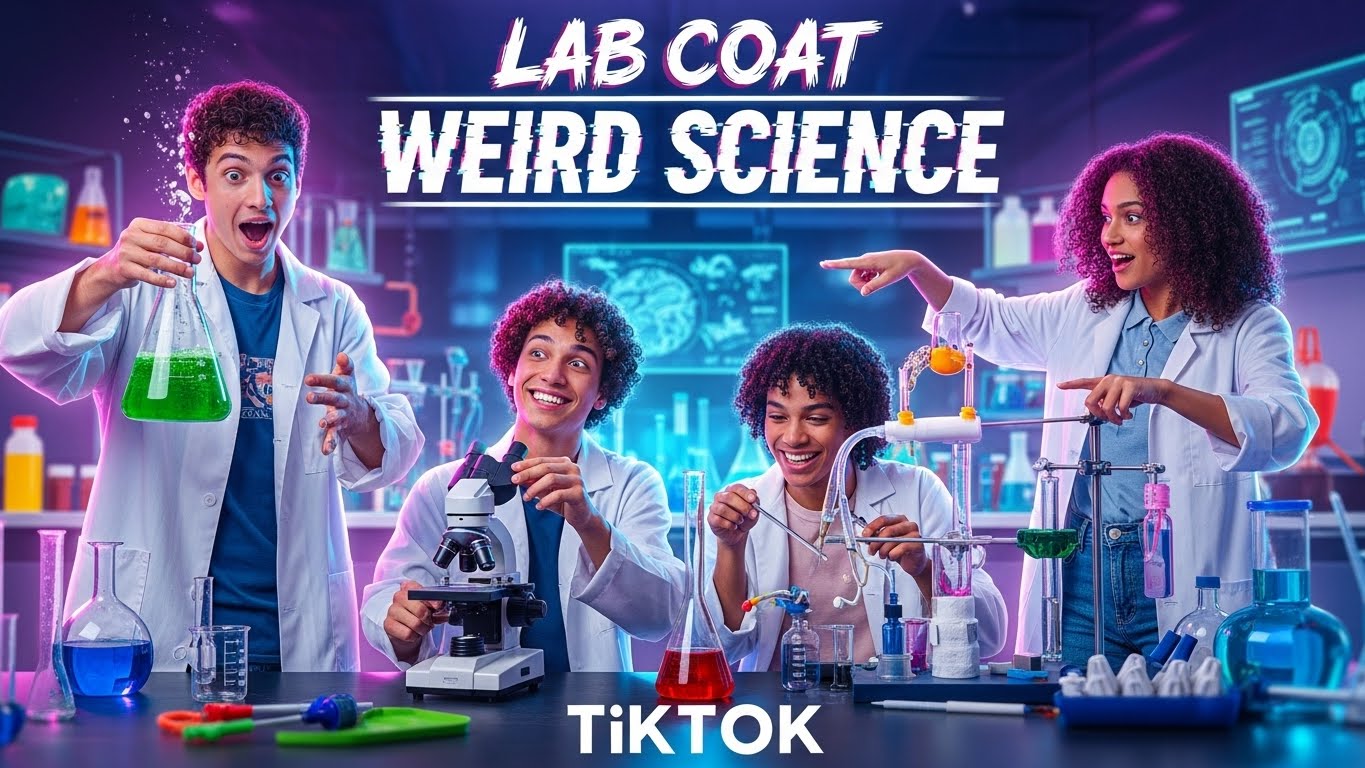
Transforming complex skincare science into viral content that educates, entertains, and converts A chemist in a lab coat holds up two beakers. “This is hyaluronic acid. This is your skin without it. Watch what happens when they meet.” 3.2 million views. 847K likes. 12,000 saves. Science just went viral. For decades, skincare brands treated science as boring—something to hide in fine print, mention vaguely in marketing copy, or dumb down into meaningless buzzwords. “Dermatologist-tested!” (Tested how? By one derm? For what?). “Clinically proven!” (Which study? What were the results?). The assumption was always the same: consumers don’t care about the science, they just want the glow. Then TikTok happened. And suddenly, #SkinScience has 2.8 billion views. Videos explaining the Maillard reaction (skin glycation) get millions of views. Teens are arguing about ceramide-to-cholesterol ratios in the comments. Lab coats are aspirational. Nerdy is the new sexy. Science isn’t boring—bad science communication is boring. The Lab Coat Revolution isn’t about dumbing down science for mass appeal—it’s about making rigorous science so engaging that people can’t scroll past it. It’s about TikTok chemists explaining molecular structures with gummy bears. It’s about turning occlusion theory into a viral trend. It’s about proof that when you respect your audience’s intelligence and make learning fun, education becomes entertainment. This article will show you how to join the Lab Coat Revolution—creating TikTok content that makes “weird science” irresistibly cool, marketing complex concepts through viral visuals without sacrificing accuracy, and building brands where expertise is the ultimate influencer credential. TikTok’s algorithm doesn’t reward polish or production value—it rewards watch time and engagement. And nothing keeps people watching like “Wait, WHAT?!” moments. Science delivers those moments constantly. Understanding why science content thrives on TikTok is essential to creating it effectively. According to TikTok’s own research, STEM content has over 100 billion views, with skincare science among the fastest-growing categories. Gen Z isn’t anti-intellectual—they’re anti-boring. Make science exciting, and they’ll watch. Make it shareable, and they’ll spread it. The key insight: TikTok rewards content that makes people feel smart, not content that talks down to them. Respect intelligence, deliver “wow” moments, and the algorithm does the rest. Strategy: Start with counterintuitive statement or visual surprise. “Your moisturizer is making you DRY” or beaker fizzing reaction. Stop the scroll immediately. Goal: Curiosity gap that demands resolution—they MUST keep watching Strategy: Demonstrate with props, animations, or metaphors. “Hyaluronic acid holds 1000x its weight in water—watch” [drops water on polymer]. Make abstract concepts tangible. Goal: Visual proof that teaches without words—understanding through watching Strategy: Use analogies, comparisons, everyday language. “Your skin barrier is like a brick wall—ceramides are the mortar.” Accessible WITHOUT inaccurate. Goal: “Aha!” moment where complex becomes clear—education as entertainment Strategy: “So what does this mean for YOU?” Connect science to tangible action. “This is why you slugging [applying occlusive] works—you’re trapping water.” Goal: Transform understanding into actionable knowledge they’ll use/share Strategy: “Drop a 🧪 if this makes sense now” or “Part 2 coming—should I explain why vitamin C oxidizes?” Trigger comments, saves, follows. Goal: Convert watchers into engagers—algorithm amplification through interaction Core Principle: The Lab Coat Revolution isn’t about choosing between entertainment and education—it’s about making education so entertaining that people seek it out. Start with curiosity, deliver visual understanding, explain accurately but accessibly, provide practical value, and trigger engagement. Science becomes viral when it respects the audience’s intelligence while rewarding their attention with genuine insight. Not all science content goes viral. Understanding the patterns that separate 100 views from 1 million views helps you create content that consistently performs: Counterintuitive hook + Visual demonstration + Simple analogy + Practical application + Engagement question = Viral formula. Notice: accuracy never compromised. The science is REAL—the communication is optimized for TikTok’s format. That’s the difference. “Occlusion” is a perfect test case—it’s a genuinely important skincare concept (creating a barrier that prevents transepidermal water loss) that sounds boring and technical. How do you make occlusion theory go viral on TikTok while maintaining scientific accuracy? Here’s the complete playbook for turning complex dermatology into shareable content: The challenge: occlusion involves molecular concepts (preventing TEWL through lipid barriers), counterintuitive truths (some “moisturizers” don’t moisturize), and technical terminology that makes eyes glaze over. But it’s also visually demonstrable, has immediate practical applications, and challenges common misconceptions—perfect viral ingredients if communicated right. Instead of: “Today I’ll explain transepidermal water loss prevention.” The Viral Hook: “Your moisturizer is evaporating off your face in MINUTES. Here’s the science of why—and how to trap it.” [Shows water droplet on skin evaporating fast, then shows one under occlusive staying put] Why this works: Immediately relatable problem (wasted product $$$), visual contrast creates curiosity gap, suggests actionable solution. They MUST keep watching to learn the fix. The Technical Explanation: Occlusives create lipophilic barriers preventing transepidermal water loss. The Visual Metaphor Version: The Saran Wrap Demonstration: Setup (0-3 seconds): Two identical wet sponges. One bare. One wrapped in Saran Wrap. Time-lapse (4-8 seconds): 30 minutes later. Bare sponge: dry. Wrapped sponge: still moist. The Connection (9-15 seconds): “Your hyaluronic acid serum? That’s the water in the sponge. Your skin? That’s the sponge. Air? It’s stealing that moisture every second. Occlusives like Vaseline, ceramides, or squalane? That’s the Saran Wrap—trapping hydration IN.” The Science Layer (Optional 5 seconds for those who want it): Why this works: Saran Wrap is universally understood, visual is instantly graspable, time-lapse shows dramatic difference, science term provided for those who want accuracy. NO dumbing down—just smart translation. The Challenge: Teaching which ingredients are occlusive vs. humectant (draws water) vs. emollient (softens). The Interactive Format: The Three-Bucket Challenge: 💧 HUMECTANTS “Water Magnets” ✨ EMOLLIENTS “Skin Softeners” 🛡️ OCCLUSIVES “Moisture Sealers” The Game: “I’m sorting these popular ingredients. Comment if you disagree!” Why ordering matters: “Humectants draw water. Emollients spread smoothly. Occlusives SEAL. Apply in that order: hydrate → smooth → trap. Wrong order? You’re sealing in nothing.” Why this works: Interactive format demands engagement (comment corrections!), game mechanics are inherently shareable, teaching layering order provides practical value, some ingredients fitting multiple categories shows nuance. Science remains accurate while format is TikTok-native. The Controversial Take: Challenge popular beliefs with science. The Occlusion Myth-Bust: ❌ Common Myth: “Oils are moisturizing” or “You don’t need moisturizer if you have oily skin” ✓ The Science Truth: “Oils DON’T moisturize—they seal. Moisture = water. Oil = occlusion. If you apply oil to dry skin, you’re just sealing in dryness.” The Visual Proof: Side-by-side test: Dry arm A: oil only. Dry arm B: water-based serum THEN oil. Check hydration meter. B wins dramatically. “See? Occlusives need something TO occlude. Layer order matters.” Why this works: Challenges widespread belief = comment debates (“But I thought…!”), visual side-by-side eliminates argument, practical demo proves science, shareability through “tag someone who needs to see this.” Controversy WITHOUT dumbing down. The Strategy: Hijack existing trends with science angles. Occlusion Trend Examples: Why this works: Riding trend waves puts science in front of massive audiences already engaged, connecting science to existing interests makes it relevant, familiar audio/formats lower barrier to engagement. Science becomes part of culture, not separate from it. The Strategy: One concept = multiple videos in series format. The Occlusion Series: The Algorithm Advantage: Each video ends: “Part 2 tomorrow—should I explain why some occlusives break you out?” Teasing next installment triggers follows, return views, and sustained engagement. One complex concept = 6+ viral videos. Why this works: Series format builds anticipation, allows deep dives without overwhelming single video, creates loyal audience invested in learning journey, maximizes content from single concept. Depth WITHOUT density. Dr. Idriss (@shereeneidriss) turned occlusion into multiple viral videos by using the exact framework above. Her “slugging” explanation video used Vaseline on wet sponge vs. dry sponge demo—visual, immediate, scientifically accurate. Her ingredient sorting series (“Which of these is actually occlusive?”) generated thousands of debate comments. Her myth-bust on “oils moisturizing” sparked controversy and shares. Each video maintained dermatological accuracy while using TikTok-native formats. Result? 1.2M+ followers consuming advanced skincare science because she made it visually engaging without compromising truth. Complex concepts CAN go viral—when communicated with respect for both the science AND the platform. When you market complex concepts like occlusion through relatable hooks, visual metaphors, game formats, myth-busts, trend integration, and series structures—while maintaining scientific accuracy throughout—you prove that “dumbing down” is never necessary. The audience is smart. Your job is making smart content fun to consume. That’s the Lab Coat Revolution. Learn the proven strategies successful brands use to make skincare science viral, turn complex concepts into shareable content, and build audiences that value expertise as much as entertainment—all without compromising scientific accuracy. Explore the Beauty Marketing Course → Join the Lab Coat Revolution—where nerdy is the new viral Beyond individual videos, certain content formats consistently make science content shareable. Here are the high-performing frameworks: Show what ingredients DO with household items: Example: “This is niacinamide. Watch it reduce inflammation.” [Shows actual anti-inflammatory action using pH indicators, temperature changes, or visual reactions] Science becomes observable, not abstract. Test popular beliefs scientifically: Example: “They say pores open and close. Let’s test it with thermal camera.” [Shows pores don’t actually open/close with temperature] Myth-busting triggers saves and shares. Side-by-side scientific comparisons: Example: “Chemical exfoliant vs. physical scrub under microscope. Here’s what they actually do to skin.” [Shows cellular level difference] Visual proof wins arguments. Ride viral trends with education: Example: “Everyone’s doing skin cycling. Here’s the SCIENCE of why rest days matter for retinoid tolerance.” Connect trends to mechanisms—audience already interested, you add depth. Individual viral videos are great. But sustained success requires building a brand identity around scientific credibility. Here’s how: Lab coat, goggles, beakers, or other science signifiers become brand markers. LabMuffin Beauty Science uses actual lab coat + goggles. Viewers instantly know “this is the science account.” Share your background naturally: “As a cosmetic chemist…” or “In my lab…” establishes expertise without arrogance. Science credibility matters—flex it. Recurring segments like “Myth Monday” or “Ingredient of the Week” train audience to expect regular science content. Consistency builds loyal viewership. For too long, beauty marketing operated on a false premise: consumers don’t want science, they want simple promises. Brands hid their R&D, dumbed down their explanations, and treated education as boring obligation rather than marketing opportunity. TikTok demolished that assumption. Turns out, people LOVE learning—when learning is engaging. They WANT to understand how skincare works—when explanations respect their intelligence. They SEEK expert voices—when those voices communicate accessibly without condescension. “The Lab Coat Revolution proves that the divide between ‘educational’ and ‘entertaining’ was always false. Science IS entertaining when communicated with creativity. Complex concepts CAN go viral when visualized cleverly. Expertise IS influencer-worthy when shared generously. The brands winning on TikTok aren’t those dumbing down science—they’re those making science so cool that followers binge-watch biochemistry explanations and debate ceramide ratios in comments. Nerdy became the new aspirational because Gen Z values knowledge as social currency. The future of beauty marketing isn’t less science—it’s better science communication. Lab coats are the new status symbol. Beakers are the new aesthetic. Understanding transepidermal water loss is the new flex.” So embrace the Lab Coat Revolution. Start videos with “Wait, WHAT?!” hooks. Use Saran Wrap and sponges to explain occlusion. Create ingredient sorting games. Myth-bust with side-by-side tests. Hijack trends with science angles. Build series around complex concepts. Make learning fun without compromising accuracy. Because in the curiosity economy, expertise isn’t boring—bad communication is boring. And TikTok just proved science can be the coolest thing on the internet. Put on your lab coat. Make science viral. Join the revolution. 🧪✨ Share this guide with beauty brand creators! Keywords: skincare science TikTok, viral science content, occlusion marketing, beauty education content, lab coat revolution, complex concepts visualization, myth-busting skincare, ingredient education, Gen Z science marketing, TikTok beauty strategyWhy Science Content Dominates TikTok: The Curiosity Economy
Why #SkinScience Has 2.8 Billion Views
The reveal format: Science naturally builds to “aha!” moments—perfect for TikTok’s short-form reveal structure
Visual transformation: Before/after, reaction demonstrations, visual metaphors—science shows change dramatically
Myth-busting appeal: “Everything you thought about [topic] is wrong” triggers rage-watch and comment engagement
Saveable value: Educational content gets saved for reference—algorithm gold
Comment debates: Science invites discussion, disagreement, and follow-up questions—all boost engagement
Expertise as identity: Viewers share science content to signal intelligence—social currency of knowledgeThe Lab Coat Revolution: Science Content That Goes Viral
Hook with “Wait, WHAT?!” (First 0.5 Seconds)
Show the Science Visually (Seconds 1-5)
Explain Simply (But Accurately) (Seconds 6-15)
The Practical Payoff (Seconds 16-25)
Engagement Hook (Final 5 Seconds)
The Science Content Formula: What Makes Nerdy Go Viral
The Viral Science Pattern
How to Market Complex Concepts (Like Occlusion) Through Fun, Viral Visuals Without Dumbing Down the Science
The Complex-to-Viral Framework: Occlusion Edition
Step 1: The Hook—Start with Relatable Problem
Step 2: Visual Metaphor—Make Abstract Concrete
“Technically, we’re preventing transepidermal water loss—TEWL—by creating a lipid barrier. But the sponge shows you exactly how it works.”Step 3: Product Sorting—The Viral Game Format
Step 4: The Myth-Bust—Controversy Drives Engagement
Step 5: The Trend Integration—Science Meets Pop Culture
Step 6: The Series Hook—Keep Them Coming Back
Real Example: Dr. Shereene Idriss and Occlusion Science
Ready to Master Science-First TikTok Marketing?
Content Formats That Make Science Irresistible
“Ingredient in Real Life” Demonstrations
“Myth vs. Science” Head-to-Head
“This vs. That” Comparison Tests
“Explaining the Trend” Science Angle
Building Your Lab Coat Brand: From Viral to Authority
The Authority-Building Strategy
Consistent Visual Identity
Credentials Display (But Not Gatekeeping)
Series Consistency
The Lab Coat Revolution: When Smart Becomes Viral
Resources for Science Content Creators