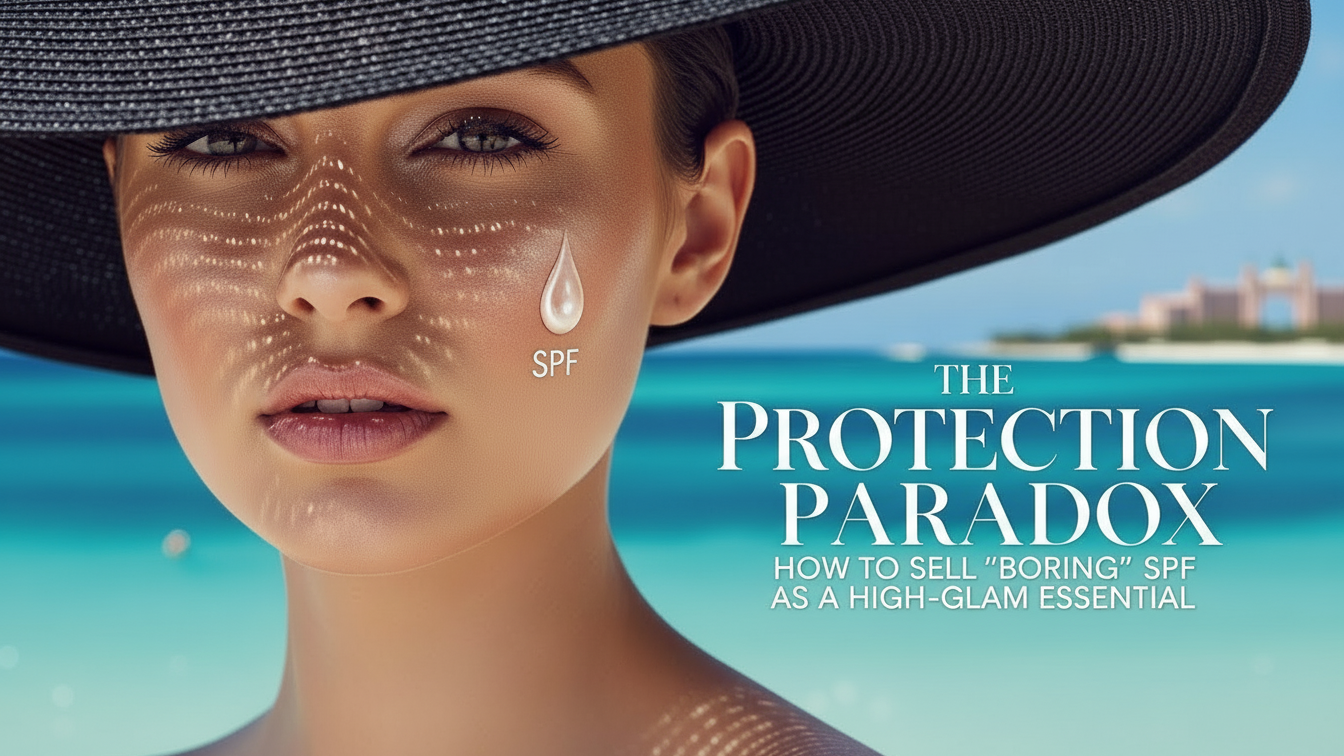
Transform sunscreen from a clinical obligation into the most glamorous step in any beauty routine The Billion-Dollar Problem: SPF is the single most important skincare product dermatologists recommend, yet it has the lowest consumer compliance rate. The global sunscreen market is worth $13.6 billion, but most brands still market it like medicine. It’s time to change the narrative. Sunscreen suffers from what I call the “Protection Paradox”—consumers intellectually understand they need it, but emotionally, they don’t want to use it. Why? Because for decades, the beauty industry has positioned SPF as: “Dermatologist-recommended” screams obligation, not aspiration White cast, greasy feel, pilling under makeup—the consumer memory is traumatic “The last step” positioning makes it feel like a chore tacked onto your routine According to a study by the American Academy of Dermatology, only 33% of Americans regularly use sunscreen on exposed skin, despite 90% knowing it prevents skin cancer. This isn’t an education problem—it’s a desire problem. 🎯 The Marketing Insight: People don’t buy what they need—they buy what they want. Your job isn’t to convince people SPF is important (they already know). Your job is to make them want to wear it every single day. The most successful SPF brands of the past five years—think Supergoop, ISDIN, and La Roche-Posay’s invisible fluid—didn’t win by being better at sun protection. They won by making sun protection feel luxurious, aspirational, and integrated into beauty routines rather than separate from them. Notice how the glamorous translations never lose the functional benefit—they simply reframe it through aspiration rather than obligation. You’re not abandoning efficacy; you’re wrapping it in desire. Here’s the fundamental challenge: SPF’s primary benefit is invisible. It prevents damage you’ll never see because it never happened. This makes traditional before/after marketing impossible. So how do you visualize prevention? Show the same person in two parallel timelines—one with daily SPF use, one without. Age progression software makes this visceral. But don’t stop at wrinkles; show the glow difference, texture, and vitality of protected skin. Example Campaign: “Meet yourself in 2045. Which version do you want to be?” Pair with glamorous imagery showing the SPF-protected version living her best life—not just looking younger, but more confident and radiant. Why it works without being clinical: You’re selling aspiration (future you thriving) not fear (future you with sun damage). The focus is glamorous life outcomes, not medical prevention. Borrow visual language from high-end technology and fashion. Think: iPhone screen protectors, luxury car paint protection, museum-grade UV glass. Position SPF as the equivalent investment for your most valuable asset. Visual Execution Ideas: The key is making the “invisible” feel tangible through premium material associations. When your SPF packaging looks like it belongs in a luxury boutique rather than a pharmacy, the perceived value shifts dramatically. People struggle with delayed gratification. Instead of focusing on benefits 20 years from now, highlight what SPF does today: prevents redness, maintains makeup integrity, creates a smooth canvas, adds a subtle glow. Today vs. Tomorrow Benefit Balance: ✨ Today 🔮 Long-term Marketing ratio: Lead with 70% immediate benefits, support with 30% long-term benefits. This creates instant buy-in while reinforcing the preventive value. Don’t show SPF application in a bathroom. Show it everywhere luxurious people go: rooftop brunches, yacht decks, convertibles, ski chalets. Make it synonymous with living well, not hiding from the sun. Campaign Concept: “Go Ahead, Live in the Light” Position your SPF as the product that enables adventure, not restricts it. Show beautiful people doing sun-adjacent activities with confidence—not cowering under umbrellas, but fully engaged in golden-hour experiences. Visual palette: Golden hour lighting, warm tones, movement and joy. Avoid harsh midday sun imagery that feels aggressive or scary. Your SPF should feel like a passport to pleasure, not a barrier to avoid pain. Treat your UV filters like hero ingredients. Give them backstories, visualize how they work through beautiful micro-photography and elegant animations. Make the science feel sexy. Example: Zinc Oxide Rebrand ❌ Clinical Version: “Contains 20% zinc oxide for physical UV protection” ✅ Glamorous Version: “Powered by mineral light diffusers that create a soft-focus, airbrushed finish while forming an invisible barrier between your skin and aging UV rays. Think of it as a real-life Instagram filter plus future-proofing.” Pro tip: Use macro photography of the formula—pearlescent textures, light refraction, silky spreads. Make the product itself look like art. Pair with language about “molecular architecture” and “photon deflection” to sound sophisticated without being clinical. The future of beauty marketing isn’t just inclusive—it’s scientifically rigorous, culturally competent, and built on authentic trust. If you’re ready to develop marketing strategies that truly serve diverse consumers while driving real business results, specialized education is essential. Explore the Beauty Marketing Course → Learn evidence-based strategies for marketing to diverse skin tones, building authentic brand trust, and creating campaigns that convert. The biggest obstacle to SPF adoption isn’t the invisible benefit—it’s the very visible, tangible experience of wearing it. White casts, greasiness, pilling, and that distinct “sunscreen smell” have traumatized generations of consumers. Your marketing must directly address these pain points, not pretend they don’t exist. Here’s the framework: Don’t bury the formula innovation—make it your headline. “Weightless,” “invisible finish,” “gel-cream hybrid,” “water-light texture”—these aren’t just descriptors, they’re purchase triggers. Sample headline: “The SPF That Feels Like Nothing (But Does Everything)” Video content showing the product disappearing into skin, not leaving residue, and playing well under makeup is essential. Show the application in real-time, not sped up. Content series idea: “The 15-Second Application Test”—show diverse skin tones applying product and achieving invisible finish in under 15 secondsWhy SPF Has an Image Problem (And Why That’s Your Opportunity)
❌ A Medical Necessity
❌ A Sensory Nightmare
❌ An Afterthought
The Glamorization Strategy: Repositioning SPF from Duty to Desire
The SPF Glamorization Framework
Clinical Language Glamorous Translation Emotional Impact Broad spectrum protection Your invisible force field Power + sophistication Prevents photoaging Time-travel for your skin Mystery + aspiration Water-resistant 80 minutes Beach-to-brunch ready Lifestyle + versatility Non-comedogenic formula Skin-perfecting primer Beauty + multi-function SPF 50+ Maximum glow protection Radiance + luxury 💡 The Language Shift Matters
Visualizing the Invisible Shield: Marketing Benefits You Can’t See
5 Strategies to Visualize Invisible Protection
1. The “Time-Travel Twin” Approach
2. The “Luxury Shield” Metaphor
3. The “Immediate Gratification” Reframe
4. The “Lifestyle Integration” Narrative
5. The “Ingredient Storytelling” Approach
Master the Art of Inclusive Beauty Marketing
The Sensory Solution: Overcoming the Touch-and-Feel Barrier
🚫 The Sensory Crimes of Traditional SPF:
1. Lead with Texture Transformation
2. Prove It with Product Demos