Starting an online beauty store sounds glamorous — and it absolutely can be. But most aspiring beauty entrepreneurs hit the same wall: they assume they need thousands of dollars in paid ads before they can make a single sale. The truth? Some of today’s most successful indie beauty brands built six-figure stores on little more than a smartphone, a clear strategy, and a deep understanding of their customer.
In this guide, we’ll walk through every stage — from niche selection to your first viral post — with proven, budget-friendly tactics that actually work in 2025.
📋 Table of Contents
- Why Low-Budget Beauty Brands Are Winning Right Now
- Find Your Beauty Niche (The Goldilocks Zone)
- Choose the Right Platform for Your Store
- Build Your Brand Identity on a Budget
- Product Sourcing: Private Label, Dropship, or Create?
- Free & Low-Cost Marketing Strategies That Actually Work
- Content That Converts: Social Media for Beauty Brands
- SEO for Beauty E-Commerce (Free Traffic Forever)
- Email Marketing: Your Highest-ROI Channel
- Scale Smart: When & How to Invest in Paid Ads
1. Why Low-Budget Beauty Brands Are Winning Right Now
The beauty industry used to be dominated by L’Oréal, Estée Lauder, and a handful of other giants with nine-figure ad budgets. Social media changed everything. According to Statista, the global online beauty market is growing at roughly 8.5% annually — and independent brands are capturing an outsized share of that growth.
Why? Because consumers now trust recommendations from real people over polished ads. A 22-year-old esthetician on TikTok can outsell a brand with a $5M TV budget when her skincare routine goes viral. This is the moment to launch.
2. Find Your Beauty Niche (The Goldilocks Zone)
The biggest mistake new beauty entrepreneurs make is trying to sell everything to everyone. “I sell skincare, haircare, makeup, and nail products” is a strategy for staying invisible. Niche down until it feels uncomfortably specific — then go one level deeper.
Use tools like Google Trends, Exploding Topics, and Reddit’s beauty communities (r/SkincareAddiction has 1.8M members) to spot underserved audiences before they hit mainstream.
| Niche Category | Example Sub-Niche | Avg. Search Volume | Competition Level |
|---|---|---|---|
| Skincare | Barrier-repair for acne-prone skin | ~40,000/mo | Medium |
| Hair Care | Natural curly hair (3C–4C type) | ~90,000/mo | High |
| Makeup | Clean makeup for sensitive skin | ~22,000/mo | Medium-Low |
| Body Care | Hyperpigmentation body treatments | ~15,000/mo | Low 🔥 |
| Wellness Beauty | Adaptogens + beauty supplements | ~28,000/mo | Low–Medium 🔥 |
3. Choose the Right Platform for Your Store
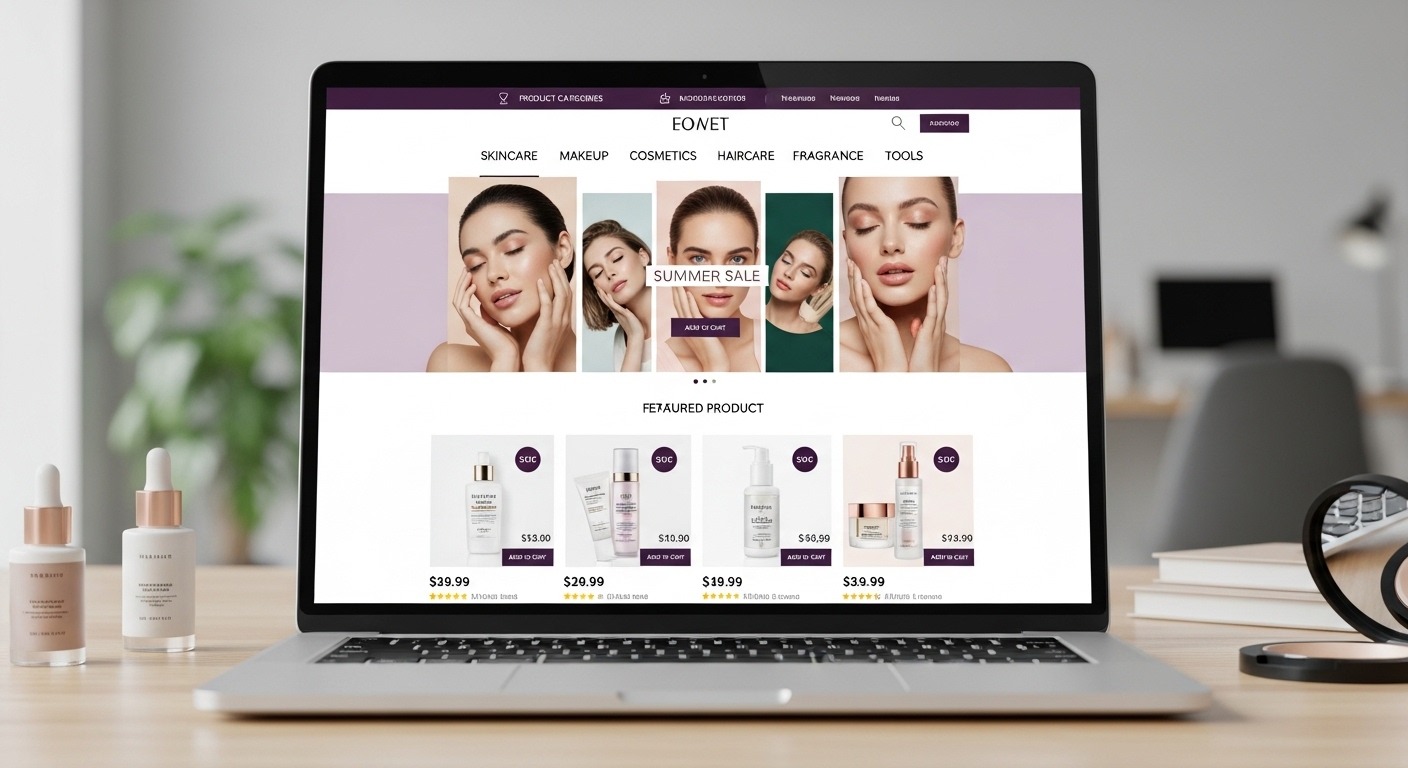
Your e-commerce platform is the backbone of your business. Choosing wrong at the start costs you money, time, and sanity. Here’s how the top platforms stack up for beauty sellers:
| Platform | Starting Cost/mo | Best For | Beauty-Specific Pros |
|---|---|---|---|
| Shopify | $39 | Growing brands | Best app ecosystem; easy subscriptions; TikTok Shop integration |
| WooCommerce | ~$10 (hosting) | Budget starters | Full control; strong SEO; no transaction fees |
| Etsy | $0.20/listing | Handmade / indie | Built-in audience; great for handmade beauty |
| Amazon | $39.99 | Scale / white label | Massive reach; FBA logistics; Beauty storefront pages |
| Squarespace | $23 | Visual brand-first | Beautiful templates; great for beauty aesthetics; easy to use |
💡 Pro Tip: Start with Shopify if you want speed and scalability, or WooCommerce if you want to keep costs near zero and own everything. Both have excellent beauty-specific themes.
4. Build Your Brand Identity on a Budget
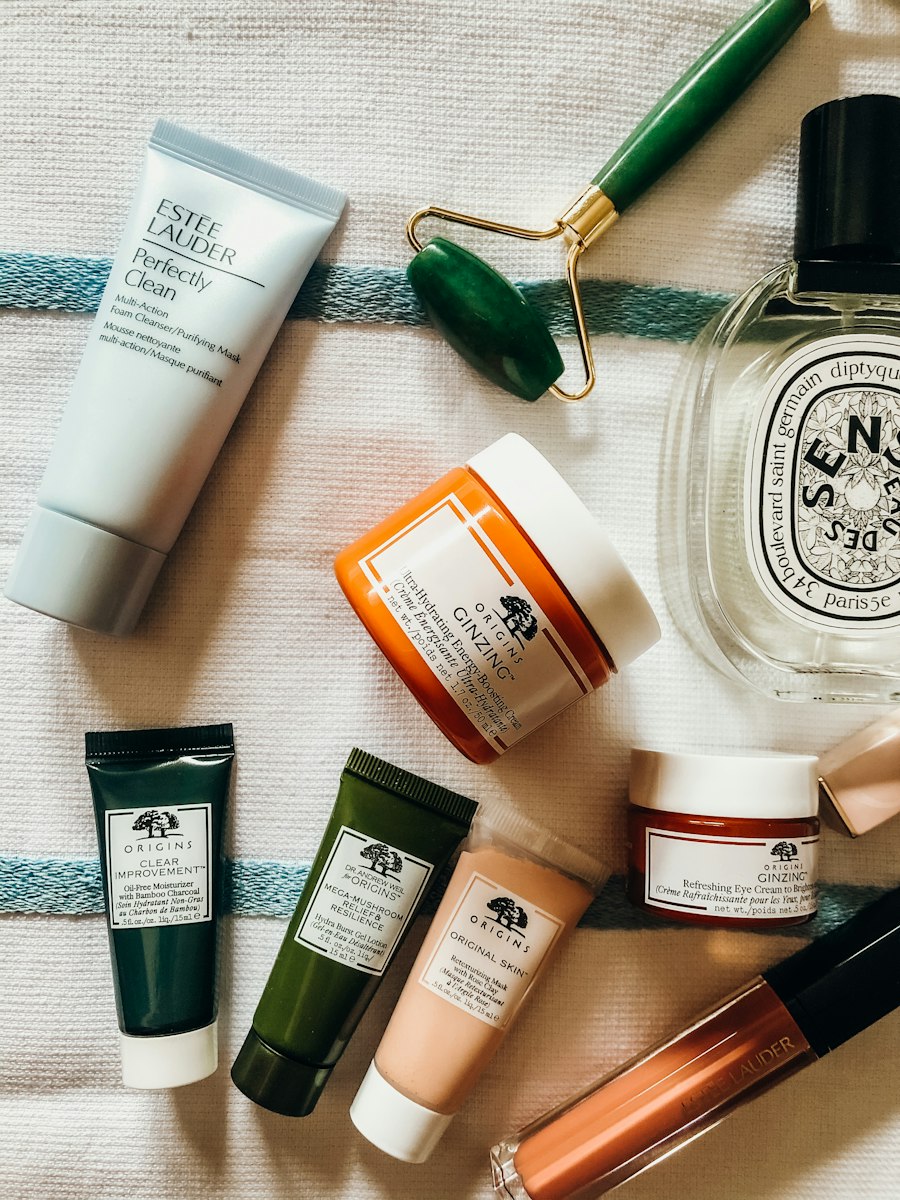
Your brand identity is how people feel about you when they’re not looking at your products. It’s your logo, your color palette, your tone of voice, and the story behind why you started. Done well, it’s the reason someone chooses you over a cheaper competitor.
The good news: great branding doesn’t require a six-figure design agency. Here are the tools top indie beauty brands use:
5. Product Sourcing: Private Label, Dropship, or Create?
This is one of the biggest decisions you’ll make — and it affects your margins, your brand differentiation, and your startup cost. Here’s a clear breakdown:
6. Free & Low-Cost Marketing Strategies That Actually Work

Here’s where most beauty entrepreneurs waste their limited budget — on ads before they’ve proved their message works organically. Instead, master these zero-or-low-cost channels first:
7. Content That Converts: Social Media for Beauty Brands
Not all content is created equal. Here’s a content mix that builds both audience AND sales simultaneously — the 3-2-1 method used by top indie beauty brands:
| Content Type | Frequency | Goal | Example |
|---|---|---|---|
| Educational | 3×/week | Build trust & authority | “Why your moisturizer isn’t working” tutorial |
| Inspirational / Lifestyle | 2×/week | Build brand identity | Morning skincare routine aesthetic reel |
| Promotional / Product | 1×/week | Drive sales | Before/after with product link + limited offer |
| Community / UGC | 2×/week | Social proof | Repost customer results with credit |
| Behind the Scenes | 1–2×/week | Brand humanity | “Packing orders” or “formulating batch” video |
8. SEO for Beauty E-Commerce (Free Traffic Forever)
While social media requires constant posting, SEO builds compounding free traffic. A well-ranked blog post can bring you qualified buyers every single day — for years — without spending a penny.
Key SEO moves for beauty e-commerce:
Long-tail keyword targeting
“Best face serum for dark spots over 40” converts 5× better than “face serum”
Beauty ingredient blogs
Write detailed guides on trending ingredients — niacinamide, bakuchiol, centella. Captures research-phase buyers.
Product review schema
Add review structured data to your product pages for rich snippets — stars in search results increase CTR by 35%
Guest posting
Contribute expert articles to beauty blogs and magazines. Earns backlinks + referral traffic from established audiences.
9. Email Marketing: Your Highest-ROI Channel
Email marketing generates an average ROI of $42 for every $1 spent — making it the single highest-returning channel for e-commerce, including beauty. Social media algorithms change; your email list is yours forever.
| Timing | Subject Line Formula | Goal | |
|---|---|---|---|
| #1 Welcome | Immediately | “Welcome to [Brand] — your skin journey starts now ✨” | Deliver lead magnet, set expectations |
| #2 Story | Day 2 | “The real reason I started [Brand]…” | Build emotional connection |
| #3 Education | Day 4 | “Are you making this skincare mistake?” | Establish expertise |
| #4 Social Proof | Day 6 | “She transformed her skin in 30 days. Here’s how.” | Build trust with results |
| #5 Offer | Day 8 | “Your exclusive 15% off expires tonight 🕐” | Convert to first purchase |
🛠 Tools to use: Mailchimp (free up to 500 contacts), Klaviyo (best beauty e-commerce integrations), or ConvertKit (best for content-led brands).
10. Scale Smart: When & How to Invest in Paid Ads
Paid advertising is a accelerant — it pours gasoline on a flame that already exists. If you try to use paid ads before you’ve validated your offer, your product-market fit, and your messaging, you’ll burn money fast. But once you have proof that your offer converts organically, ads become a reliable growth lever.
You’re ready for ads when: ✓ You have a 2%+ organic conversion rate on your store | ✓ You have 10+ positive reviews | ✓ Your email sequence is converting | ✓ You have UGC content to use as ad creative
📊 The Beauty Brand Ad Budget Ladder
Testing phase: Run 3–5 ad variations to the same audience. Find your winning creative before scaling.
Scaling phase: Scale winning ads. Target lookalike audiences from your email list and purchasers.
Growth phase: Horizontal scaling across platforms (Meta + TikTok + Pinterest). Retargeting funnels.
✅ Your 30-Day Launch Checklist
Week 1 – Foundation
- ☐Define your niche & target customer
- ☐Choose your e-commerce platform
- ☐Finalize your brand name, colors, logo
- ☐Source your first 3–5 products
Week 2 – Build
- ☐Build and publish your store
- ☐Write SEO product descriptions
- ☐Set up email welcome sequence
- ☐Create social media profiles
Week 3–4 – Launch
- ☐Gift 10 micro-influencers for UGC
- ☐Post first 9 social media pieces
- ☐Set up Pinterest & start pinning
- ☐Publish first SEO blog post
The Bottom Line 💄
You don’t need a massive marketing budget to build a profitable online beauty store. You need a clear niche, a compelling brand story, a consistent content presence, and the willingness to learn the strategies that actually work in 2025’s creator economy.
Every major indie beauty brand you admire — The Ordinary, Fenty, Glossier in its early days — started exactly where you are now: with a great product, a specific audience, and smart marketing. The blueprint is in your hands.

Written by the Easy Marketing School Team
Helping beauty entrepreneurs build profitable brands since 2019. This post may contain affiliate or partner links. We only recommend tools and courses we genuinely believe in.