
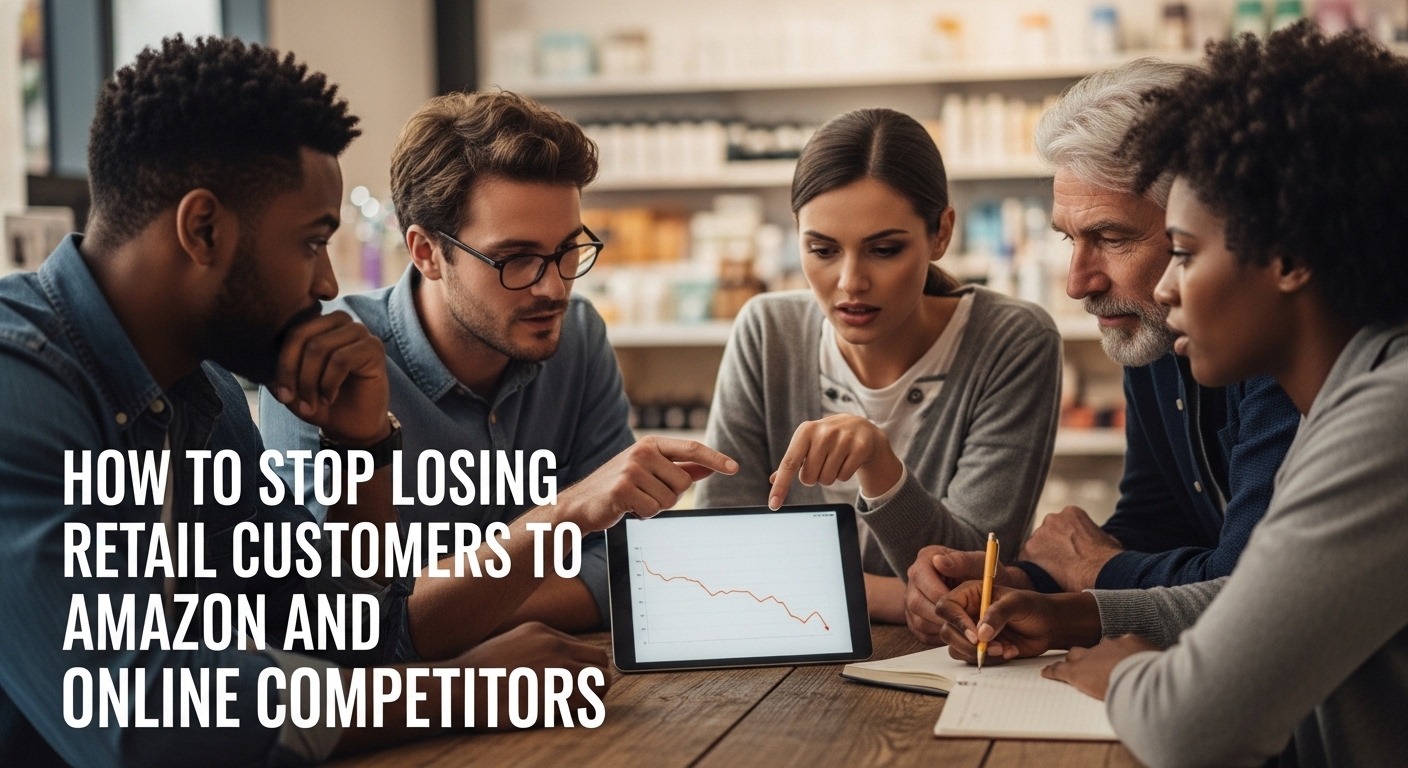
Every week, another small retailer closes its doors. The culprit is almost always the same: Amazon, Walmart.com, or a wave of online-only competitors who sell the same products faster, cheaper, and with a single click. If you own or manage a retail business — whether it’s a boutique clothing shop, a hardware store, a pet supply outlet, or a specialty food market — you’ve probably felt the pressure firsthand.
But here’s what the doom-and-gloom headlines miss: thousands of independent retailers are not just surviving — they’re thriving. And they’re doing it without turning into Amazon. They’re winning because they understand something crucial: the fight isn’t really about price or selection. It’s about connection, trust, and experience.
This guide lays out exactly how they do it — and how you can too.
1. Why Retailers Are Losing to Amazon — And It’s Not Price
Most retailers assume they’re losing because Amazon is cheaper. The data disagrees. According to a PwC Global Consumer Insights Survey, consumers rank convenience, speed, and trust above price when choosing where to shop online. Amazon wins on all three — not because of its prices, but because of its systems.
🔍 Why Shoppers Really Choose Amazon Over Local Retailers
The good news: you can replicate or even surpass every single one of these advantages in your own way — often at low cost — by thinking strategically rather than reactively.
2. The Real Data Behind the Retail Shift
Before you fix a problem, you need to understand it fully. Here’s the current state of retail in hard numbers:
The key insight from this data: people still want to shop locally. They just need a reason — and an easy path — to do it. Your job as a retailer is to provide both.
3. Win with In-Store Experience Amazon Can Never Replicate
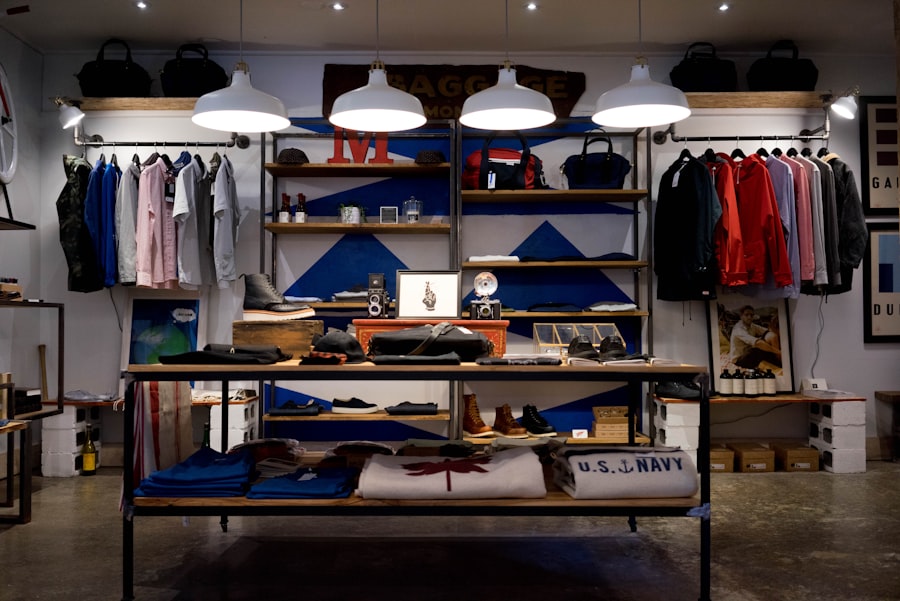
Amazon is a logistics machine. It cannot smile. It cannot answer a nuanced question. It cannot let you smell the candle before you buy it, try on the jacket, or taste the cheese. Experiential retail is your moat.
🎨 In-Store Events
Host workshops, tastings, demonstrations, or exclusive product launches. Events create community and free word-of-mouth marketing.
🙋 Expert Staff
Invest in training. Knowledgeable staff who genuinely help — not just transact — are your most powerful differentiator against any algorithm.
🛍️ Curated Selection
Don’t stock everything. Carry products you believe in, tell stories about them. Curation builds authority. Amazon’s 300M+ SKUs is overwhelming — yours should feel like a trusted recommendation.
🏪 Store Design
Create an environment people want to share on social media. Instagrammable stores generate organic reach worth thousands in paid ads.
“Retail is not dying. Boring retail is dying. Experience, story, and community are the new shelves.” — Doug Stephens, Retail Prophet
4. Build Unbreakable Customer Loyalty
Acquiring a new customer costs 5–7x more than retaining an existing one. Yet most struggling retailers focus almost entirely on attracting new shoppers rather than deepening relationships with current ones. That’s a costly mistake.
Tools like Smile.io, Yotpo, or even a simple punch card can turn a one-time buyer into a loyal customer who spends 67% more over their lifetime, according to Bain & Company research.
5. Dominate Local SEO and Google Discovery
When someone searches “hiking boots near me” or “best coffee shop in [your city]”, you want to be the first result. That’s the power of local SEO — and most small retailers completely ignore it.
Here’s the local SEO checklist every retailer needs to tick off:
- ✅ Claim & fully optimize your Google Business Profile — photos, hours, categories, Q&A
- ✅ Collect Google reviews consistently — ask every happy customer
- ✅ Keep NAP consistent (Name, Address, Phone) across all listings
- ✅ List on Yelp, Apple Maps, Bing Places and local directories
- ✅ Create locally-targeted content on your blog and website
- ✅ Add location-based keywords to your website title tags and meta descriptions

💡 Pro Tip: Post on Google Business Profile Weekly
Google Business Profile posts appear directly in search results and Google Maps. Share new arrivals, promotions, or events every week. Businesses that post weekly appear in 2.7x more searches than those that don’t, per Google’s own data.
7. Email & SMS Marketing: Your Highest-ROI Secret Weapon
Marketing Channel ROI Comparison
Social media algorithms limit your reach to roughly 2–5% of your followers. Email and SMS go directly to your customer — no algorithm in between. For retail, these channels are non-negotiable.
🚀 Email Campaign Ideas for Retailers
- Welcome series — Greet new subscribers with your story, best sellers, and a first-purchase discount
- Win-back campaigns — Re-engage customers who haven’t purchased in 60–90 days
- New arrivals newsletters — Weekly or bi-weekly showcase of what just came in
- VIP early access — Let loyal customers shop sales before the public
- Abandoned browse/cart — Remind shoppers what they were looking at with a gentle nudge
- Post-purchase follow-up — Ask for a review, offer related products, deepen the relationship
Platforms like Mailchimp, Klaviyo, or Omnisend make it possible to automate all of this — so it runs in the background while you focus on your store.
8. Own Your Niche — Don’t Try to Compete on Everything

Amazon sells everything to everyone. You cannot win that game. But you can win the game of being the definitive destination for a specific type of customer with a specific need.
A running store that offers personalized gait analysis and custom shoe fitting doesn’t just sell shoes — it sells confidence in performance. A wine shop with knowledgeable staff who know your taste profile and can recommend the perfect bottle isn’t just a store — it’s a trusted advisor.
Specialization builds trust. Trust builds loyalty. Loyalty builds revenue.
9. Go Omnichannel — Meet Customers Everywhere They Are
The future isn’t “online vs. offline.” It’s everywhere at once. Customers who engage with a brand across multiple channels have a 30% higher lifetime value, according to Salesforce research.
The Retail Omnichannel Ecosystem
The goal: seamless, consistent experience across ALL touchpoints
Start with a clean, fast-loading website with online ordering or click-and-collect. Add a Google Business Profile. Then layer in email. You don’t need everything at once — but you need a plan to grow your presence consistently across channels.
Stop Competing with Amazon.
Start Owning Your Market.
The Retail Marketing Course at Easy Marketing School gives you a step-by-step system to attract more customers, build lasting loyalty, and grow your sales — without slashing prices or burning out. Built specifically for retail business owners and managers.
🚀 Enroll in the Retail Marketing Course →
Join hundreds of retail owners already growing with these strategies
The Bottom Line: You Don’t Have to Lose to Amazon
Amazon will never go away. Online competition will never slow down. But here’s the truth: you don’t need to beat Amazon globally. You need to be the undeniable best choice for the customers in your market, in your niche, in your community.
The retailers who are winning right now are doing so by investing in experience, relationships, and smart marketing — not by racing to the bottom on price. They know their customers by name. They show up consistently in Google, on social media, and in the inbox. They give people a reason to choose them — and then they give those customers every reason to come back.
✅ Your Action Plan: Start This Week
- Audit your Google Business Profile — fill every field, add 10+ photos
- Email your customer list with a “Thank You” offer — reconnect immediately
- Ask 5 customers for a Google review this week
- Identify 1 event or workshop you can host next month
- Set up a simple loyalty punch card or digital rewards program
- Post 3 pieces of social content showing the human side of your store
- Define your niche clearly — and communicate it everywhere
Every strategy in this guide is learnable. Every tactic is achievable. The question isn’t whether you can compete — it’s whether you have the knowledge and system to do it efficiently. That’s exactly what structured retail marketing education provides.
#SmallBusiness
#LocalBusiness
#EcommerceTips

6. Use Social Media to Drive Foot Traffic
Social media isn’t just for brand awareness — it’s a direct driver of in-store visits when used strategically. The most effective social tactics for retailers aren’t the most obvious ones:
Instagram Reels
Behind-the-scenes, “new arrivals” walkthroughs, and staff picks get massive organic reach with almost zero cost
Facebook Groups
Create a local community group around your niche — not just your brand. Become the hub, not the store.
TikTok
Younger demographics, raw authentic content. “Day in the life of a shop owner” videos routinely go viral with zero ad spend.
Pinterest
Product discovery engine. Pins link directly to your store. Huge for home decor, fashion, food, craft and hobby retail.
Use tools like Buffer or Later to batch-schedule content so social media doesn’t take over your week. Consistency beats frequency — posting 3 times a week, every week, beats 21 posts in one week then silence.