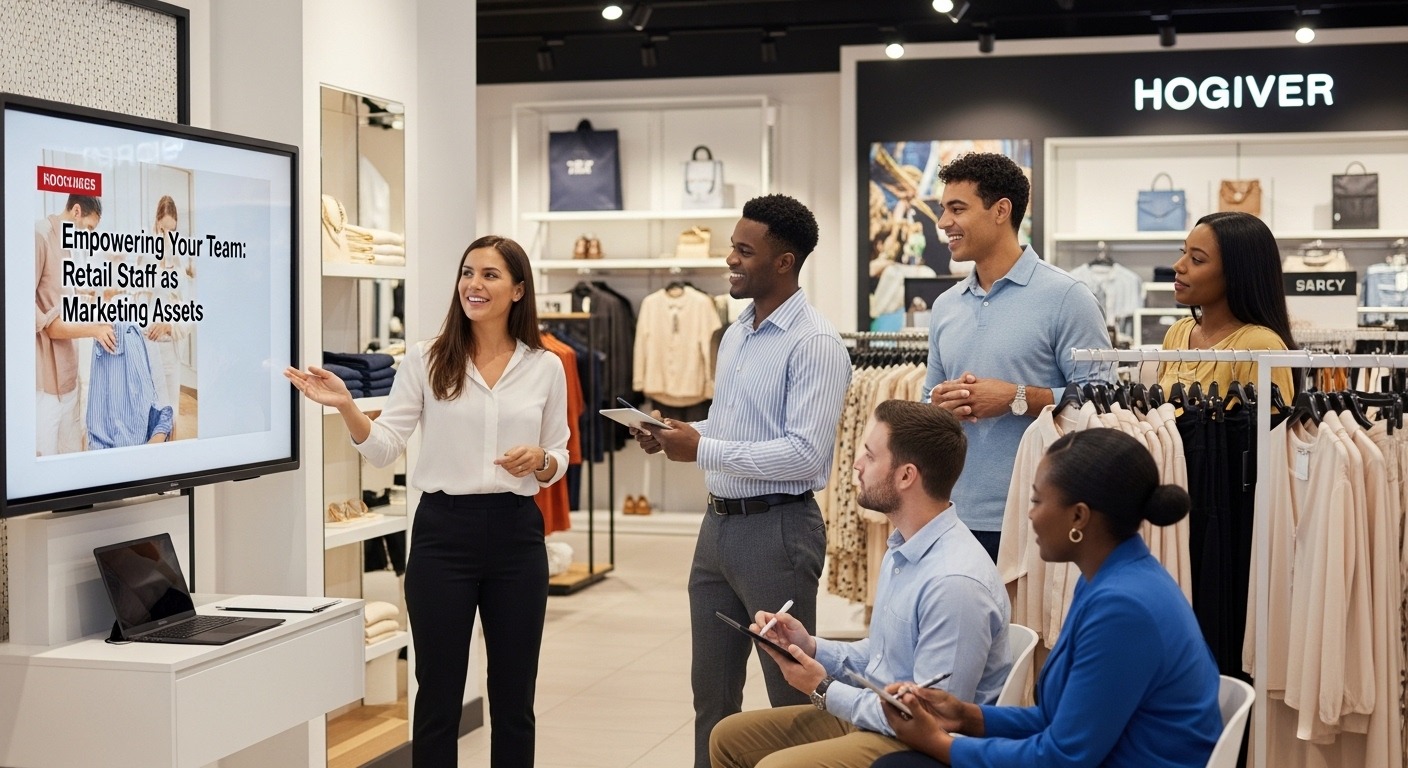
You can spend thousands on window displays, social media ads, and loyalty programs — but none of it matters if your staff are ignoring customers, giving wrong product information, or failing to communicate your brand’s story. Your retail floor staff are the single most powerful marketing tool you have. And most businesses never train them that way.
In this guide, we’ll walk through exactly how to train your retail team to become proactive brand ambassadors — people who boost sales, deepen customer loyalty, and reinforce your marketing message with every single interaction. Whether you manage a boutique, a chain, or a multi-location retail brand, these strategies will transform how your floor team operates.
📋 What You’ll Learn
- Why Your Staff ARE Your Marketing
- Teaching Your Brand Story and Values
- Deep Product Knowledge as a Marketing Tool
- Training Powerful Customer Conversations
- Upselling and Cross-Selling the Right Way
- Staff and Visual Merchandising Alignment
- Building Loyalty Through Staff Interactions
- Measuring Staff Marketing Performance
- Take It Further: Full Retail Marketing Training
1. Why Your Staff ARE Your Marketing
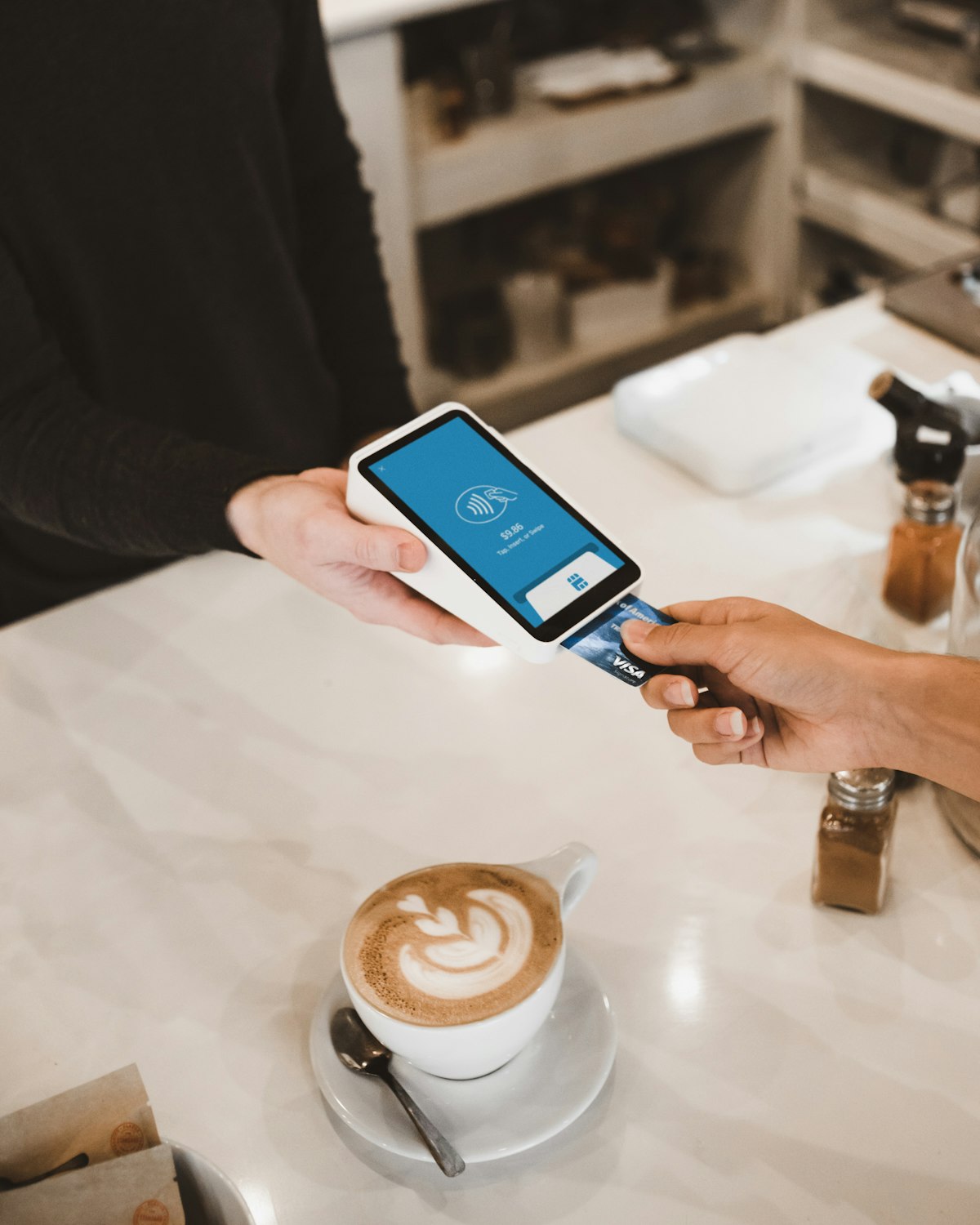
Think about the last time a brand truly won your loyalty. Chances are, a person was involved — not a banner ad, not a email campaign. Research by Salesforce consistently shows that 80% of customers say the experience a company provides is as important as its products. And in physical retail, that experience is almost entirely delivered by your staff.
The implication is clear: your floor staff are a direct revenue and marketing lever. They influence word-of-mouth, online reviews, repeat visits, and basket size. Yet most retailers train staff for compliance — not for marketing impact.
2. Teaching Your Brand Story and Values
Before your staff can market your brand, they need to understand it — deeply. Not just what you sell, but why you exist, who you serve, and what makes you meaningfully different. This is your brand foundation, and it should be the first thing every new hire learns.
🏗️ The 5 Brand Pillars Every Staff Member Should Know
A practical way to embed brand story in training is through “brand story sessions” — 30-minute onboarding workshops where new hires learn to tell the brand origin story in their own words. Role-play exercises where staff practice answering “What makes you different from [competitor]?” can be transformative. According to Harvard Business Review, staff who understand brand purpose perform measurably better in customer-facing roles.
3. Deep Product Knowledge as a Marketing Tool
Customers today arrive in-store having done research online. They expect your staff to know more than they do — or at least as much. Retail Dive studies show that knowledgeable staff drive up to 20% higher average order values. Product training is marketing — period.
| Training Level | What Staff Learn | Marketing Impact | Priority |
|---|---|---|---|
| Basic | SKU names, prices, categories, locations in store | Reduces friction, prevents frustration | Must-Have |
| Intermediate | Features, benefits, materials, use cases, comparisons | Builds trust, increases conversion rate | High Value |
| Advanced | Origin stories, sourcing, sustainability, competitor differences | Creates storytelling, emotional brand connection | Game-Changer |
| Expert | Customer lifestyle matching, problem-solving, personalized recs | Generates reviews, referrals, and brand advocacy | Ambassador |
The key to advancing staff through these levels is structured weekly product huddles — 10-minute briefings at the start of shifts where managers highlight one product’s story, use case, or differentiator. Over time, this compounds into deep institutional knowledge.
4. Training Powerful Customer Conversations
The way your staff greet, engage, and close conversations with customers is a direct expression of your brand marketing. Scripts kill authenticity — frameworks empower it. Instead of scripted lines, train staff on conversational frameworks they can adapt naturally.
The REACH Customer Conversation Framework
5. Upselling and Cross-Selling the Right Way
Upselling and cross-selling are not pushy tactics — they’re service, done right. When a staff member says “This pairs beautifully with the serum you just picked up,” they’re not pushing a product — they’re completing the customer’s vision. McKinsey research finds that well-trained upselling can increase revenue per transaction by 10–30%.
❌ Wrong Way (Salesy)
- “Do you want to buy anything else?”
- Recommending before understanding the need
- Promoting items that are on sale, not relevant
- Repeating the pitch after a polite “no”
- Following customers around the store
✅ Right Way (Helpful)
- “A lot of our customers also love X with this”
- Recommending only after identifying the need
- Connecting add-ons to the problem being solved
- Respecting a “no” and shifting to stellar service
- Giving space, checking in only once more
Train staff with monthly “perfect basket” challenges — identify which 3 products belong together and why. This builds habits of complementary thinking and makes staff more confident in natural recommendations.
6. Staff and Visual Merchandising Alignment
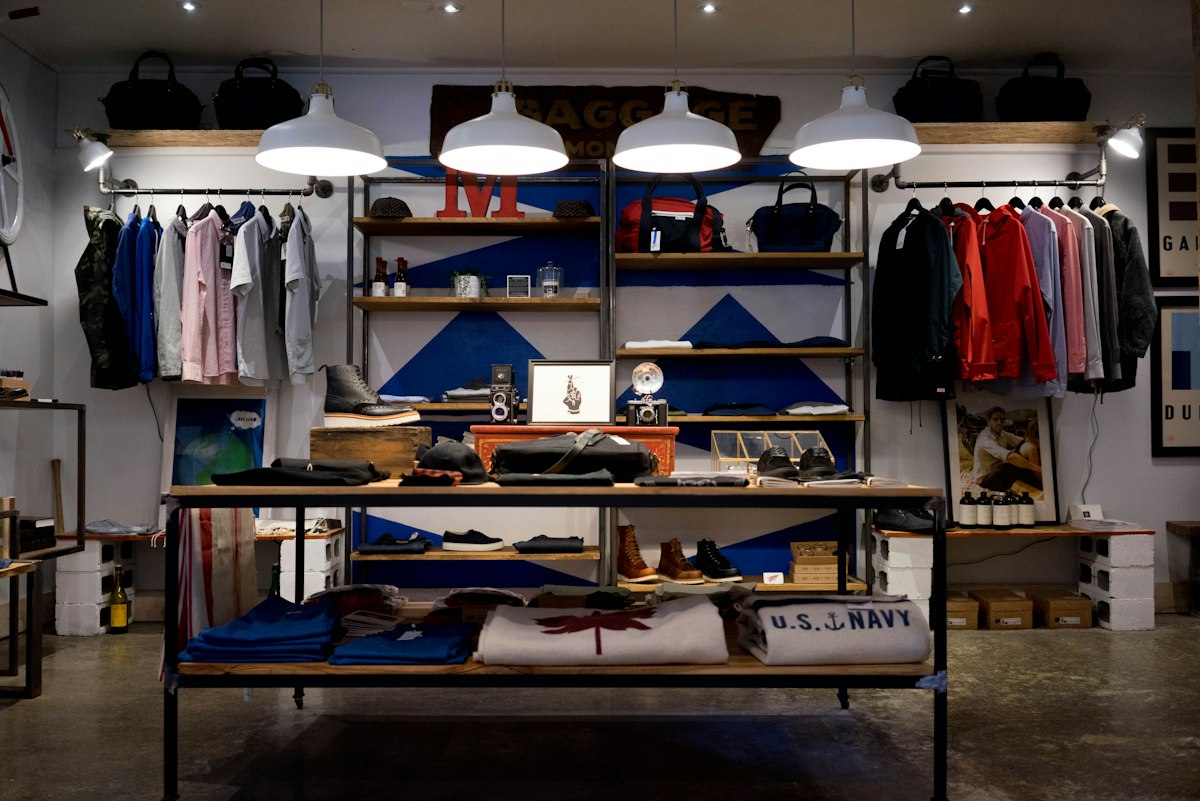
Visual merchandising and staff behavior must work in concert. When your window display promotes a seasonal story but your staff don’t know what it’s about, you’ve broken the marketing chain. Every display should have a matching staff talking point.
📌 Staff-Merchandising Alignment Checklist
7. Building Customer Loyalty Through Staff Interactions
Loyalty programs get talked about a lot — but the real loyalty driver in retail is human connection. Bain & Company’s research shows that customers who have emotionally positive in-store experiences are 3× more likely to return and spend 2× more over their lifetime.
Train staff to be micro-personalizers:
8. Measuring Staff Marketing Performance
You can’t improve what you don’t measure. Most retailers track sales numbers — but few track the marketing metrics that reveal staff effectiveness. Here’s the matrix that matters:
| Metric | What It Measures | How to Track | Frequency |
|---|---|---|---|
| Conversion Rate | % of browsers who buy | POS + foot traffic counter | Daily |
| Average Order Value | Upsell/cross-sell effectiveness | POS reports by staff | Weekly |
| Customer Return Rate | Loyalty driven by experience | Loyalty program / CRM | Monthly |
| Net Promoter Score | Word-of-mouth readiness | Post-purchase survey | Quarterly |
| Google Review Score | Public brand reputation signal | Google Business Profile | Weekly |
Share these metrics with your team transparently. Staff who see the numbers become invested in improving them. Monthly 15-minute team metric reviews — framed as “here’s how we’re doing as a team” — dramatically increase staff engagement with marketing goals. According to Gallup’s employee engagement research, engaged retail employees produce 17% higher productivity and 20% better sales outcomes.

The Bottom Line: Marketing Starts on the Floor
The most sophisticated marketing strategy in the world can be undone by a disengaged, untrained store associate. Conversely, a well-trained staff member — armed with brand knowledge, conversational skill, and genuine enthusiasm — can turn a casual browser into a lifelong customer with a single interaction.
The retailers who win in the modern market aren’t just the ones with the best products or the biggest ad budgets. They’re the ones who’ve invested in building a team that sells their brand with every breath. Start with the frameworks in this guide, track the metrics, and commit to ongoing training — and you’ll see the difference in every KPI that matters.
🎯 Key Takeaways
#StaffTraining
#CustomerExperience
#RetailStrategy