
Only 6% of shoppers always buy the same brand. The other 94% are making active decisions every time they shop — and 46% are regularly trying new brands. In today’s retail landscape, a first purchase is not a relationship. It’s a trial. And whether that trial becomes lifetime loyalty depends entirely on what happens next.
The retailers winning right now understand something fundamental: your most loyal customers are also your most effective marketers. Attentive’s 2025 Consumer Trends Report found that two-thirds of consumers recommend brands they love to friends and family — and 85% of shoppers say their purchases are influenced by those very recommendations. That’s a marketing flywheel money alone cannot buy.
This guide gives you a complete, stage-by-stage system for turning one-time retail buyers into genuine brand advocates — people who return, spend more, and bring others with them. Every strategy is backed by 2025 research and built for practical application.
The Brand Advocacy Opportunity — 2025 Research Snapshot
Sources: Attentive 2025 Consumer Trends Report · Shopify WOM Guide · Salsify 2025 Consumer Research · Wiser Review · BigCommerce
1. What Makes a Brand Advocate Different from a Loyal Customer
There’s a meaningful difference between a customer who comes back and a customer who brings others with them. Both are valuable — but only one is a growth engine.
| Characteristic | Repeat Customer | Brand Advocate ⭐ |
|---|---|---|
| Purchase behaviour | Buys regularly | Buys regularly AND recommends others |
| Price sensitivity | Motivated partly by deals | Buys at full price — 63% without waiting for sales |
| Switching risk | Will consider competitors | Defends and stays loyal under competitive pressure |
| Marketing value | Revenue from their own purchases | Revenue from their purchases + new customers they bring |
| Emotional connection | Satisfaction — “I like this store” | Identity — “This brand is part of who I am” |
| Online behaviour | May leave a review | Creates UGC, posts reviews, shares content unprompted |
Brand advocates are a fundamentally different customer tier — and they must be created intentionally. They don’t emerge automatically from satisfied customers. They emerge when retail brands engineer experiences, moments, and systems specifically designed to turn satisfaction into passionate identification with the brand.
2. The 5-Stage Advocacy Journey: From First Purchase to Evangelist
Brand advocacy doesn’t happen overnight. According to Shopify’s word-of-mouth marketing guide, it’s a progression through distinct psychological stages — and retailers can (and must) actively design for each one. On average, it takes 2.1 purchases before a product becomes a regular staple in a customer’s basket — so Stage 1 and Stage 2 are absolutely critical.
First-Time Buyer
First impression is everything. The customer is evaluating: was this worth it? Was it easy? Did it match expectations? The window to secure a second purchase starts here — before they’ve even left the checkout.
Post-Purchase Engagement
The post-purchase journey is where most retailers go quiet — and where most advocacy opportunities are squandered. Proactive communication, onboarding, and appreciation here turn satisfaction into genuine connection.
Community Member
The customer joins a tribe, not just a loyalty program. They participate in your community, engage on social media, attend events, and begin to see your brand as part of their identity. This is the pivotal stage where retention becomes organic.
Active Promoter
The customer starts creating UGC, leaving reviews, referring friends, and sharing experiences on social media — organically. They’ve moved beyond “I like this brand” to “I want others to know about this brand.” 39% report increased loyalty after making a referral.
Lifelong Brand Evangelist
The highest tier: customers who defend your brand, recruit others without being asked, and whose entire identity is partly shaped by being your customer. These are the customers driving sustainable, compounding growth.
3. Stage 1 — The First Impression: Making It Unforgettable
The first experience a customer has with your retail brand sets the emotional baseline for everything that follows. Salsify’s 2025 research shows that 54% of shoppers have abandoned a sale because product content wasn’t consistent across channels — and 71% have made a return because the product didn’t match the listing. Every inconsistency at this stage destroys future advocacy potential.
Packaging as a First Act
Unboxing has become a genuine cultural moment. Packaging that surprises, delights, or includes a personal note creates an emotional peak — the moment most likely to become a social share or recommendation to a friend.
Exceed the Promise, Not Just Meet It
87% of shoppers will pay more for a brand they trust. Trust starts when what you advertise matches what customers receive — or better, when reality exceeds the ad. Underpromise-and-overdeliver is not a cliché: it’s the mechanism of advocacy creation.
Speed as a Signal of Respect
Fast shipping, instant order confirmation, and rapid response to first-purchase questions all communicate one thing: you value this customer’s time. In a world of 1–2 day delivery expectations, speed is now a basic trust signal.
Friction-Free Returns
Counterintuitively, a seamless return experience is one of the strongest first-impression tools available. Customers who experience easy returns are more likely to make a second purchase and recommend the brand than customers who never needed to return anything at all.
In-Store: The Human Advantage
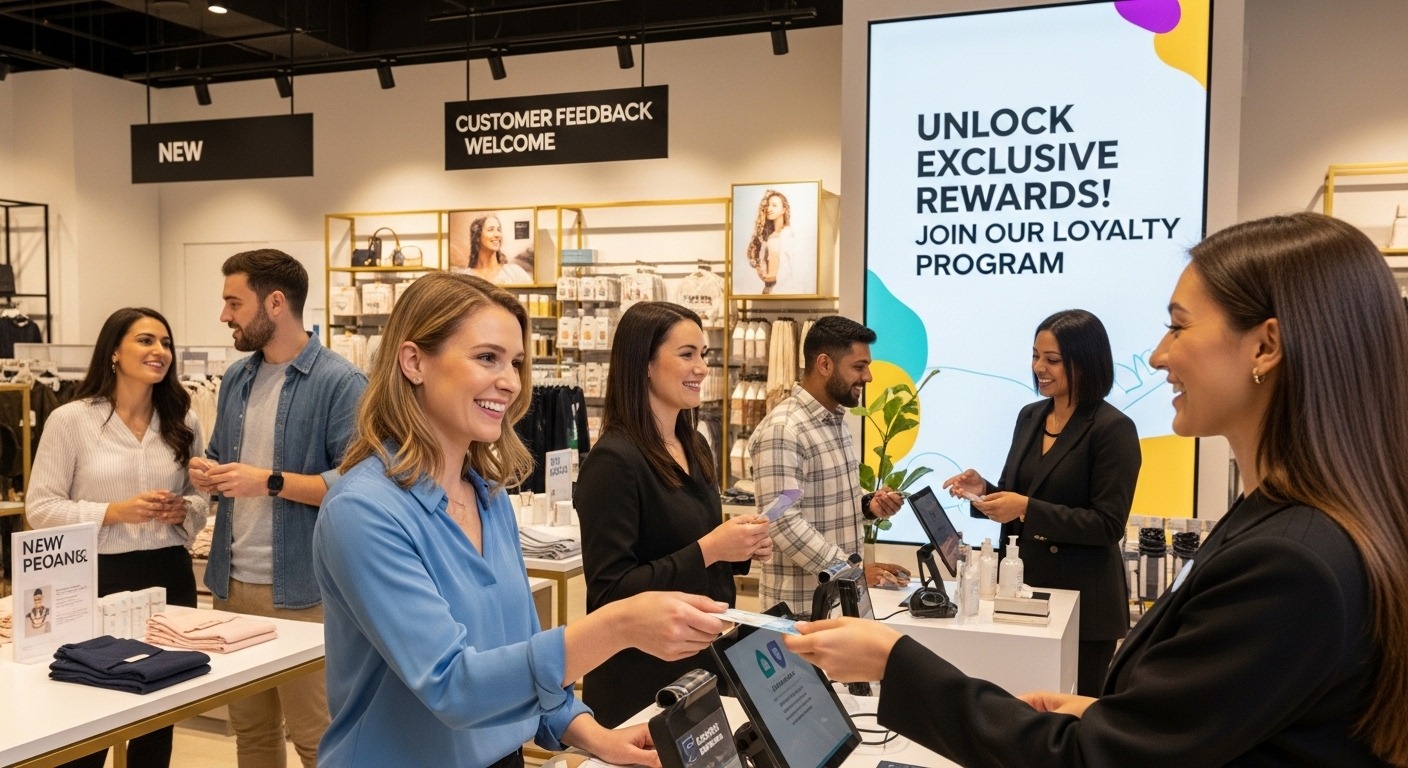
Physical retail’s greatest asset is the human interaction. A staff member who remembers a customer’s name, makes a genuine recommendation, or goes out of their way to help creates a story worth telling — and that story becomes your best marketing.
Omnichannel Consistency
58% of consumers are more likely to purchase when they receive the same messaging across channels. Shoppers who find different prices, descriptions, or service standards online versus in-store lose trust instantly — before advocacy has a chance to form.
4. Stage 2 — The Post-Purchase Window: Where Advocates Are Made or Lost

Most retail brands invest heavily in converting visitors to buyers — then go almost completely silent once the purchase is made. This is the single biggest missed opportunity in retail advocacy building. The 48–72 hours after purchase is when buyer’s confidence is either reinforced or eroded.
| Timing | Communication | Goal | Advocacy Impact |
|---|---|---|---|
| Immediately | Personalised order confirmation | Reduce post-purchase anxiety | Sets positive emotional tone |
| 24 hrs | Shipping update + “what to expect” guide | Build anticipation | Reduces returns and disappointment |
| Delivery day | “It’s arrived!” with how-to / setup tips | Maximise product success | Customers share success moments |
| Day 3–5 | Check-in: “How are you getting on?” | Catch issues before they fester | Turns potential detractors into fans |
| Day 7–10 | Review request + social share prompt | Generate social proof content | Creates the first act of advocacy |
| Day 14–21 | Personalised next product recommendation | Initiate second purchase | Converts trial into habit |
A personalised birthday email with a reward generates 342% higher revenue per email than a standard promotional message. The post-purchase sequence that includes milestone acknowledgements (first anniversary as a customer, 10th purchase) has similar impact on advocacy intent.
5. Stage 3 — Community & Belonging: The Deepest Loyalty Driver
Loyalty programs keep customers coming back. Community makes them bring their friends. Invesp’s 2025 WOMM research shows the fastest-growing advocacy happens in tight-knit online communities — Discord servers, Facebook groups, brand forums, and niche creator ecosystems. When customers feel they belong to something, their identity becomes entangled with the brand.
🏠 Community-Building Tactics That Create Advocates
Private sales previews, in-store experiences, product launch parties, or online AMAs with your founder. Events create memorable moments and belonging in one stroke — and 65% of Gen Z will recommend brands that give them experiences worth sharing.
Private Facebook groups, Discord servers, or app-based communities give your best customers a place to connect — with each other and your brand. 78% of social media users talk about brands they follow — give them a dedicated channel for it.
Feature your best customers in newsletters, social posts, or in-store displays. When people see themselves reflected in a brand’s story, they deepen their identification with it — and share that story with their own networks.
Invite loyal customers to vote on new products, name new SKUs, or test prototypes. When customers feel they helped build something, they champion it with a parent’s pride. This also generates priceless market research at zero cost.
65% of Gen Z consumers are more likely to buy from a brand that expresses values they agree with. Sustainable practices, community giving, and transparent supply chains are no longer differentiators — they’re trust prerequisites for younger demographics.
Challenges, streaks, leaderboards, and achievement badges build community participation through friendly competition. Brands incorporating gamification see a 47% rise in engagement and a 22% increase in loyalty — turning passive members into active participants.
6. Stage 4 — UGC & Referrals: Activating Your Customer Army
User-generated content (UGC) and structured referral programmes are where community feeling gets converted into measurable business results. Research from Wiser Review shows that UGC made 73% of online shoppers feel more confident in a product — and brand advocates are 55% more likely to influence purchasing decisions than regular customers.
A well-designed referral programme creates a self-reinforcing growth loop: advocacy → new customer → new advocate → more advocacy. Here’s what the data says drives the highest referral participation rates:
| Programme Element | Best Practice | Why It Works |
|---|---|---|
| Reward for both parties | Advocate gets £10; new customer gets 15% off | Removes the guilt of “selling to friends” |
| Trigger timing | Ask for referral at satisfaction peak (day 7–10) | Highest share rates occur immediately post-delight |
| Frictionless sharing | One-click share to WhatsApp, email, or link | Referral intent drops sharply with every extra step |
| Social proof integration | “Join 12,847 customers who referred a friend” | Normalises advocacy behaviour with peer validation |
| Progress visibility | Show “You’ve referred 2/5 friends — reward unlocks at 5” | Goal proximity effect drives completion |
7. Stage 5 — Word-of-Mouth at Scale: Systems That Sustain It
Individual acts of advocacy are valuable. Systematic word-of-mouth is transformational. Invesp’s 2025 research shows that in 2025, WOMM spreads through fragmented channels: private DMs, Discord servers, niche communities, and nano-influencer networks. Brands that only track visible social mentions are missing the majority of their advocacy activity.
📡 Where Word-of-Mouth Actually Happens in 2025
Private DMs
WhatsApp, iMessage — invisible but powerful
Review Platforms
95% of shoppers read reviews before buying
TikTok / Reels
87.7% of TikTok creators are nano-influencers
Facebook Groups
Niche communities drive category decisions
Discord / Reddit
Gen Z brand discovery increasingly happens here
Face-to-Face
50% of US consumers most influenced by F&F recommendations
Rather than investing in expensive celebrity partnerships, identify your most passionate existing customers who have even modest social followings (1,000–10,000 followers). Send them early access to new products, invite them to exclusive events, and let their authentic enthusiasm do the work.
The numbers support this strategy: Gen Z shoppers are 3.2× more likely to trust an authentic micro-influencer recommendation than a celebrity endorsement. Nano-influencers generate an average engagement rate of 10.3% — nearly triple that of megastars. And unlike paid influencers, your genuine advocates aren’t just another budget line — they’re friends recommending something they genuinely love.
8. How to Measure Brand Advocacy (And What to Do With the Data)
You can’t scale what you can’t measure. These are the six metrics that tell you where your advocacy engine is strong — and where it’s leaking:
| Metric | Definition | Target | Action If Low |
|---|---|---|---|
| Net Promoter Score (NPS) | % Promoters − % Detractors | > 50 = excellent | Survey detractors for root causes |
| Referral Conversion Rate | Referred visitors who purchase | 3–5× higher than cold traffic | Review landing page + offer value |
| UGC Volume | Brand mentions + tagged posts per month | Growing month-over-month | Add post-purchase share prompt |
| Review Rate | % of buyers leaving a review | > 15% of purchasers | Optimise review request timing |
| Repeat Purchase Rate | % of customers who buy 2+ times | > 40% within 12 months | Strengthen post-purchase sequence |
| Advocate CLV vs Non-Advocate | Revenue gap between advocates and average customers | Advocates 10× avg first purchase | Invest more in advocate identification |
9. Your 90-Day Brand Advocacy Action Plan
Use this 90-day sprint to build the foundations of your brand advocacy system. Each phase builds on the last — by the end, you’ll have a self-reinforcing loop running that turns new buyers into advocates without requiring constant manual effort.
The Final Truth About Brand Advocacy
Brand advocates are not born. They’re made — through intentional design, consistent delivery, and the kind of genuine human moments that mass-market advertising can never replicate. In a retail environment where only 6% of shoppers are brand-exclusive and 46% are actively trying new things, the brands that build advocate ecosystems are the ones that grow despite the noise.
The economics are compelling: word-of-mouth drives 5× more sales than paid advertising, with customer acquisition costs that are, by definition, near zero. Every satisfied customer who recommends your store is a free media channel with built-in credibility — a channel no budget allocation can match.
Start with Stage 1. Fix what happens in the first 48 hours after a purchase. From that foundation, build the community, referral, and UGC systems that will compound for years. The retailers who begin this work today are the ones their competitors will be trying to understand in three years.
Data-backed retail marketing education for store owners and marketing professionals. Sources verified June 2025.
Word of Mouth
Retail Marketing