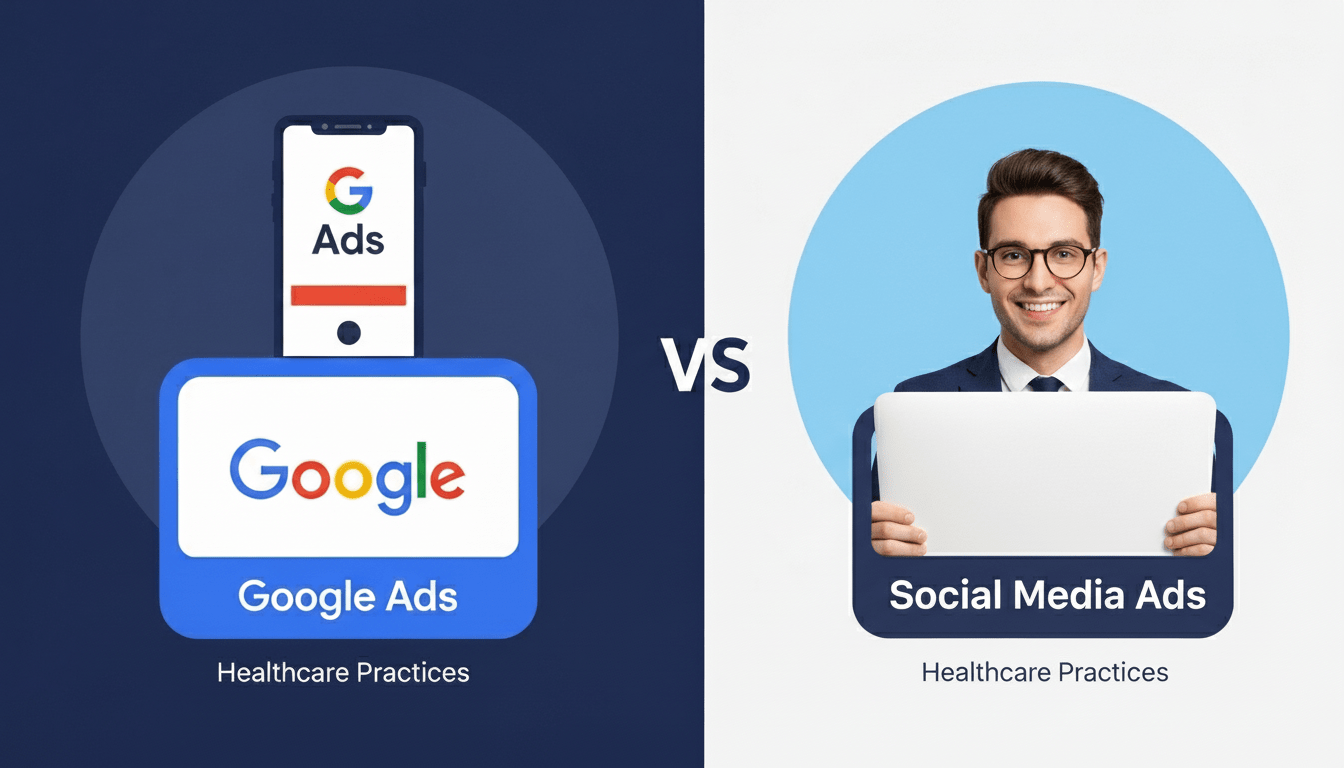
In 2026, the question isn’t which platform is better—it’s which one matches your patient’s intent.
Choosing where to spend your marketing budget is one of the most critical decisions a healthcare practice owner can make. In 2026, the digital landscape is split between High-Intent Search (Google Ads) and Disruptive Discovery (Social Media Ads like Facebook and Instagram). Both can drive growth, but they serve very different clinical goals.
According to recent 2026 healthcare advertising data, Google Ads still holds the crown for immediate appointment bookings, while Social Media leads the way in brand recall and patient education. Understanding the “Patient Psychology” behind each click is the secret to a profitable ROI.
1. Google Ads: The “I Need Help Now” Machine
Google Ads is built on Intent. When a patient searches for “emergency dentist near me” or “best cardiologist in [City],” they have an immediate need. They are looking for a solution, not a story. For practices that offer urgent care, surgical specialties, or high-demand diagnostics, Google Ads is often the most direct path to a new patient.
The Google Ads Advantage:
- Higher Conversion Rates: Users are actively looking to book an appointment.
- Keyword Precision: You only pay for clicks from people searching for your specific treatments.
- Local Map Dominance: Integrated with Google Business Profiles, these ads put you at the top of local maps.
The Patient Psychology Split
🔎
Google: Intent-Based
“I have a specific problem and I need a doctor to fix it today.”
📱
Social: Interest-Based
“I am interested in wellness/beauty and this clinic looks trustworthy.”
2. Social Media Ads: The “Trust & Awareness” Engine
Facebook and Instagram Ads work via Interruption. Patients aren’t searching for you; you are appearing in their feed. This is perfect for elective procedures (plastic surgery, LASIK, aesthetics) or lifestyle-based healthcare where patients need “nurturing” before they commit to a consultation.
| Feature | Google Ads | Social Media Ads |
|---|---|---|
| Primary Goal | Lead Generation | Awareness & Education |
| Cost Per Click | Higher ($5 – $50+) | Lower ($0.50 – $3.00) |
| Ideal Services | Urgent/Pain-Related | Elective/Preventative |
Master the Full Healthcare Growth Blueprint
Ads are only one part of the puzzle. To truly dominate your local market in 2026, you need an integrated strategy that connects Google Search, Social Authority, and Automated Patient Retention. Learn the frameworks used by the world’s most successful clinics.
3. The Compliance Factor: Google vs. Meta
Regardless of the platform, healthcare marketing must be HIPAA compliant. Google is often easier for medical compliance because it relies on keywords. Meta (Facebook/Instagram) is much stricter with its “Personal Health” policies—you cannot target people based on their medical conditions or imply you know their health status in the ad copy.
Failure to follow these rules in 2026 results in immediate account suspension. This is why many practices choose Google Ads for lead generation and use Social Media primarily for retargeting (showing ads to people who have already visited your website) or community building.
Final Thoughts: Which Should You Choose?
If you have a limited budget and need appointments this week, start with Google Ads. If you are building a long-term clinical brand and want to educate your community about elective services, invest in Social Media Ads. For the fastest growth, elite practices use a 70/30 split—spending the majority on high-intent search and the remainder on social awareness.
© 2026 Healthcare Ad Analytics. All rights reserved.