The grocery aisle is influencing the beauty aisle more than ever before.
The bridge between the kitchen and the bathroom vanity has never been shorter. Consumers who spend $15 on a cold-pressed green juice are the exact same demographic willing to spend $85 on a “Kale & Spinach Superfood Serum.”
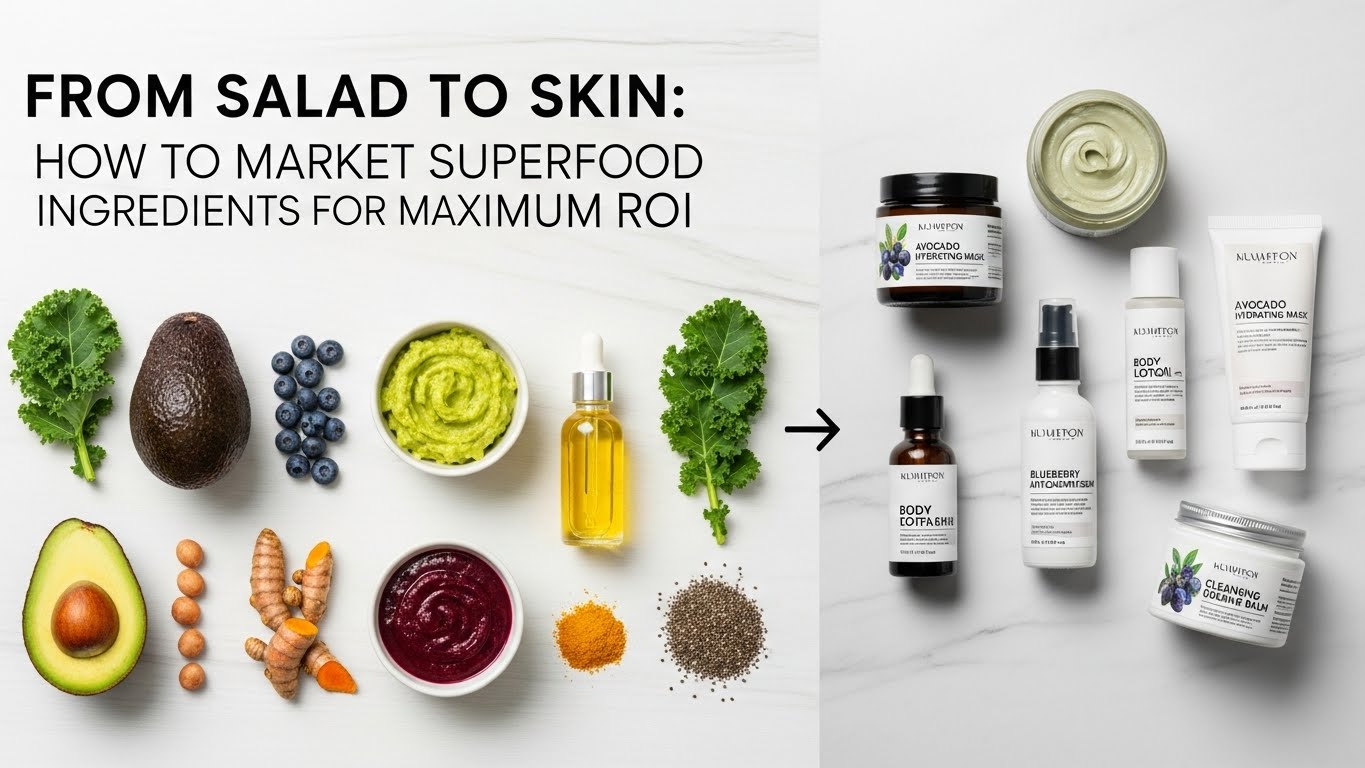
This is the “Salad to Skin” movement. For beauty founders, superfood ingredients offer a unique marketing advantage: Instant Familiarity. You don’t have to explain what a blueberry is; consumers already associate it with antioxidants and health.
However, relying on the ingredient name alone isn’t enough to guarantee a high Return on Investment (ROI). You need to translate that familiarity into a high-value skincare proposition. Here is how to market edible beauty effectively.
1. The Psychology of “Edible” Skincare
Why do superfoods convert so well? It comes down to cognitive fluency. Science-heavy ingredients like “Acetyl Hexapeptide-8” require education. “Pomegranate Seed Oil” requires zero explanation.
According to global beauty trends, consumers equate “dietary health” with “skin health.” If it is good for their gut, they assume it is good for their face. Your marketing copy should leverage this pre-existing belief.
2. Visual Storytelling for Cold-Pressed Ingredients
The challenge with processing superfoods into skincare is that the final product often looks like a clear or white liquid. You lose the visual cue of the original ingredient. To get maximum ROI, you must re-introduce the “raw” visual into your advertising.
Visual storytelling for cold-pressed ingredients requires a focus on vibrancy and extraction.
The “Juice Bar” Aesthetic
Treat your ad creative like a high-end juice commercial, not a clinical lab report.
- The Crush: Use slow-motion video of the ingredient (e.g., a raspberry) being crushed. This triggers a sensory response related to “freshness.”
- The Pigment Pop: Ensure color grading is saturated. If your star ingredient is Turmeric, the yellow in your ad should be electric, implying high potency.
- The Condensation: Show droplets of water on the raw ingredients. In the consumer’s mind, Wet = Fresh = Active. Dry ingredients imply stale formulations.
3. Positioning: The Superfood Upgrade
You cannot just say “We have Avocado.” You must explain why your Avocado is skincare-grade. This is the difference between a grocery item and a luxury beauty product.
Use a comparison approach in your content marketing to elevate the ingredient from “food” to “formula.”
| The Ingredient | The Grocery Perception | The Beauty Marketing Angle |
|---|---|---|
| Broccoli Seed Oil | Healthy side dish. | “Nature’s Retinol Alternative.” Focus on the Vitamin A content without the irritation. |
| Green Tea (Matcha) | Morning beverage. | “Pollution Shield.” Focus on EGCG antioxidants fighting city smog. |
| Chia Seed | Pudding ingredient. | “Hydration Lock.” Highlight the Omega-3 fatty acids for barrier repair. |
4. The “Freshness” Funnel
When marketing superfoods, your enemy is the perception of preservatives. How can something be “fresh” if it sits on a shelf for 12 months?
Your funnel needs to address stability. Explain the technology (e.g., cold-pressing, airless pumps, opaque glass) that keeps the “salad” fresh for the skin.
The Nutrient Retention Flow
Organic Farm
Cold Pressed (No Heat)
100% Potency
Highlighting the preservation of potency builds value.
Conclusion: Feed the Skin, Fuel the Sales
Superfood skincare is not a fad; it is a reflection of the modern wellness lifestyle. By using vibrant visual storytelling, leveraging the familiarity of ingredients, and validating the science behind the food, you can create a marketing recipe that consumers devour.
Hungry for Better Marketing Results?
Ingredients are just one part of the equation. To truly scale a beauty brand, you need a comprehensive strategy for acquisition, retention, and branding. Learn the system used by top founders.