The secret to surviving the “Race to the Bottom” and winning on value, not price.
Let’s be real: you are never going to win a price war against Amazon or the big-box giants. They have the scale; they have the shipping lanes; they have the bottomless budgets. If your only selling point is being the cheapest, you’re not building a business—you’re managing a countdown to burnout.
But here’s the good news: Customers don’t always want the cheapest option. They want the best option for their specific needs, their values, and their self-image. To survive in 2026, your retail store must transition from a “place that sells stuff” to a “brand people belong to.”
1. Solve a Problem, Don’t Just Sell a Product
Commodities are sold on price; solutions are sold on value. A cheaper alternative might provide the same physical object, but it rarely provides the same transformation.
According to research published in the Harvard Business Review, there are “Elements of Value” that go far beyond functional use. These include emotional benefits like “reducing anxiety” or “providing hope.” When you position your product as a solution to a specific lifestyle hurdle, price becomes secondary.
| Feature | The “Cheaper” Alternative | The “Premium” Retail Brand |
|---|---|---|
| Focus | Transaction & Volume | Relationship & Retention |
| Experience | Self-service / Generic | Curated / Personalized |
| Messaging | “Lowest price in town!” | “The right fit for your life.” |
Table 1: Key differentiators that justify premium pricing.
2. Curate, Don’t Just Stock
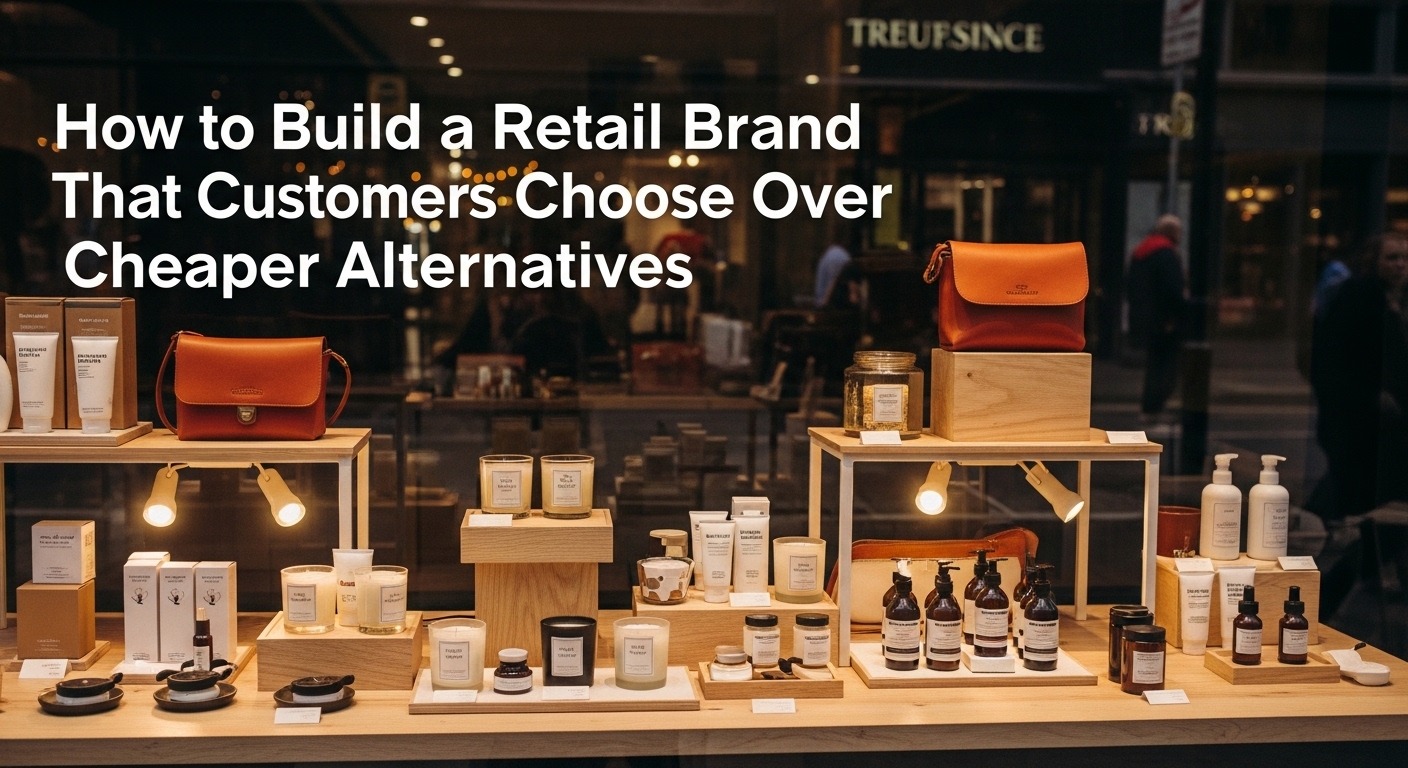
In an age of infinite choice, customers are suffering from “decision fatigue.” A cheaper alternative often offers a warehouse full of mediocre options. A Retail Brand offers a curated selection of the right options.
By narrowing your focus and becoming an expert in your niche, you provide a service that AI and algorithms struggle to replicate: Trust. When a customer knows you’ve done the hard work of vetting the quality for them, they are happy to pay a premium for the peace of mind.
Stop Fighting Over Cents. Start Building a Legacy.
Marketing is the difference between a shop that survives and a brand that thrives. Learn the exact frameworks used by high-end retailers to command higher prices and build fanatical loyalty.
3. Humanize Your Operations
Big-box retailers are faceless. They are logos and spreadsheets. You have a massive advantage: you are a human being.
Humanizing your brand means showing the people behind the counter, sharing your “why,” and being transparent about your sourcing. Forbes highlights that authenticity is the top driver for Millennial and Gen Z brand loyalty. When people feel like they are supporting a neighbor rather than a corporation, they aren’t looking for a coupon—they’re looking for a connection.
Final Thoughts
Competing on price is a race to zero. Competing on brand is a race to the top. By focusing on solving real problems, providing expert curation, and maintaining a human connection, you create a moat around your business that “cheaper alternatives” can never cross.
Remember: You don’t need everyone to buy from you. You just need the right people to value what you do.