In 2026, your customers don’t see “online” or “offline”—they just see your brand. Is your marketing keeping up?
The modern retail journey is no longer a straight line. A customer might see your Instagram ad while on the bus, browse your website during lunch, and finally walk into your physical store on Saturday to make the purchase. This is Omnichannel Retail, and it is the only way to survive in today’s market.
According to Shopify’s Retail Report, businesses with a strong omnichannel strategy retain an average of 89% of their customers. If your ads are only focused on “clicks” and ignoring “foot traffic,” you are missing half the picture. Here is how to bridge the gap.
1. Use Location-Based “Geo-Fencing”
The most powerful tool for driving in-store sales is geographic targeting. On platforms like Meta and Google, you can set a “radius” around your shop. But the secret is in the Call to Action (CTA).
Instead of just “Shop Now,” use “Get Directions” or “Check In-Store Availability.” This signals to the customer that you are a local solution to their immediate need. Research from Google Marketing Insights shows that 76% of people who search for something nearby on their smartphone visit a related business within a day.
The Hybrid Campaign Checklist
BOPIS Offers
“Buy Online, Pick Up In-Store” is the #1 bridge between digital and physical.
Inventory Sync
Connect your POS to your ads so you only show what’s actually in stock.
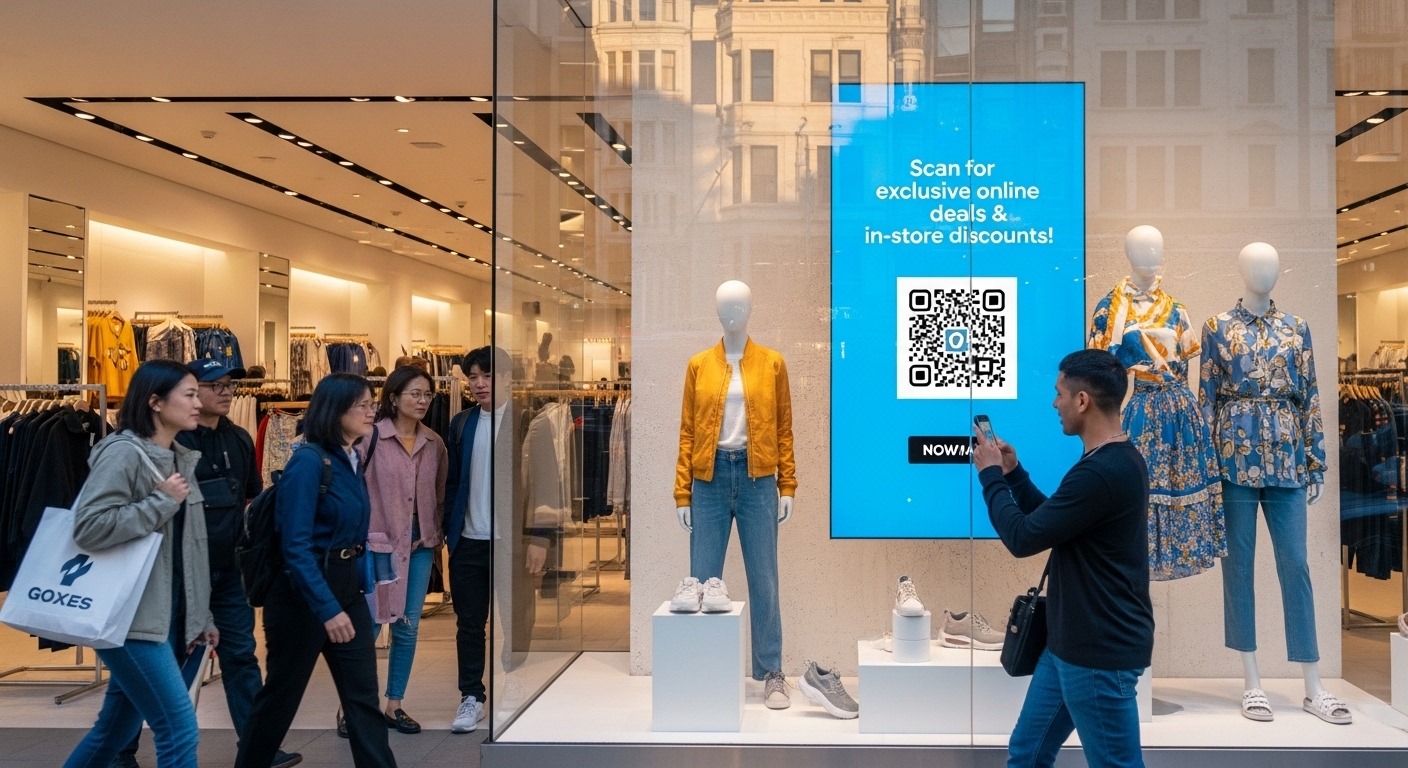
Mobile Coupons
Ads with scannable barcodes drive measurable in-store redemptions.
2. Sync Your Online and Offline Inventory
Nothing kills an omnichannel experience faster than a customer seeing an ad for a product, driving to your store, and finding out it’s sold out. By using Local Inventory Ads (LIA) through Google, you can display your real-time stock levels directly in the search results.
| Feature | Drives Online Sales By… | Drives In-Store Sales By… |
|---|---|---|
| Dynamic Ads | One-click “Buy Now” ease. | Showing “Available 2 miles away.” |
| User Reviews | Building digital trust. | Validating quality before the visit. |
| Video Reels | Showing product in use. | Showing the in-store “vibe.” |
Master the Future of Retail Marketing
Campaigns are just the surface. To truly win, you need a deep dive into retail psychology, advanced inventory management, and local SEO that dominates your market.
3. Tracking Success: The “Offline Conversion”
How do you prove your Facebook ad caused an in-store sale? In 2026, we use Offline Conversion Tracking. By uploading your daily POS sales data to your ad platform, the AI can match the customer’s email or phone number to the person who saw the ad.
This data is gold. It tells you which ads are actually ringing the cash register, allowing you to stop wasting budget on “empty clicks” and double down on the creative that drives real-world revenue.
Final Thoughts
Retail isn’t dead—boring retail is. By creating a seamless loop between your digital presence and your physical storefront, you offer a convenience that giant e-commerce marketplaces can’t match. Start by geo-fencing your best sellers today and watch your foot traffic transform.
© 2026 Retail Excellence Insights. All rights reserved.