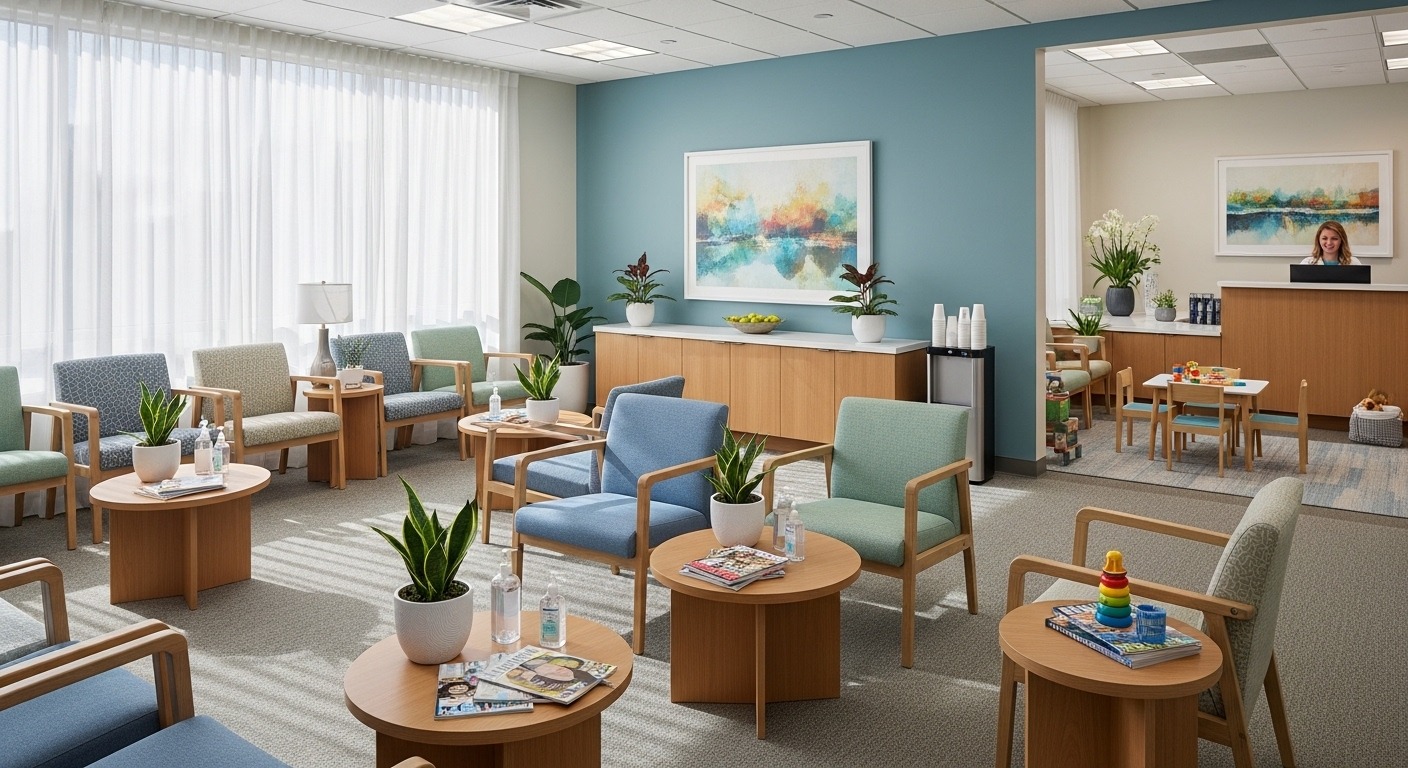
Your patient’s clinical outcome begins the moment they sit down. Is your environment healing or hindering?
In 2026, the “waiting room” is no longer just a holding pen; it is the physical manifestation of your brand’s empathy. For many patients, the time spent in your reception area is the peak of their appointment anxiety. If your space feels clinical, cold, or cluttered, you are inadvertently signaling that the patient is just a number.
According to Statista, environmental factors in healthcare contribute to over 60% of a patient’s initial “trust rating” of a provider. By applying evidence-based design (EBD), you can transform this space into a powerful marketing tool that speaks to your expertise and care before you even say hello.
1. The Biophilic Advantage: Bringing Nature Indoors
Biophilic design—the integration of natural elements—is one of the most effective ways to lower cortisol levels. Studies have shown that even a view of greenery can reduce perceived pain and heart rate.
Low-Cost Design Wins:
- Living Walls: Potted plants or moss walls improve air quality and provide visual “softness.”
- Natural Light: Prioritize window seating. If your space is windowless, use circadian-rhythm lighting that mimics natural day-to-night cycles.
- Organic Textures: Replace cold plastic and chrome with wood finishes and textured fabrics.
Anatomy of a High-Trust Waiting Area
Seating Clusters
Avoid “bus station” rows. Group chairs for privacy and family comfort.
Color Psychology
Use muted blues, soft greens, or warm ochres to stabilize mood.
Sensory Zones
A clean beverage station and soft acoustic baffling to dampen noise.
2. Digital Transparency: Reducing “Wait Time” Anxiety
Psychologically, an unexplained wait feels much longer than an explained one. Use your waiting room design to keep patients informed. This builds clinical authority and respect for the patient’s time.
| Traditional Design | Patient Feeling | The Modern Alternative |
|---|---|---|
| Daytime TV (News/Adverts) | Anxiety / Agitation | Digital “Wait-Time” Displays |
| High Reception Counter | Barrier / Intimidation | Lowered “Concierge” Desks |
| Fluorescent Lighting | Clinical Fear | Warm, Indirect LEDs |
Scale Your Practice with Authority & Empathy
Designing the physical space is just one part of a world-class patient experience. To truly dominate your market, you need a full-funnel strategy that connects your clinical environment with high-authority Local SEO and automated reputation management. Learn the exact frameworks used by elite medical brands.
3. Building Trust Through Educational Displays
Instead of pharmaceutical pamphlets or celebrity gossip magazines, use your walls to showcase your E-E-A-T (Experience, Expertise, Authoritativeness, and Trustworthiness). Display clear, easy-to-read infographics about your services, doctor biographies, and community involvement.
Following Google’s Business Profile quality standards, consistent branding and clear communication in your physical office often mirror your online authority. When a patient sees a professional, educational environment, they are more likely to engage with your digital content and leave positive feedback.
Final Thoughts
Your waiting room is the “pre-op” for your clinical relationship. By focusing on biophilic elements, digital transparency, and calming sensory inputs, you don’t just reduce anxiety—you build a practice that patients recommend to their families and friends. Remember: a relaxed patient is a more compliant and satisfied patient.
© 2026 Modern Healthcare Design Academy. All rights reserved.