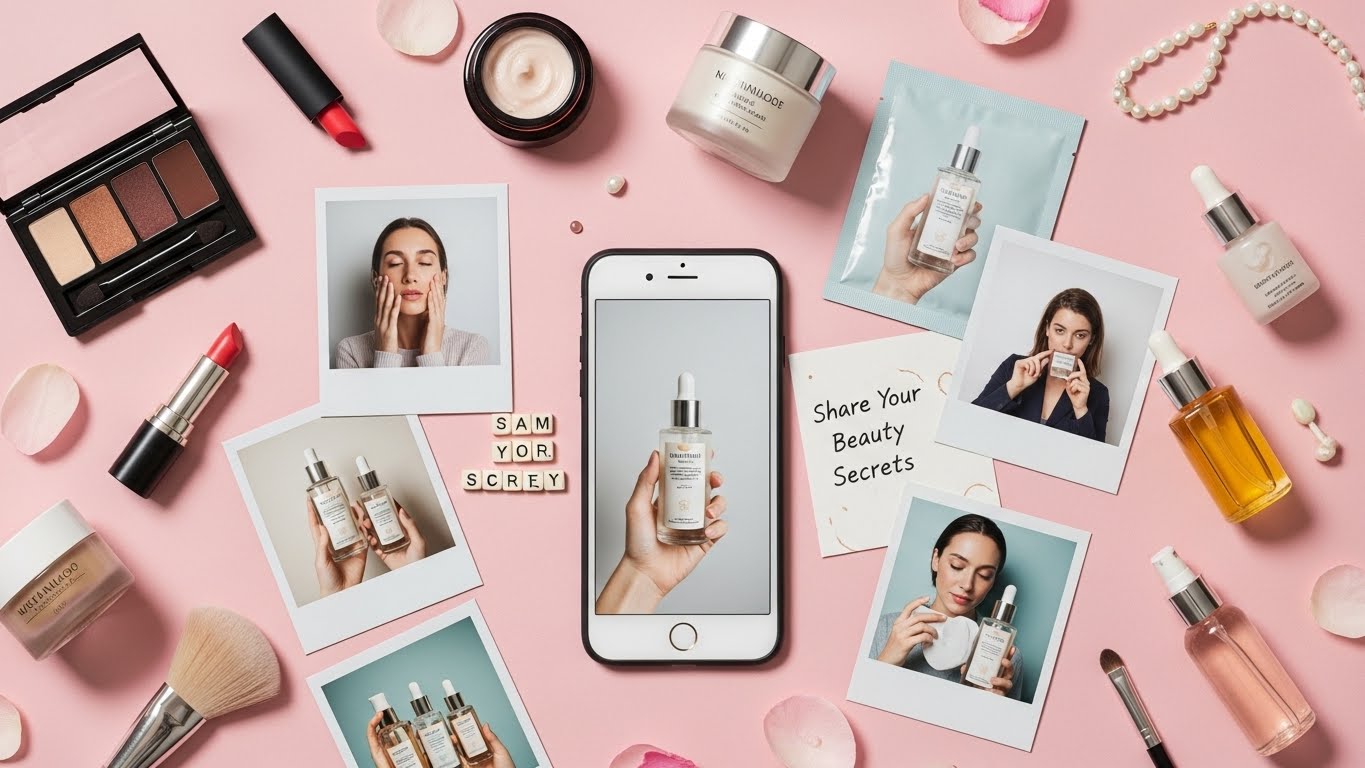
Your beauty brand’s most powerful marketing asset isn’t celebrity endorsements or professionally produced ads. It’s the authentic content your actual customers create when they genuinely love your products. User-generated content (UGC) converts 4.5 times better than brand-created content and costs a fraction of traditional marketing campaigns.
Yet most beauty brands struggle to generate consistent UGC. They watch competitors’ customers enthusiastically posting makeup tutorials, skincare routines, and glowing reviews while their own social feeds remain frustratingly quiet. The assumption? Those other brands must be spending thousands on influencer partnerships or running expensive contests.
The truth is simpler: the brands winning at UGC have mastered the psychology of what motivates customers to share—and built systems that make sharing irresistible, easy, and rewarding without massive budgets. Here’s exactly how to turn your customers into content creators who amplify your beauty brand organically.
Why User-Generated Content Matters More in Beauty Than Most Industries
Beauty products are inherently visual, experiential, and personal. Customers want to see real results on real people before investing in new skincare or cosmetics. A professional model wearing your lipstick is aspirational, but your customer’s friend showing how that exact shade looks on her lips is actionable information that drives purchases.
The trust factor UGC provides:
Ninety-two percent of consumers trust recommendations from real people over brand messaging. When someone posts their honest review, unfiltered selfie using your products, or tutorial showing application techniques, they’re providing social proof that no advertising budget can buy.
This trust translates directly to conversions. Potential customers scrolling through UGC see people with similar skin tones, ages, concerns, and styles using your products successfully. That identification removes purchase hesitation more effectively than any celebrity endorsement featuring someone they could never relate to.
The content volume challenge:
Creating enough fresh content to maintain active social media presence demands enormous resources. Professional photoshoots cost thousands of dollars and produce finite content that eventually feels repetitive. User-generated content provides an endless stream of diverse, authentic visuals showcasing your products in real-world contexts you could never stage.
Beauty brands that successfully encourage UGC essentially crowdsource their content marketing, receiving dozens or hundreds of unique posts weekly without producing any of it themselves. This scalability is impossible through traditional content creation alone.

Understanding What Motivates Customers to Create Content
Before implementing tactics, understand the psychological motivations driving people to post about beauty products publicly. Nobody shares content randomly—there’s always an underlying reason.
The primary motivations behind sharing:
People share to express their identity and personal style, positioning themselves as knowledgeable about beauty or trendsetters discovering new products. They share to be helpful, wanting friends and followers to know about products that solved their problems. Many share to participate in community, feeling connected to brands and other customers who share their interests.
Some are motivated by recognition, wanting acknowledgment from brands they admire. Others seek validation through likes, comments, and engagement their posts receive. And yes, some are motivated by rewards—but this is often the weakest motivator when the other factors aren’t present.
Your UGC strategy should trigger multiple motivations simultaneously. A customer who posts because she genuinely loves your product, wants to help others with similar skin concerns, AND might get featured on your brand’s Instagram is far more likely to share than someone motivated solely by entering a contest.
Creating Share-Worthy Products and Experiences First
No marketing tactic can generate authentic enthusiasm for mediocre products. The foundation of successful UGC is creating beauty products and customer experiences worth talking about.
Product quality as prerequisite:
This seems obvious, yet many brands focus on UGC tactics while overlooking that their products simply don’t inspire enthusiasm. Exceptional formulations, unique packaging, impressive results, or innovative approaches give customers something genuinely worth sharing.
Ask yourself: would someone naturally want to post about this product without any incentive? If not, improve the product or find its true fans rather than trying to manufacture enthusiasm that doesn’t exist.
The unboxing experience matters:
Beauty customers love sharing unboxing moments, but only when there’s something special to show. Thoughtful packaging design, surprise samples, handwritten thank-you notes, or unique branded elements transform mundane package opening into shareable content moments.
This doesn’t require luxury budgets. Even small touches like tissue paper in your brand colors, a sticker customers can use, or eco-friendly packaging worth mentioning can differentiate your unboxing experience enough to inspire posts. The key is creating visual and emotional moments that feel special beyond just receiving the product.
Results that surprise and delight:
Products delivering unexpected results naturally inspire sharing. A serum that visibly reduces dark circles within days, a foundation with shade matching so perfect customers can’t believe it, or a cleanser with such a unique texture people want to show friends—these exceptional experiences generate organic UGC without prompting.
Focus on product excellence in areas that matter most to your target customer. If your audience cares about clean ingredients, your certification badges and ingredient transparency become share-worthy. If they prioritize performance, dramatic before-and-after results inspire posts.
Low-Cost Strategies to Encourage More Customer Content
Once you have products worth sharing, implement strategic systems that make creating and sharing content easy, rewarding, and aligned with customer motivations.
Branded hashtags done right:
Create a memorable, unique branded hashtag for customers to use when posting about your products. The hashtag should be short, easy to spell, and ideally incorporate your brand name. Generic hashtags like #beautylover get lost in millions of posts, while a specific branded tag like #GlowWithBrandName creates a searchable collection of all customer content.
Prominently display your hashtag on packaging, product inserts, your website, email signatures, and all your own social posts. The more visible and repeated it is, the more customers remember to use it. Consider printing it directly on products or mirrors if contextually appropriate.
Most importantly, actively monitor and engage with your branded hashtag. Like, comment on, and reshare posts using it. Customers who receive acknowledgment are exponentially more likely to post again, and their followers see that your brand notices and appreciates customer content.
Feature customers regularly and prominently:
Create consistent features showcasing customer content on your social channels. “Customer Spotlight Fridays,” reposting user photos to your Instagram feed, or dedicating Instagram Story highlights to customer reviews and tutorials all signal that you value and amplify customer voices.
When featuring customer content, always tag the original creator, ask permission for reposting, and provide genuine compliments about what you love about their post. This recognition is often more motivating than monetary rewards, especially when you have a meaningful following.
Rotate featured customers rather than repeatedly highlighting the same people. When diverse customers see themselves represented—different ages, skin tones, styles, and experience levels—more people feel their content could be featured too, motivating participation.
Simple, ongoing engagement prompts:
Instead of elaborate contests, use simple questions and prompts in your social posts and emails that naturally encourage response. Post a new lipstick shade and ask “How would you style this color?” Show your skincare routine products and prompt “What’s your evening routine?” Share a customer photo and ask “Who else loves this look?”
These casual engagement invitations feel conversational rather than promotional. Customers respond because they enjoy participating in the discussion, not because they’re explicitly creating marketing content for you. Yet every response is potential UGC you can reshare with permission.
Create fill-in-the-blank or tag-a-friend prompts that encourage participation. “My go-to beauty product for confidence is ___” or “Tag someone who needs to try this mascara” generate engagement while creating opportunities for customers to mention your products organically.
Make sharing physically easy:
Remove every possible friction point in the content creation and sharing process. Include a small mirror or instruction card with products specifically for customers to photograph their results or application. Print your social handles and hashtags on packaging exactly where customers will see them when using products.
Send post-purchase emails with sample social captions customers can customize and use, quality product photos they can share if they didn’t take their own, and direct links to tag your brand on different platforms. The easier you make it, the more people will do it.
For skincare brands, create templated before-and-after photo layouts customers can use. For makeup brands, offer filters or frames in your brand aesthetic. These tools help customers create more polished content they feel proud sharing while reinforcing your visual branding.
Strategic Incentive Programs That Work Without Breaking the Bank
While authentic enthusiasm drives the best UGC, strategic rewards can increase volume and consistency without requiring massive budgets.
Points and loyalty program integration:
Award loyalty points for sharing content, writing reviews, or tagging your brand in posts. This transforms one-time purchasers into engaged community members who benefit from continued interaction. Points systems feel like appreciation for participation rather than payment for content, maintaining authenticity while providing tangible rewards.
The key is making points valuable enough to motivate but not so generous that content creation becomes purely transactional. Twenty-five to fifty points worth $1-2 toward future purchases for sharing content strikes an effective balance for most beauty brands.
Automatically award points when customers complete actions rather than requiring manual submission. Integration with platforms that detect when customers tag you or use your hashtag makes participation seamless and rewards immediate.
Tiered recognition programs:
Create VIP tiers for customers based on engagement level—bronze for occasional sharers, silver for regular contributors, gold for consistent brand advocates. Each tier offers progressively better perks like early access to new products, exclusive discounts, or input on product development.
This gamification motivates continued participation as customers work toward higher tiers. The non-monetary perks like early access or insider status often matter more than discounts to engaged beauty enthusiasts who want to feel like true insiders.
Publicly recognize tier achievements by featuring these VIP customers more prominently, creating special badges or titles they can display, or inviting them to exclusive virtual events. Recognition satisfies the status motivation that drives many engaged customers.
Product seeding for micro-advocates:
Instead of paying mega-influencers, identify your most engaged existing customers who consistently create quality content and send them new products to try. These micro-advocates already love your brand and will share honest reviews with their followers who trust their recommendations.
This costs only the product value plus shipping—typically $20-50 per person—yet generates authentic content from trusted voices. Unlike paid influencer partnerships that audiences recognize as advertisements, content from real customers who happen to receive PR feels more genuine.
Select diverse micro-advocates representing your full customer base so their content resonates with different segments of your audience. Avoid only choosing customers with large followings—someone with 500 engaged followers in your target demographic often delivers better ROI than someone with 10,000 disengaged followers.
Contests with attainable participation:
Design contests where simply participating feels achievable and enjoyable, not like work. “Show us your summer glow using our products” with a simple photo submission is far more accessible than “Create a full tutorial video with specific editing requirements.”
Offer multiple smaller prizes rather than one grand prize. Ten winners receiving $50 product bundles generates more participation than one winner receiving a $500 prize because perceived chances of winning feel higher. More winners also means more people excited to share their winning announcement, amplifying your reach.
Run shorter, more frequent contests rather than major quarterly campaigns. Monthly themes keep content flowing consistently and give more customers opportunities to win, maintaining ongoing engagement rather than spikes followed by silence.
Leveraging Different Content Types Strategically
Not all UGC serves the same purpose. Understanding different content types helps you encourage the specific content your marketing needs most.
Reviews and testimonials for conversion:
Written reviews with star ratings directly impact purchase decisions, especially for new product launches or when targeting customers unfamiliar with your brand. Actively encourage reviews by sending post-purchase emails specifically requesting feedback with direct links to review platforms.
Offer small incentives like loyalty points or entry into monthly drawings for verified reviews. This increases review volume without compromising authenticity since customers still write honest opinions and the incentive isn’t conditional on positive reviews.
Feature compelling reviews throughout your marketing—on product pages, in email campaigns, in social posts, even in ads. When customers see their words featured prominently, they feel valued and are more likely to leave future reviews.
Photos for social proof and visual content:
Customer photos showing real people using your products provide the social proof and relatable imagery that drives social media conversions. Encourage photo sharing by creating specific moments worth photographing—beautiful packaging, interesting textures, dramatic results, or unique application tools.
Make your products Instagram-worthy through thoughtful design and branding. Aesthetically pleasing packaging that photographs well naturally generates more customer content without any prompting required.
Create photo challenges or themes that give customers creative direction. “Show us your boldest lip look” or “Share your minimalist skincare shelfie” provides inspiration while still allowing personal interpretation and creativity.
Tutorials and educational content:
How-to content from experienced customers helps newer users while showcasing product versatility. Encourage tutorials by asking questions like “How do you use our eyeshadow palette?” or “What’s your technique for flawless foundation application?”
This content serves double duty—entertaining and engaging current followers while educating potential customers about proper product use. Complex products particularly benefit from customer tutorials showing various application methods and results.
Feature standout tutorials prominently and consider creating a dedicated section on your website or YouTube channel for customer tutorials. This curated collection becomes a valuable resource that also motivates more customers to contribute their expertise.
Building Systems for Long-Term UGC Success
Sporadic UGC campaigns generate temporary content spikes followed by silence. Sustainable UGC requires systematic approaches that make content creation a natural, ongoing part of your customer experience.
Integrate UGC into your marketing calendar:
Plan specific UGC themes, prompts, or focuses for each month that align with your broader marketing calendar. If launching a new product line in March, begin encouraging sneak peek speculation in February. If running a summer campaign, prompt customers to share their warm-weather routines starting in May.
This strategic alignment ensures you’re consistently generating relevant content that supports current business priorities rather than random disconnected posts.
Train your team on UGC engagement:
Every team member who interacts with customers should understand the importance of encouraging and acknowledging UGC. Customer service representatives can thank customers and mention you’d love to see photos of their results. Social media managers should actively seek out untagged content and engage with it.
Create response templates and guidelines so engagement feels consistent and authentic across team members. Customers should receive similarly enthusiastic responses whether they interact with different staff members.
Measure and optimize continuously:
Track which prompts, incentives, and content types generate the most customer participation and highest quality content. Monitor not just volume but engagement rates—content that generates strong reactions from your audience holds more marketing value than content that’s ignored.
Survey customers who frequently create content and those who never do to understand what motivates or prevents participation. Use these insights to refine your approach over time.
Mastering Beauty Brand Social Media Strategy
Encouraging consistent, high-quality user-generated content requires understanding customer psychology, creating share-worthy experiences, implementing strategic systems, and continuously engaging with your community. It’s not about big budgets—it’s about building genuine relationships with customers who become authentic advocates.
For beauty brand owners ready to transform their social media presence through strategic UGC programs and comprehensive social marketing strategies, specialized education accelerates results. The Beauty Marketing Course teaches proven techniques for generating customer content, building engaged communities, and leveraging social media to grow your beauty business without massive advertising budgets.
Start Building Your UGC Engine Today
You don’t need to implement every strategy immediately. Start by selecting one or two approaches that align best with your current resources and customer base. If you’re just beginning, start with a branded hashtag and commit to featuring customer content weekly. If you already have some UGC, implement a simple loyalty program that rewards continued participation.
Audit your current customer experience for share-worthy moments. Does your packaging inspire unboxing posts? Do your products deliver results dramatic enough to photograph? Are you making it physically easy for customers to tag you and share? Identify and improve the friction points preventing customers from naturally sharing.
Most importantly, genuinely engage with the content customers already create. Search for untagged mentions of your brand, comment authentically on customer posts, and celebrate people who share their experiences with your products. This engagement costs nothing but builds relationships that multiply your content exponentially.
The beauty brands dominating social media aren’t outspending competitors—they’re out-engaging them through authentic relationships that inspire customers to become voluntary brand ambassadors. Your products are already changing your customers’ lives. Now it’s time to help them share those transformations with the world, creating a virtuous cycle where customer content attracts new customers who create more content.
Start treating your customers like the powerful marketing partners they are, and watch your social presence transform from broadcasting into genuine conversation that drives awareness, trust, and sales far beyond what any paid campaign could achieve.