Stop reacting and start dominating. Here is your blueprint for a high-profit retail year in 2026.
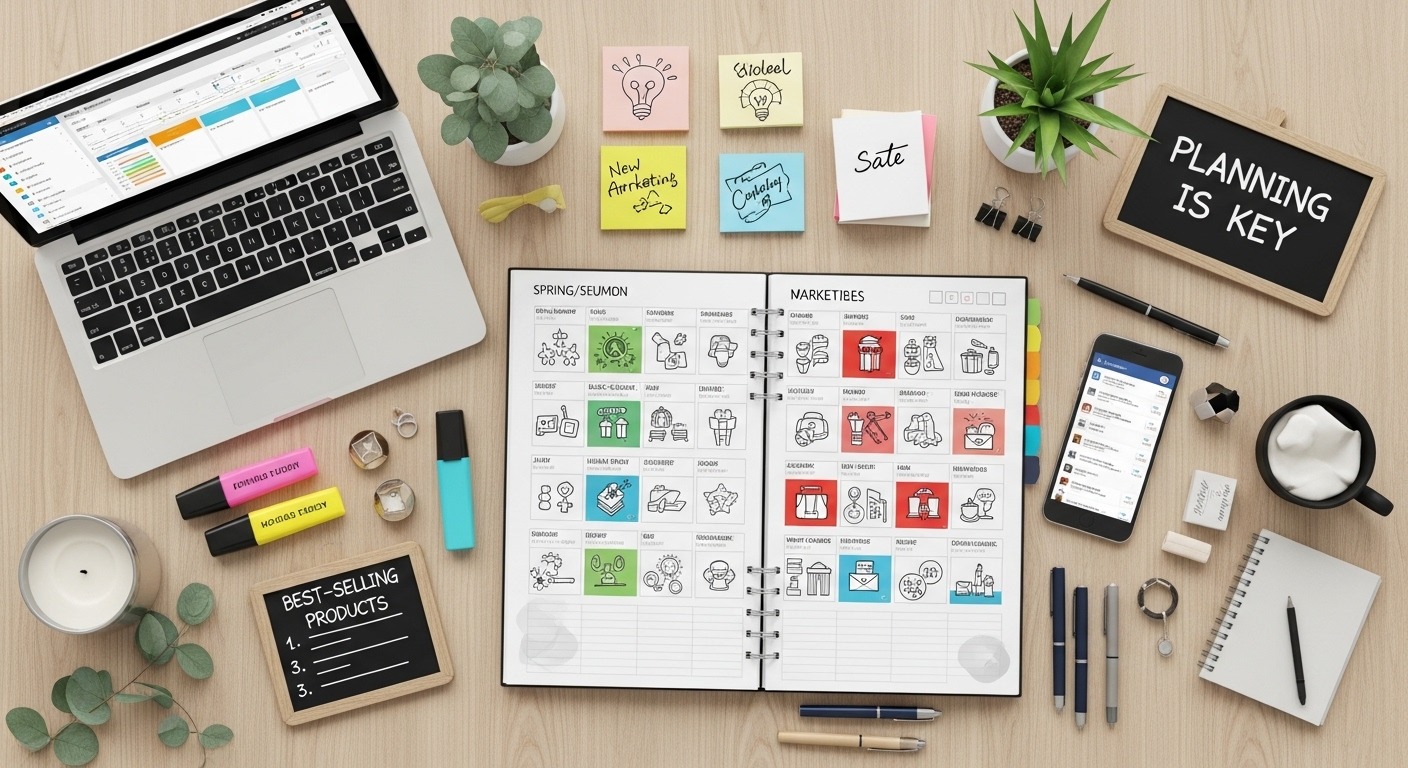
In the world of retail, if you are planning for Christmas in November, you’ve already lost the battle. Success in 2026 requires a proactive, data-driven Retail Marketing Calendar that aligns your inventory, staff, and advertising efforts months in advance.
According to The National Retail Federation, seasonal sales can account for as much as 30% of a retailer’s total annual revenue. Failing to plan for these windows is leaving money on the table. Here is how to build a calendar that works.
1. The “Reverse Engineering” Method
The secret to a stress-free sales season is working backward. For a major event like Black Friday, your marketing journey doesn’t start with a social media post; it starts with inventory procurement and creative asset development 90 to 120 days prior.
The Pro Rule: Use the 60-30-10 rule. 60% of your effort should be in the planning phase, 30% in the execution, and 10% in the post-season analysis to refine your strategy for next year.
The 4-Quarter Retail Rhythm
Q1: Renew
Post-holiday clearance and “New Year, New Me” campaigns.
Q2: Refresh
Mother’s Day, Spring transitions, and early Summer hype.
Q3: Prepare
Back-to-school and the critical holiday inventory build-up.
Q4: Peak
Black Friday, Cyber Monday, and Christmas gift-giving peak.
2. Identifying Your High-Value Holidays
Not every holiday is a “sales” holiday for every niche. A hardware store has a different peak season than a boutique chocolatier. You must identify your “Big Five”—the five periods where your specific audience is most likely to spend.
| Campaign Stage | Timeline | Key Action Item |
|---|---|---|
| Inventory Check | T-Minus 90 Days | Finalize SKU selection & vendor orders. |
| Content Creation | T-Minus 45 Days | Photoshoots & Ad copy approval. |
| Teaser Launch | T-Minus 14 Days | SMS & Email “early access” signups. |
Master the Full Retail Marketing System
Planning the calendar is step one. But do you know how to execute the high-ROAS ads, the store layouts, and the omnichannel sync that turns that calendar into profit? Learn the professional frameworks used by top retailers.
3. The Power of “Micro-Moments”
Beyond the major holidays, your calendar should include micro-moments. These are smaller, niche holidays like “National Coffee Day” or “Small Business Saturday.” These moments provide a lower-competition environment where you can engage your community without the noise of Black Friday.
As noted in Shopify’s Marketing Insights, utilizing micro-moments can improve your email open rates by up to 25% because the content feels more relevant and less sales-heavy.
Final Thoughts
A retail marketing calendar is more than just a list of dates; it is a strategic roadmap. By aligning your team around seasonal peaks and preparing your infrastructure in advance, you move from a state of constant “putting out fires” to a state of predictable, scalable growth. Start your 2026 plan today, and your future self will thank you when the Q4 rush arrives.
© 2026 Modern Retail Academy. All rights reserved.