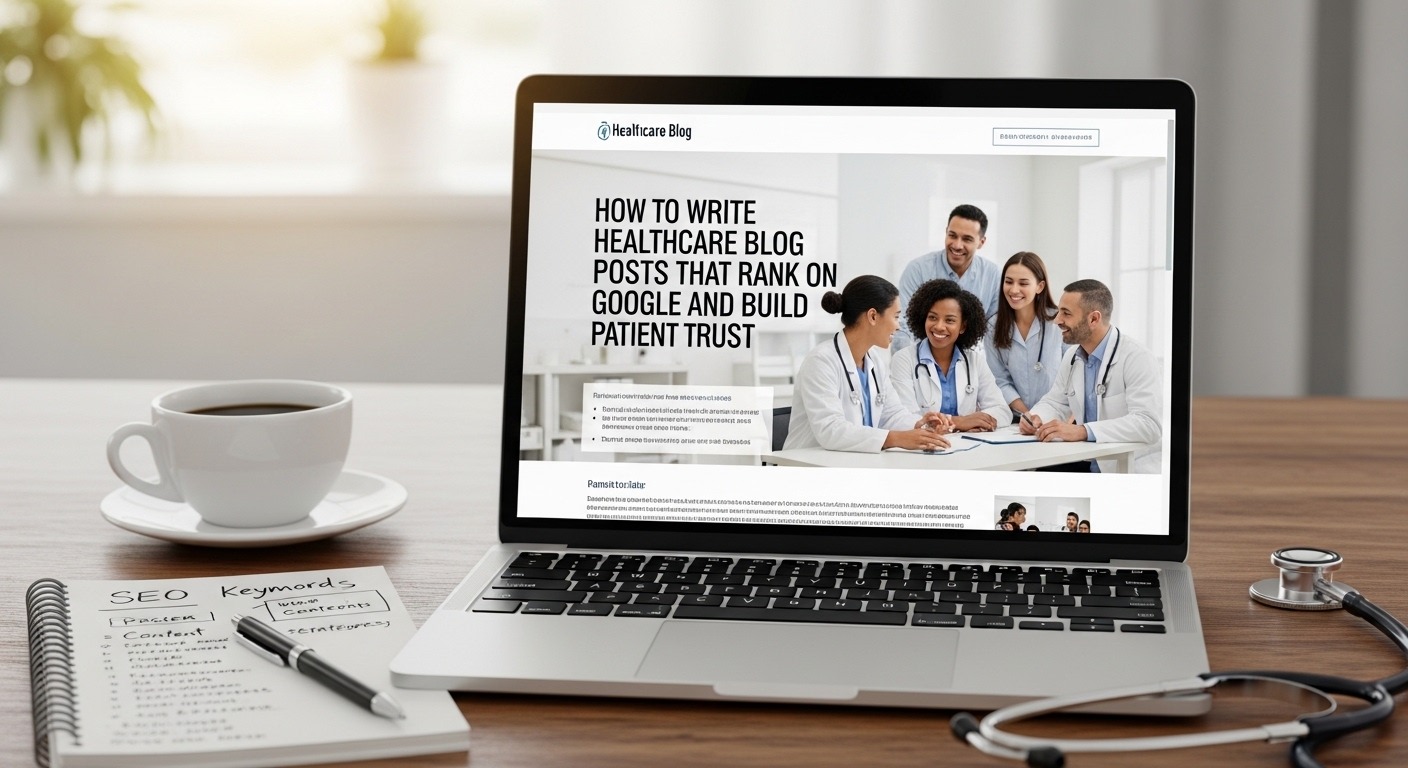
In 2026, medical authority isn’t just about what you know—it’s about how you rank and relate.
Writing for a medical practice is unlike any other niche. You are operating in what Google calls the “Your Money or Your Life” (YMYL) category. This means search engines hold your content to the highest possible standards of accuracy and safety. In 2026, simply “writing a blog” isn’t enough; you need a strategy that satisfies both a complex algorithm and a vulnerable patient.
To succeed, your content must master the E-E-A-T principle (Experience, Expertise, Authoritativeness, and Trustworthiness). According to Google’s Search Essentials, content that demonstrates real-world experience is now the primary driver for medical rankings.
1. Solving Problems, Not Just Defining Terms
Most medical blogs fail because they read like a textbook. A patient doesn’t search for “Pathophysiology of Acute Bursitis”; they search for “Why does my shoulder hurt when I reach for a shelf?”
SEO Keyword Strategy for 2026:
- Intent-Based Keywords: Focus on symptoms and “next step” questions.
- Natural Language: Optimize for voice search and AI-driven queries.
- Local Nuance: Mention your city or neighborhood to capture “near me” traffic.
The Healthcare Content Trust Funnel
Visibility
Rank for high-intent symptoms that patients search for daily.
Credibility
Cite peer-reviewed journals and board certifications.
Conversion
Empathic copy that moves the patient to book a consult.
2. The Structural Blueprint of a High-Ranking Post
Patients are often anxious when reading your blog. If they see a “wall of text,” they will bounce. Use the Inverted Pyramid style of journalism: put the most important answer in the first paragraph, then provide the clinical details below.
| Element | SEO Best Practice | Patient Trust Factor |
|---|---|---|
| H1 Title | Primary Keyword + City | Clear, non-clickbait answer. |
| Citations | External links to .gov or .edu | Shows evidence-based care. |
| Author Bio | Schema markup for “Person” | Verified medical credentials. |
Take Your Practice to the Next Level
Learning to write is just the beginning. To truly dominate your market, you need a full-funnel acquisition strategy that turns readers into lifetime patients.
3. Compliance and Ethical Considerations
Trust isn’t just about SEO; it’s about legality. In 2026, the Federal Trade Commission (FTC) and medical boards are increasingly strict about “guarantees.” Never promise a specific outcome. Use phrases like “Results may vary” or “Typically, patients see improvement within…”
Additionally, always ensure your blog follows HIPAA guidelines. Never use identifying patient information or specific case studies without written, marketing-specific consent forms on file. Compliance is the ultimate long-term SEO strategy.
Final Thoughts
Ranking on Google in 2026 requires a blend of clinical precision and human empathy. By focusing on the patient’s search intent, providing verifiable evidence through authoritative links, and maintaining a clear, readable structure, you can build a blog that doesn’t just attract clicks—it attracts patients.
© 2026 Medical Marketing Insights. All medical claims should be substantiated by clinical evidence.