How to Use Temporal Discounting Psychology to Increase Sales in Your Cosmetics Store During Promotional Periods
Discover the neuroscience behind why your customers can’t resist a ticking clock — and how to ethically leverage it to skyrocket your beauty brand’s revenue.
•
⏱ 12 min read
•
🛍 Beauty Marketing
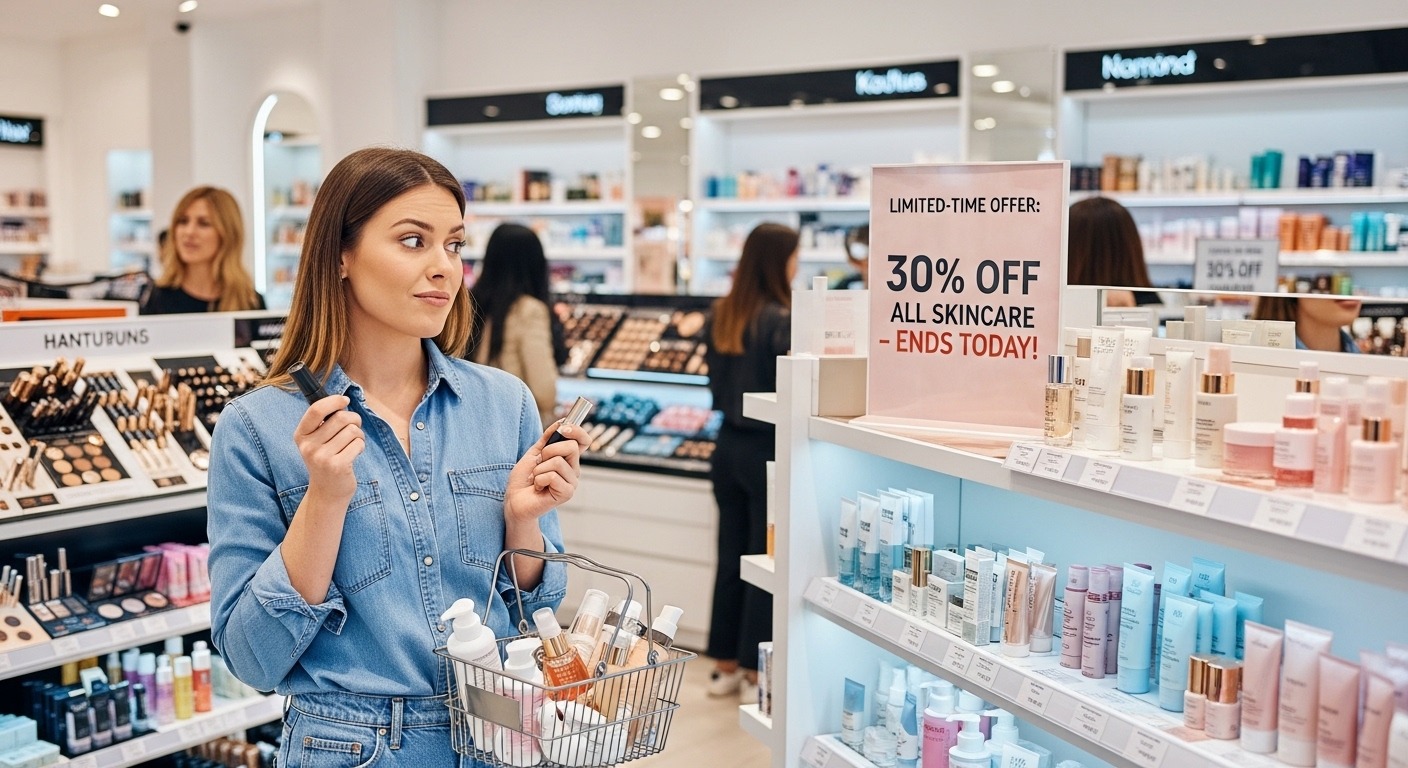
Imagine two versions of the same lipstick offer. In the first, your customer sees it at 30% off with no time limit. In the second, it’s 30% off — but only for the next 6 hours. Which version makes her hit “Add to Cart” faster?
If you guessed the second, you’ve just experienced temporal discounting in action — one of the most powerful psychological forces in consumer behavior. And for cosmetics store owners, understanding this principle isn’t just interesting; it’s essential for designing promotions that actually convert.
In this in-depth guide, you’ll learn exactly what temporal discounting is, how the human brain processes time-sensitive rewards, and — most importantly — how to structure your beauty store’s promotional campaigns to turn hesitant browsers into enthusiastic buyers.
📋 Table of Contents
- What Is Temporal Discounting? (The Psychology Explained)
- Why Cosmetics Customers Are Especially Vulnerable
- The Neuroscience Behind Urgency in Shopping
- 7 Proven Temporal Discounting Strategies for Beauty Promotions
- How to Use Countdown Timers Effectively
- Combining Scarcity + Time for Maximum Impact
- Ethical Boundaries: How NOT to Manipulate
- Real-World Examples from Beauty Brands
- Metrics to Track Your Promotional Success
- Level Up Your Beauty Marketing Skills
1. What Is Temporal Discounting? The Psychology Explained
Temporal discounting (also called delay discounting) is the psychological tendency for people to assign lower value to rewards that arrive in the future compared to the same reward available right now. In simple terms: we overvalue the present and undervalue the future.
This isn’t a flaw in human reasoning — it’s an evolved survival mechanism. For our ancestors, a bird in hand was genuinely worth two in the bush. That wiring still lives in our brains today, and marketers — especially in the beauty industry — can tap into it powerfully.
🧠 How Temporal Discounting Works
The brain perceives immediate rewards as significantly more valuable — even when the dollar amount is identical. This is the core of temporal discounting.
Research published in the Journal of Behavioral Decision Making found that discount rates in consumer behavior can be as high as 50–300% per year — meaning people dramatically over-discount future value. For your cosmetics store, this means a flash sale that ends at midnight feels far more compelling than an “ongoing offer.”
2. Why Cosmetics Customers Are Especially Vulnerable
Not all product categories respond equally to temporal discounting. The beauty industry sits at a uniquely sweet spot for several reasons:
Emotional Purchase Drivers
Beauty products are often bought on impulse and emotion — exactly the state where present-bias is strongest. When a customer feels beautiful looking at a product, time pressure seals the deal.
High Repurchase Rate
Skincare and makeup run out. Customers already plan to repurchase — a time-limited offer simply accelerates their timeline, making the decision feel logical, not pressured.
Trend-Sensitive Category
Beauty trends move fast. FOMO (Fear Of Missing Out) is naturally high. Temporal limits amplify the feeling that “this moment” is uniquely special.
Self-Care Identity
Buying beauty products is often tied to self-image and care rituals. The message “treat yourself now” resonates deeply when paired with a deadline.
3. The Neuroscience Behind Urgency in Shopping
When your customer sees a countdown timer, something very specific happens in her brain. The amygdala — your brain’s alarm system — activates. This triggers a mild stress response that says: “Act now or lose this.”
At the same time, the brain’s reward centers light up with anticipatory dopamine — the pleasure chemical released not just when we get a reward, but when we expect one. According to research from Nature Neuroscience, this anticipatory surge can be stronger than the satisfaction of actually receiving the reward.
🧠 What Happens in the Brain During a Flash Sale
This neurological sequence explains why well-executed flash sales feel natural and satisfying to buyers — not manipulative. You’re simply aligning your promotion with how human decision-making already works.
4. 7 Proven Temporal Discounting Strategies for Beauty Promotions
The “Today Only” Anchor
Set a specific, believable time boundary — not “limited time offer” (vague) but “Offer ends tonight at 11:59 PM.” The specificity creates psychological realness. The customer’s brain can literally visualize the deadline.
“Our Birthday Sale on the Rose Glow Vitamin C Serum ends TONIGHT at midnight. After that, it’s back to full price — no exceptions.”
The Tiered Deadline (Early Bird) Structure
Create multiple urgency peaks by structuring discounts in tiers. This rewards fast movers AND keeps the urgency alive throughout the campaign window.
| Window | Discount | Message | Urgency Level |
|---|---|---|---|
| First 6 Hours | 40% OFF | “VIP Early Access” | 🔥🔥🔥🔥 |
| Hours 6–24 | 30% OFF | “Sale Is Live” | 🔥🔥🔥 |
| Final 6 Hours | 20% OFF | “Last Chance” | 🔥🔥🔥🔥🔥 |
| After Promotion | Full Price | “Sale Ended” | — |
The “Vanishing Bonus” Technique
Instead of (or alongside) discounting prices, add time-limited bonuses — a free mini product, complimentary gift wrapping, a beauty guide, or free express shipping. When the bonus disappears, the core product can remain at its same price (protecting your margins). Customers feel the loss of the bonus, not price manipulation.
“Order any foundation in the next 12 hours and receive a FREE travel-size setting spray (worth $18). Offer disappears when the timer hits zero.”
Season & Calendar Anchoring
Link your promotion to a calendar event that already carries emotional weight: Valentine’s Day, International Women’s Day, “Back to Beauty” in September, holiday gifting season. This external legitimacy makes the deadline feel inevitable and beyond your control — increasing credibility and reducing resistance.
A study from Journal of Consumer Research showed that deadline framing tied to natural events significantly reduces buyer skepticism about sales authenticity.
Personalized Expiry Windows
If you use email marketing or an app, send customers a personalized discount code with a unique expiry timestamp — “Your exclusive code expires in 48 hours.” Personalization amplifies temporal discounting because the offer feels crafted just for them, making the potential loss feel personal.
Email platforms like Mailchimp, Klaviyo, and Omnisend all support automated time-limited coupon delivery with dynamic countdown elements.
Loss-Framed Messaging
Nobel Prize-winning research by Kahneman & Tversky on prospect theory shows that losses feel approximately twice as painful as equivalent gains feel good. Apply this to your copy:
“Save $25 on your next order.”
“Don’t lose your $25 savings — timer expires at midnight.”
Post-Purchase Time Bridge
After a customer buys, offer them a secondary time-limited offer on a complementary product — “Thank you! As a valued customer, here’s 20% off your matching lip liner for the next 2 hours only.” This extends the buying session and dramatically increases average order value (AOV).
5. How to Use Countdown Timers Effectively
A countdown timer is the most direct visual representation of temporal discounting. Done right, it’s a conversion machine. Done wrong, it can destroy customer trust.
| ✅ DO | ❌ DON’T |
|---|---|
| Set real deadlines that actually expire | Reset the timer when it hits zero (fake urgency) |
| Place the timer near the price or CTA button | Hide it in the footer where it’s ignored |
| Use short windows (2–24 hours) for maximum pressure | Run 30-day “flash sales” (feels like full price) |
| Show it in email headers (Sendtric, Deadline Funnel) | Use timers on products that are always on sale |
| Match color to urgency (red/orange for final hours) | Use 5+ timers on the same page simultaneously |
Tools to add countdown timers to your beauty store: Shopify Timer Apps, Deadline Funnel (for personalized timers), or free tools like Sendtric for email-embedded timers.
6. Combining Scarcity + Time for Maximum Impact
Time pressure and quantity scarcity are two separate psychological forces. When combined, they create a powerful compound effect. Think of them as two levers you can pull simultaneously:
Time Scarcity
“This offer ends in 4 hours”
Quantity Scarcity
“Only 7 units left in stock”
Combined Effect
“4 hrs left · Only 7 remain”
A classic beauty industry example: “Our limited-edition Cherry Blossom Glow Kit is almost gone — only 11 sets remaining. Our spring sale ends in 3 hours.” This combines both levers and creates one of the most potent buying triggers available.
7. Ethical Boundaries: How NOT to Manipulate
⚠️ Important: Trust Is Your Most Valuable Asset
In the beauty industry, customer loyalty and word-of-mouth are everything. Fake urgency and deceptive scarcity will get short-term clicks but destroy long-term brand equity. Here are the lines you must never cross:
Never create false deadlines. If your timer resets every time a customer refreshes the page, that’s a dark pattern. In many countries, it’s also illegal under consumer protection law. The FTC in the United States and the EU’s Consumer Rights Directive both have clear guidance on honest promotional practices.
Never fake stock levels. Saying “Only 3 left!” when you have 300 in your warehouse is deceptive. Real scarcity is powerful. Fake scarcity is fraud.
Always deliver on promises. If a sale ends at midnight, it ends at midnight. Your customers will check — and if you extended the sale, they’ll feel manipulated and tell their friends.
Use social proof instead of manufactured pressure. “14 people are viewing this product” or “47 orders placed today” — if true — builds real urgency through social validation rather than deception.
8. Real-World Examples from Beauty Brands
Flash Sale Strategy
Sephora’s “Beauty Insider Sales” use tiered member access (Gold gets access hours before regular members) combined with limited stock. The early-access window creates temporal urgency for lower tiers who know they’ll miss the best products if they wait.
Calendar-Anchored Limited Editions
Glossier releases holiday collections with hard supply caps and genuine sell-out dates. They communicate stock levels honestly (tracking on their website) which builds trust while generating real urgency. Customers know the deadline is real.
21 Days of Beauty
Ulta’s “21 Days of Beauty” campaign features a different product at 50% off each day. This is temporal discounting mastery: every day creates a fresh deadline with a new product, giving shoppers a reason to check back daily. It’s calendar-based urgency made into a loyalty mechanic.
9. Metrics to Track Your Promotional Success
Running temporal discounting campaigns without measuring results is like applying a full face of makeup in the dark. Here’s the measurement framework every beauty store owner needs:
| Metric | What It Measures | Benchmark Goal |
|---|---|---|
| Conversion Rate | % of visitors who purchase during promotion | 2–5% ecommerce avg (aim for 2–3× non-promo rate) |
| Cart Abandonment Rate | % who add to cart but don’t buy | Should fall vs baseline during urgency windows |
| Average Order Value (AOV) | Revenue per transaction | Target 15–25% above non-promo AOV |
| Revenue / Promo Hour | Hourly revenue during campaign | Should peak at start & final 2 hours |
| Email Open Rate (during promo) | Engagement with time-sensitive email campaigns | 25–40% for beauty sector (industry avg ~21%) |
Use platforms like Google Analytics 4, your store’s native analytics (Shopify, WooCommerce), and your email platform’s reporting to track these across every promotional period.
Ready to Master Beauty Marketing from the Inside Out?
You’ve just learned the psychology — now build the complete skill set to run high-converting campaigns year-round. The Beauty Marketing Course at Easy Marketing School covers temporal discounting, email funnels, social media strategy, and advanced promotional psychology — all tailored specifically for cosmetics and beauty brands.
✅ Promotional campaign templates
✅ Psychology-driven copywriting
✅ Email & social media mastery
👉 Explore the Beauty Marketing Course →
Join beauty entrepreneurs already scaling their brands with proven marketing strategies.
⭐ Key Takeaways
About This Article: This guide covers evidence-based marketing psychology for beauty business owners. External links to platforms, tools, and academic sources are provided for reference. Efficacy of individual strategies will vary based on your audience, platform, and product category.
Disclosure: This article contains an affiliate/referral link to Easy Marketing School’s Beauty Marketing Course. We only recommend resources we believe genuinely benefit our readers.