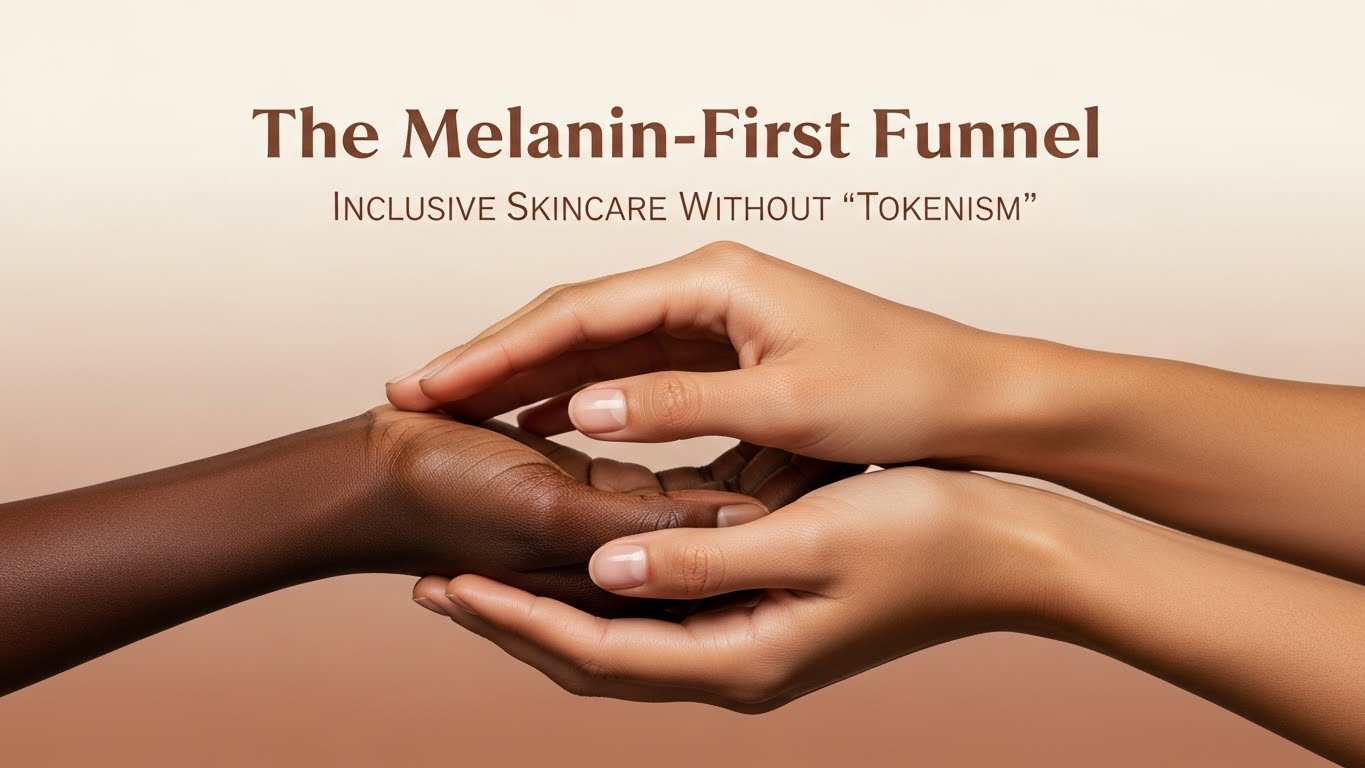
Building authentically inclusive brands that center melanin-rich skin from formulation to marketing A skincare brand launches. The website shows one model with darker skin among eight fair-skinned ones. The marketing copy mentions “all skin types” once, buried in a paragraph. The shade range stops at “medium tan.” They call it “inclusive.” This is tokenism, not inclusion. Real inclusion in skincare isn’t about adding diversity as decoration—it’s about centering melanin-rich skin from the very beginning. It means formulating with hyperpigmentation, keloid scarring, and darker skin tones as the primary consideration, not an afterthought. It means understanding that melanin isn’t just “more color”—it’s fundamentally different skin biology that requires different solutions. Brands like Topicals (built for hyperpigmentation), Bolden (melanin-focused from day one), and Black Girl Sunscreen (SPF formulated for no white cast) have proven that melanin-first isn’t niche—it’s profitable. They’ve built eight-figure businesses by rejecting tokenism and building authentically inclusive brands that understand: melanin-rich consumers can tell the difference between brands that center them versus brands that just feature them. According to market research, melanin-rich consumers spend $1.3 trillion annually on beauty products, yet historically only 2.5% of beauty brand ownership is Black. The opportunity is enormous—but succeeding requires genuine understanding, not performative diversity. This article will show you how to build the “Melanin-First Funnel”—a framework for marketing inclusive skincare authentically, communicating complex melanin science accessibly, and building brands that center rather than tokenize melanin-rich skin. Tokenism says “we have products for everyone.” Melanin-first says “we formulated for melanin-rich skin and it happens to work for everyone.” The difference isn’t semantic—it’s foundational. Understanding this distinction is essential to authentic inclusive marketing. According to research from Nielsen, Black consumers are highly discerning about brand authenticity, with 38% saying they can immediately tell when a brand is being performative versus genuine in their diversity efforts. Token representation doesn’t convert—centered representation does. The key insight: melanin-rich consumers don’t want to be included—they want to be centered. There’s a profound difference. Strategy: Develop products specifically for hyperpigmentation, texture concerns, keloid prevention. Test on melanin-rich skin FIRST. Goal: Build from melanin-first science, not adapt later Strategy: Majority of marketing imagery features melanin-rich skin. Diverse range within that (not just one “dark” model). Goal: Melanin-rich consumers see themselves as primary audience Strategy: Communicate how melanin works differently without medical jargon. Make Smart Melanin technology understandable. Goal: Customers understand WHY melanin-first formulation matters Strategy: Before/afters on deep skin tones, testimonials from melanin-rich customers, clinical data on diverse subjects. Goal: Evidence that products work FOR them, not despite them Strategy: Melanin-rich founders/team members, community input on products, authentic partnerships (not influencer tokenism). Goal: Inclusion as identity, not initiative—permanent, not performative Core Principle: The melanin-first funnel isn’t about adding diversity to an existing brand—it’s about building the brand FROM melanin-rich skin concerns outward. When you center the most underserved, you create products that work for everyone. When you tokenize, you create products that work for no one authentically. Melanin-rich consumers have finely tuned tokenism detectors. They’ve seen decades of performative diversity. Here’s how to avoid red flags and demonstrate authentic commitment: Ask: “If I removed all text and just looked at imagery, who would seem to be the primary customer?” If the answer isn’t clearly “melanin-rich skin,” you’re tokenizing. Authentic inclusion is visible without explanation. “Smart Melanin” technology—formulations that work WITH melanin’s unique biology rather than against it—is revolutionary. But explaining complex dermatological science without losing or boring your audience is the marketing challenge. The solution? Layer complexity progressively and use accessible metaphors. The mistake most brands make: either dumbing down to the point of meaninglessness (“good for dark skin!”) or overwhelming with technical jargon (“melanocyte-regulating peptide complexes targeting tyrosinase inhibition”). Neither converts. Here’s the framework for accessible science communication: Start here—the one-sentence explanation: “Your melanin protects you—but it can also overreact to irritation, causing dark spots. Smart Melanin technology teaches your skin to protect WITHOUT the hyperpigmentation.” Why this works: Non-scientific language, relatable problem, clear benefit. Most people stop here—and that’s okay. They get enough to understand value. For those who want to know more: How Melanin Works (The Simple Version): Think of melanin as your skin’s security system. When it senses a threat—inflammation, UV damage, irritation—it calls for backup: more pigment production. This is protective… but sometimes the alarm doesn’t turn off. You end up with dark spots long after the threat is gone. The Problem with Traditional Products: Most skincare was designed for skin with less melanin. These products either ignore melanin entirely (ineffective) or try to “turn down” melanin production (risky—you need that protection!). What Smart Melanin Technology Does: Instead of shutting down melanin, Smart Melanin technology makes it smarter—responsive to actual threats, not overreactive to minor irritation. Your skin stays protected but stops creating unnecessary dark spots. Why this works: Security system metaphor makes complex biology relatable. Explains the “smart” part without medical jargon. For those who want the actual science: The Technical Details: Step 1: Melanocyte Regulation Step 2: Inflammation Control Step 3: Targeted Fading Clinical evidence: In studies on Fitzpatrick skin types IV-VI, Smart Melanin formulations reduced post-inflammatory hyperpigmentation by 52% over 12 weeks while maintaining skin’s natural UV protection. Why this works: Satisfies the science-literate without requiring everyone to read it. Builds credibility through detail availability. Instead of paragraphs, show the process: Simple Infographic Flow: ❌ Old Approach: Irritation → Melanin Alarm → Overproduction → Dark Spots Last Forever ✓ Smart Melanin: Irritation → Controlled Response → Protection Without Overproduction → Even Tone Maintained Why this works: Visual comparison makes abstract concept immediately graspable. No reading required to understand benefit. Science becomes credible when customers see it working: Before/After on Deep Skin Tones: Show hyperpigmentation fading on Fitzpatrick V-VI skin. Include timeline: 4 weeks, 8 weeks, 12 weeks. Document lighting conditions, photography setup—transparency builds trust. Customer Testimonial Template: “I’ve tried every ‘brightening’ product out there—most were formulated for lighter skin and either didn’t work or made things worse. This is the first time I’ve seen real fading on MY dark spots without irritation. Finally, something that actually understands melanin.” — Aisha, Fitzpatrick VI Why this works: Results validation on melanin-rich skin proves the science isn’t theoretical—it’s functional for the people you’re centering. Topicals built their brand on making hyperpigmentation science accessible to melanin-rich consumers. They start simple: “Fades dark spots without irritation.” Then layer complexity for those who want it: ingredient breakdowns, mechanism explanations, clinical study summaries. They use metaphors (“melanin needs training wheels, not brakes”), show before/afters exclusively on deeper skin tones, and feature customers explaining the science in their own words. They never assume customers won’t understand complexity—they just make it optional to engage with. Result? Highly educated customer base that becomes brand evangelists because they understand not just THAT it works, but WHY it works for their melanin specifically. When you communicate Smart Melanin technology through layered complexity—simple hook, accessible explanation, detailed science for enthusiasts, visual aids, and proof on melanin-rich skin—you respect your audience’s intelligence while making science accessible. Not everyone needs Level 3, but everyone deserves Level 1. Give them all options. Learn the proven strategies successful inclusive brands use to center melanin-rich skin authentically, communicate complex science accessibly, and build brands that convert through genuine representation, not tokenism. Explore the Beauty Marketing Course → Build brands melanin-rich consumers actually trust Authentic melanin-first marketing means melanin-rich people aren’t just IN your content—they’re CREATING your content, sharing their expertise, telling their stories. Make your platform theirs. Feature melanin-rich customers telling their hyperpigmentation stories: Example: “I’ve struggled with dark spots since teenage acne. Every ‘brightening’ product was formulated for fair skin—didn’t work or made it worse. When I found a brand that actually understood melanin biology, everything changed.” Real stories, unscripted. Platform melanin-rich dermatologists and chemists: Example: Monthly Q&A with Dr. [Name], dermatologist specializing in melanin-rich skin: “Ask me about hyperpigmentation, keloid prevention, texture concerns—things traditional derm training often overlooks.” Transparent results on full Fitzpatrick spectrum: Example: “12-week hyperpigmentation study. 50 participants, Fitzpatrick IV-VI. Same lighting, same angle, same camera. No filters. See the actual results on melanin-rich skin—because that’s who we formulated for.” Show melanin-rich customers influencing product decisions: Example: “You asked for a body product that handles hyperpigmentation from ingrown hairs. We listened. Meet [Product Name], formulated based on your feedback, tested on your skin, created WITH you, not just FOR you.” Influencer partnerships can reinforce authenticity—or expose tokenism. Here’s the difference: Work with melanin-rich creators consistently, not just during Black History Month or when launching “inclusive” products. Make them ongoing brand partners, not campaign tokens. Partner with creators who genuinely understand melanin-rich skin concerns, not just anyone with large following. Micro-influencers with hyperpigmentation expertise > mega-influencers who happen to be melanin-rich. Let melanin-rich creators tell THEIR stories in THEIR voices. Don’t script authenticity. And pay them fairly—undervaluing melanin-rich creators’ work is another form of tokenism. The beauty industry has historically treated melanin-rich skin as afterthought, add-on, or diversity checkbox. Brands added one darker shade, featured one model with deeper skin tone, mentioned “all skin types” in fine print—and called it inclusive. But melanin-rich consumers—who represent $1.3 trillion in annual spending power—can immediately detect the difference between centering and tokenizing. They’ve lived it. They know when a brand truly understands hyperpigmentation, keloid concerns, and melanin biology versus when a brand is performing diversity for optics. “The future of skincare isn’t about ‘including’ melanin-rich consumers—it’s about centering them. When you formulate for the most underserved, you create products that work for everyone. When you design for hyperpigmentation concerns, your brightening actives perform better across all skin tones. When you test on Fitzpatrick VI first, you ensure efficacy for everyone. Centering melanin-rich skin isn’t niche—it’s the path to universal excellence. The brands winning aren’t those tokenizing diversity but those building FROM melanin-rich skin outward. That’s not political correctness—that’s smart business.” So reject tokenism. Center melanin-rich skin in formulation, representation, messaging, partnerships, and community building. Communicate Smart Melanin science accessibly but thoroughly. Show results on the skin you claim to serve. Build WITH melanin-rich experts, not just FOR melanin-rich consumers. Because authentic inclusion isn’t just ethical—it’s profitable. And melanin-rich consumers will reward brands that genuinely see them with loyalty that transforms businesses. Build melanin-first. Market authentically. Center, don’t tokenize. ✊🏾✨ Share this guide with inclusive skincare founders! Keywords: melanin-first skincare, inclusive beauty marketing, hyperpigmentation solutions, Smart Melanin technology, authentic diversity skincare, melanin-rich skin care, anti-tokenism marketing, diverse beauty brands, Fitzpatrick skin types, inclusive formulation strategyUnderstanding Melanin-First vs. Tokenism: The Critical Difference
Melanin-First Marketing Principles
Formulation primacy: Products designed FOR melanin-rich skin first, not adapted for it later
Visual majority: Melanin-rich skin as primary representation, not token inclusion
Concern specificity: Addressing hyperpigmentation, keloids, texture concerns central to melanin-rich skin
Authentic expertise: Team includes melanin-rich skin experts, not just consultants
Testing transparency: Clinical trials on melanin-rich skin, results shown on diverse skin tones
Long-term commitment: Diversity as core identity, not marketing campaignThe Melanin-First Funnel: Authentic Inclusion Strategy
Foundation: Center Melanin-Rich Skin in Formulation
Representation: Visual Majority, Not Token Inclusion
Education: Explain Melanin Biology Accessibly
Proof: Show Results on Actual Melanin-Rich Skin
Community: Build With, Not For
Tokenism Red Flags vs. Authentic Inclusion Indicators
The Authenticity Test
Communicating the Science of ‘Smart Melanin’ Technology to a Non-Scientific Audience
The Smart Melanin Communication Framework
Level 1: The Simple Truth (Hook)
Level 2: The Accessible Explanation (For the Curious)
Level 3: The Mechanism (For Science Enthusiasts)
Smart Melanin peptides modulate melanocyte activity, reducing excess tyrosinase production (the enzyme that creates pigment) without suppressing necessary melanin synthesis.
Because inflammation triggers melanin overproduction, anti-inflammatory actives (niacinamide, licorice root, tranexamic acid) calm the initial alarm before melanocytes react.
Gentle exfoliants and brightening agents work on existing hyperpigmentation while Steps 1-2 prevent new dark spots from forming.The Visual Translation: Making Science Visible
The Proof: Real Results on Real Skin
Real Example: Topicals’ Science Communication
Ready to Master Melanin-First Marketing?
Content Strategy: Centering Melanin-Rich Voices
“My Melanin Journey” Customer Stories
“Expert Voices” Series
“Real Skin” Before/After Documentation
“Community Input” Product Development
Building Authentic Partnerships (Not Influencer Tokenism)
The Authentic Partnership Framework
Long-Term Relationships > One-Off Campaigns
Expertise Over Follower Count
Creative Control + Fair Compensation
The Melanin-First Revolution: Centering Creates Profitability
Resources for Melanin-First Brands