In 2026, the line between “online” and “offline” has vanished. Is your brand everywhere your customer is?
We’ve officially entered the era of the “borderless shopper.” In 2026, a customer might discover your product on a TikTok live stream, check your local inventory on their phone while at lunch, and finally walk into your physical store to make the purchase. If these touchpoints aren’t connected, you aren’t just losing data—you’re losing customers.
According to Google Marketing Insights, omnichannel strategies drive an 80% higher rate of incremental store visits. This isn’t just a buzzword anymore; it’s the operational standard for retail survival.
1. What Exactly is Omnichannel in 2026?
Many retailers confuse “Multichannel” with “Omnichannel.” Multichannel means you sell in many places (website, Instagram, physical store). Omnichannel means those places are unified. If a customer buys online, they should be able to return in-store seamlessly. If they have a loyalty point balance, it should update in real-time across all platforms.
The 3 Pillars of Unified Retail
Inventory Sync
Real-time stock levels shared between your shelf and your web store.
Single Customer View
One profile for every shopper, regardless of where they buy.
Flexible Fulfillment
BOPIS (Buy Online, Pick Up In Store) and Curbside excellence.
2. The Data Advantage
The primary reason to adopt this strategy is personalization. When your POS (Point of Sale) system communicates with your email marketing, you can send highly targeted offers. If a customer buys a specific brand of shoes in-store, your Facebook ads should automatically show them the matching socks—not the shoes they already bought.
| Feature | Multichannel Strategy | Omnichannel Strategy |
|---|---|---|
| Customer Experience | Fragmented / Siloed | Seamless / Unified |
| Inventory Management | Manual Updates | Automated & Real-time |
| Marketing Impact | Generic Mass Appeals | Hyper-Personalized |
Become a Master of Modern Retail
Omnichannel is just one piece of the puzzle. From psychological store layouts to high-ROAS advertising and inventory scaling, learn the frameworks used by seven-figure retailers to dominate their markets.
3. Implementing the “Bridge” Strategy
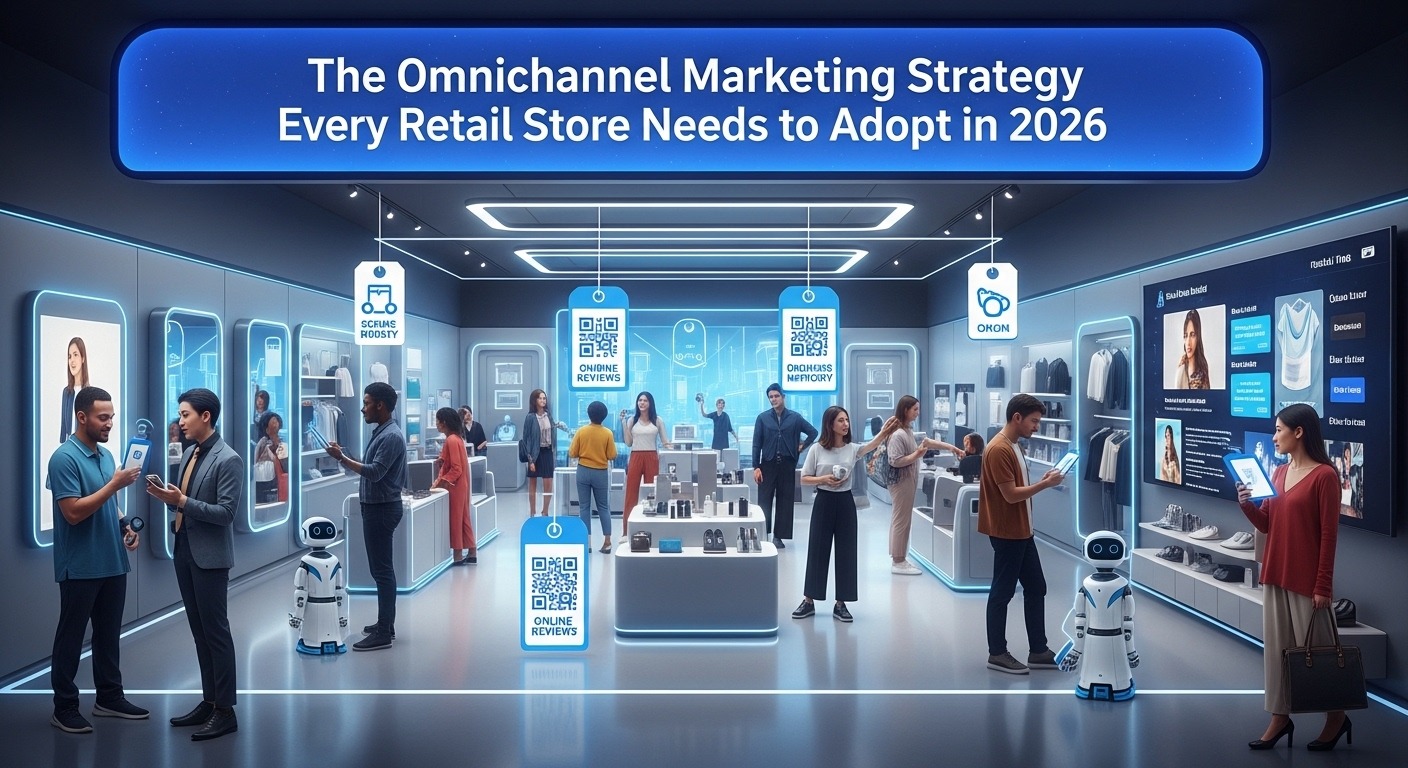
You don’t need a million-dollar tech stack to start. Use QR codes in your dressing rooms that lead to your online “Style Guide.” Offer “Digital Receipts” to capture emails at the physical register. These small bridges connect the physical and digital worlds.
As noted by Shopify Retail, the goal is to make the shopping experience “channel-less.” The customer shouldn’t have to think about where they are buying—they should only think about the brand they are buying from.
Final Thoughts
In 2026, a retail store is no longer just a place where goods are kept; it is a hub in a massive, interconnected network of digital and physical touchpoints. By adopting an omnichannel mindset today, you future-proof your business against the giants and provide the friction-free experience your customers expect.
© 2026 Global Retail Insights. All rights reserved.