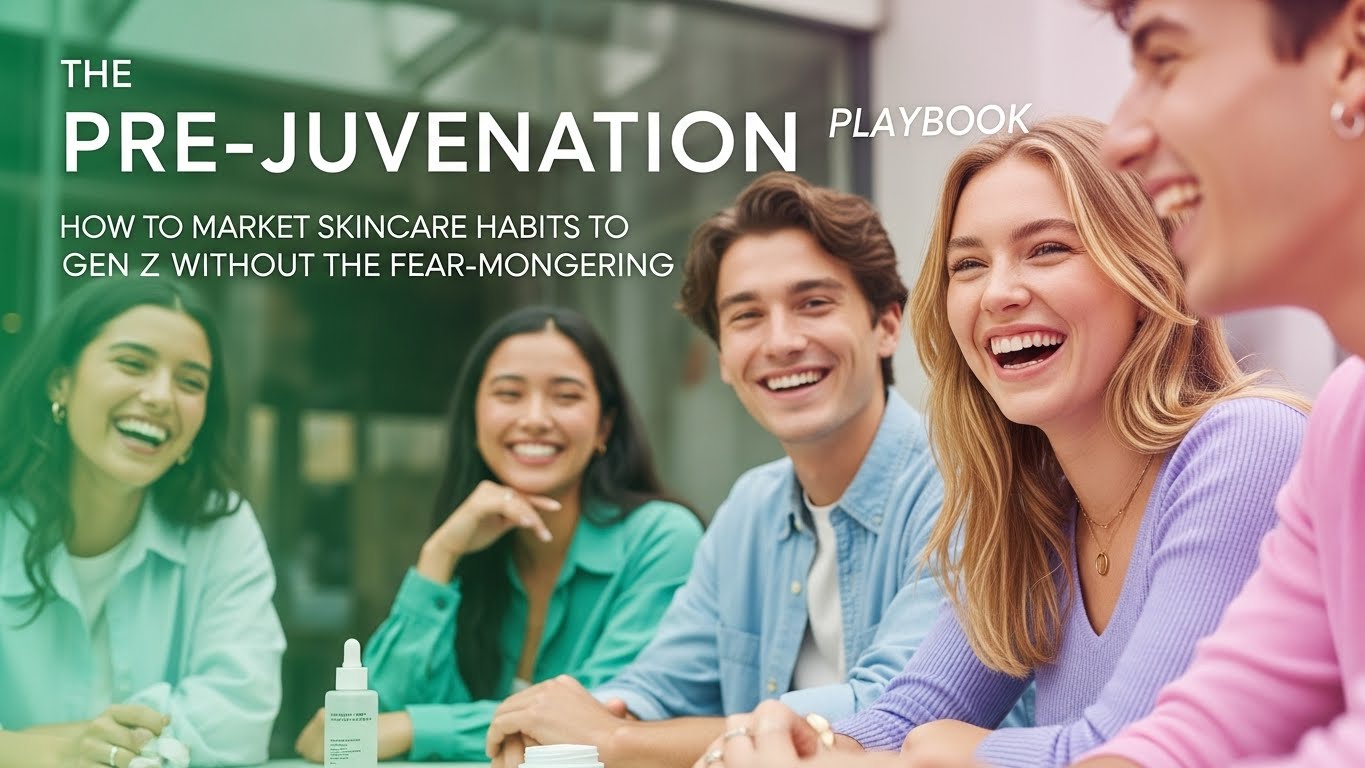
Building healthy skin relationships through barrier education, not anxiety marketing She’s 19 years old, scrolling through TikTok. A skincare brand’s ad appears: “Prevent aging NOW before it’s too late! These wrinkles are coming!” She feels anxiety creep in. Looks in mirror. Searches for invisible lines. Adds six anti-aging products to cart. She’s terrified of a future that hasn’t happened yet. This is the dark side of anti-aging marketing—an industry built on fear, urgency, and the message that your future face is something to dread. For Gen Z (born 1997-2012, currently ages 13-28), this fear-mongering starts earlier than ever. Brands target teenagers with “anti-aging” serums, warning them that prevention must begin NOW or they’ll regret it at 30. The result? A generation anxious about wrinkles they don’t have, obsessing over aging processes that haven’t started, and developing unhealthy relationships with their skin. Enter pre-juvenation—a marketing approach that reframes skincare for younger consumers from fear-based prevention to positive habit-building. Instead of “fight aging before it starts,” the message becomes “build healthy skin now.” Instead of anxiety about future wrinkles, it’s education about current barrier health. Instead of panicking about what might go wrong, it’s understanding what’s going right and how to maintain it. Brands like Youth to the People, Bubble Skincare, and Glow Recipe have pioneered this approach—marketing to Gen Z without weaponizing their fears, focusing on barrier health over anti-aging, and building sustainable skincare habits through education rather than panic. They’ve proven that you can sell effectively to younger consumers without making them anxious about their futures. According to research, 71% of Gen Z consumers say they’re interested in skincare for “skin health” not “anti-aging,” and 64% report feeling anxiety when exposed to anti-aging marketing targeted at their age group. The pre-juvenation market (skincare for 18-25 year-olds focused on prevention through health, not fear) is growing at 12.4% annually, projected to reach $8.9B by 2027. The challenge: how do you market preventative skincare to Gen Z without resorting to fear tactics? How do you educate on barrier health when they’re more familiar with acne-fighting claims? How do you build long-term customer relationships based on healthy habits rather than anxiety-driven purchases? And critically—how do you sell retinol and vitamin C (legitimately beneficial preventative ingredients) without making 20-year-olds panic about aging? This article will show you how to market pre-juvenation skincare to Gen Z—building barrier health education instead of acne-fighting fear, reframing prevention from anxiety to empowerment, and creating sustainable revenue through positive habit formation rather than panic-driven impulse buying. Before building pre-juvenation marketing, understand how Gen Z approaches skincare differently: According to Mintel beauty research, 78% of Gen Z consumers say they prefer “skin health” messaging over “anti-aging” messaging, and 69% report actively avoiding brands that use fear-based marketing tactics. The key insight: Gen Z wants to take care of their skin, but they want education and empowerment, not anxiety and urgency. Market health habits, not fear of aging. Position your brand as educator, not fear-monger. Strategy: Teach what skin barrier is, how it functions, why maintaining it matters. Science-based education replaces anxiety-driven messaging. Knowledge = power. Goal: Build understanding of skin health as foundation, not fear of aging Strategy: Language shift from prevention-of-bad to maintenance-of-good. Same ingredients (retinol, vitamin C), different framing—for health, not fear. Goal: Make preventative care positive aspiration, not anxious obligation Strategy: Core routine focus—cleanser, moisturizer, SPF, one active. Fight overconsumption culture. Simple = sustainable long-term. Goal: Build maintainable habits, not overwhelming 12-step routines Strategy: Transparent ingredient education, routine-building guides, skin science content. Make customers informed, not dependent on brand expertise. Goal: Create knowledgeable customers who choose you through understanding Strategy: Consistency over intensity—daily SPF, nightly moisturizer, weekly active. Build rituals that last decades through repetition. Goal: Lifetime customers through healthy habits, not fear-driven repurchases Core Principle: Pre-juvenation marketing builds sustainable skincare relationships by educating on barrier health, reframing prevention from fear to health maintenance, simplifying routines for long-term adherence, empowering through knowledge sharing, and sustaining habits through positive reinforcement. Gen Z becomes lifetime customers through education, not anxiety. Same preventative ingredients, opposite emotional approaches. One creates anxiety; one builds confidence: Every fear-based claim can be reframed as health-based education. Instead of “prevent X disaster,” say “support Y healthy function.” Same preventative action, opposite emotional trigger. Gen Z responds to empowerment, not anxiety. Choose education over fear every time. This is the Gen Z skincare paradigm shift: previous generations marketed to teenagers focused almost exclusively on acne treatment—spot fighting, oil control, pore minimizing. The message: your skin is a problem to fix. Gen Z still deals with acne, but they’re hungry for deeper understanding. They want to know WHY breakouts happen, HOW their skin actually functions, and WHAT creates lasting skin health beyond just treating symptoms. The opportunity: barrier health education positions your brand as expert educator, not just product pusher. When you teach Gen Z about their skin barrier—what it is, how it works, why it matters, what disrupts it, how to support it—you’re giving them framework for understanding ALL their skin concerns (acne, sensitivity, dryness, redness) through one unifying concept. Barrier health becomes the foundation, and your products become tools for maintaining it. The Strategy: Make invisible skin barrier tangible and understandable through metaphors and visuals. The Brick Wall Analogy (Most Effective Gen Z Education): The Structure: “Your skin barrier is like a brick wall. Skin cells = bricks (structural). Lipids (ceramides, cholesterol, fatty acids) = mortar between bricks (holds everything together). When wall is strong: moisture stays in, irritants stay out, skin functions perfectly.” What Breaks Down the Wall: “Harsh cleansers = sledgehammer to mortar, strips lipids. Over-exfoliation = sandblaster to bricks, removes too many cells. Sun damage = wall left in weather, deteriorates structure. When mortar crumbles: moisture escapes (dryness), irritants enter (sensitivity), inflammation increases (acne, redness).” How to Repair and Maintain: “Gentle cleanser = careful wall maintenance. Moisturizer with ceramides/fatty acids = mortar repair. SPF = protective coating against weather. Actives (retinol, acids) = controlled renovation—improves wall but needs careful timing to avoid over-disruption.” Visual Content: Create illustrated infographic of brick wall showing healthy barrier (tight bricks/mortar) vs. compromised barrier (crumbling mortar, gaps). Instagram carousel format works perfectly—swipe through barrier breakdown stages. Why this works: Brick wall metaphor makes abstract concept (skin barrier) concrete and visual, explains ALL skin concerns (dryness, sensitivity, acne) through one framework, empowers Gen Z to understand their skin holistically, creates foundation for ALL product recommendations. The Strategy: Show how barrier health explains and solves their existing skin issues—acne, dryness, sensitivity. The Concern-to-Barrier Connection: ACNE through Barrier Lens: “Harsh acne products strip your barrier → barrier disruption triggers inflammation → inflammation worsens breakouts. Better approach: gentle cleansing maintains barrier while salicylic acid targets specific concerns. Healthy barrier = less inflammation = clearer skin long-term.” DRYNESS through Barrier Lens: “Dry skin = compromised barrier can’t retain moisture. Adding more moisturizer is temporary fix. Real solution: repair barrier with ceramides and cholesterol → strong barrier holds moisture naturally → lasting hydration.” SENSITIVITY through Barrier Lens: “Everything burns/stings = damaged barrier allows irritants to penetrate. Fragrance, actives, even water can sting when barrier is down. Heal barrier first with minimal routine → sensitivity reduces dramatically as barrier strengthens.” Content Format: “Why Your [Concern] Won’t Heal: The Barrier Connection” video series. Each video addresses one concern (acne, dryness, sensitivity) and explains barrier role. Gen Z loves understanding root causes, not just treating symptoms. Why this works: Meets Gen Z where they are (current concerns), reframes issues through health lens not just symptom fighting, provides deeper understanding that builds trust, positions barrier health as solution to multiple problems, creates “aha moment” that increases brand authority. The Strategy: Share actionable habits that support barrier health—some product-related, some lifestyle. The Barrier Health Habit Checklist (Educational Content): Honest Positioning: “Our moisturizer helps, but gentle cleansing and daily SPF matter MORE for barrier health than any single product. We’re teaching you holistic skin health, not just selling you stuff.” Why this works: Includes non-product habits (hot water, damp skin application) = genuinely helpful not just sales pitch, builds trust through honesty (SPF matters more than expensive serum), positions brand as educator prioritizing customer results over revenue, creates long-term customer loyalty through authentic value. The Strategy: Address common misconceptions that harm barrier health—position brand as myth-buster. The Barrier Myth-Busting Series: Myth #1: “Tight/squeaky clean feeling = effective cleansing” Myth #2: “More products = better results” Myth #3: “If it burns/tingles, it’s working” Content Strategy: TikTok/Instagram “Barrier Myth Monday” series. Each week debunk one myth with science explanation. Gen Z loves fact-checking and myth-busting content—builds brand authority. Why this works: Corrects harmful misinformation perpetuated by beauty industry, positions brand on Gen Z’s side against misleading marketing, demonstrates expertise through science-based corrections, builds trust by prioritizing skin health over sales narratives. The Strategy: Set honest timeline for barrier repair—prevents disappointment, builds long-term trust. The Barrier Repair Timeline (Educational Transparency): Week 1: Immediate Relief “Stop barrier-damaging habits (harsh cleansing, over-exfoliating), start gentle routine. Skin feels less tight/irritated almost immediately. Inflammation begins calming.” Weeks 2-4: Foundation Repair “Barrier lipids rebuilding. Dryness improves. Sensitivity decreases—products that stung before now tolerated. Redness reducing. Visible improvement.” Weeks 6-8: Full Restoration “Barrier fully functional—moisture retention optimal, irritant protection strong. Skin resilient, glowing, balanced. Foundation for adding actives if desired. This is when to introduce retinol/acids carefully.” Honest Messaging: “Barrier repair takes 6-8 weeks minimum. No product delivers instant barrier restoration—anyone claiming otherwise is lying. But consistent gentle care DOES work. Trust the process, see results.” Why this works: Realistic timelines prevent customer frustration (no “instant results” lies), weekly milestone check-ins keep customers engaged through repair process, honesty about timeline builds trust (most brands overclaim), sets foundation for long-term relationship not quick fix. The Strategy: Give Gen Z tools to self-assess barrier health—empowers ongoing monitoring. The Barrier Health Self-Assessment Quiz: Signs of Healthy Barrier: Signs of Compromised Barrier: Interactive Content: Website quiz: “How’s Your Barrier?” Results suggest routine adjustments—gentle cleanser if compromised, can add active if healthy. Empowers customers to self-regulate based on barrier needs. Why this works: Self-assessment tools create ongoing engagement beyond purchase, empowers Gen Z to understand their own skin vs. depending on brand, positions brand as educator providing tools not just products, builds long-term relationship through continuous value. Youth to the People built $100M+ brand by pioneering barrier health education for Gen Z. Their strategy: (1) “Superfood” positioning connects skin health to wellness—kale extract for skin = kale smoothie for body, holistic health language Gen Z understands, (2) Educational content prioritizes barrier function over anti-aging—blog series “What Is Skin Barrier & Why It Matters” ranks #1 for barrier searches, (3) Product naming reflects function not fear—”Dream Mask” focuses on hydration/repair, not “anti-aging overnight treatment,” (4) Gentle formulation philosophy—cleaners that don’t strip, no harsh sulfates, pH-balanced formulas that support barrier, (5) Transparent ingredient education—explain EVERY ingredient’s barrier role, e.g., “spinach extract = antioxidants protect barrier from environmental stress,” and (6) Routine simplicity—3-step core routine (cleanse, treat, moisturize+SPF) that doesn’t overwhelm barrier or customer. Result: 76% of customers are Gen Z, average customer age 23, 4.6-star rating with reviews consistently mentioning “finally understand my skin,” “cleared up issues by focusing on barrier,” “gentle but effective.” They proved barrier education sells—customers buy MORE when they understand WHY, not less. Education creates informed, loyal customers who understand product value beyond marketing claims. When you explain what skin barrier actually is through tangible metaphors, connect barrier health to their current concerns (acne, dryness, sensitivity), teach barrier-supportive habits beyond just products, debunk damaging myths perpetuated by industry, show realistic repair timelines, and create ongoing self-assessment tools—Gen Z gains framework for understanding ALL their skin concerns through one unifying concept. Barrier education positions you as expert authority while building trust through genuine helpfulness, not just sales pitches. Learn the proven strategies successful brands use to market skincare habits to Gen Z without fear-mongering, master barrier health education instead of acne fighting, and build sustainable revenue through positive habit formation—turning prevention into empowerment. Explore the Beauty Marketing Course → Build brands Gen Z trusts—without the fear Beyond product marketing, create educational content that builds lasting Gen Z relationships: Weekly deep-dive into skin biology: Example: “Week 1: What ceramides actually do. Week 2: How cell turnover works. Week 3: Sun damage at molecular level. Week 4: pH and skin health connection.” Educational content builds authority, creates returning audience, positions products as science-backed solutions. Different recommendations based on barrier health: Example: “Compromised Barrier: Focus on repair—gentle cleanser, barrier-supporting moisturizer, no actives until healed. Healthy Barrier: Can introduce gentle retinol 2x/week for cell turnover support.” Teaches self-assessment and adjustment—not one-size-fits-all. Document actual customer barrier repair journeys: Example: “Sarah’s Barrier Repair: Week 1 (red, irritated), Week 4 (calming), Week 8 (fully healed, glowing). Honest journey with setbacks included.” Realistic expectations prevent disappointment, authentic stories build trust. Regular Q&A addressing Gen Z barrier health questions: Example: “Your Questions Answered: ‘Can I use vitamin C with damaged barrier?’ ‘How to introduce retinol safely?’ ‘Why does my moisturizer burn?'” Shows brand listens, provides valuable answers, builds community through shared learning. How to describe preventative ingredients without fear-mongering: Fear-Based: “Prevent wrinkles and aging signs” Fear-Based: “Fight free radical damage before it’s too late” Fear-Based: “Stop aging damage from UV exposure” Gen Z is the first generation to reject fear-based beauty marketing en masse. They’ve grown up with enough anxiety—climate crisis, economic instability, social media pressure—without brands adding “fear your future face” to the pile. They’re seeking brands that empower rather than panic them, educate rather than manipulate them, and build healthy habits rather than exploit insecurities. The pre-juvenation approach wins because it aligns with Gen Z values: health over vanity, knowledge over fear, sustainability over quick fixes, authenticity over performative wellness. When you market barrier health instead of anti-aging, simple routines instead of product hoarding, and realistic timelines instead of miracle promises—you’re speaking Gen Z’s language. You’re positioning prevention as empowerment, not anxiety. “The future of skincare marketing to Gen Z is barrier health education—teaching what skin barrier actually is through tangible brick wall metaphors, connecting barrier health to their current concerns (acne through barrier lens = less inflammation, dryness = moisture retention, sensitivity = irritant protection), teaching habits beyond products (lukewarm water, damp skin application, gentle cleansing), debunking damaging myths (tight skin ≠ clean, burning ≠ working), showing realistic repair timelines (6-8 weeks for full barrier restoration), and creating self-assessment tools for ongoing monitoring. When you reframe retinol from ‘prevent aging’ to ‘healthy cell turnover support,’ vitamin C from ‘fight damage’ to ‘antioxidant barrier protection,’ and SPF from ‘stop aging’ to ‘maintain skin function’—you’re selling the same preventative ingredients without weaponizing Gen Z’s fears. Build educational authority through weekly skin science content, personalized barrier-state routines, real customer repair journeys, and community Q&A. Position your brand as expert educator, not anxiety merchant. Because Gen Z will pay premium prices for skin health—but they’ll reject fear-mongering instantly. Market habits, not horror stories. Educate on function, not failures. Build prevention through understanding, not urgency. The brands that win Gen Z loyalty will be those that help them build healthy relationships with their skin—not anxiety about aging they haven’t experienced yet.” So build your pre-juvenation strategy. Educate on barrier health. Reframe prevention positively. Simplify routines sustainably. Empower through knowledge. Build habits that last. Because Gen Z wants to take care of their skin. They just want education, not anxiety. Give them that, and they’re yours for life. Market pre-juvenation boldly. Teach barrier health passionately. Build brands without fear. 🌱✨ Share this guide with beauty brand founders! Keywords: pre-juvenation skincare, Gen Z beauty marketing, barrier health education, skin barrier teaching, fear-free skincare marketing, healthy skin habits Gen Z, preventative skincare without anxiety, youth skincare educationUnderstanding Gen Z’s Skincare Mindset: Health-Focused, Fear-Adverse
The Seven Gen Z Skincare Values
Health-first mindset: View skincare as wellness extension—skin health like gut health, not vanity project
Fear-marketing resistant: Reject anxiety-driven advertising—see through manipulation, distrust scare tactics
Education-hungry: Want to understand HOW products work—ingredient knowledge as empowerment, not overwhelm
Prevention-positive: Interested in maintaining current skin health, not frantically avoiding future disasters
Authenticity-demanding: Detect and reject performative wellness—require honest, realistic skincare messaging
Community-oriented: Trust peer recommendations over brand claims—Reddit, TikTok reviews > celebrity endorsements
Sustainability-conscious: Consider environmental impact—packaging, ingredients, brand ethics matter alongside efficacyThe Pre-Juvenation Marketing Framework
EDUCATE: Barrier Health Foundation (Not Fear)
REFRAME: “Skin Health” Not “Anti-Aging”
SIMPLIFY: Essential Habits Over Product Overload
EMPOWER: Knowledge Sharing (Not Gatekeeping)
SUSTAIN: Habit Formation (Not Panic Buying)
Fear-Based Marketing vs. Health-Based Pre-Juvenation
The Language Reframe Rule
Educating Younger Consumers on Barrier Health (Instead of Just Acne Fighting)
The Barrier Health Education Framework
1. Explain What the Barrier Actually IS (Foundation Knowledge)
2. Connect Barrier Health to Their Current Concerns (Relevance)
3. Teach Barrier-Supportive Habits (Not Just Product Pushing)
4. Debunk Barrier-Damaging Myths (Trust Building)
Truth: That tight feeling is stripped barrier. Effective cleansing removes dirt/oil without disrupting lipid layer. Skin should feel clean but not tight.
Truth: 12-step routines often overwhelm barrier with too many actives. Simple routine with barrier-focused products typically outperforms complex routines.
Truth: Some actives cause mild tingling (normal), but burning = barrier damage/inflammation. Effective ingredients don’t have to hurt to work.5. Show Barrier Recovery Timeline (Realistic Expectations)
6. Create “Barrier Check-In” Tools (Ongoing Education)
Real Example: Youth to the People’s Barrier-First Education
Ready to Master Pre-Juvenation Marketing?
Content Strategy: Building Education-Based Authority
“Skin Science Sundays” Educational Series
“Routine for Your Barrier State” Personalization
“Real Results, Real Timeline” Customer Journeys
“Question Box” Community Engagement
Product Positioning: Pre-Juvenation Language Guide
The Language Transformation Framework
Retinol Reframe
Health-Based: “Supports healthy cell turnover—keeps skin renewal cycle functioning optimally”Vitamin C Reframe
Health-Based: “Antioxidant protection for barrier health—neutralizes environmental stressors daily”SPF Reframe
Health-Based: “Daily barrier protection—UV disrupts skin function, SPF maintains it”The Future Is Health-First: Building Gen Z Brands on Education, Not Anxiety
Resources for Pre-Juvenation Brands