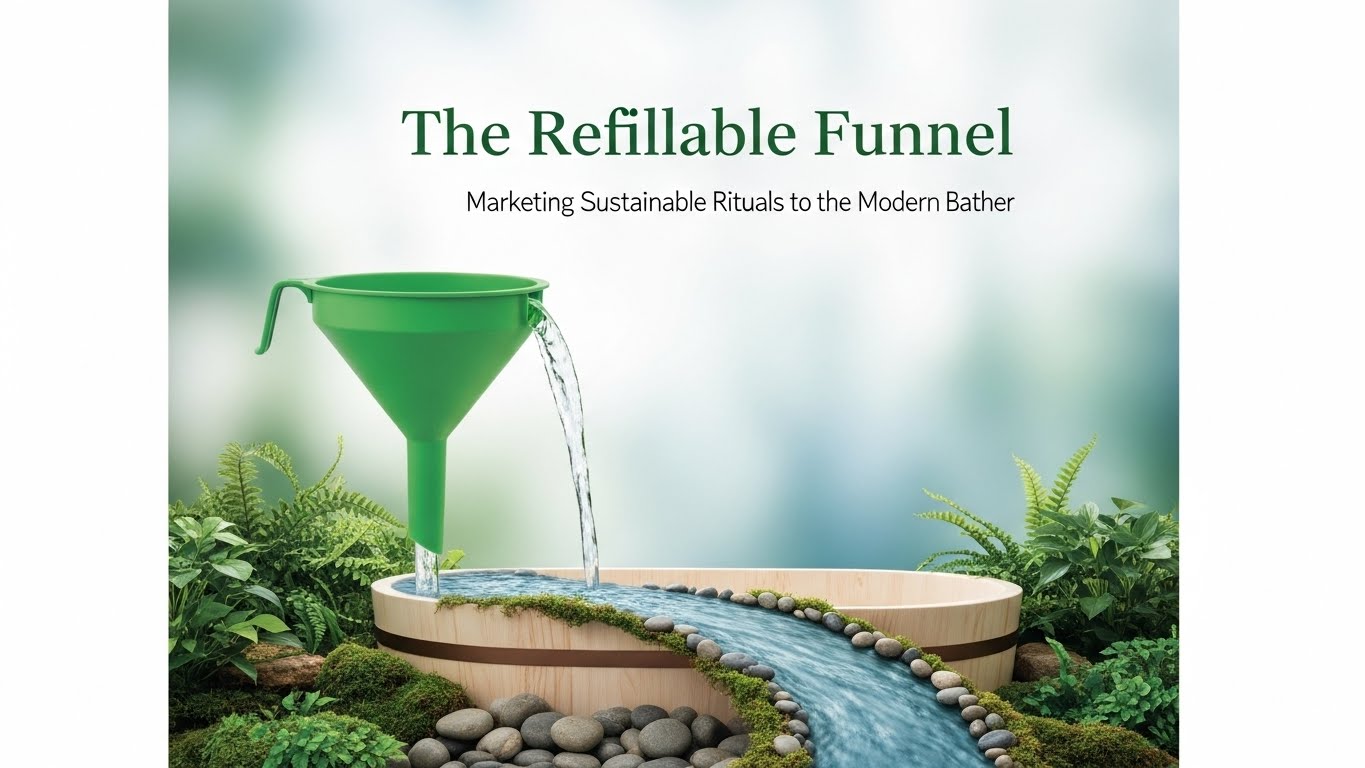
Building zero-waste bath brands through scent storytelling and ritual retention She’s standing in her shower, holding an empty bottle of the body wash she’s used for three years. Same ceramic vessel. Same pump mechanism. Fourth refill. The bottle isn’t trash—it’s a ritual object. She pours the new concentrate in, adds water, shakes. In 60 seconds, she’s made fresh body wash and avoided another plastic bottle in the landfill. This isn’t virtue signaling. It’s her normal. This is the modern bather—a consumer who demands both sustainability AND luxury, zero-waste systems AND sensory indulgence, environmental responsibility AND beautiful bottles. They’re not choosing between ethics and experience; they’re choosing brands that deliver both without compromise. The refillable ritual has evolved from eco-sacrifice to premium positioning, from granola guilt to aspirational lifestyle. Welcome to the refillable revolution—where brands like Plaine Products, Blueland, and By Humankind have proven that sustainable bath products can command premium prices through smart refill systems, compelling scent stories, and ritual-focused marketing. These aren’t “eco alternatives” positioned as inferior compromises. They’re luxury bath experiences that happen to eliminate single-use plastic through thoughtful design. According to research, the sustainable personal care market is growing at 9.8% annually, projected to reach $25.1B by 2028. But more importantly: 68% of consumers say they’d pay 15-20% premiums for refillable packaging, and refillable product customers show 3.7x higher lifetime value than single-purchase customers due to automatic replenishment behavior. The refill model isn’t just environmentally smart—it’s economically superior. The challenge: how do you market refillable products when customers are trained for single-use convenience? How do you make “buy once, refill forever” feel luxurious rather than limiting? How do you visually communicate scent—especially place-based fragrances like “Northern California coast”—when customers can’t smell through screens before committing to permanent bottles? And the bigger opportunity: how do you build customer retention into your product design itself? When the beautiful bottle stays on their shelf and only concentrate refills arrive monthly, you’ve created physical brand permanence. The refillable funnel transforms one-time buyers into forever subscribers—not through forced subscriptions, but through ritual investment in reusable systems. This article will show you how to market refillable bath products to modern bathers—building zero-waste systems that feel like luxury upgrades, creating scent storytelling that makes place-based fragrances irresistible sight-unseen, and designing refill funnels that turn sustainability from virtue signal into competitive advantage. Before building the refillable funnel, understand who’s buying sustainable bath products and why: According to Mintel sustainable packaging research, 73% of consumers consider packaging waste when purchasing personal care products, and 82% say they’d be “very likely” or “somewhat likely” to purchase refillable versions of products they already use. The key insight: modern bathers aren’t asking “Should I go sustainable?” They’re asking “Which sustainable brand delivers the best experience?” Your competition isn’t conventional bath products—it’s other refillable systems. Win by making your refill ritual superior. Strategy: Position permanent bottle as beautiful investment—ceramic, glass, substantial weight. Price reflects quality + longevity. “Buy once, keep forever.” Goal: Create initial buy-in to system through ritual object desire Strategy: Make first refill process surprisingly satisfying—concentrate mixing, bottle transformation, zero-waste accomplishment. Ritual enjoyment, not chore. Goal: Prove refilling is pleasure, not compromise—convert skeptics Strategy: Offer (don’t force) auto-refill subscriptions—arrives when bottle empties, skip/pause flexibility. Convenience without commitment pressure. Goal: Remove thinking—refills arrive automatically, ritual continues effortlessly Strategy: Once committed to bottles (body wash), expand to matching products (shampoo, hand soap, lotion). Same system, complete bathroom aesthetic. Goal: Increase share of shower—customer refills multiple products from you Strategy: Encourage refill ritual photos—beautiful bottles, mixing process, impact stats. Turn sustainability into shareable lifestyle content. Goal: Customer acquisition through authentic sustainability advocacy Core Principle: The refillable funnel transforms single purchases into lifetime relationships by creating initial investment in beautiful permanent bottles, proving refill ritual satisfaction, automating replenishment, expanding into complete ecosystems, and building advocacy communities. When customers own your bottles, they’re physically committed—refills become their only option, and system beauty makes switching emotionally unappealing. Same body wash formula, different business model. One competes on features; one builds ecosystems: Single-use brands fight for every repurchase. Refillable brands create system lock-in—once customers own your permanent bottles, switching means abandoning their investment. The beautiful vessel sitting on their counter is a physical reminder to reorder from YOU, not try competitors. Refills become path of least resistance. This is the refillable bath product paradox: customers must commit to permanent bottles BEFORE smelling your product. Unlike conventional beauty where they can test in-store, refillable models require upfront investment ($35 ceramic bottle + first fill) based solely on scent descriptions and visual storytelling. How do you make “Northern California coast” scent so compelling through screens that customers buy sight-unseen and commit long-term? The opportunity: place-based scents (coastal sage, desert rain, forest floor) are inherently storytelling-rich. Unlike generic “lavender vanilla,” geographic fragrances carry immediate emotional associations—”Northern California coast” evokes imagery, memories, aspirations before customers even smell it. Your challenge is translating olfactory experience into visual narrative so powerful that customers imagine the scent accurately and purchase confidently. The Strategy: Show the actual place your scent captures—make geography the hero. The Northern California Coast Visual Series: Opening Shot: The Landscape “Wide drone shot: rugged cliffs, crashing waves, morning mist, cypress trees. Golden hour light. Text overlay: ‘This is where your scent begins.'” Detail Shots: Scent Elements “Close-ups of: sea spray on rocks, wild sage growing in sand, driftwood weathered by salt air, eucalyptus leaves crushed in hand. Each element = one note in your fragrance.” Atmospheric Conditions: Weather as Scent “Show marine layer fog rolling in, salty air visible. Text: ‘That fresh-after-rain petrichor + ocean ozone + crisp morning cold = our top notes.'” Sensory Movement: Wind, Waves, Life “Video of wind moving through coastal grass, waves breaking (sound on), seagulls calling. Movement suggests aliveness—scent isn’t static photograph, it’s living place.” The Power: When customers see the actual Northern California coast—cliffs, sage, mist, driftwood—their brain supplies the scent from memory or imagination. Visual cues trigger olfactory recall. They “smell” your product before it arrives. Why this works: Place-based scents activate geographic memory (customers who’ve been) or aspirational imagination (customers who want to go), visual beauty creates emotional desire to “bring that place home,” specific location photography beats generic “ocean scent” descriptions, movement/sound adds sensory dimensionality to 2D screens. The Strategy: Break down complex fragrance into visual layers customers understand. The Layered Scent Breakdown: TOP NOTES (First 15 minutes) “Sea spray ozone + crushed eucalyptus + morning dew. What you smell when ocean wind hits your face.” [Image: wave close-up, eucalyptus leaves] HEART NOTES (30-60 minutes) “Wild coastal sage + beach rose + sea grass. The green-herbal warmth as sun rises over dunes.” [Image: sage close-up, coastal flowers] BASE NOTES (Lasting) “Driftwood + warm sand + cypress resin. The grounding earthy foundation—what lingers on your skin.” [Image: weathered driftwood, sand texture] Infographic Format: Create actual pyramid illustration with layers. Each layer shows: note name, natural ingredient photo, scent descriptor, time duration. Makes fragrance complexity tangible. Why this works: Fragrance pyramids educate customers on how scent evolves, natural ingredient photos create scent associations, time duration sets expectations (not just initial spray), layered format makes complexity feel sophisticated not overwhelming, visual structure helps customers “understand” what they’ll smell. The Strategy: Connect scent to universal experiences customers recognize emotionally. The “Smells Like…” Comparison Framework: Product Page Copy: “Close your eyes. You’re standing on Point Reyes beach at sunrise. Salt spray on your skin. Cypress wind. Wild sage underfoot. That scent—we bottled it.” Why this works: “Smells like…” descriptions activate customer’s own scent memories, emotional experiences (vacation, hiking, dawn) transfer to product, specific place names create aspirational desire, multi-sensory language (crushed between fingers, salt on skin) engages imagination beyond just nose. The Strategy: Show where scent ingredients actually come from—wild harvest, foraging, ethical sourcing. The Coastal Sage Sourcing Series: Video Journey: “We wild-harvest coastal sage from protected California dunes. Here’s the foraging process—sustainable picking (leaving 80% of plant), respectful timing (after seed set), small-batch distillation within 24 hours to preserve volatile oils. The sage you smell grew here.” [Show forager collecting, close-ups of plants, distillation process] Impact: Botanical sourcing story makes scent feel precious (wild-harvested not synthetic), ethical practices appeal to values-driven customers, visual journey from plant to bottle creates transparency, small-batch process justifies premium pricing. Why this works: Origin story adds authenticity to place-based scent claims, wild-harvesting implies rarity and quality, showing actual plants creates tangible scent connection, sustainable practices align with refillable brand values, distillation process proves fresh not synthetic. The Strategy: Show scent transforming bathroom into coastal sanctuary—steam, ambiance, transportation. The Morning Shower Ritual Video: Scene Setup: Bathroom at dawn, soft natural light. Person enters shower, pumps body wash (your ceramic bottle visible). Steam begins rising. Scent Release: Lather in hands, visible deep inhale, eyes closing, shoulders relaxing. Text overlay: “Coastal sage. Sea air. You’re not in your bathroom—you’re on the Northern California coast.” The Transformation: Cut to: actual Northern California coast footage—matching the feeling created in shower. Text: “Five minutes in your shower. Five hours on the coast. Same escape.” Why this works: Shows product in actual use context (bathroom not just bottle), steam makes scent release visible, person’s reaction (inhale, eyes close, relax) demonstrates experience, comparison to actual coast location proves transportation claim, positions daily shower as micro-vacation. The Strategy: Feature customer reviews that describe scent in their own words—relatable, varied perspectives. Featured Review Quotes on Product Page: “Smells exactly like Big Sur morning hikes—that fresh sage-meets-ocean combo I’ve been trying to find for years.” — Sarah M. “My bathroom smells like expensive spa on the California coast now. Clean, herbal, not fake. The real deal.” — Jessica T. “I grew up in Northern California. This scent is childhood summers at the beach—eucalyptus wind, salty air, wildflowers. Made me cry.” — David L. Why this works: Customer language more relatable than brand copy, multiple perspectives show scent works for varied associations, emotional reactions (tears, nostalgia) prove powerful connection, specific place references (Big Sur, childhood summers) validate geographic accuracy, “real deal” vs. “fake” addresses authenticity concerns. Juniper Ridge built a cult following selling “wilderness in a bottle”—hiking trail scents captured through wild-harvesting and distillation. Their strategy: (1) Every product named for specific trail/location—”Big Sur Campfire,” “Mojave Ghost,” “Cascade Glacier”—geographic specificity creates immediate visual association, (2) Product pages feature actual location photography—sweeping wilderness shots, trail markers, the exact places scents come from—customers see where they’ll be transported, (3) Scent pyramids break down every note with natural ingredient photos—coastal sage close-up, chaparral, ocean spray—botanical education makes complex fragrances understandable, (4) Wild-harvesting videos show founder foraging sustainably—picking sagebrush, distilling in small batches—artisan process justifies $28 soap bars, (5) Customer reviews describe emotional transportation—”smells exactly like camping in Yosemite,” “my apartment smells like Joshua Tree now”—social proof validates place-accuracy, and (6) “Smells like…” descriptions trigger memory—”smells like hiking through juniper groves after rain”—multi-sensory language activates imagination. Result: 4.8-star average with reviews consistently mentioning “authentic,” “exactly like the place,” “bottled wilderness.” They sell $38 body wash concentrate (customers commit to refill system) based purely on scent descriptions and place-based storytelling—proving geographic fragrances can drive sight-unseen purchases when visual narrative is strong enough. Their Instagram shows actual wilderness locations more than products, because the place IS the product story. When you create location immersion photography, scent pyramid visualizations, memory trigger descriptions, ingredient harvest stories, bathroom transformation videos, and customer scent reviews—place-based fragrances stop being abstract descriptions. They become experiences customers can imagine so vividly they purchase confidently, commit to permanent bottles, and build refill rituals around scents that transport them daily to Northern California coasts from their own showers. Learn the proven strategies successful sustainable brands use to build refillable funnels, master place-based scent storytelling, and create zero-waste rituals that convert modern bathers into lifetime customers—turning sustainability into your most powerful competitive advantage. Explore the Beauty Marketing Course → Build sustainable brands that refill forever Beyond product marketing, create content that celebrates and sustains refill culture: Encourage customers to share their refill process: Example: “#RefillSunday—show us your ritual. Mix concentrate, photograph transformation, tag us. Every refill = one fewer plastic bottle.” UGC builds community around sustainable practice, makes refilling social currency. Quantify collective environmental impact: Example: “This quarter, our community eliminated 47,000 plastic bottles through refills. That’s 2.1 tons of plastic waste avoided. Here’s how it breaks down…” Make sustainability tangible and collective. Deep-dive into place-based scent origins: Example: “Exploring the Northern California Coast: The landscapes, botanicals, and weather that inspired our signature scent. Video tour with forager, naturalist, perfumer.” Educational content that enriches scent connection. Celebrate customers using bottles for years: Example: “Meet Sarah’s bottle—3 years old, 36 refills, still perfect. ‘This ceramic vessel is part of my bathroom now, like a family heirloom.'” Show permanence as badge of honor. Refillable pricing requires reframing—initial investment justifies ongoing savings: Single-use: $12/bottle × 12 = $144/year. Refillable: $35 bottle + ($15 refill × 12) = $215. Seems more expensive… until Year 2. Single-use: $144/year forever. Refillable: $180/year (refills only). Plus: no plastic waste, permanent beautiful bottle, auto-delivery convenience. LTV wins dramatically. “12 plastic bottles eliminated annually = unmeasurable value. You can’t put a price on guilt-free showering. That’s worth the $35 initial investment alone.” The modern bather has moved beyond asking “Should I care about sustainability?” to demanding “Which sustainable system works best for me?” Single-use plastics aren’t just environmentally problematic—they’re increasingly socially unacceptable. The refillable revolution isn’t coming; it’s here. Brands still selling disposable bottles aren’t competing on sustainability; they’re competing on convenience. And convenience is a race to the bottom. Refillable brands win by making sustainability the superior experience—not a compromise. When your ceramic bottle is more beautiful than plastic, when refill rituals are more satisfying than single-use, when place-based scents transport customers daily to Northern California coasts, when auto-replenishment removes all friction—refillable stops being “eco alternative” and becomes simply better. “The future of bath brands is the refillable funnel—where first purchases become forever relationships through smart system design. Build beautiful permanent bottles that customers want to keep on their counters as ritual objects. Make refilling satisfying through concentrate mixing, transformation watching, zero-waste accomplishment. Automate replenishment so customers never run out, never think, just receive refills when needed. For scent-based products, master place-based storytelling: show actual Northern California coast locations through immersive geography, break down scent pyramids with botanical visuals, trigger memory associations through ‘smells like…’ descriptions, document ingredient wild-harvesting, show bathroom transformation into coastal sanctuary, feature customer scent reviews. When customers can imagine your fragrance so vividly through screens that they commit to $35 permanent bottles sight-unseen—your visual storytelling has succeeded. The refillable model isn’t just sustainable; it’s economically superior. Customers who invest in your bottles have 3.7x higher lifetime value, automatic repurchase behavior, and switching barriers (abandoning beautiful vessels they own). Build starter sets that create initial system buy-in, prove refill satisfaction, automate subscriptions, expand into complete bathroom ecosystems, celebrate community refill rituals. When your customer’s ceramic bottle sits on their shower shelf for years—your brand has physical permanence. That bottle is a daily reminder to reorder from YOU. You’ve built retention into product design itself.” So build your refillable funnel. Create beautiful permanent vessels. Make refilling ritualistic. Master place-based scent storytelling. Automate thoughtfully. Build for forever. Because the modern bather isn’t buying body wash—they’re investing in sustainable systems that make them feel good about every shower. Market refillable brands boldly. Bottle place-based scents. Build rituals that last. ♻️✨ Share this guide with sustainable bath brand founders! Keywords: refillable bath products, sustainable beauty marketing, zero-waste bath rituals, place-based scent storytelling, Northern California coast fragrance, refillable funnel, modern bather, sustainable packaging, lifetime value customersUnderstanding the Modern Bather: Sustainability as Non-Negotiable
The Seven Characteristics of Modern Bather Customers
Zero-waste committed: Already composting, using reusable bags, avoiding single-use plastic—refillable bath products natural next step
Non-compromising on quality: Won’t sacrifice luxury for sustainability—demand both beautiful design AND environmental responsibility
System thinkers: Understand upfront investment (permanent bottle $35) pays off through refills ($15)—appreciate long-term value
Ritual-oriented: See refilling as satisfying act—mixing concentrate, watching bottle fill, tangible sustainability participation
Transparency-demanding: Verify packaging claims—check if “refillable” means truly reusable or just recyclable marketing
Community-aligned: Share sustainable finds, photograph refill rituals, identify with zero-waste lifestyle tribe
Long-term loyalty prone: Once invested in system (permanent bottle), unlikely to switch—physical commitment creates psychological lock-inThe Refillable Funnel: From First Fill to Forever Loyalty
INVEST: The Starter Set (Premium First Purchase)
EXPERIENCE: First Refill Ritual (Satisfaction Proof)
AUTOMATE: Subscription Refill Flow (Friction Elimination)
EXPAND: Ecosystem Building (Category Extension)
ADVOCATE: Community Ritual (Social Sustainability)
Single-Use Marketing vs. Refillable Ritual Positioning
The Refillable Revenue Model
Visual Storytelling for Scent-Based Products (Capturing the Northern California Coast)
The Place-Based Scent Storytelling Framework
1. The Location Immersion (Geographic Photography)
2. The Scent Pyramid Visualization (Olfactory Education)
3. The Scent Memory Triggers (Emotional Association)
4. The Ingredient Harvest Story (Botanical Sourcing)
5. The Bathroom Transformation (In-Context Scent Experience)
6. The Customer Scent Reviews (Social Proof Descriptions)
Real Example: Juniper Ridge’s Place-Based Scent Mastery
Ready to Master Refillable Brand Marketing?
Content Strategy: Building Refill Ritual Communities
“Refill Day” Ritual Documentation
“Impact Counter” Transparency Updates
“Scent Journey” Location Series
“Bottle Hall of Fame” Long-Term Testimonials
Pricing Refillable Premium (Investment vs. Ongoing Value)
The Refillable Value Proposition Framework
Year 1 Cost Comparison
Year 2+ Lifetime Value
The Environmental Value Add
The Future Is Refillable: Building Brands for Forever Customers
Resources for Refillable Bath Brands