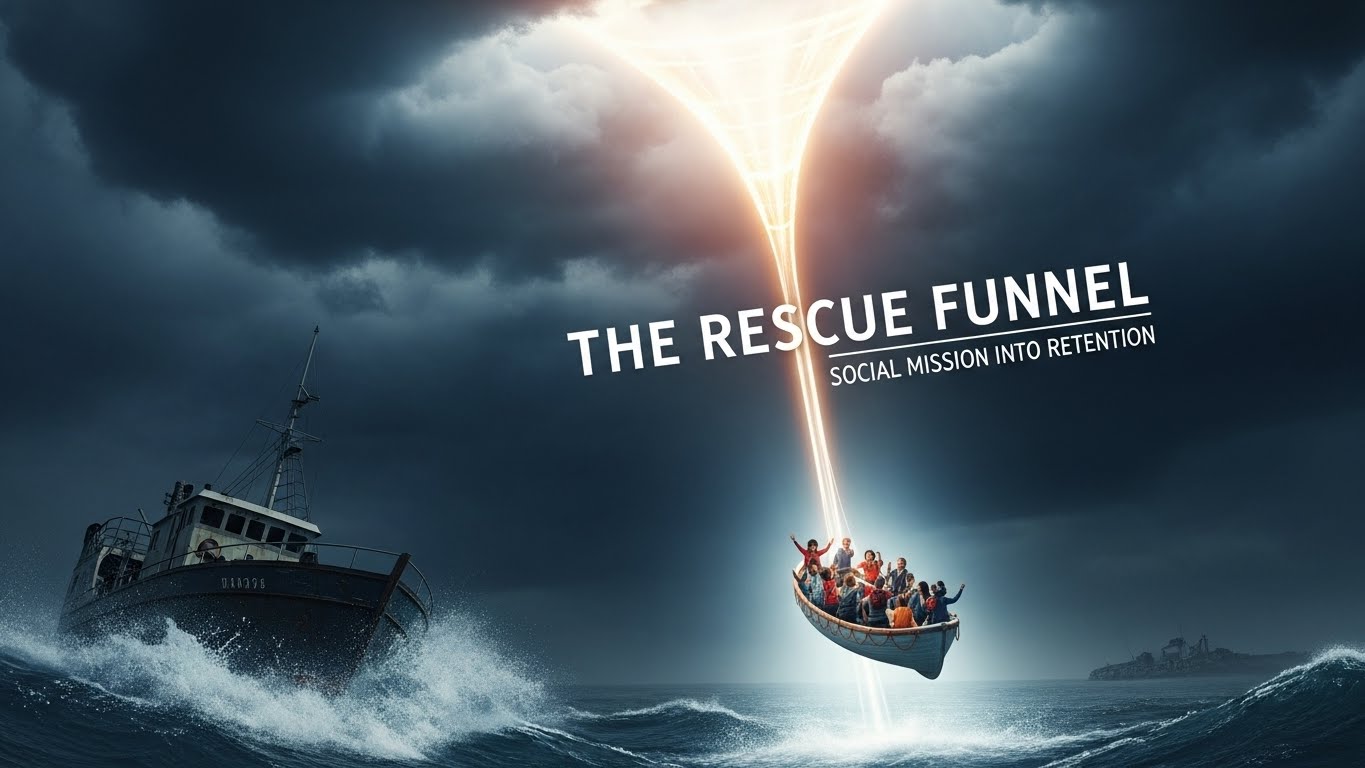
Where “your purchase saves lives” becomes traceable proof—impact accountability drives premium loyalty Your beauty brand donates 5% of profits to ocean cleanup. Your packaging states “Every Purchase Protects Our Oceans.” A customer buys your $48 seaweed-based moisturizer. Then what? She never hears about the donation again. Doesn’t know how much actually went to cleanup. Can’t verify impact happened. Six months later when competitors launch similar products at $38, she switches. Your social mission didn’t create retention—it was just marketing copy that failed to convert values into loyalty. This is the social mission conversion gap—brands slap “giving back” messaging on products expecting customers to stay loyal, but without impact accountability, transparency, and personal connection to change created, social mission becomes empty promise that neither justifies premium pricing nor builds retention. Customers want to believe their purchases matter, but vague claims (“we donate to charity”) without proof feel like purpose-washing—performative values exploiting their desire for ethical consumption. Welcome to the Rescue Funnel—a framework that transforms social mission from marketing claim into high-converting retention loop through impact tracking, transparent accountability, and personal connection to measurable change. Brands like Pela, Patagonia, and TOMS pioneered elements of this: batch codes showing specific impact, transparent reporting on where money goes, customer dashboards tracking cumulative change—mission as retention mechanism, not just acquisition hook. According to research, 73% of consumers will pay premium for brands with authentic social missions, but only 31% believe brands actually follow through on mission claims. The mission-driven beauty market ($28.4B annually, growing 16.8%) is dominated by brands with vague impact statements. However, brands with transparent impact tracking see 2.8x higher customer lifetime value ($520 vs. $185) and 67% repurchase rates vs. 24% for vague-mission brands—accountability creates retention premium pricing enables. The challenge: how do you turn social mission from acquisition marketing into retention driver? How do you use impact tracking (batch codes, customer dashboards, transparent reporting) to justify premium pricing skeptical consumers question? How do you create personal emotional connection between individual purchase and measurable change so customers feel their money genuinely creates impact? And critically—how do you build accountability systems proving mission authenticity without overwhelming customers with data or coming across as self-congratulatory? This article will show you how to build the Rescue Funnel—turning social mission into high-converting retention loops through impact tracking that justifies premium pricing, transparent accountability that converts skeptics, and personal connection to measurable change that makes customers champions of your mission, not just buyers of your products. Before building rescue funnels, understand what mission-driven consumers actually want: According to BCG consumer research, 73% will pay premium for authentic social missions, but only 31% believe brand claims without proof—transparency gap represents massive opportunity. The key insight: mission-driven consumers aren’t naive—they want to believe their purchases create change, but need proof overcoming greenwashing skepticism. Impact tracking, personal connection to measurable outcomes, and ongoing accountability transform mission from acquisition claim into retention driver justifying premium pricing through demonstrated value alignment. Strategy: Each product has batch code showing specific impact. “Your Batch #47392 = 2lbs ocean plastic removed, 0.8 trees planted.” Personal, measurable, traceable. Goal: Create direct connection between purchase and change Strategy: Customer portal showing total impact across all purchases. “You’ve removed 18lbs plastic, planted 7 trees, funded 3 cleanups.” Gamification drives repurchase. Goal: Visualize growing impact, motivate continued participation Strategy: Quarterly impact reports with financial breakdowns: “$X revenue → $Y to ocean cleanup → Z tons removed.” Third-party verification. Radical transparency. Goal: Build trust through accountability, differentiate from greenwashers Strategy: “2lbs plastic = 94 water bottles saved from ocean” or “0.8 trees = offsets 1 month driving.” Make abstract data emotionally meaningful. Goal: Help customers understand significance of their impact Strategy: “Our community removed 47 tons plastic this year—equivalent to cleaning 2 miles of coastline.” Tribe identity around shared mission achievement. Goal: Build belonging through collective accomplishment Core Principle: The Rescue Funnel converts mission into retention by tracking impact per purchase through batch codes, visualizing cumulative change via personal dashboards, reporting transparent financials quarterly with third-party verification, contextualizing data as relatable outcomes, and celebrating collective community achievement. Mission becomes retention mechanism through accountability, not marketing claim. Same social mission, opposite customer retention. One feels empty; one builds loyalty: Every mission claim must have three elements: (1) Traceable—batch codes, GPS coordinates, specific amounts customers can verify, (2) Measurable—quantified outcomes (2.2lbs plastic, 103 bottles, 0.6 tons CO2) not vague “doing good,” (3) Contextual—translate numbers to relatable equivalents (flights, driving, bottles) so customers understand significance. Without all three, mission is marketing theater not retention driver. This is the mission-driven pricing paradox: customers say they’ll pay premium for brands with authentic social missions, but balk at checkout when $48 moisturizer sits next to $32 competitor without clear differentiation. They WANT to support your ocean cleanup mission, but premium requires proof their extra dollars create measurable difference. Vague “5% donated” promises don’t justify $16 price gap—feels like paying extra for marketing claims, not actual impact. Without transparent tracking showing where their money goes and what it accomplishes, mission becomes empty premium justification that doesn’t convert values into willingness to pay. The opportunity: impact tracking (batch codes, transparent breakdowns, personal dashboards) transforms premium pricing from questioned markup into justified mission contribution. When customers see EXACTLY what their extra dollars fund (Your $10 premium = 4.5lbs plastic removed = 211 bottles saved), can track cumulative impact growing with each purchase, and receive ongoing proof mission is authentic not marketing theater—premium becomes investment in measurable change, not brand tax. Impact accountability turns price objection into loyalty driver. The Strategy: Break down pricing showing exactly what portion funds mission vs. product—transparency justifies premium. Product Page Pricing Transparency: The Breakdown Displayed Prominently: OCEAN RESCUE MOISTURIZER – $48 What You’re Paying For: Your $10 Ocean Rescue Premium Creates: Competitor Comparison: Justification Power: Breaking down EXACTLY what $10 premium funds (4.5lbs, 211 bottles, 0.3 cleanups) transforms abstract “we donate” into concrete measurable impact customer knowingly purchases. Premium becomes choice, not exploitation. Why this works: Transparency about company margin builds trust (not hiding profit), isolating mission premium ($10) makes it separate conscious decision, quantifying impact (4.5lbs, 211 bottles) proves premium worth, competitor comparison contextualizes value, “you decide” respects customer agency, batch code traceability = accountability. The Strategy: Every product has unique batch code linking to specific impact created by that purchase—personal accountability. Batch Code System Implementation: How It Works: On Product: Batch code printed on bottom of jar: “BATCH #47392” On Package Insert: Your $10 premium funded: Track your impact: OceanRescue.com/track/47392 On Website Portal (OceanRescue.com/track/47392): Premium Justification: When customer can enter batch code and see EXACT cleanup their purchase funded (location, photos, date, verification), premium becomes traceable investment in real change, not abstract donation claim. Accountability = willingness to pay. Why this works: Batch code makes impact personal and traceable, GPS location proves real action taken, photos provide visual proof, date stamp shows timeliness, third-party verification = independent accountability, showing 47 other purchases = collective effort context, portal visit = engagement driving brand connection. The Strategy: Customer dashboard showing total impact across all purchases—gamification motivates repurchase to increase contribution. Impact Dashboard Design: YOUR OCEAN RESCUE IMPACT Total Since Joining (Jan 2024): Purchase History: Next Milestone: Your Impact Ranking: Share Your Impact: Retention Mechanism: Dashboard visualizes cumulative impact increasing with purchases, milestone gamification (“Ocean Champion” badge at 20lbs) motivates next purchase, ranking creates friendly competition, social sharing amplifies mission + drives referrals. Why this works: Seeing impact accumulate creates ownership (“MY 18.2 lbs”), milestone unlocking gamifies repurchase, 91% progress bar triggers completion urge, ranking adds social proof and competition, contextualizing (13 flights) makes abstract meaningful, sharing transforms customers into mission advocates. The Strategy: Public quarterly reports showing exactly where mission premium goes—radical transparency builds trust justifying premium. Q4 2024 Impact Report (Public Webpage): Trust Building: Showing 100% of premium donated (not “up to” or “portion”), third-party verification, cost-per-pound transparency (vs. industry average), geographic breakdown = radical accountability competitors can’t match. Premium justified through demonstrated integrity. Why this works: 100% premium donation proves no skimming, third-party audit = independent verification, comparing cost-per-pound to industry shows efficiency, geographic breakdown adds specificity, quarterly consistency demonstrates ongoing commitment, public posting = accountability to community. The Strategy: Show side-by-side what customer’s money creates with your brand vs. competitor—justifies premium through contrast. “Your Money, Two Choices” Comparison: COMPETITOR X MOISTURIZER – $32 OUR OCEAN RESCUE MOISTURIZER – $48 (+$16) The Question: Why this works: Side-by-side comparison makes premium tangible, “zero ocean impact” vs. “4.5 lbs removed” = stark value difference, highlighting batch code and dashboard = unique advantages, “you decide” respects customer, social proof (“our customers say yes”) provides validation. The Strategy: Reward customers based on cumulative impact created, not just money spent—mission becomes loyalty mechanism. Impact-Based Loyalty Tiers: Retention Power: Tiers based on impact (not spend) aligns rewards with mission, customers motivated to reach next tier through purchasing = retention, higher tiers get premium benefits justifying continued loyalty, “visit cleanup site” ultimate reward = experiential connection. Why this works: Impact-based tiers (not spend-based) feel mission-aligned not transactional, progressive benefits motivate tier advancement through purchasing, “Ocean Guardian” visit to cleanup site = dream reward, VIP community builds belonging, premium benefits justify continued premium paying. Pela built $50M+ phone case brand charging $40 vs. $15 competitors through transparent impact tracking justifying premium. Their strategy: (1) Clear breakdown—”$40 = $22 compostable case + $8 operations + $10 ocean cleanup premium” showing exactly where money goes, (2) Batch code system—every case has code linking to specific ocean cleanup funded (GPS location, photos, verification), customers can track impact at Pela.Earth/impact/[code], (3) Personal dashboard—”Your Pela Impact: 3 cases = 13.5 lbs plastic removed, 632 bottles saved, 0.9 cleanups funded” with milestone unlocking (Ocean Champion at 20 lbs) gamifying repurchase, (4) Quarterly transparency reports—public financial flow showing 100% of $10 premium donated to ocean cleanup partners (Ocean Conservancy, 5 Gyres), third-party audited, (5) Comparison messaging—”$15 plastic case = landfill waste. $40 Pela = compostable + 4.5 lbs ocean plastic removed. Worth $25? Our community says yes,” and (6) Impact-based loyalty—tiers unlock based on cumulative pounds removed (Ocean Guardian at 50+ lbs gets cleanup site visit). Result: 68% repurchase rate (vs. 18% phone case industry), $420 customer lifetime value (vs. $65 average), 4.6-star rating with reviews mentioning “worth premium for mission,” customers stay average 3.2 years purchasing 5.6 cases (vs. 1.1 years/1.4 cases industry). Success proves impact tracking justifies premium pricing through accountability—transparency converts skepticism into loyalty, batch codes create personal ownership, dashboards gamify retention, mission becomes competitive moat no price-focused competitor can match. When you break down pricing showing where premium goes transparently ($10 = 4.5 lbs removed), implement batch codes linking purchases to specific traceable impact, create personal dashboards visualizing cumulative contribution with milestone gamification, publish quarterly financial reports with third-party verification, produce comparison content showing impact vs. competitors doing nothing, and integrate impact-based loyalty rewards—premium pricing transforms from questioned markup into justified mission investment. Customers pay more because they see exactly what their dollars create. Learn the proven strategies successful mission-driven brands use to turn social impact into high-converting retention loops, master implementing impact tracking systems that justify premium pricing through accountability, and build rescue funnels where measurable change creates customer loyalty competitors can’t replicate—creating movements that generate profit through purpose. Explore the Beauty Marketing Course → Build brands where mission is retention, impact justifies premium Beyond individual tactics, systematize mission-driven retention throughout operations: Technical implementation: Example: “Partner with fulfillment to print unique batch codes on each product. Build impact tracking portal where customers enter code to see specific cleanup funded. Link codes to partner organization’s verified cleanup data.” Customer portal creation: Example: “Build customer portal showing cumulative impact across purchases. Include milestone tracking, social sharing, purchase history with batch codes, leaderboard (optional). Gamification drives engagement and repurchase.” Accountability cadence: Example: “Every quarter: publish public report showing revenue, premium collected, amount donated, impact created (tons removed, bottles saved), geographic breakdown, third-party verification. Consistency builds trust.” Mission authenticity: Example: “Partner only with verified 501(c)(3) organizations with transparent financials and proven impact. Ocean Conservancy, 5 Gyres, etc. Vet thoroughly—your mission credibility depends on their legitimacy.” The mission-driven beauty market grows 16.8% annually as consumers increasingly prefer brands with authentic social impact. But 69% of consumers distrust brand mission claims due to rampant greenwashing—vague “we give back” promises without proof feel performative not purposeful. Traditional mission marketing treats social impact as acquisition hook (“buy from us, we donate!”) without retention infrastructure, leading to mission-motivated first purchase but no loyalty preventing customer from switching to cheaper competitors. Mission becomes marketing theater not business advantage. The Rescue Funnel wins by transforming social mission from claim into accountability system. When you track impact per purchase through batch codes showing specific outcomes (Your Batch #47392 = 4.5 lbs plastic removed, 211 bottles saved, GPS verified), create personal dashboards visualizing cumulative contribution with milestone gamification (Ocean Champion at 20 lbs unlocked!), publish quarterly transparency reports with financial breakdowns and third-party verification (100% of $10 premium donated, audited), contextualize data as relatable outcomes (4.5 lbs = 211 bottles or 2.3 flights offset), celebrate collective community achievement (our tribe removed 47 tons this year!), break down pricing transparently (your $10 premium creates X impact), implement impact-based loyalty rewards (tiers by pounds removed, cleanup site visit at Guardian level)—mission becomes retention mechanism through accountability impossible for competitors to replicate without genuine commitment. “The future of mission-driven brands is Rescue Funnels—turning social impact into retention through accountability. Track impact per purchase: batch codes on products linking to specific outcomes (4.5 lbs removed, 211 bottles, GPS location, photos, verification). Build personal dashboards: cumulative impact visualization with milestone gamification (Ocean Champion badge at 20 lbs motivates repurchase). Report transparently quarterly: financial flow ($284K revenue → $59K donated), 100% premium goes to mission proven, third-party audited. Contextualize numbers: 4.5 lbs = 211 bottles or 2.3 flights, making abstract tangible. Celebrate collective: ‘Our community removed 47 tons = 2 miles coastline cleaned.’ Justify premium through breakdown: $48 = $32 product + $6 margin + $10 mission premium creating measurable impact. Implement impact-based loyalty: tiers by pounds removed (Ocean Guardian 50+ lbs = cleanup site visit), rewards mission alignment. Pela proved impact tracking justifies premium: $40 vs. $15 competitors through transparent batch codes, personal dashboards, quarterly reports—68% repurchase, $420 LTV vs. $65 industry, 3.2 years vs. 1.1 years retention. Build batch code infrastructure, develop customer portal, commit quarterly reporting, vet partner legitimacy. Mission-driven consumers spend 2.8x more ($520 vs. $185 LTV) with accountable brands—loyalty through proof not promises. Market mission as retention. Track impact transparently. Justify premium through accountability. Win through measurable change.” So build your Rescue Funnel. Track impact per batch. Dashboard cumulative change. Report transparently quarterly. Justify premium through proof. Celebrate collective achievement. Because mission-driven consumers will pay premium and stay loyal—when your accountability proves their dollars create measurable change they can track, verify, and accumulate with pride. Impact transparency is the new competitive advantage. Market mission. Track impact. Build accountability. Justify premium. Win retention. 🌍✨ Share this guide with mission-driven beauty brands! Keywords: rescue funnel marketing, social mission retention loops, impact tracking batch codes, premium pricing justification, mission-driven customer loyalty, transparent accountability beauty brands, sustainable beauty impact measurementUnderstanding Mission-Driven Consumer Psychology: Belief + Proof = Loyalty
The Seven Mission-Driven Consumer Expectations
Proof-seeking: Want evidence impact actually happens—”we donate” means nothing without transparent reporting on what, where, how much
Personal connection: Want to see THEIR purchase’s specific impact—not brand’s total donations, but what their $48 did
Measurable change: Care about outcomes not inputs—”planted 1,000 trees” less meaningful than “offset 12 tons CO2, equivalent to 47 flights”
Ongoing updates: One-time donation notification insufficient—want to see cumulative impact grow over time with each purchase
Skepticism-aware: Burned by greenwashing, need transparency proving mission authentic not marketing ploy—accountability builds trust
Community-oriented: Want to be part of collective impact with other mission-aligned customers—tribe building around shared values
Premium-justifying: Will pay more IF impact is proven and personal—premium requires proof their extra dollars create measurable differenceThe Rescue Funnel: Mission-to-Retention Framework
TRACK: Impact Tied to Every Purchase (Batch Codes)
DASHBOARD: Personal Impact Accumulation Visible
REPORT: Transparent Where-Money-Goes Accountability
CONTEXT: Translate Numbers to Relatable Outcomes
COMMUNITY: Collective Impact Celebration
Vague Mission Claims vs. Impact-Tracked Accountability
The Accountability Rule
Using “Impact Tracking” (Like Your Batch Codes) to Justify Premium Pricing and Boost Customer Loyalty
The Impact-Justified Premium Pricing Framework
1. Transparent Price Breakdown: Show Where Premium Goes
• $32 = Product (seaweed extract, packaging, shipping, operations)
• $6 = Company margin (keeps us sustainable)
• $10 = Ocean Rescue Premium
• 4.5 pounds ocean plastic removed
• 211 plastic bottles prevented from entering ocean
• Funding for 0.3 beach cleanup operations
• Tracked via your unique Batch Code: #47392
Similar moisturizer without mission: $32-38
Your premium: $10 = measurable ocean impact
Worth it? You decide—but your purchase literally saves ocean life.2. Batch Code Impact Tracking: Personal Proof Per Purchase
“YOUR OCEAN RESCUE IMPACT
Batch #47392 | Purchased: Dec 2024
• 4.5 lbs ocean plastic removed
• 211 plastic bottles saved
• 0.3 beach cleanups
• GPS: Bali Beach Cleanup, Indonesia
See photos, cleanup date, verification”
• Map showing Bali cleanup location
• Photos of cleanup team removing plastic
• Date stamp: Dec 15, 2024
• Third-party verification: Ocean Conservancy seal
• “This was made possible by your purchase and 47 others”3. Personal Impact Dashboard: Cumulative Value Visualization
• 18.2 pounds ocean plastic removed
• 854 plastic bottles saved from ocean
• 1.2 beach cleanups funded
• 3.4 tons CO2 offset (equivalent to 13 cross-country flights)
1. Batch #45012 – Jan 2024 – 4.1 lbs removed
2. Batch #45890 – Apr 2024 – 4.5 lbs removed
3. Batch #46523 – Jul 2024 – 4.8 lbs removed
4. Batch #47392 – Dec 2024 – 4.8 lbs removed
Purchase 1 more to unlock “Ocean Champion” badge (20+ lbs removed)
Progress bar: 91% complete
Top 12% of our community
You’ve saved more plastic than 847 customers
[Social share buttons with pre-filled text: “I’ve removed 18.2 lbs of ocean plastic with @BrandName. Join me: [link]”]4. Quarterly Transparency Reports: Financial Flow Accountability
5. Comparison Content: Your Impact vs. Competitor “Doing Nothing”
What you get:
• 50ml moisturizer
• Nice packaging
• Zero ocean impact
What you get:
• 50ml moisturizer (same quality)
• Ocean-sourced ingredients
• 4.5 lbs plastic removed from ocean
• 211 bottles saved
• Trackable batch code proving impact
• Impact dashboard showing your contribution
Is removing 4.5 pounds of ocean plastic worth $16?
Our customers say yes. You decide.6. Loyalty Program Integration: Impact = Rewards
Real Example: Pela’s Impact-Justified Premium Success
Ready to Master Mission-Driven Retention Marketing?
Implementation Strategy: Building Rescue Funnel Infrastructure
Batch Code Infrastructure Setup
Impact Dashboard Development
Quarterly Transparency Reporting
Partner Organization Vetting
The Future Is Accountable Mission: Where Impact Tracking Becomes Competitive Moat
Resources for Mission-Driven Brands