Stop competing with giant budgets. Start competing with smarter strategies.
Let’s be real: as a small retail owner, looking at the marketing budgets of big-box retailers is enough to make you want to close your laptop and take a very long nap. They have entire departments dedicated to Search Engine Optimization (SEO), while you have… well, you.
But here is the secret the “big guys” don’t want you to know: SEO isn’t about who spends the most; it’s about who provides the most value to the local community. You don’t need a five-figure monthly retainer to show up on page one of Google. You just need a roadmap.
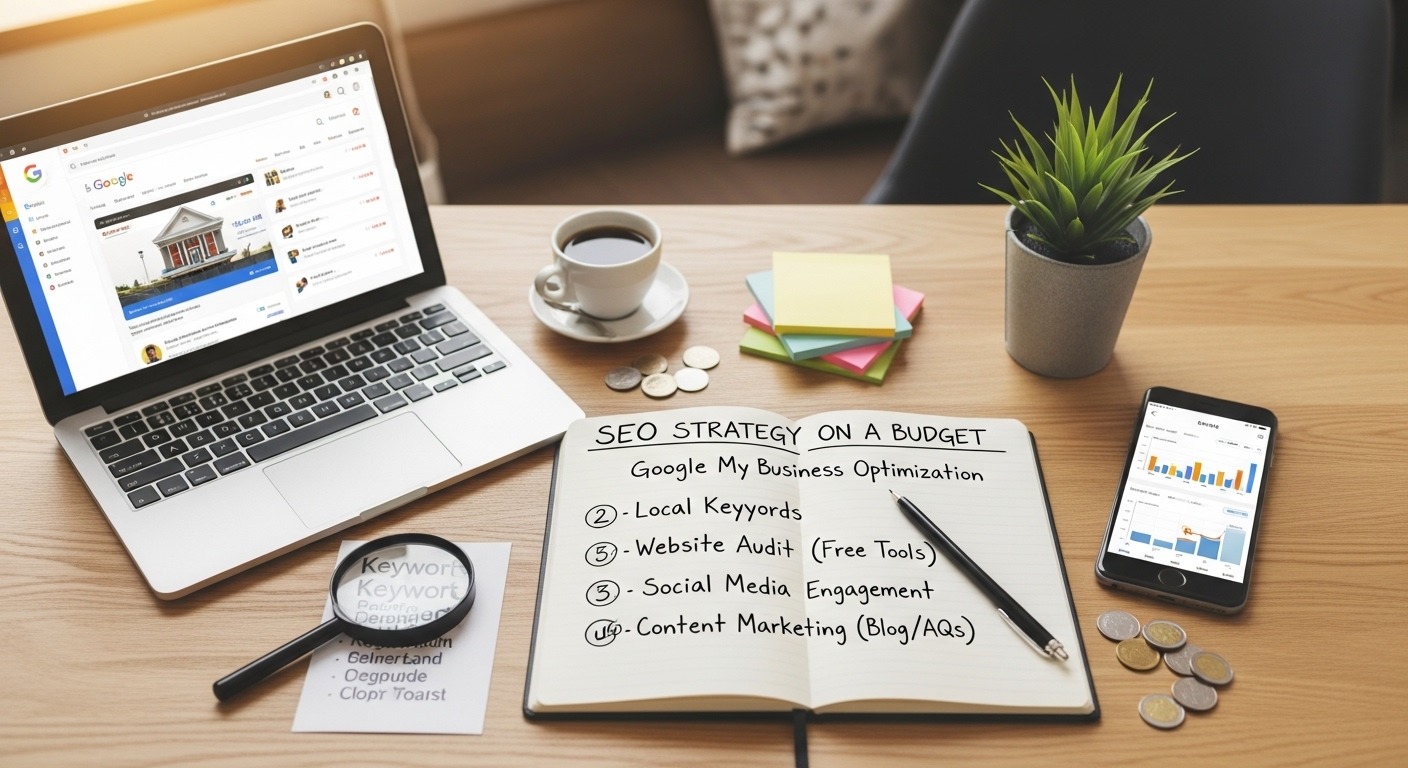
The 4 Pillars of Budget Retail SEO
Local Focus
Long-Tail Keywords
Niche Content
User Experience
Step 1: Dominate Your Immediate Radius (Local SEO)
Before you try to rank globally, you must rank on your own street. Local SEO is the highest ROI activity for small retailers.
- Google Business Profile (GBP): This is your most powerful free tool. Claim it, verify it, and upload high-quality photos of your shop weekly.
- Consistency is King: Ensure your Name, Address, and Phone Number (NAP) are identical across the web. Discrepancies confuse Google and hurt your rankings.
- Reviews: Ask your regulars for reviews. Respond to every single one—even the grumpy ones.
Step 2: Find the “Hidden” Keywords
Stop trying to rank for generic terms like “shoes” or “clothing.” You will lose to Amazon every time. Instead, target Long-Tail Keywords. These are specific phrases that customers search for when they are ready to buy.
Example: Instead of “Handmade Jewelry,” try “Handmade sterling silver necklaces in [Your City Name].” You can find these for free using tools like Google Keyword Planner or AnswerThePublic.
| SEO Task | The “Pro” (Expensive) Tool | The “Budget” (Free) Alternative |
|---|---|---|
| Keyword Research | Semrush ($120/mo) | Google Search Console (Free) |
| Site Audit | Ahrefs ($99/mo) | Ubersuggest (Free Tier) |
| Rank Tracking | Moz ($179/mo) | Manual Search in Incognito |
Struggling to Turn Website Clicks into Foot Traffic?
SEO is just the beginning. To truly grow your shop, you need a marketing system that works while you sleep. Master the art of modern retail marketing today.
Step 3: Create Content That Answers Questions
Don’t just blog for the sake of blogging. Use your blog to answer the specific questions your customers ask in-store. If five people a week ask, “How do I style a denim jacket for a wedding?”—that is your next blog post.
Google loves educational content. By providing answers, you establish “E-E-A-T” (Experience, Expertise, Authoritativeness, and Trustworthiness), which is a core part of Google’s search quality guidelines.
Step 4: Fix Your Mobile Speed
Most retail searches happen on a phone while the person is literally on the go. If your site takes more than 3 seconds to load, they are going to your competitor.
- Compress Images: Large images are the #1 reason retail sites are slow. Use free tools like TinyPNG.
- Keep it Simple: A clean, fast-loading site is better than a flashy one that crashes.
The Bottom Line
Budget SEO is about consistency over intensity. You don’t need to do everything today. Start with your Google Business Profile, fix your image sizes, and write one helpful post a week. Before you know it, the algorithm will start rewarding your effort with the one thing every retailer wants: more customers at the door.