

The traveler who booked a tour by walking into a travel agency is extinct. In their place stands a digitally fluent, research-driven, experience-hungry consumer who reads reviews obsessively, compares options across five tabs, and can spot inauthenticity from a mile away.
If you operate tours, run a hotel, manage a destination experience, or market anything in the hospitality space — understanding the modern traveler’s mindset is no longer optional. It is the difference between a fully-booked season and an empty calendar.
This guide breaks down exactly what today’s travelers prioritize when choosing who to book with — and how you can position your offering to match those expectations at every touchpoint.
In This Article
- Authenticity Over Polish
- Social Proof & Reviews Are Make-or-Break
- Personalization & Customization Options
- Sustainability & Responsible Tourism
- A Seamless Digital Experience
- Perceived Value (Not Just Price)
- Local Connection & Insider Access
- Flexibility & Trust in Cancellation Policies
- Key Stats at a Glance (Infographic)
- Your Action Plan
Authenticity Over Polish

Today’s traveler is allergic to corporate gloss. They scroll past perfectly staged stock photos. They ignore hollow taglines. What they respond to are raw, real, human stories — footage of a local grandmother teaching pasta-making, a guide sharing a personal story about their hometown, or an unedited guest review that reads like a text message.
According to Skift Research, 72% of millennials and Gen Z travelers say “authentic, local experiences” are among their top three booking motivators. The question tour operators must ask themselves: does our marketing feel lived-in, or manufactured?
“Travelers don’t want a highlight reel. They want a window into a real place, with real people.”
— Modern Travel Behavior Report, 2024
What this means for you: Lead with genuine storytelling. Use user-generated content (UGC). Show your guides as individuals, not uniforms. Authenticity isn’t a strategy — it’s the foundation everything else is built on.
Personalization & Customization Options
The era of one-size-fits-all tours is fading fast. Travelers in 2025 expect some level of customization — whether it’s choosing a departure time, adding a dietary preference, selecting a private vs. group format, or simply having a guide who speaks their language.
McKinsey’s travel research shows that personalized experiences drive up to 40% higher customer satisfaction scores in hospitality — and satisfied customers are repeat customers who refer friends.
Personalization Checklist for Tour Operators
Sustainability & Responsible Tourism

Sustainability has graduated from buzzword to genuine booking factor. Booking.com’s Sustainable Travel Report found that 76% of global travelers say they want to travel more sustainably — and a growing segment actively filters for eco-certified operators.
This doesn’t mean you need to sell only rainforest conservation tours. It means being transparent about your environmental and social practices. Do you use local guides? Do you keep group sizes small to reduce impact? Do you partner with locally-owned suppliers? Say so — loudly and specifically.
| Sustainability Signal | Why Travelers Care | How to Showcase It |
|---|---|---|
| Local guide employment | Community economic impact | Guide bio pages with hometown stories |
| Small group sizes | Reduced overtourism impact | Highlight max pax in listings |
| No single-use plastics | Environmental responsibility | Mention in booking confirmation |
| Eco-certifications | Trusted third-party validation | Display badge on website & OTAs |
| Local food sourcing | Supports local economy | Name your partner farms/producers |
A Seamless Digital Experience
Your experience might be world-class, but if your website takes 8 seconds to load on mobile, the traveler has already booked with your competitor. The digital booking journey IS the first impression of your experience.
Consider that Google’s travel data shows over 60% of travel research now happens on mobile devices. A clunky checkout process or a website that isn’t optimized for smartphones is commercial suicide in 2025.
Perceived Value, Not Just Price
Modern travelers are not cheap — but they are shrewd. They will happily pay a premium for an experience that clearly justifies its price. The mistake many operators make is competing on cost. The winning play is competing on perceived value.
Value isn’t just what you offer — it’s how clearly you communicate what makes your experience worth every dollar. Your listing descriptions, photos, and video content should make the value self-evident before a traveler even checks the price.
Value Communication Framework
🎯 What’s included — Be exhaustively specific
🌟 What makes you different — The genuine differentiator
🤝 Who this is for — Speak directly to your ideal traveler
💡 What they’ll feel/learn/take away — Outcome-focused language
🔒 Risk reduction — Cancellation policy, guarantee, reviews
Local Connection & Insider Access
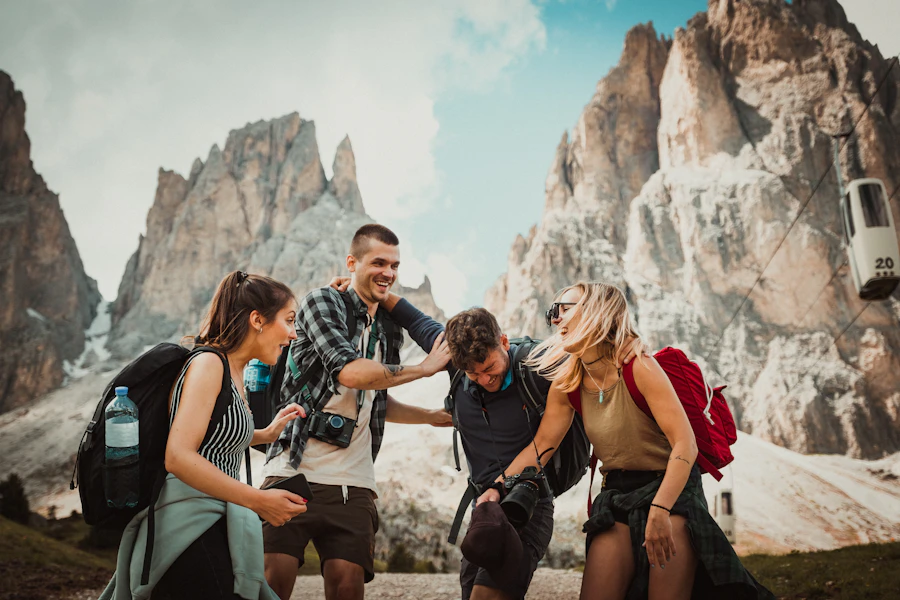
Travelers aren’t just visiting places anymore — they want to inhabit them, if only for a day. The desire for insider access — the hidden restaurant, the secret viewpoint, the neighborhood bar that doesn’t show up on Google Maps — is one of the most powerful motivators in modern travel.
This is why the guide matters as much as the itinerary. A tour led by a passionate local who grew up in the neighborhood delivers something no AI-generated travel guide can replicate: genuine human connection and unrepeatable local knowledge.
Marketing takeaway: Feature your guides prominently. Write their stories. Show their faces. The guide is not support staff — in the modern traveler’s mind, they are the product.
Flexibility & Trust in Cancellation Policies
Post-pandemic, flexibility is non-negotiable. Travelers have lived through the chaos of cancelled trips, lost deposits, and unresponsive operators. The psychological residue of that era lives on — and it directly affects booking confidence.
Operators who offer free cancellation up to 24-48 hours before departure consistently outperform those with rigid policies — not just in booking volume, but in conversion rates. When the risk feels lower, the “yes” comes faster.
| Policy Type | Traveler Confidence | Conversion Impact |
|---|---|---|
| Free cancellation (48hr) | ⭐⭐⭐⭐⭐ Very High | +35% lift |
| Partial refund (50%) | ⭐⭐⭐ Moderate | +12% lift |
| Non-refundable | ⭐ Low | Baseline / drag |
What Modern Travelers Prioritize
Key factors ranked by booking influence (2024–2025 Travel Behavior Data)
Sources: Skift, Booking.com, TripAdvisor, McKinsey (2024–2025)
Ready to Market Your Tour or Experience Like a Pro?
Understanding what travelers want is step one. Knowing how to reach them, convert them, and keep them coming back is the skill that separates thriving hospitality businesses from struggling ones.
The Hospitality Marketing Course by Easy Marketing School gives you a proven, step-by-step system to attract modern travelers — from SEO and social media to OTA optimization and email automation. Built specifically for tour operators, hotels, and experience creators.
🎓 Explore the Hospitality Marketing Course →
Join hospitality professionals already using these strategies to grow their bookings.
Your 30-Day Action Plan
Implement these steps to start aligning with modern traveler expectations
Audit Your Digital Presence
Check your mobile site speed (use Google PageSpeed Insights), audit your review responses on all platforms, and assess whether your listing descriptions communicate genuine value.
Collect & Showcase Authentic Content
Photograph or video your actual guide team. Set up a post-experience email asking for reviews. Create a page featuring your most compelling guest testimonials with photos.
Add Flexibility & Customization Options
Update your cancellation policy to at least 24-hour free cancellation. Add a brief pre-booking questionnaire for dietary/interest preferences. Create a private tour option at a premium price point.
Sharpen Your Sustainability Story
List every tangible sustainable practice you follow. Add an “Our Commitment” section to your website. Reach out to a local eco-certification body if applicable.
The Bottom Line
Today’s travelers are more informed, more discerning, and more values-driven than any generation before them. They’re not looking for a perfect brochure — they’re looking for something that feels real, delivers genuine value, and respects them as individuals.
The tour operators and hospitality businesses that will thrive in this environment are those who stop trying to market at travelers, and start building genuine connections with them — from the first Google search all the way through to the post-trip review.
That shift starts with understanding what your travelers actually want. And it accelerates when you learn how to communicate it effectively across every channel.
We help tour operators, hotels, and experience creators build marketing systems that attract modern travelers and grow bookings year-round. Learn more about our Hospitality Marketing Course.
Social Proof & Reviews Are Make-or-Break
Before pressing “Book Now,” the modern traveler reads reviews. All of them. TripAdvisor’s Insights consistently shows that 93% of travelers say online reviews influence their booking decisions — making your review strategy arguably your most powerful marketing tool.
But it’s not just the score. Travelers read how businesses respond to negative reviews. A thoughtful, empathetic reply to a complaint can actually increase trust more than a perfect 5-star record. Silence, on the other hand, is disqualifying.
Platforms to prioritize: Google Business Profile, TripAdvisor, Viator, GetYourGuide, Airbnb Experiences, and your own website testimonials page.