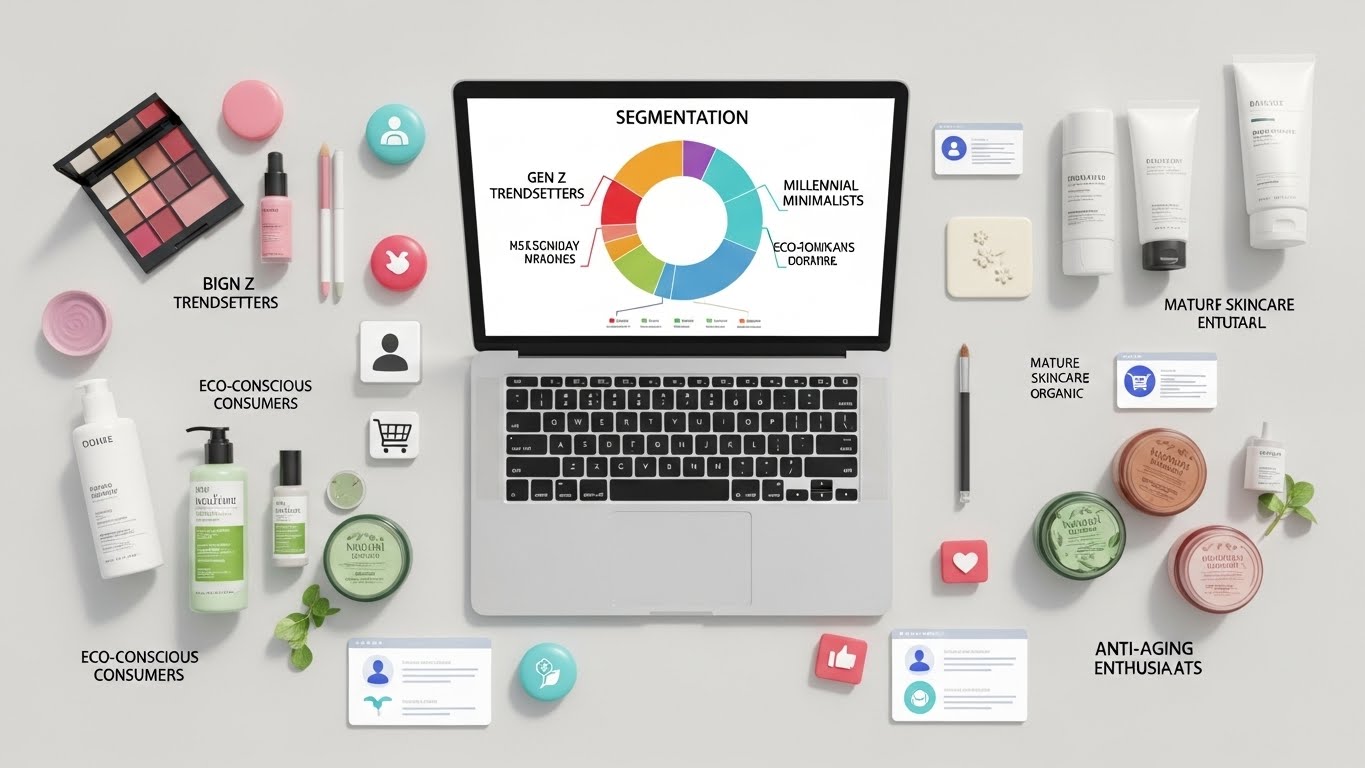
Starting an indie cosmetics brand is exciting. You’ve poured your heart into creating products you believe in, and you’re ready to share them with the world. But here’s the hard truth: trying to sell to everyone is the fastest way to burn through your budget and stall your growth.
The most successful indie beauty brands don’t succeed by casting the widest net. They succeed by knowing exactly who they’re talking to—and speaking directly to those people’s needs, desires, and pain points.
If you’re serious about scaling your cosmetics business profitably, customer segmentation isn’t just a nice-to-have marketing exercise. It’s your foundation.

What is Customer Segmentation (and Why It Matters for Indie Brands)
Customer segmentation is the practice of dividing your potential customers into distinct groups based on shared characteristics. These might include demographics like age and income, behavioral patterns like shopping habits, or psychographic factors like values and lifestyle preferences.
For indie cosmetics brands operating on tight margins, segmentation is critical because it allows you to allocate your limited resources where they’ll have the biggest impact. Instead of spending money on broad advertising that reaches people who’ll never buy from you, you invest in targeted campaigns that speak directly to your ideal customers.
The result? Higher conversion rates, better customer retention, and more efficient marketing spend—all of which translate to profitability.
The Cost of Not Knowing Your Customer Segments
Many indie beauty founders make the mistake of thinking their product is for “anyone who wants good skincare” or “everyone who loves lipstick.” This approach seems inclusive, but it’s actually a recipe for wasted resources.
Without clear customer segments, you end up creating generic marketing messages that don’t resonate with anyone. Your Instagram posts feel bland because you’re trying to appeal to too many different people. Your email campaigns get low open rates because the content isn’t relevant to large portions of your list. Your paid ads drain your budget without converting because you’re targeting too broadly.
Worse, you miss opportunities to create products and experiences that truly delight your core customers. When you try to please everyone, you end up pleasing no one.
How Customer Segmentation Drives Profitable Growth
When you clearly define your customer segments, several powerful things happen in your business:
You create more effective marketing. Instead of guessing what might work, you craft messages that speak directly to specific pain points and desires. A busy professional in her 30s looking for a quick skincare routine needs to hear something completely different than a Gen Z makeup enthusiast who views beauty as creative expression.
You make smarter product decisions. Understanding your segments helps you prioritize which products to develop next, which ingredients matter most to your audience, and what price points make sense. You stop wasting time on products nobody wants and focus on what your specific customers will actually buy.
You improve customer lifetime value. When customers feel understood, they become loyal. They don’t just make one purchase—they come back again and again. They tell their friends. They become brand advocates who do your marketing for you.
You spend your marketing budget more efficiently. Every dollar you invest in advertising goes further when you target specific segments. Your cost per acquisition drops, your return on ad spend increases, and you can scale profitably instead of just burning cash.
Real Examples of Segmentation in the Indie Beauty Space
Consider how different indie beauty brands have carved out profitable niches through smart segmentation:
Some brands focus exclusively on consumers with sensitive skin conditions, creating entire product lines formulated without common irritants. Others target eco-conscious millennials who prioritize sustainability and transparency over everything else. Still others serve specific demographics—like mature women overlooked by mainstream beauty brands, or BIPOC customers whose unique needs haven’t been adequately addressed.
Each of these brands could try to expand and serve everyone. But their profitability comes from depth, not breadth—from knowing their segment intimately and serving them exceptionally well.
How to Start Defining Your Customer Segments
If you’re ready to implement customer segmentation in your indie cosmetics business, start with these foundational steps:
Begin by analyzing your existing customers. Who has already purchased from you? Look for patterns in demographics, purchase behavior, and engagement. Your best current customers often reveal who your target segments should be.
Conduct customer research through surveys, interviews, and social media listening. Ask questions about their beauty routines, pain points, values, and shopping preferences. The insights you gather will be invaluable for creating detailed segment profiles.
Create 2-4 primary customer personas that represent your most important segments. Give each persona a name, detailed demographics, goals, challenges, and preferences. These should be specific enough that you can picture real people when you’re making marketing decisions.
Test your segmentation by creating targeted campaigns for each group. Monitor which segments respond best to your messaging, convert at higher rates, and have higher lifetime value. Use this data to refine your segments over time.
If you want to dive deeper into customer segmentation strategies specifically designed for beauty brands, along with actionable marketing frameworks you can implement immediately, the Beauty Marketing Course provides comprehensive training on building a profitable beauty business through smart, targeted marketing.
Segmentation Powers Every Other Marketing Decision
Once you have clear customer segments, every other aspect of your marketing becomes easier and more effective:
Your content strategy writes itself because you know what topics and formats each segment values. Your product launches succeed because you’re creating solutions for real, defined problems. Your influencer partnerships work because you choose creators whose audiences align with your segments. Your email sequences convert because the messaging is personalized and relevant.
Customer segmentation isn’t a one-time project—it’s an ongoing practice that evolves as your business grows. As you gather more data and interact with more customers, you’ll refine your understanding of who you serve and how to reach them most effectively.
The Bottom Line: Segmentation is Your Scaling Strategy
Scaling an indie cosmetics business profitably isn’t about reaching more people—it’s about reaching the right people more effectively. Customer segmentation gives you the clarity to make strategic decisions that drive growth without wasting resources.
When you know exactly who you’re serving, you can create products they’ll love, marketing that resonates, and experiences that turn first-time buyers into lifelong fans. That’s how indie brands compete with larger companies despite having smaller budgets.
The brands that struggle are those still trying to be everything to everyone. The brands that thrive are those that embrace segmentation, get specific about who they serve, and commit to serving those people exceptionally well.
Your ideal customers are out there, ready to discover your products. Your job is to identify who they are, understand what they need, and speak directly to them. That’s not just good marketing—it’s the foundation of a profitable, scalable beauty business.
Start defining your customer segments today, and watch how it transforms every aspect of your business. Your future self (and your bank account) will thank you.