Patients no longer want to be “sold” to—they want to be “cared for” before they even step into your office.
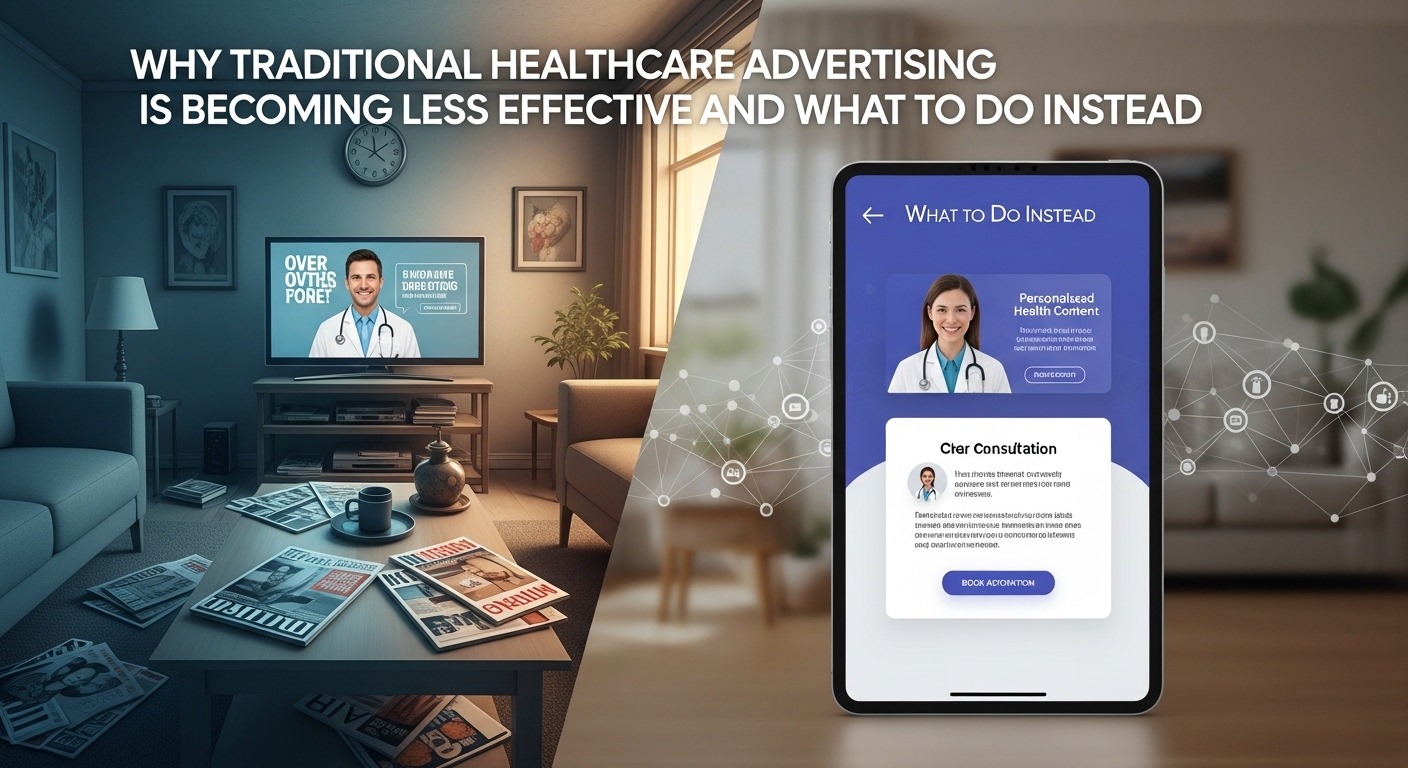
For decades, healthcare marketing followed a simple, expensive formula: buy a billboard, run a local radio spot, or place a full-page ad in the neighborhood magazine. But in 2026, these “shout-at-the-crowd” tactics are seeing record-low returns.
Modern patients are digitally savvy and inherently skeptical of polished, corporate advertisements. According to Statista, over 80% of consumers now ignore traditional outbound ads in favor of self-directed research. If your practice is still relying on the “Old Guard” of advertising, you aren’t just wasting money—you’re becoming invisible.
The Death of “Interruption” Marketing
The fundamental problem with traditional ads is that they are interruptions. They force themselves into a patient’s day when they aren’t necessarily looking for a solution. Today’s patient journey starts with an intention—usually a Google search for a specific symptom or a local specialist.
To win in this environment, you must move from Interruption Marketing to Educational Authority.
The Shift in Patient Acquisition
❌ TRADITIONAL (OUTBOUND)
- Billboards & Print Ads
- One-way communication
- Broad, untargeted reach
- High cost, low tracking
✅ MODERN (INTENT-BASED)
- Local SEO & Google Search
- Patient-centered education
- Hyper-local targeting
- Data-driven ROI tracking
3 Reasons Traditional Ads Are Falling Flat
1. The Trust Gap: Patients trust Google Reviews and peer recommendations far more than a slogan on a bus stop. In 2026, your “Social Proof” is your most valuable currency.
2. High Friction: Traditional ads usually require the patient to remember a name or phone number. Modern digital strategies provide a one-click path to booking an appointment.
3. Lack of Attribution: It is nearly impossible to tell exactly how many patients walked through your door because of a billboard. In contrast, digital platforms allow you to track every cent of your Healthcare ROI.
| Channel | Targeting Precision | Cost per Acquisition |
|---|---|---|
| Local Print Media | Low (Mass Audience) | High ($$$) |
| Google Local Services | Very High (Intent) | Low ($) |
| Educational Video/Blog | High (Problem-Solving) | Medium (Time Investment) |
Future-Proof Your Medical Practice
Stop gambling your marketing budget on outdated tactics. Learn how to build a HIPAA-compliant, high-conversion patient acquisition system that works while you sleep.
What to Do Instead: The “Authority First” Strategy
If you want to grow your practice in 2026, you must become a resource before you become a provider. This is known as Inbound Healthcare Marketing.
By producing high-quality content—like videos explaining common procedures or blogs addressing patient fears—you build trust before the patient ever meets you. As noted in Google’s search guidelines, E-E-A-T (Experience, Expertise, Authoritativeness, and Trustworthiness) is the primary factor for ranking medical content.
Final Thoughts
The practices that thrive in the coming years will be the ones that stop advertising and start educating. Trade your billboards for better Local SEO, and your radio spots for a frictionless online booking experience. The landscape has changed, and it’s time for your marketing to catch up.
© 2026 Health Growth Academy. All rights reserved.
v