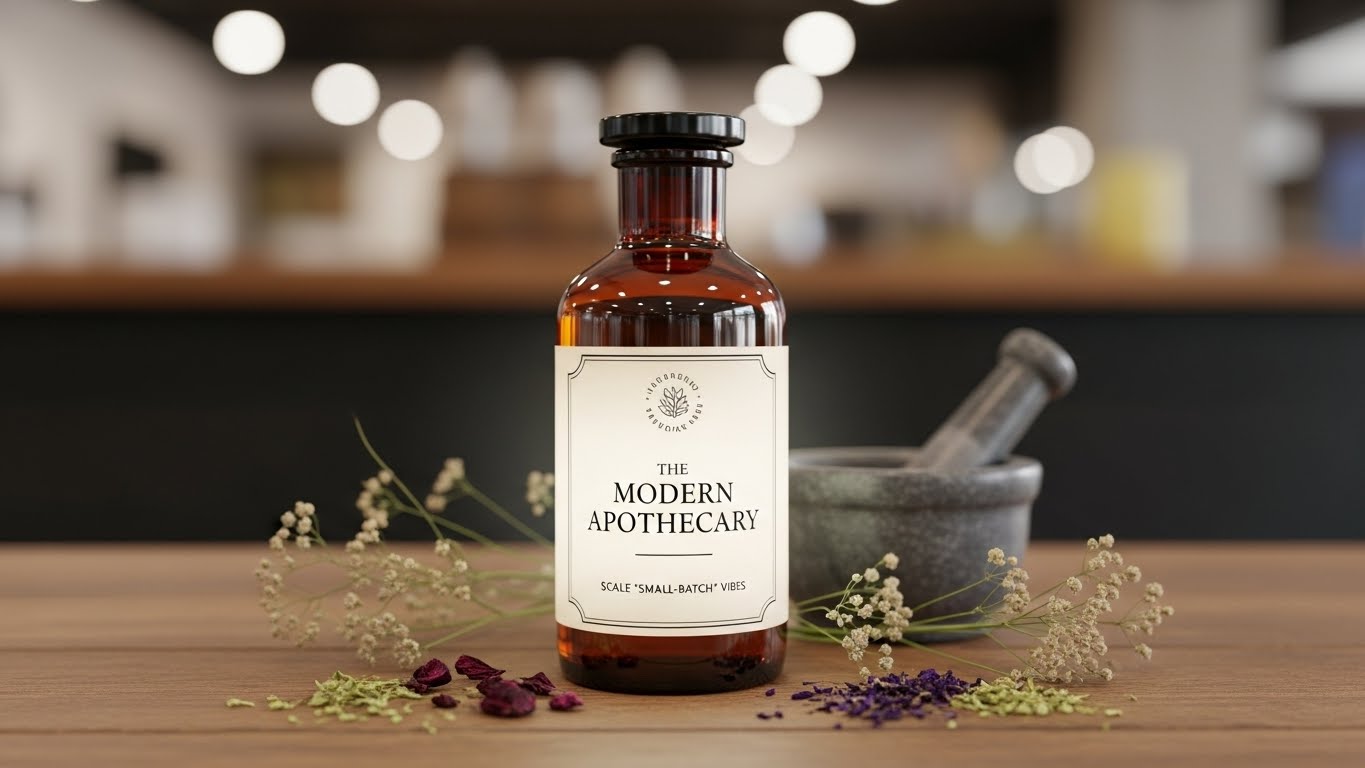
Maintaining artisanal authenticity and craft aesthetics while meeting mass market demand You started in your kitchen. Hand-mixing batches of face serum at midnight, pouring balms into amber jars by candlelight, writing ingredient lists in careful calligraphy. Your first customers fell in love with that intimacy—the handwritten thank-you notes, the slight variations between batches, the sense that they were buying from a person, not a corporation. But now you’re staring at a purchase order for 5,000 units. Your local boutique wants to stock you. A beauty box subscription service is interested. Instagram is driving more traffic than you can handle from your home studio. The opportunity is real—but so is the fear: How do I scale without losing what made people love me in the first place? This is the modern apothecary’s dilemma. Consumers crave the artisanal, the handmade, the personal—but they want it available, affordable, and consistent. They want small-batch vibes with big-brand accessibility. And surprisingly, you can give them both. This article will show you exactly how to preserve your small-batch identity while building the systems needed for sustainable growth. You’ll learn from brands that have successfully navigated this transition, and you’ll discover the specific strategies that maintain authenticity at scale. Before we dive into scaling strategies, let’s confront an uncomfortable truth: customers don’t actually want small-batch. What they want is the feeling that comes with it. Here’s the key insight: You can preserve all of these qualities without literally making everything by hand forever. What you need to protect isn’t the process—it’s the perception and reality of care, quality, and authenticity. According to Grand View Research, the global organic personal care market is expected to reach $54.5 billion by 2027, driven largely by consumer preference for artisanal, small-batch aesthetics. But the same consumers buying “handcrafted” products also want them available at their local Target. This isn’t hypocrisy—it’s an opportunity for savvy founders. Reality: You make everything personally. Variations between batches. Handwritten notes. Limited availability. Challenge: Can’t keep up with demand, inconsistent quality, unsustainable workload Reality: Documented processes. Small team helping. Batch sizes standardized. Still personal oversight. Sweet Spot: Maintains authenticity while becoming sustainable Reality: Professional facility. Batch production. Systems for “artisanal touches.” Strategic personalization. Key: Preserving feeling through intentional design choices Reality: Contract manufacturing. National distribution. Original founder’s quality standards maintained. Success: Brand story and values preserved at scale (e.g., Drunk Elephant, Youth to the People) Core Principle: The goal isn’t to stay at Stage 1 forever—it’s to evolve through stages while preserving the essence that made customers fall in love with you. Not everything about small-batch production needs to stay small-batch. But some elements are sacred—lose these, and you’ve lost your soul. Here’s what you absolutely must protect: Before making any scaling decision, ask: “Would my first 100 customers still recognize and love this brand?” If the answer is no, don’t do it. Growth that alienates your core is a path to failure. Instead, find creative ways to maintain those core elements while expanding your reach. One of the fastest-growing segments in modern apothecary beauty is gender-neutral, scent-driven products. These brands—think Le Labo, Boy Smells, Malin+Goetz—have cracked a crucial code: how to make fragrance and sensory experience feel inclusive, sophisticated, and deeply personal. The challenge with scent-driven brands is that you’re marketing something invisible. You can’t show fragrance in a photo. You can’t capture how a product makes someone feel through Instagram alone. Yet these sensory experiences are your entire brand promise. Gender-neutral beauty isn’t about being bland or avoiding color—it’s about creating visual systems that don’t rely on gendered stereotypes. Here’s how to build that language for scent-driven brands: The visual aesthetic for gender-neutral brands often leans minimal, but it can’t be cold. The key is adding warmth through: This creates approachability while maintaining sophistication—essential for broad appeal. Since you can’t photograph scent directly, you photograph what scent evokes: You’re creating sensory associations: “This image makes me feel how that scent makes me feel.” Gender-neutral marketing requires showing people of all genders using your products naturally: The goal is inclusion without tokenization—natural diversity as the default, not a statement. Font choices can evoke scent profiles without relying on gendered design tropes: Typography should feel intentional and editorial—like reading a well-designed magazine, not a beauty ad. Create a visual system for communicating fragrance composition: This empowers customers to “see” the fragrance profile and make informed choices without sampling. Shift focus from “beauty routine” (gendered) to “sensory ritual” (universal): This positions your products as lifestyle tools, not beauty products—expanding your market beyond traditional beauty consumers. Le Labo exemplifies gender-neutral, scent-driven visual storytelling. Their Instagram shows ingredients in their raw state, people of all genders in their stores, architectural shots of their apothecary-style shelving, and close-ups of their hand-labeled bottles. The aesthetic is industrial-meets-artisanal—nothing about it screams “men’s” or “women’s” fragrance, yet it appeals universally. Their success proves that removing gendered marketing doesn’t mean removing personality—it means creating space for everyone to see themselves in your brand. For scent-driven brands scaling into mass market, this visual language becomes even more critical. When your products are sitting on shelves next to heavily gendered fragrances, your neutral aesthetic and sophisticated storytelling create differentiation that commands premium pricing and loyal following. Learn the exact strategies modern beauty brands use to maintain artisanal authenticity while achieving mass market success. Master visual storytelling, scaling systems, and brand positioning that preserves your craft roots. Discover the Beauty Marketing Course → Build a beauty empire without losing your soul The handwritten thank-you note worked when you had 10 orders a week. At 500 orders, it’s impossible. But the feeling that note created—personal recognition, gratitude, human connection—can still be replicated through smart systems. Not every customer needs the same level of personal attention. Create tiers: This maintains personal touch for those who matter most while staying sustainable. Create elements in batches that still feel handmade: These elements take seconds per package but create minutes of delight when opened. Use technology to create personal moments: Automation doesn’t have to feel robotic—it can feel thoughtful when designed well. As you hire a team, make them part of the personal touch: This maintains the “made by humans” feeling even when you’re not personally packing every box. Eventually, making products in your kitchen becomes impossible. Choosing a manufacturing partner is one of the most consequential decisions you’ll make—it can preserve or destroy everything you’ve built. Never sign with a manufacturer you haven’t physically visited. See their facility. Meet their team. Watch a production run. Smell the environment. If something feels off in person, it will only get worse at scale. Trust your gut—if they won’t let you visit or you don’t feel right about what you see, walk away. According to Beauty Packaging research, 67% of small beauty brands cite manufacturing partnerships as their biggest scaling challenge. The right partner becomes an extension of your brand; the wrong one can destroy your reputation overnight. One fear about scaling is that you’ll have to lower prices to compete. Actually, the opposite can be true: proper scaling can support higher prices when positioned correctly. When you can afford better ingredients through bulk purchasing, invest in superior packaging, and create consistent experiences, you can charge more, not less. Position scale as quality improvement: “Now we can source even better botanicals” or “Larger batches mean more consistent performance.” Share exactly where your costs go. When customers see that you’re paying fair wages, using organic ingredients, and investing in sustainable packaging, they understand why you cost more than mass brands. Create a “cost breakdown” page showing percentage of price going to ingredients, labor, packaging, etc. Even as you scale, maintain some sense of limited availability. “We only produce 5,000 units of each scent per quarter” or “Seasonal batches sell out quickly.” This isn’t artificial scarcity—it’s honest about your still-artisanal approach vs. big-brand unlimited production. Include things that justify higher prices: refillable packaging, extensive education, access to a community, sustainable sourcing documentation. Make customers feel they’re paying for an experience and values alignment, not just a product. Brands like Aesop, Byredo, and Diptyque prove that artisanal-positioned beauty can command luxury prices even with significant scale. Their secret? Never competing on price, always on values and experience. When you had 100 customers, you knew many by name. At 10,000 customers, personal relationships are impossible—unless you redefine what “community” means. Create a space where customers connect with each other, not just you. You facilitate, they build relationships. Suddenly it’s not you maintaining 10,000 relationships—it’s 10,000 people in community together. Encourage customers to share their experiences. Feature real customer photos on your feed. Create hashtags. When customers see themselves represented, they feel part of something bigger than a transaction. Regular Instagram Stories or YouTube videos showing production, new product development, day-in-the-life content. Transparency creates intimacy even without direct communication. While you can’t know everyone, you can know your top customers. Create a VIP program for your most loyal buyers with direct access to you via quarterly calls, early product releases, input on new formulations. Community at scale isn’t about you knowing everyone—it’s about creating spaces and rituals where people feel known, valued, and connected to your brand’s mission. Not all growth is good growth. Sometimes the most important decision is turning down opportunities that would compromise your values or overextend your capabilities. If a big retailer wants to stock you but requires reformulation with cheaper ingredients or removal of expensive botanicals, walk away. Your formula is your brand promise. If you’re being asked to triple production in one month and you can’t maintain quality standards, say no. One bad batch can destroy years of reputation building. White-labeling your products for another brand might seem like easy revenue, but it dilutes your uniqueness and teaches competitors your formulations. Tread very carefully here. If taking investment means losing control over your artisanal standards or being pushed toward mass market positioning you don’t want, consider bootstrapping longer or finding values-aligned investors. Grow only as fast as you can maintain quality, preserve values, and keep your team healthy. Slow, steady growth that compounds over decades beats explosive growth that burns out in years. You’re building a legacy brand, not chasing a quick exit. The modern apothecary doesn’t choose between artisanal authenticity and commercial success. It creates systems that preserve the essence of small-batch while achieving the reach and stability of scale. You started mixing potions in your kitchen because you believed in a better way—better ingredients, honest marketing, genuine connection. Those values don’t have to die as your business grows. In fact, they become more important. “The brands that will define the next era of beauty aren’t the biggest or the fastest-growing. They’re the ones that figured out how to stay true to their craft while building systems that let them serve thousands without compromising the intimate, intentional experience that made people fall in love in the first place.” Scaling small-batch vibes in a mass market world isn’t about faking intimacy or manufacturing false scarcity. It’s about: The apothecaries of old were trusted community members who carefully prepared remedies by hand, building relationships with every customer. Modern apothecary brands honor that tradition not by refusing to grow, but by ensuring that growth never compromises the care, quality, and connection at the heart of the craft. Your kitchen might get bigger. Your team might expand. Your reach might go global. But if you do it right, your soul stays intact. Welcome to the modern apothecary. Where small-batch vibes meet big-brand impact. 🌿 Share this guide with fellow artisanal beauty founders navigating growth! Keywords: small-batch beauty brands, artisanal skincare scaling, modern apothecary, handmade beauty business, scaling beauty brand, gender-neutral beauty marketing, scent-driven brands, indie beauty growth, craft beauty business, premium beauty positioning, sustainable beauty scalingThe Authenticity Paradox: What Customers Really Want
What “Small-Batch” Really Signals
Care & Attention: Someone personally oversaw this product’s creation
Quality Ingredients: No cutting corners or cheap substitutes
Exclusivity: Not mass-produced in a soulless factory
Authenticity: Made by someone who genuinely cares about the craft
Story & Connection: A relationship with the maker, not just a transactionThe Apothecary Scaling Spectrum
True Small-Batch (0-100 units/month)
Systematized Small-Batch (100-500 units/month)
Small-Batch Aesthetic (500-2000 units/month)
Mass Market with Artisanal DNA (2000+ units/month)
The 7 Non-Negotiables: What You Must Preserve While Scaling
The Red Line Test
Visual Storytelling for Gender-Neutral, Scent-Driven Brands
The Gender-Neutral Visual Language
1. Architectural Minimalism with Warmth
2. Synesthetic Photography (Making Scent Visible)
3. Diverse, Non-Performative Representation
4. Typography That Communicates Scent Character
5. The Scent Note Visualization System
6. Ritual-Focused Content
Case Study: Le Labo’s Visual Success
Ready to Scale Your Apothecary Brand?
Systematizing Personal Touches at Scale
Tiered Personalization System
Batch-Made “Artisanal Touches”
Digital Personalization That Feels Human
The “Made By” Initiative
Choosing the Right Manufacturing Partner
The Visit-Before-You-Commit Rule
Pricing Strategy: Justifying Premium Prices at Scale
The Modern Apothecary Pricing Framework
Premium Positioning Through Scale
Transparency Premium
The Scarcity Paradox
Value-Add Justification
Building Community at Scale
Private Facebook/Discord Group
User-Generated Content Campaigns
Behind-the-Scenes Access
VIP Inner Circle
When to Say No to Growth Opportunities
❌ Red Flag: Retailer Demands You Change Your Formula
❌ Red Flag: Growth Faster Than Quality Control
❌ Red Flag: Private Label That Compromises Brand
❌ Red Flag: Investor Pressure to Scale Beyond Your Vision
The Sustainable Growth Principle
The Modern Apothecary: Where Craft Meets Scale
Resources for Scaling Artisanal Beauty Brands