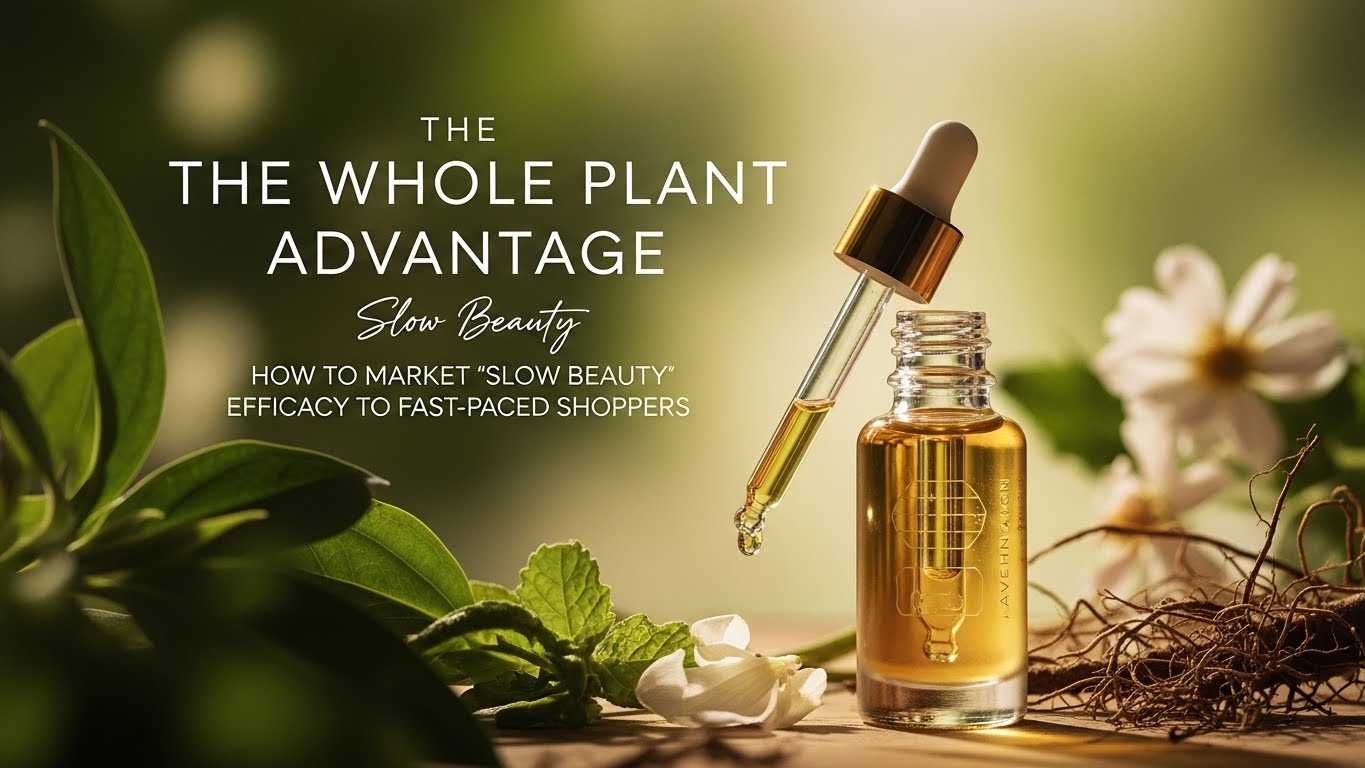
Bridging the gap between botanical patience and consumer impatience—without compromising your values Your customer is scrolling through Instagram at a red light. She’s comparing your rosehip serum—which takes 4-6 weeks to show visible results—against a retinol product promising “visible improvement in 7 days.” She’s interested in your whole-plant philosophy, but she’s also wondering if she has time to wait that long. Will she click “add to cart” or keep scrolling? This is the fundamental tension facing slow beauty brands: You’re selling patience to the impatient. Process to people who want results. Deep healing to those conditioned to expect instant gratification. But here’s what most slow beauty brands get wrong: they assume customers must choose between efficacy and ethics, speed and sustainability, results and responsibility. The truth is more nuanced—and more optimistic. Fast-paced shoppers can embrace slow beauty when you communicate the whole plant advantage in ways that resonate with their reality. This article will show you exactly how to market botanical efficacy without apology, educate without lecturing, and convert time-pressed consumers without compromising your slow beauty values. Before we can bridge the gap between slow beauty and fast-paced shoppers, we need to understand exactly what we’re working with. The disconnect isn’t about intelligence or values—it’s about conditioning, expectations, and communication. According to McKinsey research, 75% of consumers tried new shopping behaviors during recent years, but their decision-making time actually decreased. They’re open to new brands—but they need to understand value propositions faster than ever. The good news? These mindsets aren’t incompatible. You don’t need to choose between slow beauty values and fast-paced accessibility. You need to translate one into the language of the other. Communicate: Sensory delight—texture, scent, how skin feels immediately after application. This hooks fast-paced shoppers. Message: “Instantly soothing” “Immediately absorbed” “Feels luxurious from first use” Communicate: Skin comfort, reduced irritation, improved hydration levels. Set realistic early milestones. Message: “Notice calmer skin within days” “Hydration that builds” “Your skin is preparing to heal” Communicate: Measurable improvements—reduced redness, smoother texture, brighter tone. This is when whole plants shine. Message: “Real transformation by week 4” “Where botanical power becomes visible” “The difference you can see” Communicate: Fundamental skin health improvements—resilience, barrier strength, long-term radiance. The ultimate payoff. Message: “Skin that’s truly healthier” “Benefits that compound over time” “This is slow beauty’s promise” Key Strategy: Lead with Layer 1 (immediate satisfaction) while educating about Layers 3-4 (long-term transformation). Fast-paced shoppers need instant gratification AND a compelling reason to stick around. “Whole plant” is more than a buzzword—it’s a fundamentally different approach to botanical skincare. But if customers don’t understand what it means or why it matters, they’ll default to cheaper, faster alternatives. Don’t start with a lecture on phytochemistry. Start with outcomes they care about: Fast-paced shoppers make decisions with their eyes first, their brains second. For slow beauty brands using artisan-farmed ingredients, visual storytelling isn’t optional—it’s the bridge between “I’m scrolling past” and “Tell me more.” The challenge? Botanical ingredients look similar. Organic farming practices aren’t visibly different from conventional in a product photo. The patience and care of artisan cultivation can’t be captured in a single image. Yet these are precisely the elements that justify your price point and differentiate you from mass-market competitors. Create a visual timeline showing ingredients from cultivation to product: This visual sequence proves your “artisan-farmed” claim isn’t marketing fluff—it’s documented reality. Use Instagram Stories highlights or carousel posts to tell this story efficiently. Human elements make artisan farming tangible and trustworthy: When customers see real people, not corporate facilities, “artisan-farmed” transforms from concept to connection. They’re not just buying skincare—they’re supporting specific farmers. Slow beauty follows nature’s rhythms. Show this visually: This creates a narrative arc that gives customers something to follow throughout the year. Limited seasonal batches become anticipated events, not inventory problems. Show the difference without being preachy: Don’t make this about shaming conventional farming—make it about celebrating what artisan farming preserves. Focus on what you’re FOR, not what you’re against. Get extremely close to show what artisan farming produces: These macro shots prove quality in ways that product claims can’t. They’re scientific without being clinical, detailed without being boring. Motion makes patience visible and compelling: Time-lapse videos satisfy the fast-paced shopper’s need for quick content while paradoxically showing the slow process that creates value. They’re satisfying, shareable, and educational. British brand Pai Skincare features their organic farm partners extensively—showing specific fields, naming individual farmers, documenting harvest seasons. Their Instagram regularly shares photos of rosehip bushes in Scotland, chamomile fields in Hungary, and the people who tend them. This transparency has built cult loyalty despite higher prices and slower results than mainstream alternatives. Customers trust them because they can literally see where products come from. For fast-paced shoppers, artisan-farmed visual storytelling does something crucial: it makes the invisible visible. They can’t taste the soil health or feel the biodiversity, but they can see the farmer’s hands and the vibrant botanicals. This visual proof transforms “slow beauty” from abstract philosophy into concrete reality worth waiting for. Learn the exact strategies successful botanical brands use to communicate whole plant efficacy, convert time-pressed shoppers, and build thriving slow beauty businesses without compromising your values. Bridge the gap between botanical patience and consumer impatience The most successful slow beauty brands don’t choose between speed and patience—they reframe the conversation. Here’s how to message both simultaneously: Your product probably does something immediately, even if deep transformation takes weeks. Lead with that: Then layer in the deeper benefits: “And with continued use, you’ll notice…” This satisfies the immediate need while setting long-term expectations. Break the journey into achievable checkpoints: This gives fast-paced shoppers a roadmap. They’re not waiting aimlessly for “eventual results”—they’re tracking specific progress. Show why slow is actually smarter: You’re not apologizing for being slow—you’re reframing speed as the compromise, patience as the investment. Show transformation with honest timelines: Honest before/afters with realistic timelines build more trust than exaggerated overnight transformations. Whole plant products cost more to produce. Artisan-farmed ingredients command higher prices. Slow processing can’t compete with industrial efficiency. But price objections aren’t about math—they’re about perceived value. Don’t compare your $68 serum to a $15 drugstore alternative. Compare the results over time: “This lasts 3 months with consistent skin improvement vs. cycling through multiple cheap products that irritate and disappoint. Which is actually the better value?” Position premium pricing as smart investment, not luxury splurge. Getting someone to try slow beauty for the first time requires addressing their skepticism head-on. Here’s the strategic first purchase pathway: Offer discovery sets or trial sizes at accessible price points. “Try slow beauty for $28” is less intimidating than “Commit to a $68 full-size product you’re not sure about.” Get product into their hands with minimal risk. Include a “what to expect” card with first purchases: Week-by-week timeline, usage instructions, when to reassess. This prevents abandonment at week 2 when they’re not seeing miracles yet. Automated emails at Day 3 (“How does it feel?”), Week 2 (“Keep going—transformation is building”), Week 4 (“This is when most see visible change”). You’re coaching them through the slow beauty journey. Subscription discounts, loyalty rewards, auto-replenishment reminders. Once someone commits to slow beauty, remove friction from continuing the journey. Fast-paced shoppers will have predictable concerns. Address them proactively: Response: “Whole plant ingredients are clinically studied (cite research). The difference is they work with your skin’s natural processes, not against them. This takes time, but creates lasting results rather than temporary improvements.” Response: “You’ll feel and see benefits from week one—improved comfort, hydration, calm. The 4-6 week timeline is for complete transformation. And those 6 weeks will pass whether you’re using products that heal or ones that just mask problems.” Response: “We pay farmers fair wages, use whole plants instead of cheap extracts, and process gently to preserve efficacy. The real question: what’s the cost of products that don’t work or damage your skin over time?” Response: “Absolutely. Whole plant products often complement actives beautifully—they soothe and support while your treatments work. Many customers find they can tolerate stronger actives better when supported by botanical care.” Fast-paced shoppers aren’t your enemy. They’re your opportunity. These are people hungry for authenticity, exhausted by beauty industry manipulation, increasingly aware that quick fixes rarely last. They want to slow down—they just need permission, guidance, and proof it’s worth it. The whole plant advantage isn’t a compromise—it’s a competitive edge. When communicated effectively, botanical patience becomes aspirational, not apologetic. Artisan-farmed ingredients tell stories mass-market products can’t match. Slow transformation builds trust that overnight miracles destroy. “The future of beauty isn’t faster products or more aggressive marketing. It’s brands brave enough to say: ‘Real results take real time—and you’re worth the wait.’ The customers who embrace this philosophy become your most loyal advocates, your most valuable community, your proof that slow beauty works in a fast-paced world.” Your slow beauty brand doesn’t need to speed up to succeed. You need to help fast-paced shoppers understand why slowing down—in their skincare, if nowhere else—is the smartest decision they’ll make. So lead with immediate gratification while educating about lasting transformation. Show artisan farming practices through compelling visuals. Set clear milestones so patience has a roadmap. Price for value, not apology. And never, ever compromise the whole plant integrity that makes your products worth the wait. The world is speeding up. Your customers are overwhelmed. Their skin is suffering from years of harsh quick-fixes. You offer something rare and radical: the permission to be patient. The promise that slow wins. The whole plant advantage. 🌿 Share this guide with fellow slow beauty entrepreneurs! Keywords: slow beauty marketing, whole plant skincare, artisan-farmed ingredients, botanical efficacy, natural beauty marketing, sustainable skincare, organic beauty business, plant-based skincare, green beauty marketing, conscious beauty brands, ethical skincare marketingUnderstanding the Slow Beauty Mindset Gap
The Two Mindsets at Odds
The Slow Beauty Philosophy:
The Fast-Paced Shopper Reality:
The Whole Plant Efficacy Framework
Immediate Experience (Day 1)
Early Indicators (Week 1-2)
Visible Progress (Week 3-6)
Deep Transformation (Month 2-3+)
The Whole Plant Advantage: What It Actually Means
Communicating This to Fast-Paced Shoppers
Visual Storytelling for Artisan-Farmed Ingredients
The Artisan-Farmed Visual Strategy
1. The Field-to-Face Journey
2. The Farmer’s Hand in Every Frame
3. Seasonal Documentation
4. Comparison Content (The Honest Kind)
5. Macro Photography of Quality Indicators
6. Time-Lapse and Process Videos
Real Example: How Pai Skincare Does It
Ready to Master Slow Beauty Marketing?
Explore the Beauty Marketing Course →
The ‘Fast Results, Slow Method’ Messaging Framework
Lead with Immediate Gratification
Create Progress Milestones
Contrast with the Alternative
Prove It With Before/Afters (The Right Way)
Pricing Slow Beauty: Justifying Premium Costs
The Cost-Per-Result Reframe
Converting Fast-Paced Shoppers: The First Purchase Strategy
The Slow Beauty Conversion Funnel
Step 1: Lower the Barrier to Entry
Step 2: Set Clear Expectations
Step 3: Check In at Critical Moments
Step 4: Make Repurchase Easy and Rewarding
Handling Common Objections
❓ “Does slow beauty actually work?”
❓ “I don’t have time to wait 6 weeks”
❓ “Why is this so expensive?”
❓ “Can I use this with my retinol/acids?”
The Slow Beauty Revolution Meets Reality
Resources for Slow Beauty Brands