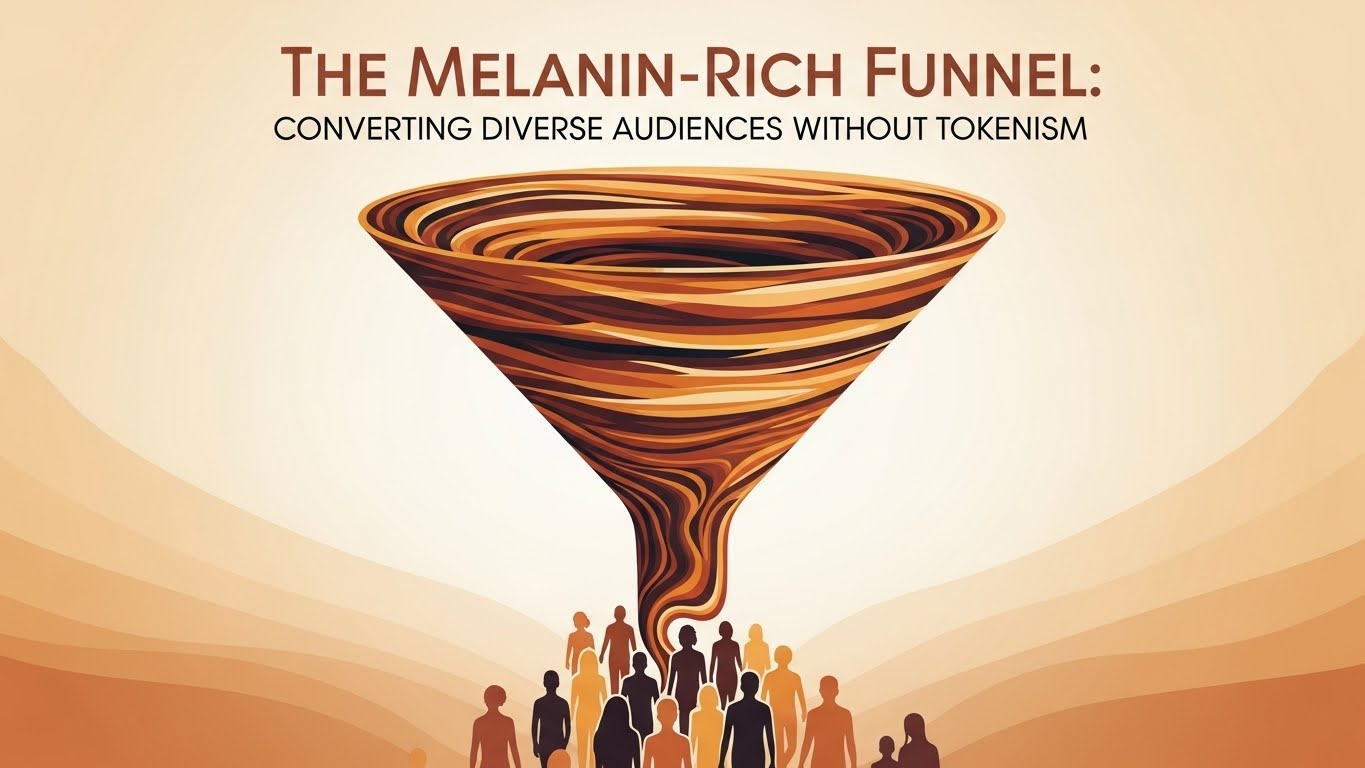
Building authentic connections with diverse beauty consumers through genuine representation and cultural competence Let’s address the elephant in the beauty industry: for decades, melanin-rich consumers—Black women, Latinas, South Asians, Indigenous peoples, and others with deeper skin tones—have been underserved, misrepresented, or completely ignored. Now, brands scramble to “diversify,” but too often this means slapping a few darker models in campaigns while changing nothing else about their approach. This isn’t just ethically problematic—it’s bad business. Melanin-rich consumers represent massive purchasing power (Black women alone spend $7.5 billion annually on beauty products in the U.S.), and they can spot performative diversity from a mile away. Tokenism doesn’t convert. Authenticity does. The Melanin-Rich Funnel is a framework for beauty brands that want to genuinely serve diverse audiences—not just feature them in ads, but truly understand their unique needs, preferences, and cultural contexts. It’s about building trust through authentic representation, cultural competence, and products that actually work for melanin-rich skin. This article will show you how to move beyond surface-level diversity into meaningful, conversion-driving inclusion that respects and serves melanin-rich consumers authentically. Before we build your melanin-rich marketing strategy, you need to understand the historical context that shapes how diverse consumers view beauty brands today. This isn’t about guilt—it’s about awareness that informs better strategy. According to Nielsen research, Black consumers are highly influential in setting beauty trends but have historically been underserved by mainstream brands. They’re more likely to research extensively before purchasing and trust recommendations from their communities over brand advertising. This means melanin-rich consumers approach new beauty brands with healthy skepticism. They’ve been disappointed too many times. Your job isn’t to overcome this skepticism with clever marketing—it’s to earn trust through genuine commitment to serving their needs. Action: Feature melanin-rich beauty as default, not diversity quota. Show diverse skin tones, hair textures, and cultural aesthetics throughout all marketing. Key: Natural, unfiltered beauty. No colorism. Diverse within diversity (not just one shade of brown). Action: Formulate specifically for melanin-rich skin concerns (hyperpigmentation, keloids, product buildup). Test on diverse skin tones from development stage. Key: Efficacy proof on deeper skin tones. Address specific concerns without stigma. Action: Learn cultural hair care practices, skin care traditions, and beauty rituals. Incorporate this knowledge into product development and marketing. Key: Hire diverse teams. Consult community experts. Avoid appropriation while honoring influence. Action: Create spaces for melanin-rich consumers to connect, share, and co-create. Listen more than you speak. Support beyond selling. Key: Authentic engagement. Community leadership. Long-term relationship investment. Action: Support Black-owned beauty businesses, fund melanin-rich creators, invest in community causes. Make inclusion systemic, not seasonal. Key: Financial commitment. Supply chain diversity. Measurable impact reporting. Core Principle: Melanin-rich consumers don’t want special campaigns—they want to be centered in everything you do. Not as diversity checkboxes, but as valued customers whose specific needs drive your decisions. Representation isn’t just about showing diverse faces—it’s about showing diverse beauty in ways that feel authentic, not performative. Here’s the difference: Even brands attempting diversity often default to lighter-skinned models with Eurocentric features. True representation means showing the full spectrum of melanin-rich beauty—from light-brown to deep ebony, from 4C coils to type 3 curls, from broad features to narrow. Don’t let colorism creep into your “diverse” casting. If all your Black models could pass a paper bag test, you’re still perpetuating harmful beauty hierarchies. When your hero ingredients are tropical fruit enzymes—papaya, pineapple, mango, guava—you have a unique opportunity to connect with melanin-rich audiences through culturally relevant storytelling. These ingredients aren’t just exotic marketing props; many come from regions with predominantly melanin-rich populations and have been used in traditional beauty practices for generations. The challenge? These same ingredients risk cultural appropriation if you extract the benefits without honoring the origins. Here’s how to tell their story authentically while marketing to diverse audiences. Don’t just show tropical beaches and fruit—show the people who have cultivated and used these ingredients: This transforms “exotic tropical ingredient” into “respected cultural heritage we’re honored to work with.” Tropical enzymes are excellent for hyperpigmentation and uneven skin tone—concerns particularly relevant for melanin-rich skin. Show this visually: Too many brands show enzyme products only on pale skin. Show results where they matter most to your melanin-rich audience. Many cultures have used tropical fruits for beauty for centuries. Honor this without appropriating: The difference between appreciation and appropriation is credit, compensation, and respect. Melanin-rich consumers are often highly educated about ingredients. Show both traditional wisdom AND scientific backing: Don’t talk down to melanin-rich consumers. They want science, not just pretty fruit photos. Tropical fruit enzymes come in gorgeous natural colors—use this visually: These warm, golden, rich tones visually complement melanin-rich skin in a way that white or pale products don’t. Use this to your advantage. Invite melanin-rich consumers to be co-creators of your tropical enzyme content: When melanin-rich consumers see themselves reflected and valued in your ingredient story, they become invested in your success. The Ordinary doesn’t use tropical fruit enzymes, but their approach to melanin-rich marketing is instructive: they show their products on every skin tone, provide specific guidance for concerns like hyperpigmentation common in melanin-rich skin, and price accessibly. Their visual content consistently features deep skin tones front and center, not as afterthoughts. Result? Massive loyalty from diverse consumers who feel genuinely seen and served. When marketing tropical fruit enzyme products to melanin-rich audiences, remember: these ingredients likely come from communities of color. Your visual storytelling should honor that heritage, prove efficacy on melanin-rich skin, and center the very consumers you’re trying to serve—not as exotic props, but as the reason these ingredients matter. Learn the strategies top beauty brands use to authentically connect with diverse audiences, avoid tokenism, and build marketing that genuinely serves melanin-rich consumers while driving real business growth. Explore the Beauty Marketing Course → Marketing that respects, serves, and converts diverse audiences Representation in marketing means nothing if your products don’t actually work for melanin-rich skin. Here are the specific considerations that should inform your formulation process: Melanin-rich skin produces melanin more readily, meaning any inflammation (acne, irritation, minor trauma) can leave dark marks that persist for months. Formulation consideration: Include gentle brightening ingredients (vitamin C, niacinamide, licorice root, kojic acid, alpha arbutin) that even tone without bleaching. Avoid harsh exfoliants that cause irritation leading to more PIH. Melanin-rich skin is more prone to raised scarring from wounds, acne, or even minor trauma. Formulation consideration: Anti-inflammatory ingredients to prevent scar formation. Gentle formulations that won’t irritate or traumatize skin. Clear warnings about potential irritants. Many products leave a white cast or ashy residue on melanin-rich skin, especially sunscreens and some moisturizers. Formulation consideration: Test extensively on deep skin tones. Avoid zinc oxide/titanium dioxide that aren’t micronized. Use tinted formulations or transparent ingredients. Melanin-rich skin often appears oily but is actually dehydrated underneath, a combination that confuses product selection. Formulation consideration: Lightweight, hydrating ingredients that don’t add surface oil. Humectants like hyaluronic acid. Non-comedogenic formulations. Test your products on melanin-rich skin from the development stage, not as an afterthought. Hire diverse testers. Document results on various skin tones. If your product works beautifully on pale skin but causes issues on deep skin, reformulate—don’t just avoid marketing to those consumers. The words you use to describe skin, beauty, and efficacy reveal your values—and melanin-rich consumers are listening closely. Here’s what to avoid and what to embrace: According to research from Voice of the Black Consumer, language choices significantly impact purchase decisions among Black consumers. Words that perpetuate colorism or exoticization damage trust, while inclusive, respectful language builds loyalty. Melanin-rich consumers can tell the difference between brands that market to them and brands that invest in them. Here’s how to move beyond performative diversity into genuine community support: Source from Black-owned and POC-owned suppliers. Pay fair prices. Create long-term partnerships, not one-off transactions. Make your supply chain diversity publicly transparent. Don’t just ask melanin-rich influencers to post for “exposure.” Pay them fairly—often MORE than white influencers with similar following, since they face more skepticism and do more educational labor. Long-term partnerships over one-off posts. Hire melanin-rich team members at all levels, especially in decision-making roles. Not just “diversity hires” but people with real authority to shape your brand direction, product development, and marketing strategy. Support causes that matter to melanin-rich communities—not just during Black History Month. Fund scholarships for Black beauty students. Support organizations fighting colorism. Donate to health equity initiatives addressing melanin-rich skin health disparities. Let’s be clear: the primary reason to authentically serve melanin-rich consumers is because it’s the right thing to do. But there’s also a powerful business case that shouldn’t be ignored. Melanin-rich consumers represent trillions in global purchasing power. They’re trend-setters, early adopters, and highly influential in beauty conversations. When you earn their trust, they become your most powerful advocates. When you tokenize or disappoint them, they’ll call it out publicly and swiftly. “The brands that will dominate beauty’s future aren’t those that added diversity to their marketing in 2020 when it was trending. They’re the brands that centered melanin-rich consumers from the beginning—in product development, in team building, in community investment. The ones where inclusion isn’t a department or a campaign, but the foundation of everything they do.” The Melanin-Rich Funnel isn’t a separate marketing strategy—it’s an integration of diverse perspectives into every aspect of your business. It’s recognizing that melanin-rich consumers aren’t a niche market to be “captured” but rather a massive, influential, and underserved audience that deserves brands built FOR them, not retrofitted to include them. So audit your brand honestly. Are melanin-rich models just in your ads, or are they in your boardroom? Do your products work for diverse skin tones because you tested them properly, or are you just hoping they do? Are you compensating melanin-rich creators fairly, or exploiting their influence for “exposure”? The beauty industry has a long history of excluding, exploiting, and tokenizing melanin-rich consumers. You have the opportunity—and the responsibility—to be different. Build a brand that genuinely serves, respects, and centers diverse beauty. The melanin-rich consumers have been waiting. ✊🏾 Share this guide with beauty brands committed to authentic diversity! Keywords: melanin-rich beauty marketing, diverse beauty audiences, inclusive skincare marketing, Black beauty consumers, multicultural beauty marketing, authentic diversity, anti-tokenism marketing, inclusive beauty brands, POC skincare, diverse beauty representationUnderstanding the Trust Gap: Why Melanin-Rich Consumers Are Skeptical
The Historical Trust Deficit
Product Exclusion: Major beauty brands historically didn’t make products for deeper skin tones or textured hair
Harmful Formulations: Products marketed to melanin-rich consumers often contained dangerous ingredients (skin bleaching, harsh relaxers)
Marketing Invisibility: Advertising rarely showed diverse beauty, sending a message that these consumers didn’t matter
Shade Range Insult: Brands would launch with 3 shades and call it “inclusive”—a clear afterthought
Cultural Appropriation: Taking from Black and brown cultures while excluding those communities from campaigns and profitThe Melanin-Rich Marketing Funnel
Representation: Showing Up Authentically
Product Reality: Actually Working for Melanin-Rich Skin
Cultural Competence: Understanding Context
Community Building: Beyond Transactional
Advocacy & Investment: Putting Money Behind Values
Representation Done Right: Beyond Stock Photos
The Colorism Problem
Visual Storytelling for Ingredient-Driven Products: Tropical Fruit Enzymes
The Tropical Enzyme Visual Strategy
1. Origin Stories with People, Not Just Places
2. Show Efficacy on Melanin-Rich Skin Specifically
3. Cultural Beauty Practices, Not Appropriation
4. The Science Behind the Nature
5. Ingredient Aesthetics That Celebrate Color
6. Community Creation, Not Just Consumption
Real Example: How The Ordinary Got It Right
Ready to Build Truly Inclusive Beauty Marketing?
Product Development: Formulating for Melanin-Rich Skin
Hyperpigmentation & Post-Inflammatory Marks
Keloid & Hypertrophic Scarring
Ashy Appearance & Product Buildup
Oiliness vs. Dehydration
The Testing Imperative
Language & Messaging: Words Matter
Community Investment: Putting Money Behind Inclusion
The Investment Framework
Supplier Diversity
Content Creator Compensation
Team Diversity
Community Causes
Beyond Tokenism: The Business Case for Authentic Inclusion
Resources for Inclusive Beauty Marketing