Beauty Marketing Strategy
How to Leverage Reciprocity Marketing to Turn One-Time Trial Customers into Brand Advocates
Discover how freebies, samplers, and strategic gifting can trigger powerful psychological loyalty — and how the world’s top beauty brands use it to build armies of devoted fans.
•
Beauty Brand Growth
Picture this: a customer stumbles upon your beauty brand, snags a free sample of your bestselling serum — and six months later, they’re posting unboxing videos, recommending you to their sister, and buying every new launch. That’s not luck. That’s reciprocity marketing working exactly as it should.
In an industry drowning in options, beauty brands that master the art of giving first consistently outperform competitors on retention, lifetime value, and organic word-of-mouth. This guide breaks down exactly how to build a reciprocity strategy that transforms casual samplers into your most powerful marketing asset: loyal brand advocates.
📋 What You’ll Learn in This Article
What Is Reciprocity Marketing?
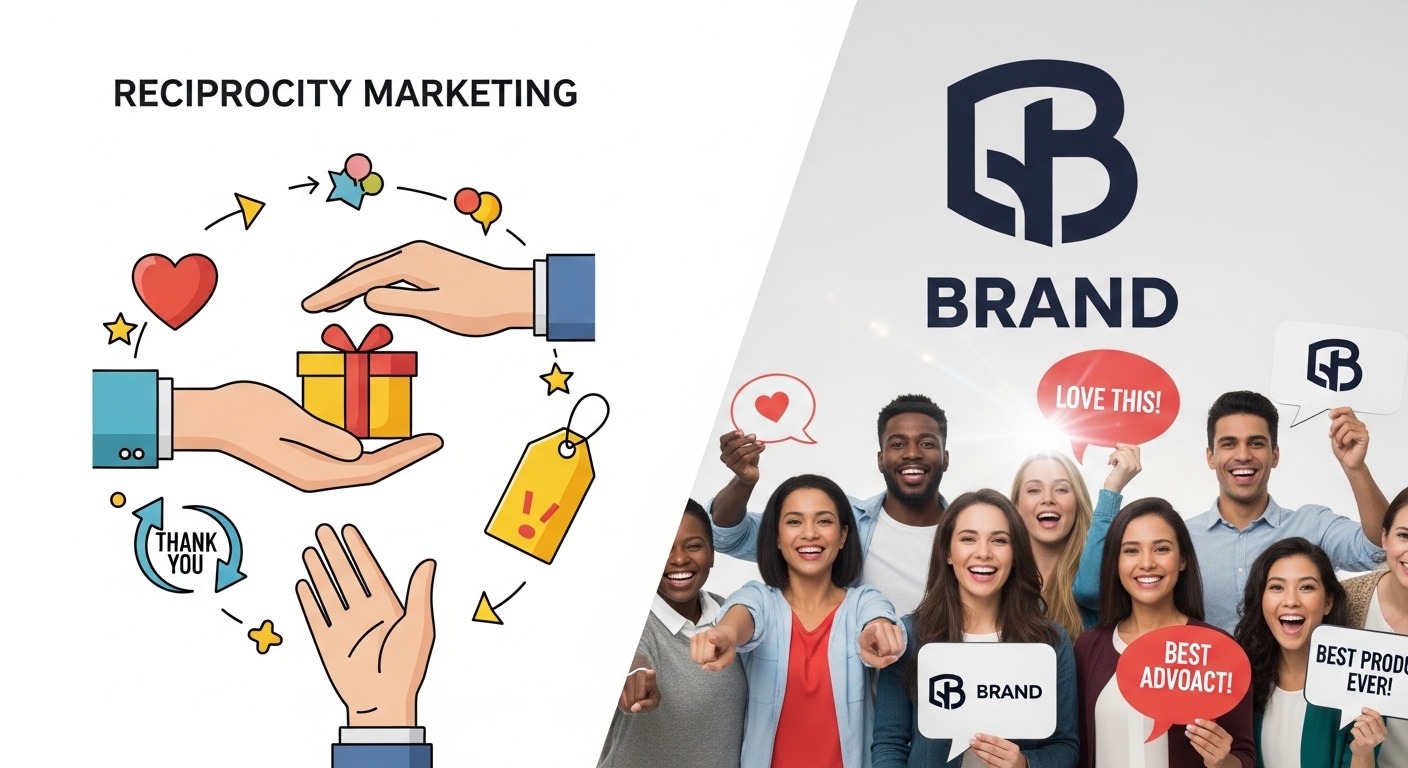
Reciprocity marketing is a growth strategy rooted in a simple social principle: when you give something of value to someone, they feel a natural, often unconscious urge to give something back. In the context of beauty and personal care brands, this means strategically offering free samples, generous gifts-with-purchase, educational content, or exclusive experiences — before asking for anything in return.
This isn’t a new concept. In fact, the rule of reciprocity was famously documented by social psychologist Dr. Robert Cialdini in his landmark book Influence, where he identified it as one of the six core principles of persuasion. In 2025, beauty brands are leveraging this principle with more sophistication than ever — and the results are measurable.
Sources: Nielsen, Bain & Company, Mintel Beauty Report
The Psychology Behind the Give: Why It Works in Beauty
The beauty industry is uniquely positioned to benefit from reciprocity marketing for several reasons. Unlike software or services, beauty products are sensory and personal. A sample is not just a product — it’s an invitation into someone’s daily ritual, their sense of identity, their self-care practice.
Here’s what’s happening neurologically when your customer receives a thoughtful freebie:
The Debt Response
Receiving a gift triggers an almost involuntary sense of social obligation. Customers feel compelled to “even the score” — often through a purchase or referral.
The Liking Effect
We buy from brands we like. A genuine act of generosity makes customers like you more — and people advocate strongly for brands they genuinely love.
Risk Removal
Skincare and makeup are high-commitment purchases. Samples eliminate purchase anxiety — when a customer knows the product works for them, conversion is nearly guaranteed.
The Surprise Factor
Unexpected gifts release dopamine. When a customer discovers a surprise sample in their order, emotional memory of your brand is encoded as positive — driving repeat behavior.
Understanding these mechanisms is the foundation of a winning reciprocity strategy. To dive deeper into buyer psychology and how it applies to beauty marketing, resources like research from the American Psychological Association on giving behavior offer excellent grounding.
Types of Reciprocity Tactics for Beauty Brands
Not all freebies are created equal. The most effective reciprocity tactics in beauty marketing are strategically matched to the customer’s stage in the journey. Here’s a breakdown of every major tactic and how to deploy it:
| Tactic | Best Used At | Primary Goal | Advocacy Potential |
|---|---|---|---|
| Product Samples | Awareness / Discovery | First purchase conversion | Very High |
| Gift with Purchase (GWP) | First & Repeat Purchase | Order value increase + retention | High |
| Subscription Box Sampling | Discovery Phase | Product trial + data collection | Medium |
| Free Education / Tutorials | All stages | Trust building + expertise | Very High |
| Early Access / Beta Testing | Loyalty Phase | Deep brand connection + UGC | Extreme |
| Loyalty Points / Cashback | Repeat Purchase | Habit formation + retention | Medium |
| Personalized Skincare Consultations | Discovery / Consideration | Deep personalization + trust | Very High |
Building Your Sampler Strategy: A Step-by-Step Framework
A sampler strategy isn’t simply “give away free stuff.” Done correctly, it’s a precision system that moves customers along a defined journey — from stranger to trialer to buyer to advocate. Here’s how to build yours:
Define Your “Sampling Funnel” Entry Points
Map every touchpoint where a potential customer can receive a sample: social media DM campaigns, e-commerce checkout add-ons, subscription box partnerships, in-store pop-ups, and influencer kits. Each entry point should have a distinct tracking mechanism so you know which channel delivers the highest-quality trial customers.
Choose Your Hero Sample Strategically
Your sample shouldn’t be your slowest seller or a product near expiry. Choose the product with the highest reorder rate or your most beloved hero SKU. The goal is to get them hooked on what keeps your existing customers coming back. Bonus: pairing your sample with a complementary product teaser drives cross-category discovery.
Make the Packaging an Experience
Your sample packaging is a first impression and a branding moment. Research on packaging psychology shows that premium-feeling packaging dramatically increases perceived product quality — even before a single drop has been applied. Tissue paper, handwritten notes, and intentional scent all contribute to shareability and emotional memory.
Build the Post-Sample Email Sequence
The sample is just the opening move. The real conversion happens in the 7–14 days after delivery. Build an automated email sequence: Day 1 (usage tips), Day 5 (results check-in + testimonials), Day 9 (scarcity offer), Day 14 (community invitation). This nurture sequence bridges the gap between “thanks for the sample” and “I just bought the full size.”
Measure, Iterate, and Scale
Track your sampler-to-purchase conversion rate (benchmark: 15–30% for well-executed programs), average time-to-purchase, and referrals generated per trial customer. Use this data to continuously refine which products, channels, and nurture sequences perform best.
Turning One-Time Trialers into Passionate Brand Advocates
Here’s where most brands leave value on the table: they get the trial, maybe even the first purchase — but they never close the loop into genuine advocacy. True brand advocates are customers who actively recommend you without being paid to do so. They’re your most powerful marketing channel — and they’re created through a very specific combination of experiences.
The Advocacy Journey: From Stranger to Super-Fan
Each stage requires a distinct reciprocity trigger — the freebie is just stage one.
The 5 Advocacy Accelerators
1. Create an “inner circle” community. After a customer’s first purchase, invite them into a private Facebook Group, WhatsApp community, or Slack channel. The exclusivity itself is a form of reciprocity — you’re giving them belonging and access. According to Marketing Week research, customers who join brand communities have 19% higher lifetime value.
2. Ask for and amplify user-generated content (UGC). Give customers a beautiful, shareable reason to post — think custom packaging, a hashtag campaign, or a “results in 30 days” challenge. When you repost their content, you’re giving them visibility and recognition, which deepens reciprocity and creates a social proof loop that attracts new trialers.
3. Personalize the re-engagement. Use purchase data to send personalized “Your routine at 60 days” emails or skin check-ins. This shows your brand is invested in their results — not just their wallet. Personalization at scale is now expected; brands that deliver it build much stronger emotional bonds.
4. Create a referral mechanism with reciprocal rewards. The most effective referral programs give something to both the referrer and the new customer — doubling the reciprocity effect. When a loyal customer knows they’re giving their friend a discount and earning one themselves, they refer more frequently and more confidently.
5. Celebrate milestones. Birthday gifts, “1-year anniversary” rewards, and congratulations on completing a skincare challenge all trigger the reciprocity loop while strengthening identity attachment to your brand. Customers who feel genuinely celebrated become vocal ambassadors.
How Top Beauty Brands Use Reciprocity Marketing
The most recognizable names in beauty didn’t build their fan bases through advertising alone. Here’s what we can learn from their reciprocity-driven approaches:
Sephora’s Beauty Insider program gives members free birthday gifts, sample rewards, and early access to launches. Their choose-your-own-sample model lets customers try products they’re genuinely curious about — dramatically improving conversion rates.
Giving customers choice over what they sample increases the perceived value of the gift and drives higher conversion to full-size purchases.
Charlotte Tilbury built her empire on free masterclasses, tutorials, and personalized beauty advice — giving enormous value before any purchase. This educational generosity positioned her as a trusted expert, not just a product seller.
Knowledge is a freebie too — and brands that educate consistently outperform those that only promote.
Glossier gave customers something priceless before products were even sold: belonging. Through Into The Gloss, they built an audience by sharing beauty journalism freely, then launched products their community co-created. Their reps program turns fans into paid micro-advocates.
Community membership is one of the most powerful and scalable freebies a beauty brand can offer.
Ready to Go Deeper?
Turn Your Beauty Brand Into a Customer Magnet
The Beauty Marketing Course at Easy Marketing School teaches you a complete system — from reciprocity strategy and sampler funnels to social media, email, and influencer marketing — built specifically for beauty brands ready to scale.
Reciprocity marketing blueprints
Freebie & sampler funnel templates
Brand advocacy system building
👉 Explore the Beauty Marketing Course →
Designed for beauty brand owners, founders, and marketers at every stage.
5 Costly Mistakes That Kill Your Reciprocity Strategy
Reciprocity marketing can backfire if it’s poorly executed. Here’s what to watch for:
Sampling is a first impression. If the product underperforms, the customer’s memory of your brand is negative — and you’ve paid for a bad review. Always sample your best work.
Without a nurture sequence, samples become expensive giveaways. Your ROI comes from what happens after the sample reaches your customer. Never skip the follow-up.
When customers feel manipulated — when the freebie comes with too many strings attached — reciprocity turns into resentment. The gift must feel genuinely generous, not like a sales technique with a bow on it.
Sending samples to people who will never buy is pure cost. Use data-driven targeting — look-alike audiences, quiz-qualified leads, or warm social traffic — to ensure samples reach people with genuine purchase intent.
The goal isn’t a buyer — it’s an advocate. Reciprocity must continue beyond the initial conversion through loyalty perks, community, and milestone moments. Stopping the program at purchase is the #1 reason customers go quiet after their first order.
Your 30-Day Reciprocity Marketing Action Plan
Ready to launch or level up your reciprocity strategy? Here’s a concrete, week-by-week roadmap:
| Week | Focus | Key Actions |
|---|---|---|
|
Week 1
|
Strategy & Selection | Identify your hero sample product. Map your customer journey. Choose your primary sampling channel (ads, checkout, influencer). Set KPIs (target: 20% sampler-to-purchase conversion). |
|
Week 2
|
Build the System | Design your sample packaging experience. Write your 5-email post-sample nurture sequence. Set up tracking links. Brief your fulfillment team on the new protocol. |
|
Week 3
|
Launch & Seed | Send first batch of samples (50–100 units). Launch to a warm audience first (existing followers, email subscribers). Begin community invitation sequence. Monitor opens and click-throughs in email flow. |
|
Week 4
|
Analyze & Scale | Review conversion data. Identify top-performing email in the sequence. Collect UGC and reviews. Identify any trialers who converted — add them to your advocate nurture track. Plan scale-up to new channels. |
The brands that win in beauty aren’t the ones with the biggest ad budgets — they’re the ones with the most genuinely delighted customers, turning their daily routines into referral engines.
The Bottom Line: Give First, Win Long-Term
Reciprocity marketing is not a gimmick or a short-term tactic. It’s a philosophy of business: the belief that when you lead with genuine generosity, customers don’t just buy — they belong. They stay. They share. And they become the most powerful marketing channel you’ll ever have access to.
In the beauty industry, where trust, texture, and sensory experience are everything, the brands that give prospects permission to truly experience their products — without barriers — will continue to outpace those that rely on traditional interruptive advertising.
Whether you’re launching your first sample campaign or optimizing an existing program, the framework is clear: choose the right sample, create a memorable experience, follow up with intention, build community, and celebrate your most loyal fans. Do this consistently, and you won’t just have customers — you’ll have brand advocates who do your marketing for you, for free, because they genuinely love what you’ve built.
#BeautyBrands
#BrandAdvocacy
#BeautyMarketing