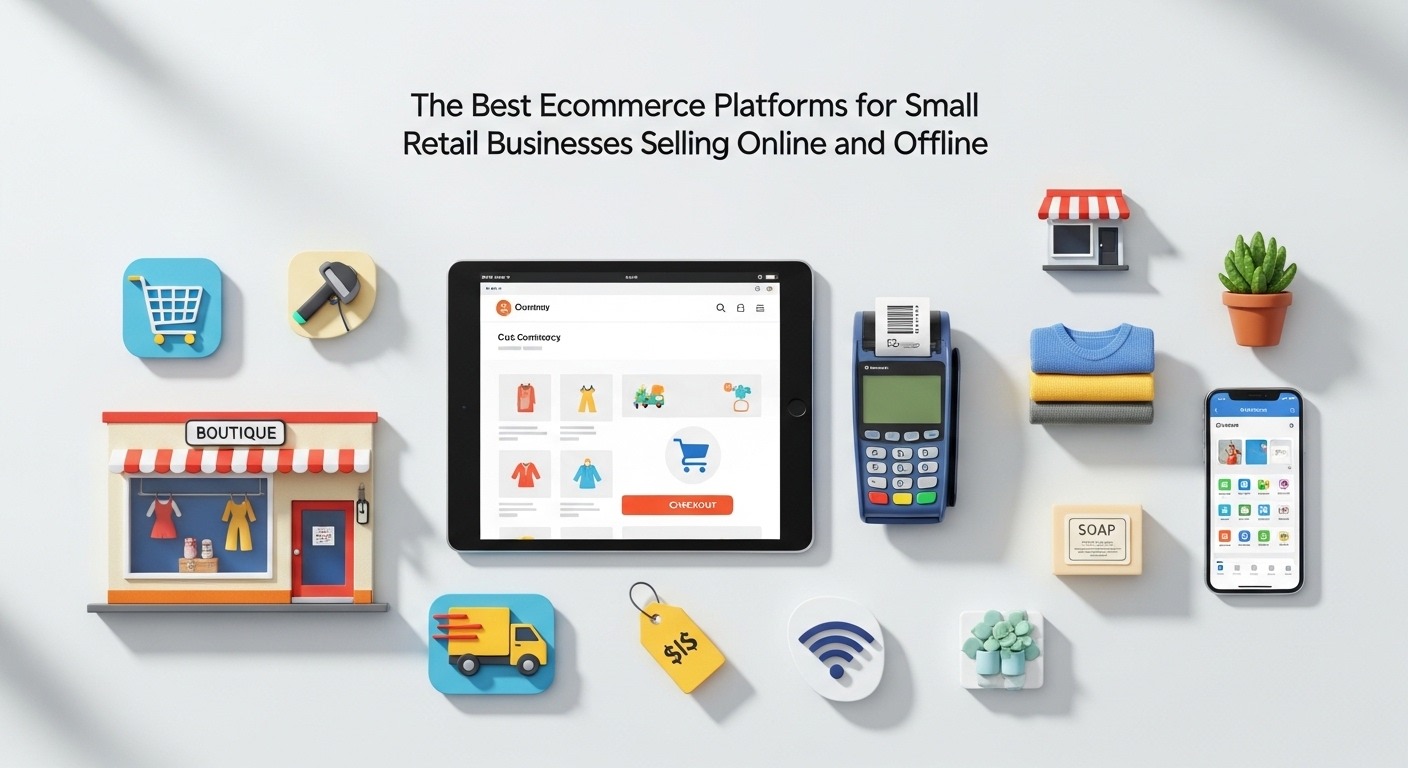
Stop managing two separate businesses. Unify your physical store and digital shopfront with the right technology.
In 2026, the term “retailer” is synonymous with “omnichannel.” If you own a brick-and-mortar store, your website is no longer just a digital brochure—it is your front door, your catalog, and your customer service desk, often before a shopper even steps foot in your physical aisle.
The challenge for small businesses isn’t just finding a place to sell online; it’s finding a platform that **connects** your online sales, your in-store Point of Sale (POS), and your single source of inventory. According to Statista, omnichannel shoppers have a 30% higher lifetime value than those who shop through a single channel.
1. Why “Unified Commerce” is the New Standard
Many retailers start with a “Frankenstein” setup: Square for in-store payments and WooCommerce for the website. While this works initially, it leads to inventory nightmares. A unified platform ensures that if a customer buys the last pair of shoes in your shop, your website updates to “Out of Stock” instantly.
This connectivity enables the #1 retail trend of 2026: BOPIS (Buy Online, Pick Up In-Store). To do this profitably, your digital and physical worlds must be one.
The Omnichannel Feedback Loop
Single Inventory
One stock count for both the shelf and the screen.
Unified Profile
Customer loyalty points sync between the counter and the cart.
Shared Data
Analyze offline trends to predict online demand.
2. Top Platform Contenders for 2026
Choosing a platform depends on your current setup and technical comfort level. Here are the top three leaders for small-to-medium retail businesses.
| Platform | Best For | Hybrid Capabilities |
|---|---|---|
| Shopify | Scaling & Marketing | Industry-leading POS sync. |
| Square Online | Local Services & Cafes | Native in-store hardware. |
| WooCommerce | DIY & Customization | Flexible through plugins. |
Shopify: The Omnichannel Giant
Shopify is the gold standard for retailers who want growth. Its Shopify POS is directly integrated into the ecosystem, making “Buy Online, Return In-Store” a three-click process. According to Shopify Retail, merchants who use their unified commerce tools grow revenue 30% faster year-over-year.
Square Online: The Local Hero
If you already use Square for your in-store card payments, their online store is the easiest bridge to build. It is remarkably simple to set up, though it offers less advanced marketing automation than Shopify.
Master the Full Retail Marketing Blueprint
Selecting a platform is just the first step. From advanced inventory psychology to high-converting local SEO and multi-channel advertising, learn the frameworks used by elite retailers to scale to seven figures.
3. Key Features to Look For
When evaluating your next platform, don’t just look at the monthly fee. Look at these three critical features that determine your long-term profitability:
- Inventory Sync Latency: Does it update in real-time or every 15 minutes? (Real-time is mandatory for high-volume stores).
- Customer Loyalty Bridge: Can a customer earn points in your shop and spend them on your website?
- Local SEO Integration: Does the platform feed your in-store inventory to Google’s “See What’s In Store” (SWIS) feature?
Final Thoughts
A retail store in 2026 is no longer just a physical location—it is a node in a network. By selecting a platform that unifies your online and offline experiences, you remove the friction that kills sales. Start with your inventory, choose a platform that scales with your ambition, and provide the seamless experience your customers expect.
© 2026 Modern Retail Growth Academy. All rights reserved.