Transform your beauty brand’s content strategy with a systematic approach to planning, creating, and distributing content that drives real results.

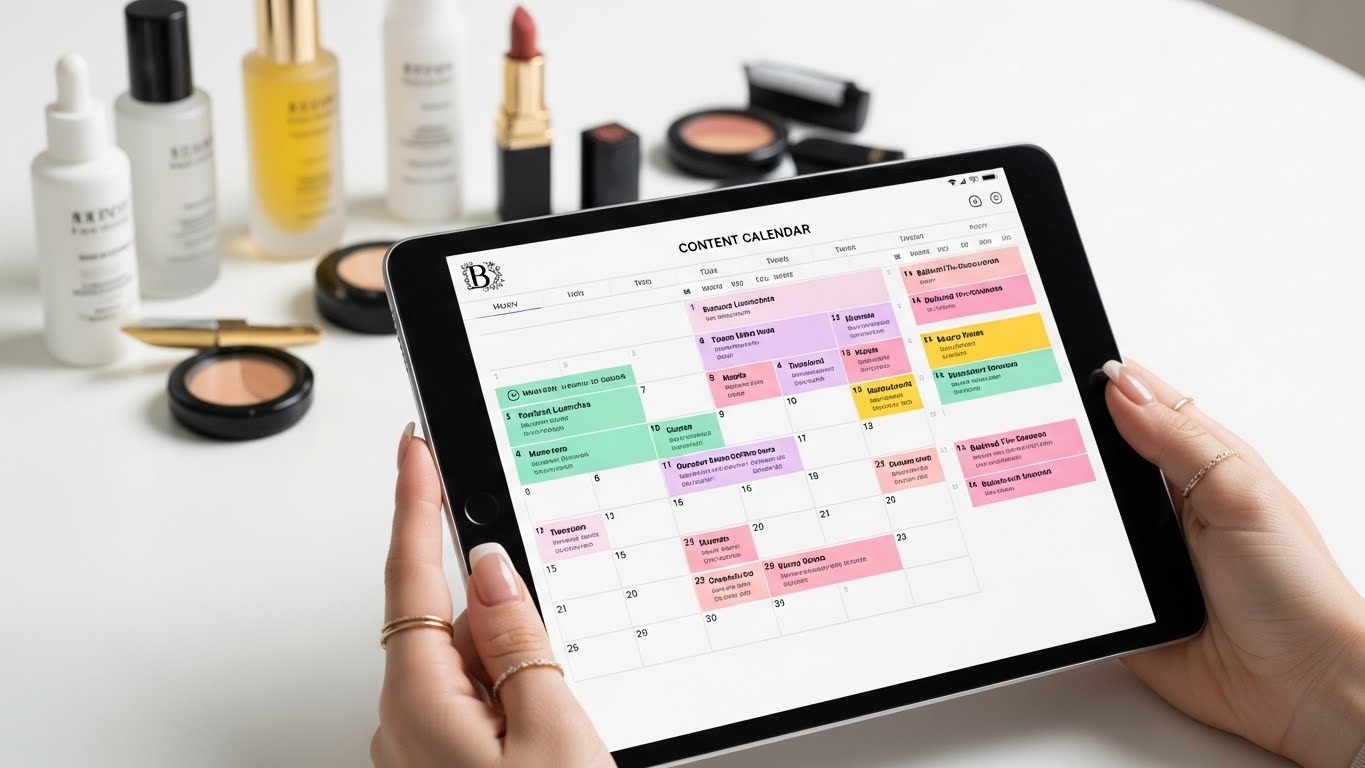
In the competitive beauty industry, consistent and strategic content is the difference between brands that thrive and those that struggle to gain traction. A well-structured content calendar doesn’t just organize your posts—it transforms your marketing into a powerful engine for education, engagement, and conversion.
Whether you’re launching a new skincare line or scaling an established makeup brand, a scalable content calendar ensures you never miss an opportunity to connect with your audience while maintaining brand consistency across all channels.
Why Beauty Brands Need a Strategic Content Calendar
The beauty industry moves at lightning speed. Trends emerge overnight, seasons change product demands, and customer questions need immediate, authoritative answers. Without a content calendar, you’re constantly playing catch-up instead of leading the conversation.
Key Benefits:
- Consistency: Maintain regular posting schedules that keep your brand top-of-mind
- Strategic Planning: Align content with product launches, seasons, and marketing campaigns
- Resource Optimization: Batch create content and allocate team resources efficiently
- Performance Tracking: Measure what works and refine your strategy continuously
Step 1: Define Your Content Pillars
Content pillars are the foundation of your calendar. These are the core themes that reflect your brand values, expertise, and customer needs. For beauty brands, effective content pillars balance education, inspiration, and product promotion.

Step 2: Map Your Content to the Customer Journey
Not all content serves the same purpose. Strategic beauty brands create content for each stage of the customer journey, nurturing prospects from awareness to advocacy.
Step 3: Choose Your Content Formats and Channels
Beauty is a visual industry, and your content formats should reflect that. A scalable calendar balances various content types to maximize reach and engagement across platforms.

📱 Social Media
- Instagram Reels & Stories
- TikTok tutorials
- Pinterest idea pins
- YouTube videos
✍️ Long-Form Content
- Blog articles
- Ultimate guides
- Email newsletters
- Case studies
🎨 Visual Assets
- Product photography
- Infographics
- Before/after galleries
- User-generated content
💡 Pro Tip: Repurpose content across formats. Turn a blog post into an infographic, then create Instagram carousel posts, and finally extract key points for Twitter threads. One piece of core content can fuel your calendar for weeks.
Step 4: Plan Around Key Dates and Seasonal Trends
The beauty industry is heavily influenced by seasons, holidays, and cultural moments. Your content calendar should anticipate and leverage these opportunities well in advance.
Step 5: Establish Your Content Creation Workflow
A scalable calendar requires efficient systems. Structure your workflow to prevent bottlenecks and ensure consistent output even as your brand grows.
Recommended Content Production Cycle:
This batching approach minimizes context-switching and allows you to maintain creative momentum while staying ahead of your publishing schedule.
Step 6: Implement the 70-20-10 Content Rule
Not every post should be a sales pitch. The 70-20-10 rule helps beauty brands strike the perfect balance between value-driven content and promotional messaging.

Educational & Value-Driven
Tips, tutorials, insights that help your audience
Shared & Curated
UGC, industry news, community content
Promotional
Product launches, sales, direct CTAs
This ratio ensures your audience sees your brand as a helpful resource first and a seller second, building the trust necessary for long-term customer relationships.
Step 7: Track Performance and Optimize
Your content calendar should be a living document that evolves based on performance data. Monitor key metrics to understand what resonates with your audience.
Essential Metrics to Track:
Review your analytics monthly to identify top-performing content types, optimal posting times, and trending topics. Use these insights to refine your calendar for the following month.
Ready to Master Beauty Brand Marketing?
A strategic content calendar is just one piece of building a successful beauty brand. If you want to dive deeper into proven marketing strategies specifically designed for the beauty industry, our comprehensive course covers everything from content creation to conversion optimization.
Essential Tools for Managing Your Content Calendar
The right tools can transform your content calendar from a spreadsheet into a powerful marketing system. Here are the essential categories of tools every beauty brand should consider:
📅 Planning Tools
Asana, Trello, Monday.com, Notion, Google Calendar, Airtable