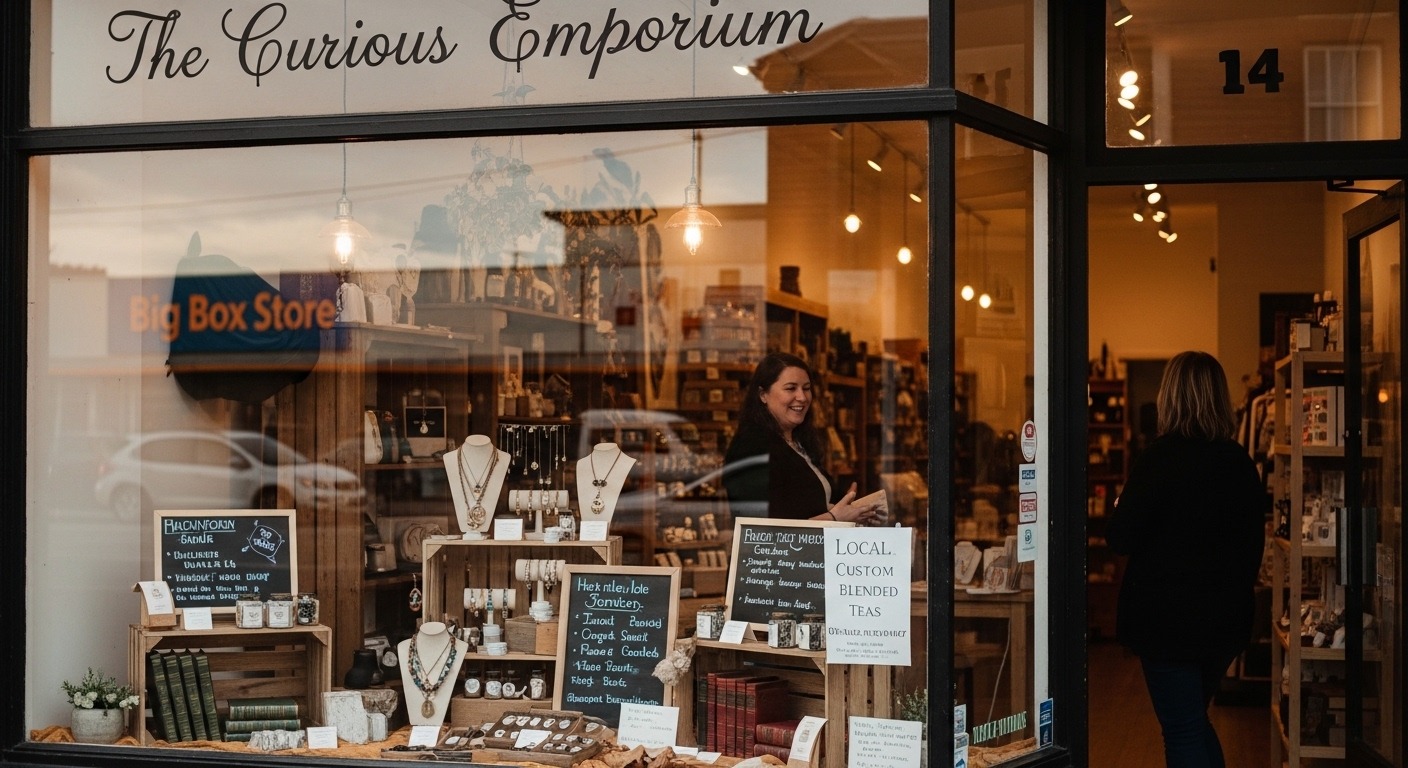
Small retailers can win by focusing on what big boxes can’t: personal connection.
For many small independent retailers, the sight of a new big-box store opening nearby can feel like a death sentence. Giant competitors like Walmart, Amazon, and Home Depot often boast seemingly insurmountable advantages: massive economies of scale, vast marketing budgets, and the ability to operate on razor-thin margins. But is the battle truly lost before it begins? Far from it.
The truth is, while big-box stores dominate in terms of sheer size and standardized efficiency, they often lack the agility, personality, and genuine connection that small businesses naturally cultivate. To compete effectively, small retailers mustn’t try to beat big boxes at their own game. Instead, they must leverage their unique strengths to create a value proposition that no corporate giant can replicate. This is where retail marketing becomes your secret weapon.
Identify and Amplify Your Unique Value Proposition (UVP)
The first step in any marketing strategy is understanding why customers choose *you*. Your Unique Value Proposition (UVP) is the cornerstone of your brand identity and the primary reason customers will walk past a chain store to shop at yours. What can you offer that they cannot?
1. Hyper-Personalized Customer Experience
This is your greatest advantage. Big box stores are, by nature, impersonal. You aren’t. Know your customers by name. Understand their preferences. Offer genuine conversations and tailored advice. A customer who feels valued as an individual will return time and time again, even if prices are slightly higher.
2. Expert Product Knowledge and Curation
Your staff shouldn’t just be shelving products; they should be experts. Train your team to answer complex questions, provide detailed recommendations, and offer hands-on demonstrations. Curation is also key. Don’t try to stock everything. Stock the *best* things, carefully selected for your specific customer base.
3. Community Connection
Big-box stores are transactional. You can be foundational. Host events, sponsor local sports teams, collaborate with other small businesses, and actively participate in community initiatives. This builds a deep, emotional connection that purely profit-driven corporations struggle to match.
4. Agility and Innovation
Small businesses can pivot quickly. See a new trend emerging? You can stock related products in days. Hear a customer suggestion? You can implement changes immediately. Big corporations require layers of approval. Use your speed to your advantage.
Competing Against Big Boxes: A Strategic Comparison
Let’s break down the typical strengths and weaknesses, and how your small business can turn the tables.
| Category | Big Box Stores (The Goliaths) | Independent Retailers (The Davids) | Small Biz Strategy |
|---|---|---|---|
| Price | High volume allows for incredibly low prices. | Lower volume means higher per-unit costs. | Don’t compete on price. Focus on value, service, and convenience. |
| Product Variety | Massive selection covering countless categories. | Limited, curated selection focused on a niche. | Offer unique, hard-to-find items and expert knowledge for the selection you do have. |
| Customer Service | Often generic, automated, and transactional. | Personalized, attentive, and relationship-driven. | This is your superpower. Train your staff extensively and build real relationships. |
| Agility | Slow-moving due to corporate hierarchy and standardized processes. | Nimble, able to adapt quickly to trends and feedback. | Experiment with new products, services, and marketing tactics. Pivot when necessary. |
| Community | Viewed as distant, corporate entities. | Seen as integral parts of the local community. | Engage deeply with local events, charities, and other small businesses. |
Mastering Retail Marketing: Your Key to Success
Understanding your UVP is one thing; effectively communicating it is another. A comprehensive, well-executed marketing strategy is essential for any small business looking to thrive in a competitive landscape.
Small Independent Retailer Marketing Infographic
)
- Content Marketing: Start a blog, create how-to videos, or write informative articles that demonstrate your expertise and provide value to your customers.
- Email Marketing: Build a loyal customer database and send regular emails with personalized recommendations, exclusive offers, and community updates.
- Social Media Engagement: Don’t just post products. Interact with your followers, run contests, and show the human side of your business.
- Local SEO: Optimize your online presence to ensure potential customers can find you when searching for products or services in your area.
- Customer Loyalty Programs: Reward your best customers with points, discounts, and exclusive perks to keep them coming back.
- Collaborations & Partnerships: Team up with other local businesses for joint events, cross-promotions, and co-branded products.
Navigating the complexities of retail marketing can be daunting, especially when resources are limited. However, you don’t have to tackle this challenge alone. By developing a strategic approach and investing in your skills, you can unlock incredible growth opportunities.
Unlock the Power of Retail Marketing!
Ready to gain a competitive edge and attract more customers to your small business? Learn proven strategies for branding, customer acquisition, and effective promotion with the
Conclusion: The David & Goliath Story is Still Relevant
Competing with big-box stores requires focus, discipline, and a deep understanding of your unique advantages. By prioritizing exceptional customer experiences, leveraging expert knowledge, cultivating a strong sense of community, and mastering the art of retail marketing, small independent retailers can not only survive but truly thrive in a marketplace dominated by giants. Remember, your size is your strength.