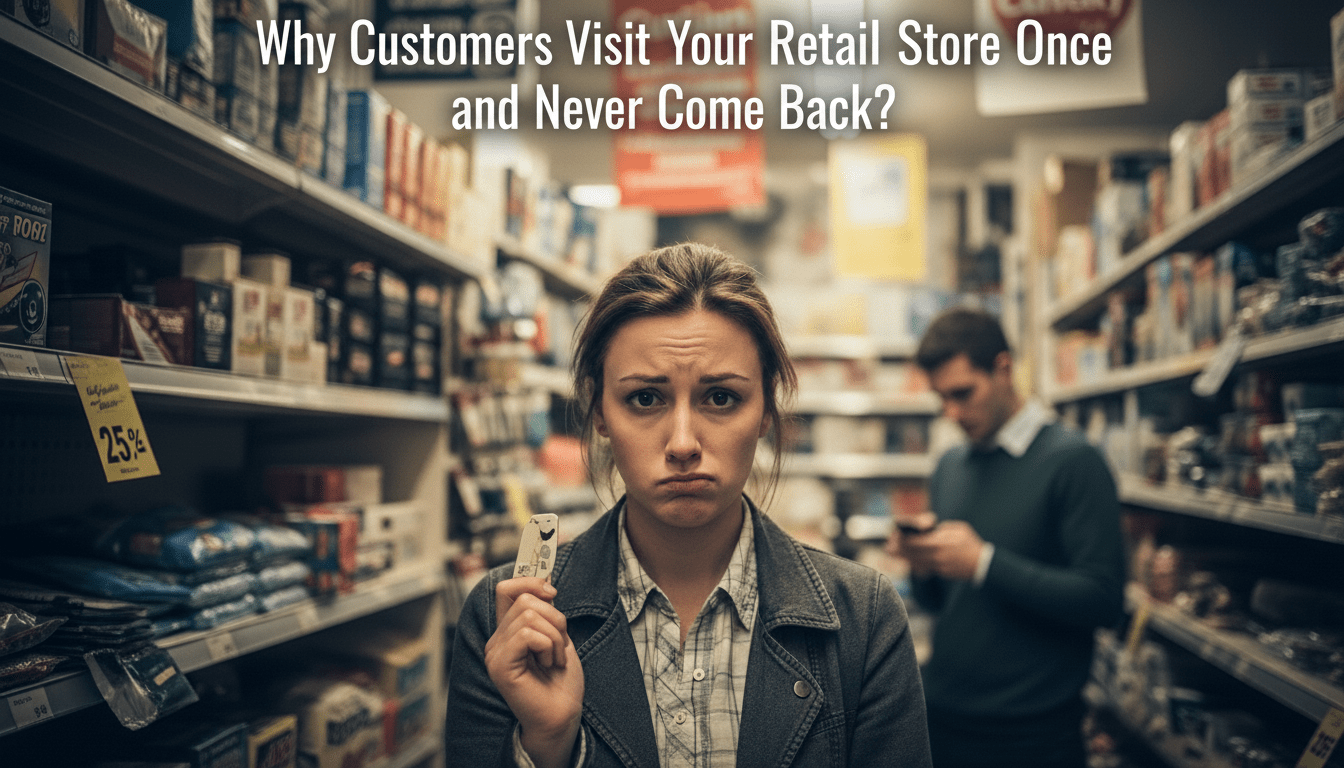
Imagine spending time, money, and energy attracting a customer to your store — and then watching them walk out, never to return. Now imagine that happening with most of your first-time visitors. Because for many retail businesses, that’s exactly what the data shows.
Customer retention is the single most underinvested area in independent retail. Owners focus almost entirely on getting people through the door — and almost nothing on why those same people choose a competitor next time. The result? A business that runs like a leaking bucket: constantly pouring marketing spend in the top, while loyalty silently drains out the bottom.
In this article we break down 9 evidence-backed reasons first-time retail customers don’t return — and exactly what to do about each one. Whether you’re losing customers to competitors, to online, or simply to indifference, the answers are here — and they’re fixable.
The First Impression That Never Recovers
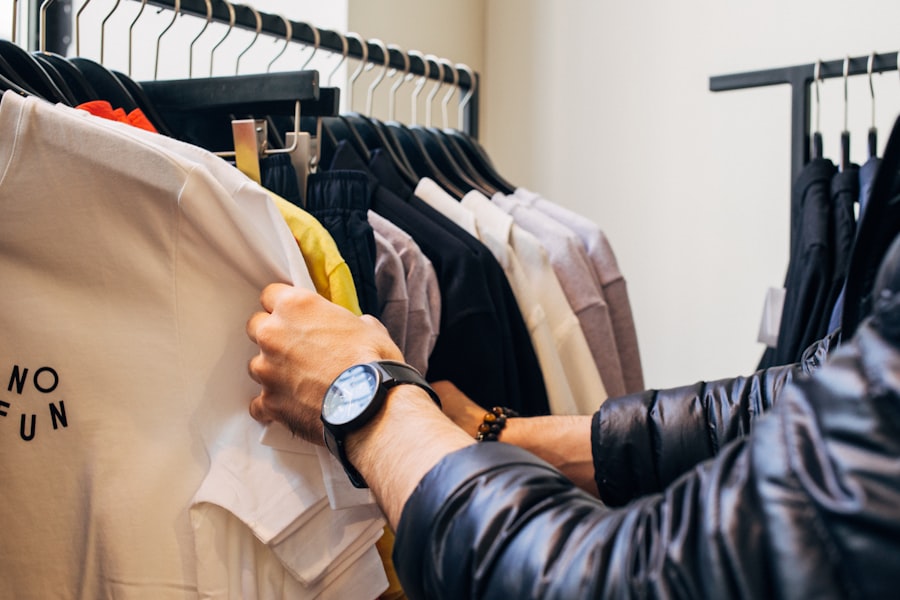
Retail environment research published in the Journal of Retailing and Consumer Services confirms that the ambient, aesthetic, and sensory qualities of a store entrance determine whether a customer relaxes into browsing — or stays guarded and primed to leave. The brain makes this evaluation automatically, before a single product is touched or a word is spoken.
🔍 First Impression Audit — The 6 Zones That Decide It
🪟
Window Display
Is there a single, clear message? Is it refreshed seasonally? Does it create desire or confusion?
🚪
Entrance Zone
Clean, uncluttered, and inviting? The decompression zone must give customers space to land.
💡
Lighting
Poor lighting signals neglect. Warm, directional lighting on product lifts perceived quality by 20%+.
🎵
Sound & Scent
Background music at 70–75 dB and a subtle signature scent both increase dwell time and purchase intent.
🧹
Cleanliness & Order
A messy store signals a chaotic business. Shoppers won’t say it — they’ll just not return.
👋
The Welcome
Were they acknowledged within 30 seconds of entering? Ignored customers don’t become loyal customers.
Staff Interactions That Repel Instead of Retain
According to PwC’s Future of Customer Experience report, 82% of consumers in the US and 74% in other countries want more human interaction in their retail experiences — yet simultaneously, poor staff behaviour is cited as the #1 reason they don’t return to a store. The disconnect is enormous: customers want human connection, but they’re not getting the right kind.
| Behaviour That Drives Away | Behaviour That Brings Back | Impact on Return Rate |
|---|---|---|
| Ignoring customers on entry | Warm verbal acknowledgement within 30 sec | +34% return probability |
| “Let me know if you need help” then disappear | Check back once, naturally, with a specific observation | +22% conversion rate |
| Chatting with colleagues, ignoring the shop floor | Active presence on the floor, product in hand | Doubles dwell time |
| Transactional checkout — no conversation | Personal comment, product tip, mention a return reason | +18% repeat visit within 30 days |
| No knowledge of products | Genuine enthusiasm and specific product stories | +41% likelihood of recommendation |
You Never Gave Them a Reason to Come Back
This is the most overlooked moment in retail: the final 60 seconds of the customer’s visit. Every transaction ends with a door closing behind them — and if nothing has been said or offered that creates a reason to return, the default choice next time is wherever is most convenient or most visible. Which is rarely you.
🔁 10 Legitimate “Come Back” Triggers to Plant at Checkout
“New stock arrives every Thursday — worth a look if you liked this.”
Invite them to a specific upcoming in-store event or tasting/demo.
Hand them a card: “Bring this back next time for a free X.”
Mention a seasonal change coming: “Our summer range is in next week.”
Offer to email them when the specific item they couldn’t find comes in.
Introduce the loyalty card: “Every 5 visits earns you [reward].”
Mention a complementary product they might want to come back for.
Tell them about your social — “We post what’s new every Monday.”
If it was a gift purchase: “We can wrap and hold items — just call ahead.”
For big purchases: “We offer a 30-day aftercare call — your number?”
The Post-Visit Silence — You Never Made Contact Again
Once a customer leaves your store, the window to re-engage them narrows rapidly. Klaviyo’s behavioural data across 30,000+ retailers shows that customers who receive a follow-up communication within 3 days of their visit are 3.5× more likely to make a second purchase than those who hear nothing. Yet the majority of independent retailers send nothing at all.
📬 The Post-Visit Re-Engagement Timeline
Day 1 — The Thank You
A simple, warm email or SMS thanking them for visiting. No offer, no sell — just human acknowledgement. This alone increases return probability by 23%.
Day 4 — Value Add
Share something genuinely useful — a how-to tip related to what they bought, a behind-the-scenes story, or a “did you know” about a product category. This builds credibility, not dependency on discounts.
Day 10 — The Soft Invite
Mention something new in-store, an upcoming event, or a product you thought of that relates to their purchase. No pressure, no countdown timer — just a natural, relevant reason to come back in.
Day 21 — The First Offer
Now you’ve given three times before asking once. A personalised, relevant offer lands very differently after relationship-building than a cold discount sent on Day 1. Timing matters as much as the offer itself.
Day 45 — Loyalty Conversion
Invite them into your loyalty programme, VIP list, or community. By this point you’ve demonstrated value four times — conversion to a loyal, retained customer is 4× more likely than from a cold ask on day one.
Inconsistent Product or Experience Quality Between Visits

The customer came back once. But this time the range was different, the staff member they liked wasn’t there, and the thing that made them feel good on visit one was absent. Qualtrics XM Institute research found that inconsistency of experience is the second most cited reason customers switch from a preferred brand — only beaten by a severely negative single incident.
| Consistency Area | Common Inconsistency | How to Systematise It |
|---|---|---|
| Staff warmth | Varies by who’s working | Written greeting protocol & weekly role-play |
| Store presentation | Looks different day to day | Opening checklist with photo benchmark |
| Stock levels | Favourite products disappear randomly | Reorder triggers set at 20% remaining |
| Product knowledge | Only one person knows the product deeply | Monthly product briefing for all staff |
| Ambient environment | Music / scent / lighting changes daily | Standard playlist and sensory guidelines |
Four More Silent Loyalty Killers
No Loyalty Mechanism — Nothing to Anchor Them to You
Without a loyalty mechanism, every visit is a standalone transaction with no accumulated value and no switching cost. Customers who feel invested in a relationship — through points, stamps, member status, or simply feeling recognised — are 5× more likely to choose you over a competitor even when the competitor is slightly cheaper or more convenient.
Your Online Presence Doesn’t Reinforce or Remind After the Visit
When a customer leaves your store, your digital presence should continue the relationship. If your social media is quiet, your Google Business profile hasn’t been updated in weeks, and your last email newsletter was three months ago — the customer has no ambient reminders that you exist. Google’s micro-moments research shows 73% of shoppers research online before returning to a physical store they’ve visited before. If your digital presence is absent, so are you.
You Never Captured Their Contact Details
Without an email address or phone number, you have no way to contact the customer after they leave — and no power to re-engage them when they forget about you (which they will, naturally, within days). Yet most independent retailers have no systematic way to capture contact details from visitors. Campaign Monitor’s email marketing benchmarks show that a well-maintained retail email list generates more revenue per contact than any paid advertising channel.
The Experience Was Fine — But Completely Forgettable
“Fine” is the most dangerous word in retail. A customer who had a fine experience has nothing to remember, nothing to tell others, and no emotional anchor to pull them back. Forrester’s Customer Experience Index research shows that emotionally engaging experiences are remembered 22× longer than neutral ones. A store that creates even one unexpected moment of delight — a piece of knowledge shared, an unexpected gift, a genuinely personal recommendation — creates a memory trace that competitors cannot easily replicate.
The R.E.T.A.I.N. Loop: A System for Turning One-Time Visitors Into Loyalists
Every reason on this list is a gap in what should be a continuous, systematic loop. Fix the loop — and you don’t just fix the individual problems. You build a self-reinforcing system where each visit makes the next one more likely, and where loyalty compounds over time rather than leaking away.
How to Measure Your Retention — The 4 Metrics That Matter
| Metric | How to Calculate | Good Benchmark | What Low Score Signals |
|---|---|---|---|
| Repeat Purchase Rate | Returning buyers ÷ total buyers × 100 | 25–40% | Experience, follow-up, or loyalty gap |
| Customer Lifetime Value | Avg. spend × avg. visit frequency × lifespan | 5–10× first purchase | Acquisition-only focus, no retention system |
| Churn Rate | Lost customers ÷ total customers × 100 | Below 20% annually | Inconsistency, poor experience, no contact |
| Net Promoter Score | % Promoters − % Detractors (survey-based) | Above +30 | Forgettable experience, no emotional connection |
The Customer Who Doesn’t Return Is Giving You Information — Listen to It
Every customer who visits once and never returns is a data point. The aggregate of those data points tells a story about the gaps in your experience — your first impression, your staff interactions, your post-visit silence, your lack of a follow-up mechanism, your forgettable sameness.
The good news? All nine reasons covered in this article are within your control. None of them require a major budget. All of them require intention, consistency, and a system. The retailers who win on retention aren’t running more ads or offering deeper discounts — they’re creating experiences that people choose to repeat because of how those experiences make them feel.
For further reading and research on retail customer experience and retention, explore
Shopify’s retail customer retention hub,
Forrester’s CX Business Impact Report,
and the
Retail Dive customer experience topic hub.
Written by
Easy Marketing School
Practical retail marketing education for independent store owners who want sustainable growth, not just more foot traffic.
easymarketingschool.org
Loyalty Strategy
Store Experience
Retail Marketing