Turn casual browsers into committed buyers using the high-conversion science of visual merchandising.
In 2026, your retail store isn’t just a place to hold inventory—it is a live marketing channel. With e-commerce offering convenience, your physical store must offer captivation. If your customers are walking past your key products without a second glance, your displays are failing the “three-second test.”
According to Shopify’s Retail Benchmarks, effective visual merchandising can increase sales by over 20% simply by changing how a product is framed. Here is how to create displays that demand attention.
1. The Pyramid Principle: Guiding the Eye
The human eye is naturally drawn to a focal point. When you arrange products at the same height, the brain perceives it as “visual noise” and filters it out. To stop a customer, you must use the Pyramid Principle.
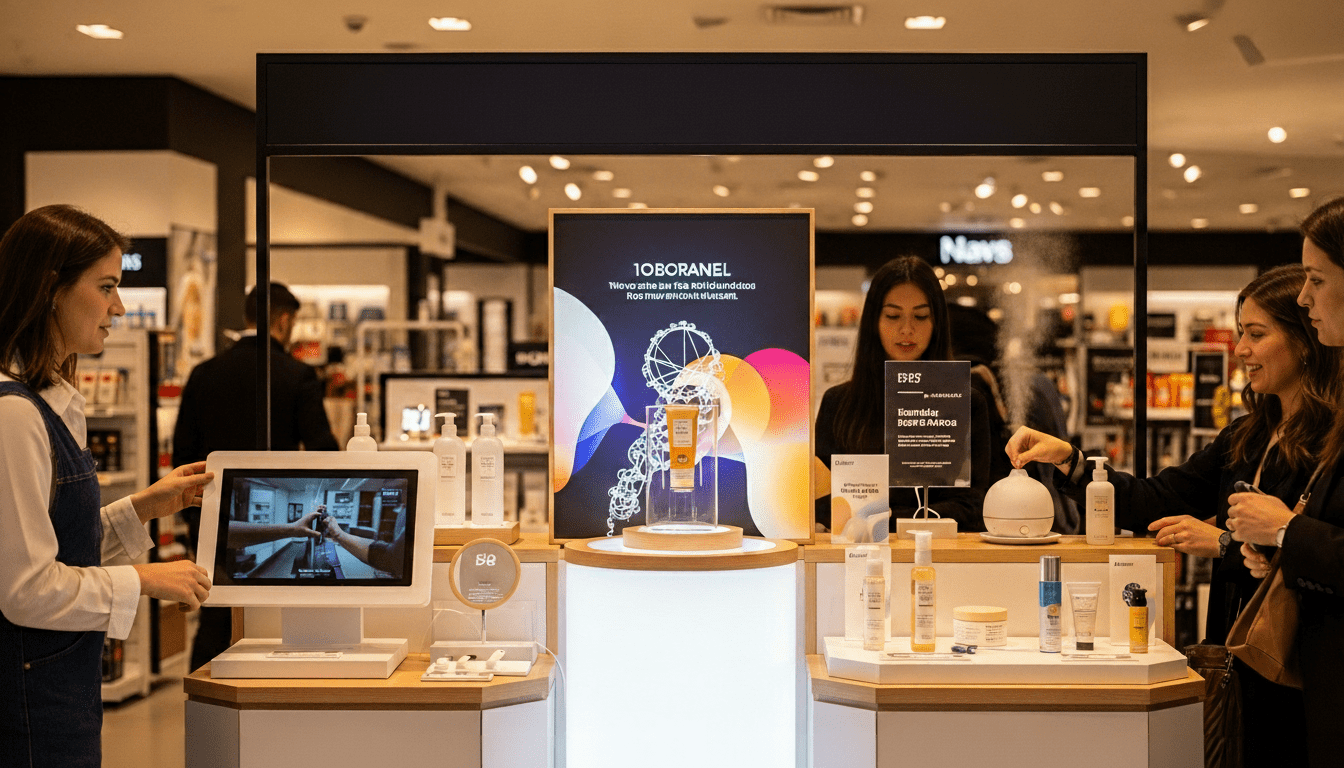
Place your “Hero Product” at the highest point in the center, and stagger supporting items downward and outward. This triangular shape creates a visual hierarchy that tells the customer exactly where to look first. Research from Harvard Business Review suggests that structured visual hierarchies significantly reduce decision fatigue and increase purchase intent.
The “Magnetic Display” Checklist
Eye Level is Buy Level
The center of your display should sit exactly 5 feet from the floor.
The Rule of Three
Items grouped in odd numbers are more appealing to the human brain.
High-Contrast Lighting
Use spotlights to make colors “pop” against the background.
2. Use “Cross-Merchandising” to Tell a Story
Don’t just sell a product; sell a solution. Cross-merchandising is the art of displaying related items together (e.g., placing wine openers next to the wine, or socks next to the shoes). This is a psychological “nudge” that increases the Units Per Transaction (UPT).
| Display Type | Marketing Goal | The “Secret Sauce” |
|---|---|---|
| Window Display | Stop Foot Traffic | Use movement or bold graphics. |
| End Cap | Impulse Purchases | Limit to ONE clear theme. |
| Point of Purchase | Increase AOV | Must be under a certain price point. |
Turn Your Store Into a Profit Machine
Visual merchandising is only one part of the retail puzzle. To truly dominate your local market, you need a full-funnel strategy—from psychological layouts to advanced inventory management.
3. The Power of Empty Space (Negative Space)
One of the biggest mistakes retailers make is cluttering every available inch. In modern retail, less is often more. High-end boutiques use negative space to signal luxury and quality. When you surround a product with “breathing room,” it naturally gains perceived value.
If your display is packed too tightly, the customer’s brain interprets it as “bargain” or “low value.” Use space strategically to elevate your most profitable lines.
Final Thoughts: Test and Rotate
The best display in the world will become “invisible” after two weeks. Regular customers develop a sensory habit, so you must rotate your displays frequently to keep the experience fresh. When you rotate a product from the back of the store to a front-facing display, it’s like launching a brand-new product all over again.
© 2026 Retail Growth Hub. All rights reserved. | Privacy & Policy