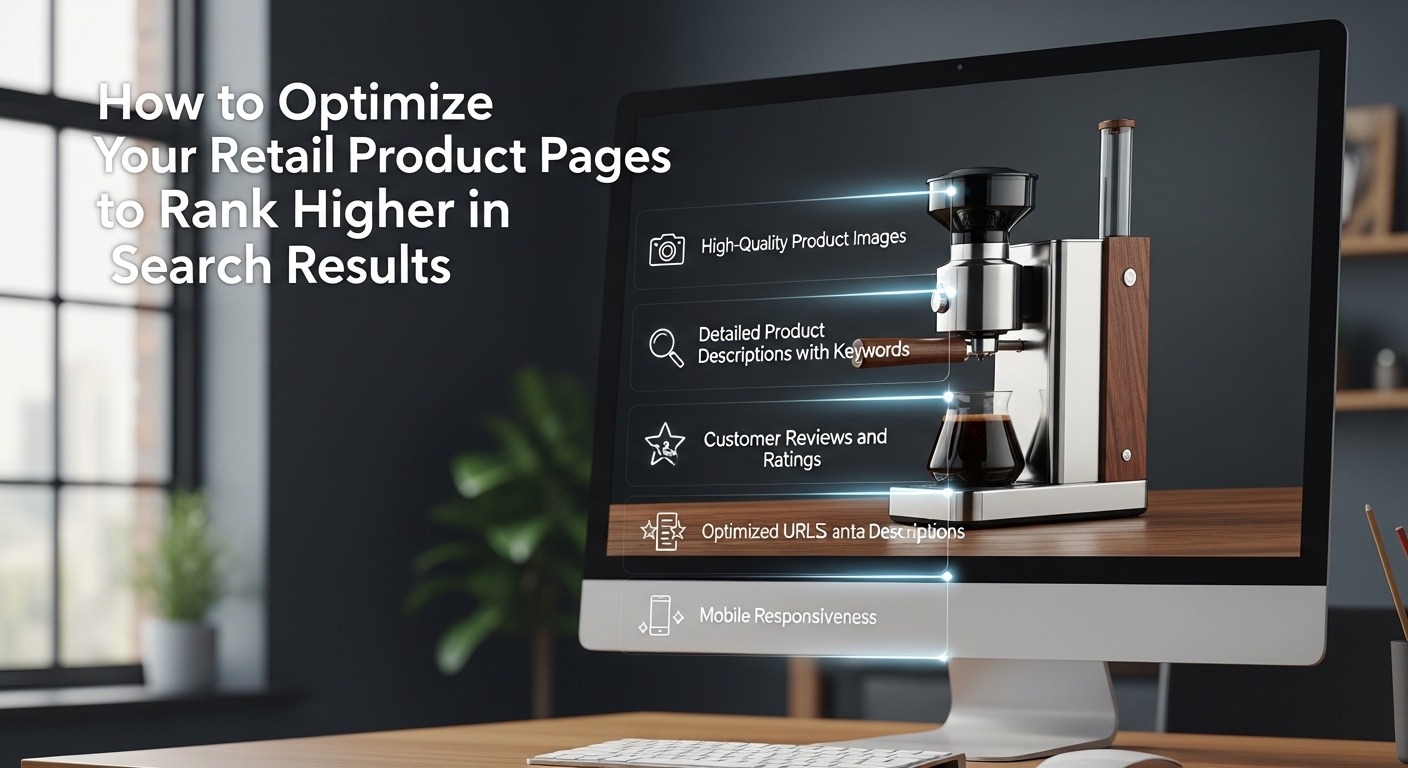
top being invisible. Start turning searchers into shoppers with these proven SEO strategies.
You have the inventory. You have the passion. But for some reason, when you search for your products on Google, your store is nowhere to be found. Instead, you’re seeing giant marketplaces or competitors who—let’s be honest—don’t even have better products than you.
The difference isn’t the quality of the item; it’s the quality of the Product Page SEO. In the world of retail, your product page is your digital salesperson. If it isn’t optimized, it’s like having a salesperson who hides in the backroom whenever a customer walks in.
1. Keyword Intent: Beyond the Product Name
Most retailers name their product pages exactly what is on the tag. For example: “Blue Linen Shirt.” The problem? Thousands of stores are using that exact same phrase.
To rank higher, you need to target Long-Tail Keywords that match customer intent. According to Google’s SEO Guide, specificity helps search engines understand exactly what you are offering. Instead of just “Blue Linen Shirt,” try “Breathable Blue Linen Summer Shirt for Men.”
The “3-Point Check” for Product Titles
Brand Name
Key Attribute (Color/Material)
Target Use
2. Don’t Just Describe—Sell with E-E-A-T
Google’s algorithm now heavily weighs Experience, Expertise, Authoritativeness, and Trustworthiness (E-E-A-T). Copying and pasting the manufacturer’s description is a fast track to the second page of search results.
Write unique descriptions that explain how to use the product. If you are a boutique owner, talk about the fabric feel. If you sell hardware, talk about the durability. This unique content signals to Google that you are an authority in your niche.
| Feature | Bad for SEO | Good for SEO |
|---|---|---|
| Image Alt Text | “IMG_001.jpg” | “vintage-leather-wallet-brown-open-view” |
| URL Structure | /p=12345/ | /products/organic-cotton-yoga-mat/ |
| Reviews | None (Hidden) | Star ratings with Schema Markup |
Table 1: Quick-fix SEO wins for retail product pages.
Take Your Retail Business to the Next Level
SEO is just one piece of the puzzle. To truly dominate the market, you need a complete 360-degree marketing strategy. Learn how to grow your brand, increase foot traffic, and skyrocket your sales.
3. Optimize Your Image “Weight”
In retail, high-quality images are non-negotiable. However, large file sizes will kill your page speed—and page speed is a confirmed ranking factor.
Always compress your images before uploading. Additionally, use descriptive “Alt Text.” Not only does this help visually impaired shoppers, but it also tells Google’s “Image Search” what your product is, giving you a second chance to rank.
4. Leverage User-Generated Content (UGC)
Reviews aren’t just for building trust; they are SEO gold. When customers leave reviews, they naturally use keywords and phrases that other shoppers use. This creates fresh, relevant content on your page without you having to lift a finger.
Pro Tip: Use “Product Schema Markup.” This is a bit of code that tells Google to show your star ratings directly in the search results. A product with a 4.5-star rating in search results gets significantly more clicks than one without.
Final Thoughts
Optimizing your product pages isn’t a “one-and-done” task. It’s an ongoing process of testing, tweaking, and listening to your data. By focusing on intent-based keywords, unique descriptions, and fast-loading images, you’ll stop fighting for scraps and start claiming your spot at the top of the search results.