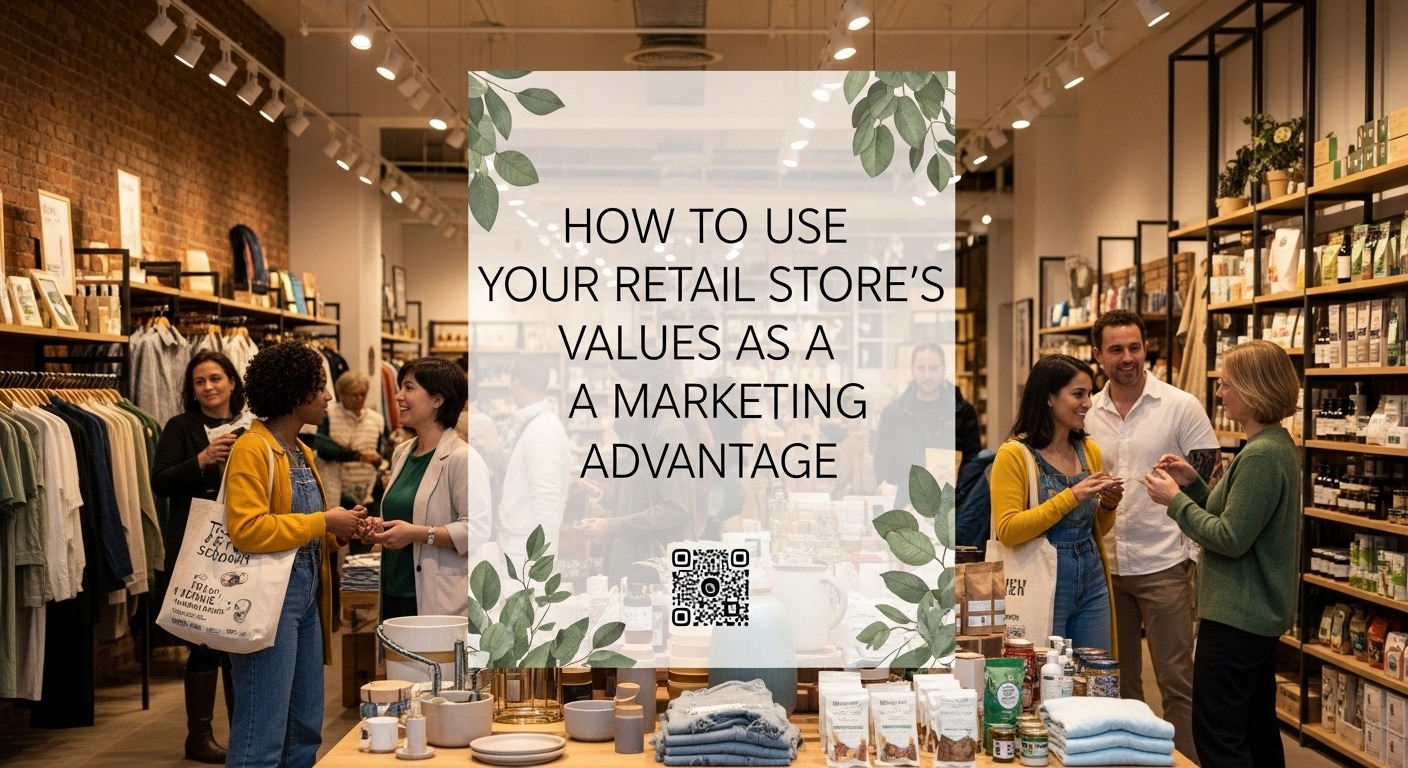
In 2026, “neutral” is the new “invisible.” Here is how to turn what you stand for into your biggest competitive edge.
Let’s be honest: in today’s hyper-saturated market, customers aren’t just buying products; they are buying philosophies. If your retail business is competing solely on price or convenience, you’re in a race to the bottom against giants like Amazon and Walmart.
The good news? You have something they don’t: a soul. By leveraging your core values as a marketing strategy, you can build a community of fanatical loyalists who wouldn’t dream of shopping anywhere else. According to recent consumer data from Forbes, over 70% of Gen Z and Millennial shoppers will pay a premium for brands that align with their personal values.
1. Move Beyond “Mission Statements”
Most retail stores have a mission statement gathering dust in a drawer. In 2026, values are active. If you value sustainability, don’t just put a leaf icon on your bag; show the local composting facility you partner with on your Instagram Stories.
Authenticity is your best defense against “values-washing.” If your marketing says you care about the community, but you don’t show up at local events, customers will smell the disconnect. Transparency is the currency of trust.
The Value-Driven Marketing Loop
Identify
Pinpoint 3 non-negotiable beliefs.
Embody
Integrate values into daily operations.
Scale
Share the “Behind the Scenes” stories.
2. Values as a Filter for Your Inventory
Your values should act as a gatekeeper for what hits your shelves. When you refuse to carry a popular product because the manufacturer doesn’t meet your ethical standards, tell that story.
Customers appreciate curation. When you say “No” to a trend to stay true to your “Yes,” you earn a level of authority that no discount code can buy. Check out how Shopify’s Retail Blog highlights ethical curation as a top growth driver this year.
Is Your Retail Strategy Stuck in 2020?
Marketing values is just one part of the puzzle. From advanced inventory management to high-converting local SEO, you need a professional roadmap to dominate the modern market.
Comparison: Transactional vs. Value-Based Retail
The difference between a “shop” and a “brand” lies in the intent behind the interaction. Here is how the two approaches stack up in 2026:
| Feature | Transactional Model | Value-Based Model |
|---|---|---|
| Marketing Hook | “Lowest price in town!” | “Support a sustainable future.” |
| Customer Loyalty | Fickle (leaves for a $1 coupon). | Deep (recommends to friends). |
| Social Media Content | Promotional flyers only. | Education & impact stories. |
3. Humanize the Connection
Your values are personal, so your marketing should be too. Use your social platforms to introduce the people behind the counter. Why did you start this business? What causes do your employees care about? When you humanize your store, you move from being a “vendor” to being a “neighbor.”
Remember: In a world of AI-generated noise, humanity is your ultimate marketing advantage.
SEO Tip: When sharing your values online, use local keywords alongside your brand values (e.g., “Sustainable retail in [Your City]”) to capture high-intent local traffic.