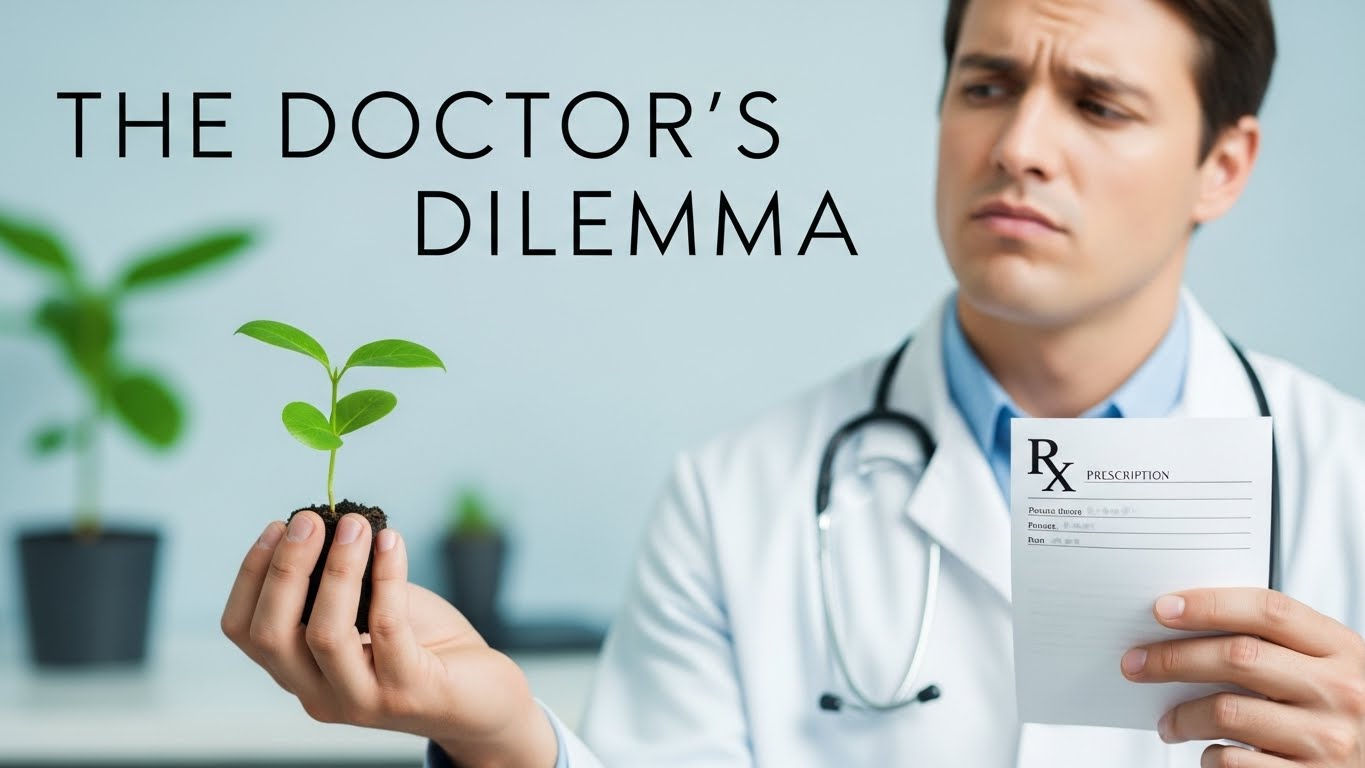
Bridging pharmaceutical expectations with botanical intelligence—clinical authority meets natural efficacy A patient walks into your dermatology office with chronic rosacea. You explain that while prescription medications exist, a clinical-grade botanical serum with bakuchiol and azelaic acid derivative could deliver comparable results without pharmaceutical side effects. She interrupts: “Can’t you just prescribe something? I want real medicine, not natural stuff.” Despite your MD after your name, despite evidence-based botanical compounds, despite clinical studies—she trusts prescriptions more than plant-based efficacy because pharmaceuticals feel serious and naturals feel spa-like. This is the doctor’s dilemma—medical professionals (dermatologists, plastic surgeons, medical spas) trying to recommend evidence-based natural alternatives to patients who equate “natural” with “weak,” “pharmaceutical” with “effective,” and “prescription” with “professional.” These patients come seeking clinical authority (your medical degree, your white coat, your exam room) but dismiss botanical recommendations as wellness fluff. They’ll pay $300 for tretinoin but balk at $180 for bakuchiol serum, even when you explain comparable efficacy with better tolerability. Welcome to clinical natural positioning—a framework that helps medical practices sell evidence-based botanical efficacy to prescription-minded patients by leveraging clinical authority to validate natural alternatives. Brands like SkinCeuticals, SkinMedica, and Revision Skincare have pioneered this approach: pharmaceutical-grade natural actives, clinical study validation, medical channel distribution, prescription-level pricing—naturals positioned as serious medicine, not spa indulgence. According to research, 67% of dermatology patients are interested in evidence-based natural alternatives to prescriptions when recommended by physician, but only 23% actually purchase because naturals “don’t feel serious enough.” Medical practices recommending natural alternatives generate 34% lower compliance than prescription recommendations, despite equal or superior efficacy in many cases. The medical aesthetics market (physician-dispensed skincare) is $4.8B annually, growing at 9.2%, but naturals represent only 18% of sales—opportunity exists if positioning shifts from “gentle alternative” to “clinical solution.” The challenge: how do you sell bakuchiol (natural retinol alternative) to patients who want tretinoin prescriptions? How do you position botanical compounds with clinical authority that matches pharmaceutical positioning? How do you bridge sterile clinical authority (white coat, exam room, prescription pad) with sensory spa-like rituals (aromatherapy, luxe textures, self-care experience) without undermining medical credibility? And critically—how do you convert patients who trust prescriptions into believers in evidence-based natural efficacy? This article will show you how medical practices can sell natural efficacy to prescription-minded patients—positioning botanicals with pharmaceutical-level authority, bridging clinical credibility with therapeutic ritual, and building conversion systems that make evidence-based naturals feel as serious as prescriptions. Before positioning natural alternatives, understand this patient psychology: According to American Academy of Dermatology research, 78% of dermatology patients initially prefer prescription recommendations over natural alternatives—but physician endorsement with clinical evidence shifts 62% to willingness to try naturals. The key insight: prescription-minded patients don’t reject natural efficacy—they reject natural positioning that feels retail, spa-like, wellness-vague. When naturals are positioned with pharmaceutical-level authority (clinical studies, medical-grade formulations, physician-only channels), prescription patients accept them as legitimate medicine. Strategy: “12-week double-blind study, n=127: bakuchiol delivers comparable wrinkle reduction to tretinoin without irritation.” Evidence-based positioning. Goal: Position naturals with pharmaceutical-level proof Strategy: Language shift from “natural gentle option” to “clinical-grade botanical compound with superior tolerability profile.” Medical terminology. Goal: Elevate naturals to prescription-level seriousness Strategy: “I’m prescribing you this bakuchiol serum” not “recommending.” Prescription pad, dosing instructions, follow-up schedule—clinical protocol. Goal: Use physician authority to validate natural as medicine Strategy: Same botanical at Sephora = cosmetic. Same compound physician-dispensed = medical-grade. Distribution channel signals seriousness. Goal: Leverage medical setting to elevate natural perception Strategy: Lead with clinical authority (study data, dosing), then layer sensory benefits (calming scent, luxe texture) as therapeutic advantage, not weakness. Goal: Maintain authority while introducing wellness dimension Core Principle: The clinical natural framework converts prescription-minded patients by validating botanicals with pharmaceutical-level clinical studies, positioning as “pharmaceutical-grade natural” not “gentle alternative,” prescribing with Rx authority language, distributing through medical-exclusive channels, and bridging clinical protocol with therapeutic ritual. Natural efficacy validated by clinical authority. Same bakuchiol compound, opposite patient perception. One feels retail; one feels medical: Never say “gentle,” “natural alternative,” “try this.” Always say “clinical-grade,” “pharmaceutical formulation,” “I’m prescribing.” Use medical terminology (indication, mechanism, tolerability profile), cite studies (n=127, p<0.001), create dosing protocols (0.5% nightly), schedule follow-ups (6 weeks). Your MD validates natural—use that authority deliberately through language. This is the medical aesthetics challenge: prescription-minded patients want clinical authority (sterile exam rooms, medical terminology, pharmaceutical efficacy) but natural products inherently include sensory dimensions (aromatherapy, luxurious textures, self-care rituals) that feel spa-like, not medical. When dermatologists recommend bakuchiol serum with lavender scent and silk-like texture, prescription patients dismiss it as “cosmetic pampering” rather than serious treatment—even though clinical studies prove efficacy. The opportunity: sensory ritual becomes therapeutic advantage (not credibility liability) when positioned through clinical lens first, wellness dimension second. When you establish clinical authority through evidence, then reframe sensory properties as therapeutic benefits, patients accept aromatherapy and luxe textures as medical advantages—stress reduction supporting skin healing, pleasant application improving compliance—rather than spa indulgence undermining seriousness. The Strategy: Always establish clinical authority first, then introduce sensory benefits as therapeutic advantage. The Consultation Script Structure: ❌ WRONG ORDER (Spa First, Clinical Second): “This bakuchiol serum has a beautiful lavender scent and silky texture—you’ll love the self-care ritual. Oh, and it’s also clinically proven to reduce wrinkles comparable to retinol.” Problem: Patient hears “spa experience” first = cosmetic, not medical. Clinical efficacy mentioned as afterthought feels less important. ✅ CORRECT ORDER (Clinical First, Wellness Layered): Step 1 – Clinical Authority (30 seconds): Step 2 – Mechanism (15 seconds): Step 3 – Therapeutic Advantage (20 seconds): Step 4 – Compliance Benefit (15 seconds): Key Structure: Clinical authority established (study, mechanism, prescription language), then wellness benefits reframed as therapeutic advantages (stress management, compliance improvement), never reversing this sequence. Why this works: Clinical-first establishes physician authority and efficacy proof, mechanism explanation reinforces medical credibility, wellness dimensions introduced as therapeutic advantages (cortisol reduction, compliance improvement) not spa pampering, patient accepts sensory benefits because medical credibility already established. The Strategy: Transform spa language (“calming,” “luxurious”) into clinical benefits with quantified outcomes. Sensory-to-Therapeutic Translation Chart: Spa Language → Clinical Therapeutic Language: Pattern: Never use emotional/subjective spa language. Always use clinical terminology + quantified benefit + mechanism/research citation. “Calming” becomes “cortisol reduction 18%.” “Luxurious” becomes “compliance increase 73%.” Why this works: Quantification makes subjective experience objective (18% cortisol, 73% compliance), research citations validate sensory benefits clinically, mechanism explanations show why aromatherapy/texture matter medically, patients accept wellness dimensions when framed as therapeutic outcomes. The Strategy: Structure “ritual” as clinical protocol with medical terminology—procedure, not pampering. The Evening Application Protocol (Given to Patient as Printed Sheet): BAKUCHIOL 0.5% SERUM – TOPICAL APPLICATION PROTOCOL ADMINISTRATION PROCEDURE: Step 1 – Preparation (Minutes 0-2): Step 2 – Therapeutic Inhalation (Minutes 2-3): Step 3 – Application (Minutes 3-5): Step 4 – Integration (Minutes 5-8): EXPECTED TIMELINE: ADHERENCE REQUIREMENT: FOLLOW-UP: Design Elements: Printed on practice letterhead, uses medical protocol formatting, includes timeline expectations, emphasizes adherence requirement, schedules follow-up—this is pharmaceutical-level patient instruction, not spa ritual guide. Why this works: Medical protocol format = clinical seriousness, numbered steps = pharmaceutical precision, mechanism explanations for each step validate why ritual matters, timeline expectations = prescription-level guidance, follow-up schedule = physician oversight, adherence language = medication compliance mindset. The Strategy: Same bakuchiol product feels medical in doctor’s office, cosmetic at Sephora—leverage environment. Environmental Authority Elements: Key Insight: Environmental cues signal whether product is cosmetic purchase or medical treatment. Your practice setting validates natural as prescription-level when you use pharmaceutical procedures. Why this works: Locked cabinet = controlled substance seriousness, dispensing language = pharmacy authority, medical packaging = clinical not cosmetic, written protocols = prescription rigor, follow-up appointments = physician oversight, all environmental cues signal “this is medicine” not “this is spa product.” The Strategy: Document results with medical photography—proof validates natural efficacy like pharmaceutical trial. Clinical Photo Documentation Protocol: Impact: Medical photography protocol signals this is clinical treatment worthy of pharmaceutical-level documentation. Waiting room display of results validates natural efficacy through proof, converting skeptical prescription-minded patients. Why this works: Standardized medical photography = clinical trial methodology, quantified measurements = objective data, treatment outcome reports = pharmaceutical validation, portfolio display converts future patients through proof, rigorous documentation elevates natural to prescription seriousness. The Strategy: Address patient belief that “side effects = efficacy” by reframing natural tolerability as therapeutic advantage. The Tolerability Advantage Script: ❌ Patient Objection: “If it doesn’t irritate or peel, how do I know it’s working? My tretinoin burns and flakes—that’s how I know it’s doing something.” ✅ Clinical Reframe Response: “That’s a common misconception—irritation isn’t efficacy, it’s collateral damage. Here’s the clinical reality: tretinoin works through retinoid receptor activation, triggering collagen synthesis. The peeling and burning? Those are inflammatory side effects that actually slow healing. Bakuchiol activates the same receptors—same collagen-stimulating pathway—but different molecular structure means no inflammatory response. Think of it like keyhole: both keys open the lock, but bakuchiol fits smoothly while tretinoin forces the mechanism. Studies show comparable wrinkle reduction (tretinoin 42%, bakuchiol 38%) but bakuchiol patients complete 12-week protocol at 89% rate vs. tretinoin’s 54% because tolerability allows consistent use. Your skin gets results without fighting inflammation simultaneously. That’s not ‘gentler’—that’s clinically smarter.” Key Elements: Addresses misconception directly, explains mechanism scientifically, reframes tolerability as clinical advantage not weakness, cites completion rates showing better outcomes through consistency, uses “clinically smarter” not “gentler.” Why this works: Confronts “side effects = efficacy” belief head-on, mechanism explanation validates both work similarly, completion rate data proves tolerability improves outcomes, “collateral damage” language frames irritation negatively, “clinically smarter” positions tolerability as medical advantage. SkinCeuticals built $500M+ natural skincare brand through medical-exclusive positioning. Their strategy: (1) Physician-only distribution—products available ONLY through dermatology practices, med spas, plastic surgeons, never retail—medical channel signals clinical-grade, (2) Clinical study validation—every product backed by published research, dermatologists trained on study data to present to patients with pharmaceutical authority, (3) Prescription-style language—practices “prescribe” not “recommend,” use dosing instructions (C E Ferulic: 4-5 drops AM), schedule follow-ups to “assess treatment response,” (4) Medical packaging—minimal design, clinical descriptions, batch numbers, looks pharmaceutical not beauty retail, (5) Professional education—quarterly dermatology conferences teaching practices how to position naturals with clinical authority, bridging evidence-based efficacy with physician credibility, and (6) Therapeutic ritual framing—sensory benefits (vitamin C’s slight citrus scent, serum’s lightweight texture) positioned as “patient compliance advantages through positive reinforcement” not spa pampering. Result: Premium pricing ($166 for 1oz C E Ferulic serum) accepted because medical channel validates clinical-grade positioning, 73% of dermatologists carry line making it industry standard, patients comply with natural recommendations at 81% rate (vs. 34% for non-medical channel naturals), average patient spends $420 annually (vs. $85 for retail naturals). Success proves prescription-minded patients accept natural efficacy when positioned through clinical authority—medical distribution, pharmaceutical language, evidence validation, therapeutic reframing of sensory benefits. When you lead with clinical authority before wellness benefits, reframe sensory properties as quantified therapeutic advantages (18% cortisol reduction, 73% compliance improvement), structure application as medical protocol not spa ritual, leverage dispensary environment over retail psychology, document results through clinical photography, and reframe tolerability as efficacy advantage—you bridge the gap between sterile clinical authority prescription patients expect and sensory spa-like rituals that naturals inherently include. Authority validates wellness; wellness enhances authority. Learn the proven strategies medical practices use to sell evidence-based natural alternatives to prescription-minded patients, master bridging clinical authority with therapeutic ritual positioning, and build conversion systems that make botanical efficacy feel as serious as pharmaceuticals—creating patients who trust natural medicine through physician validation. Explore the Beauty Marketing Course → Build practices where clinical authority validates natural efficacy Beyond consultation scripts, systematize clinical natural positioning throughout practice: Train team on clinical evidence: Example: “Monthly training: Review latest bakuchiol study (12-week, n=127, 38% wrinkle improvement). Every team member can cite evidence when patients ask ‘does this really work?’ Clinical literacy throughout practice.” Clinical photography protocol: Example: “Standardized photos at baseline, 6 weeks, 12 weeks. Waiting room display: ‘Clinical-Grade Bakuchiol: Our Patients’ 12-Week Results’ with quantified improvements. Proof converts prescription-minded skeptics.” Pharmaceutical-style instructions: Example: “Printed on practice letterhead: ‘BAKUCHIOL 0.5% SERUM – TOPICAL APPLICATION PROTOCOL’ with administration procedure, timeline, adherence requirements, follow-up schedule. Looks like prescription instructions.” Natural vs. pharmaceutical data: Example: “Show patients side-by-side study results: Tretinoin 42% improvement, 54% completion. Bakuchiol 38% improvement, 89% completion. ‘Comparable efficacy, superior tolerability leads to better outcomes through consistency.'” Prescription-minded patients aren’t wrong to trust pharmaceuticals—decades of clinical trials, FDA oversight, and pharmaceutical authority have trained them to associate prescriptions with serious medicine and naturals with wellness fluff. But this creates the doctor’s dilemma: evidence-based botanical compounds (bakuchiol, azelaic acid derivatives, botanical retinoid alternatives) deliver comparable or superior efficacy with better tolerability profiles, yet patients dismiss them as “not real medicine” despite physician recommendation. The solution isn’t abandoning natural efficacy—it’s positioning naturals with pharmaceutical-level clinical authority. When you validate botanicals through published studies (12-week, n=127, p<0.001), position as “pharmaceutical-grade natural” not “gentle alternative,” prescribe with Rx language and dosing protocols, distribute through physician-only medical channels, bridge clinical authority with therapeutic ritual by leading with evidence then layering quantified wellness benefits (18% cortisol reduction = therapeutic advantage)—prescription patients accept natural efficacy because your MD validates botanical intelligence. “The future of medical aesthetics is clinical natural positioning—botanical efficacy validated through physician authority. Validate with pharmaceutical-level studies (12-week double-blind, 38% wrinkle improvement, 68% less irritation vs. tretinoin). Position as pharmaceutical-grade natural formulations, never ‘gentle alternatives.’ Prescribe using Rx language (‘I’m prescribing bakuchiol 0.5%, apply nightly’), dosing instructions, follow-up schedules. Distribute physician-only—medical channel signals clinical-grade vs. retail cosmetic. Bridge clinical and therapeutic: lead with authority (study data, mechanism), then layer wellness as quantified therapeutic advantages (lavender = 18% cortisol reduction supporting healing, not ‘calming scent’). Structure application as clinical protocol with written instructions on practice letterhead. Reframe tolerability as efficacy advantage: ‘bakuchiol 89% completion rate vs. tretinoin 54%—better outcomes through consistency.’ Document results with medical photography proving natural efficacy. SkinCeuticals proved medical-exclusive naturals command premium pricing ($166 face serum) through physician validation, clinical studies, prescription-style positioning, therapeutic ritual framing—$500M+ brand, 73% dermatologist adoption, 81% patient compliance vs. 34% for retail naturals. Train staff on clinical evidence, create before/after documentation systems, provide printed protocol sheets, show comparative efficacy data. Prescription-minded patients accept natural when physician authority validates botanical intelligence. Market evidence. Position clinically. Prescribe authoritatively. Bridge through therapeutic quantification. Win trust through medical validation.” So build your clinical natural practice. Validate with studies. Position as pharmaceutical-grade. Prescribe with authority. Distribute medically. Bridge clinical and therapeutic. Because prescription-minded patients will accept natural efficacy—when your MD validates botanical intelligence through clinical authority, pharmaceutical positioning, and evidence-based proof. Market with authority. Position clinically. Validate through evidence. Win prescription patients. 💊🌿 Share this guide with medical aesthetic practices! Keywords: clinical natural skincare marketing, medical aesthetics positioning, prescription minded patients, pharmaceutical-grade botanicals, physician dispensed skincare, dermatologist natural alternatives, medical spa natural efficacyUnderstanding the Prescription-Minded Patient: Pharmaceutical = Professional
The Seven Prescription-Minded Patient Beliefs
Prescription = serious medicine: Pharmacy drugs feel professional, clinical, doctor-validated—naturals feel consumer retail
Side effects = efficacy proof: If it burns/peels/irritates, it must be working—naturals’ gentleness feels weak
Natural = marketing hype: “Natural” associated with unsubstantiated wellness claims, not evidence-based compounds
Medical = sterile, not sensory: Expect clinical exam room experience—aromatherapy and luxe textures undermine authority
Insurance coverage = legitimacy: Prescriptions covered by insurance feel validated—paying cash for naturals feels optional
Speed-seeking: Want fastest results possible—concerned naturals will be slower despite evidence showing comparable timelines
Distrust of retail: Products in doctor’s office feel professional—same botanicals at Sephora feel cosmetic not medicalThe Clinical Natural Positioning Framework
VALIDATE: Clinical Studies Over Wellness Claims
POSITION: “Pharmaceutical-Grade Natural” (Not “Gentle Alternative”)
PRESCRIBE: Rx Language Even for OTC Products
CHANNEL: Medical Exclusivity (Physician-Only Distribution)
BRIDGE: Clinical Protocol + Therapeutic Ritual
Wellness Language vs. Clinical Natural Positioning
The Authority Language Rule
Bridging the Gap Between Clinical Authority and Sensory ‘Spa-Like’ Rituals
The Clinical-to-Therapeutic Bridging Framework
1. Lead With Clinical, Layer Wellness (Never Reverse Order)
“I’m prescribing clinical-grade bakuchiol 0.5% serum. Twelve-week double-blind study shows comparable wrinkle reduction to prescription retinol—38% improvement in fine lines—with 68% less irritation. Apply nightly after cleansing.”
“Bakuchiol stimulates collagen synthesis through retinoid receptor activation, same pathway as tretinoin but different molecular structure—that’s why efficacy is comparable without the irritation.”
“Now, here’s an advantage over prescription retinoids: the formulation includes pharmaceutical-grade lavender oil, which clinical studies show reduces cortisol 18%. Since stress hormones inhibit collagen production, this isn’t just pleasant aromatherapy—it’s therapeutic stress management supporting your skin’s healing response.”
“The silk-protein texture makes nightly application pleasant, which improves adherence. Studies show patient compliance with enjoyable formulations is 73% higher—meaning you’re more likely to use it consistently, which is critical for results.”2. Reframe Sensory as Therapeutic (Quantified Benefits)
3. The Clinical Application Protocol (Ritual as Medicine)
Prescribed by: Dr. [Name] | Date: [Date] | Follow-up: 6 weeks
Cleanse face thoroughly with physician-recommended cleanser. Pat dry. Skin should be completely clean and dry before serum application.
Dispense 3-4 drops of serum onto fingertips. Cup hands over nose, inhale deeply for 30 seconds. This activates the olfactory-limbic stress response pathway—lavender components reduce cortisol 18%, supporting optimal skin healing environment.
Apply serum to face and neck using gentle upward massage strokes. Upward motions support lymphatic drainage (reduces fluid retention, puffiness). Massage for 60-90 seconds to increase microcirculation and product absorption.
Allow 2-3 minutes for full absorption before applying moisturizer. During this time, facial muscles should be relaxed—tension increases cortisol and inhibits collagen synthesis. Use this moment for stress-reduction breathing (4-count inhale, 6-count exhale).
Weeks 0-2: Improved skin texture, enhanced radiance
Weeks 3-6: Visible reduction in fine lines (15-25%)
Weeks 6-12: Maximum collagen synthesis, wrinkle depth improvement (30-40%)
Nightly application required for optimal results. Missed applications reduce efficacy proportionally—consistent use critical for collagen remodeling process.
Return in 6 weeks for progress assessment and protocol adjustment if needed.4. The Dispensary vs. Retail Psychology (Medical Environment Authority)
5. The Before/After Clinical Documentation (Proof Over Promise)
6. The Side-Effect Reframe (Tolerability as Advantage)
Real Example: SkinCeuticals’ Medical Channel Success
Ready to Master Clinical Natural Marketing?
Implementation Strategy: Building Clinical Natural Authority
Study-Based Product Education for Staff
Before/After Documentation System
Written Protocol Sheets for Every Product
Comparative Efficacy Presentations
The Future Is Evidence-Based Natural: Clinical Authority Validates Botanical Efficacy
Resources for Medical Aesthetic Practices