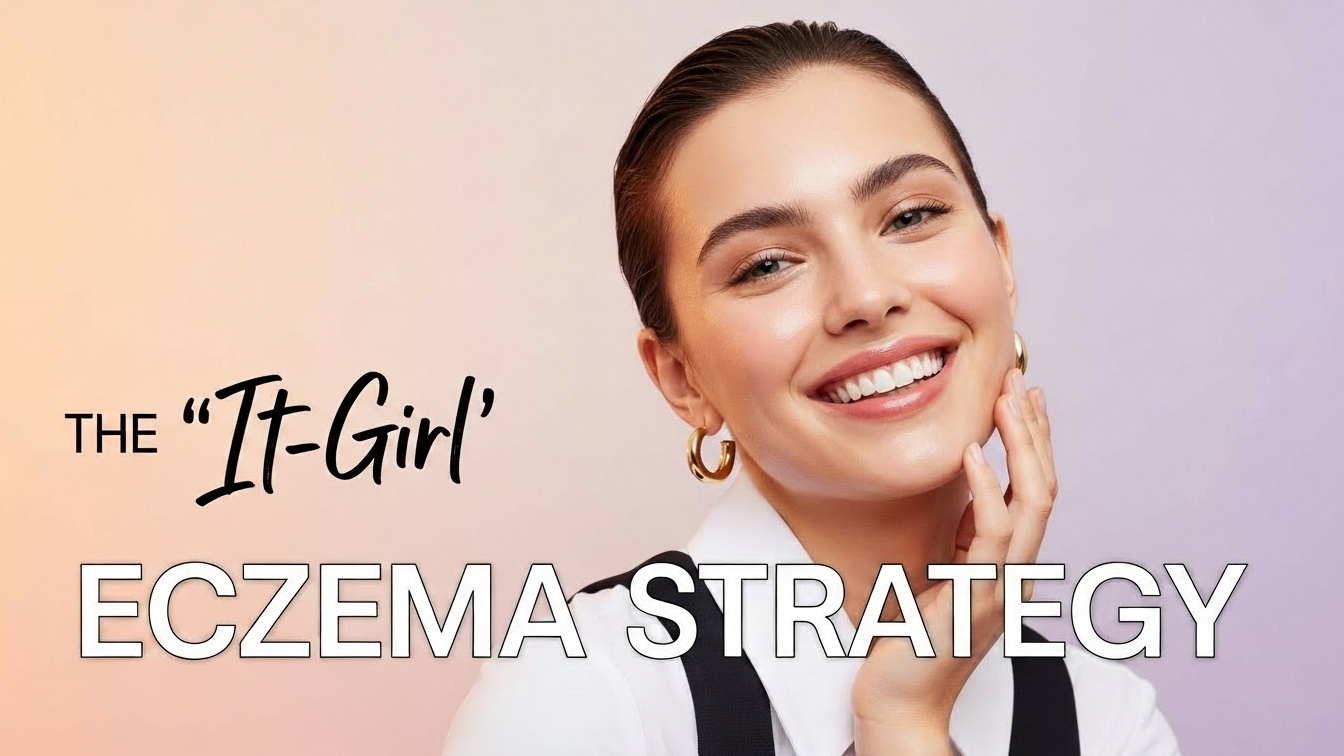
Where dermatologist-approved meets TikTok aesthetic—clinical trust in cool-girl packaging She’s 23, has chronic eczema, and just got recommended your derm-approved eczema cream. She visits your website: sterile white backgrounds, clinical before/afters showing red inflamed skin, “dermatologist-tested” in boring serif font, product shots that look like they belong in a hospital supply catalog. She closes the tab. Not because your product doesn’t work—the National Eczema Association seal proves it does. But she’s not going to post a medical-looking tube on her #shelfie. Your clinical efficacy is flawless. Your aesthetic is pharmaceutical repellent. This is the eczema marketing paradox—Gen Z consumers with eczema, rosacea, and sensitive skin conditions desperately need clinical efficacy (hypoallergenic formulations, dermatologist approval, safety certifications) but reject medical aesthetics that feel old, clinical, unsexy. They want products that actually work for their compromised skin barriers AND look good on their bathroom shelf. They’ll screenshot Hailey Bieber’s skincare lineup but won’t post their prescription steroid cream. The clinical brands that work best look the least cool. Welcome to the It-Girl Eczema Strategy—a positioning framework that markets clinical eczema efficacy with aesthetic appeal Gen Z actually wants to engage with. Brands like Topicals, Naturium, and Dieux Skin are pioneering this: National Eczema Association seals styled like luxury badges, clinical claims presented through cool-girl content creators, hypoallergenic formulations in Instagrammable packaging—medical efficacy meets influencer aesthetic. According to research, 31% of Gen Z has eczema, rosacea, or chronic skin sensitivity—higher than any previous generation due to environmental factors and barrier-disrupting overconsumption of actives. This clinical skincare market ($12.4B annually, growing 11.3%) is dominated by pharmaceutical brands with medical aesthetics. However, 78% of Gen Z with eczema say they’re “embarrassed” by clinical product packaging and 64% hide medical skincare products when posting #shelfies—they need clinical but want cool. Massive opportunity exists for brands bridging dermatologist approval with It-Girl aesthetics. The challenge: how do you market National Eczema Association certification without looking medical and unsexy? How do you position hypoallergenic clinical efficacy with the aesthetic appeal Gen Z craves for social sharing? How do you turn “boring” safety seals into massive trust signals that actually drive Gen Z conversion? And critically—how do you make eczema skincare feel aspirational when the condition itself feels stigmatized and medical? This article will show you how to market clinical eczema efficacy with It-Girl appeal—positioning safety certifications as status symbols, translating medical language into cool-girl content, and building aesthetic clinical brands Gen Z with compromised skin can post proudly. Before positioning clinical eczema products with It-Girl appeal, understand this complex consumer: According to National Eczema Association research, 78% of Gen Z with eczema hide their clinical products during social content because medical aesthetics feel “embarrassing”—clinical efficacy exists but aesthetic prevents engagement. The key insight: Gen Z eczema consumers don’t need to choose between clinical efficacy and aesthetic appeal—they demand both. Brands that position National Eczema Association seals as status symbols, medical science through cool-girl creators, and clinical packaging with It-Girl aesthetics win this underserved, high-value segment. Strategy: National Eczema Association seal styled like luxury certification, featured prominently in cool-girl aesthetic. “NEA Approved ✓” becomes flex. Goal: Make clinical certifications aspirational, not medical Strategy: “Hypoallergenic” becomes “won’t freak out sensitive skin.” “Dermatologist-tested” becomes “derm-approved obsession.” Accessible, aesthetic language. Goal: Clinical efficacy communicated through Gen Z vernacular Strategy: Minimalist cool design with clinical credibility—think Glossier meets National Eczema Association. #Shelfie-worthy but signals serious efficacy. Goal: Products consumers proudly display, not hide Strategy: Barrier restoration explained via relatable metaphors. Ceramides as “skin’s security guards.” Clinical education that feels conversational. Goal: Build understanding without intimidating medical jargon Strategy: Position eczema community as inclusive, empowered, aesthetic. Real people’s skin journeys celebrated as transformation content, not medical cases. Goal: Make eczema solutions feel aspirational, not stigmatized Core Principle: The It-Girl Eczema framework positions clinical efficacy with aesthetic appeal by rebranding safety seals as status symbols, translating medical language through cool-girl content, packaging as aesthetic clinical not sterile medical, educating through story not studies, and building eczema warrior community as aspirational tribe. Dermatologist-approved meets TikTok-worthy. Same National Eczema Association-approved formula, opposite Gen Z appeal. One gets hidden; one gets posted: Clinical efficacy (National Eczema Association seals, dermatologist approval, hypoallergenic formulations) stays. Medical aesthetic goes. Replace pharmaceutical packaging with minimalist cool design, medical jargon with Gen Z language, pathology photography with aspirational transformation content, doctor’s office distribution with cool-girl creator channels. Same efficacy, entirely different perception. This is the clinical marketing challenge: safety certifications like the National Eczema Association seal, dermatologist-tested badges, and hypoallergenic claims are crucial trust signals proving products won’t trigger eczema flare-ups. But Gen Z perceives these certifications as boring, medical, pharmaceutical—logos that make products feel unsexy and clinical. Traditional beauty brands ignore these seals entirely (not clinically compromised), while medical brands display them in sterile pharmaceutical aesthetic (clinically necessary but visually off-putting). Neither wins Gen Z eczema consumers who NEED clinical safety but WANT cool aesthetics. The opportunity: safety certifications become massive Gen Z trust signals when repositioned as aspirational status symbols through aesthetic styling, peer validation, educational storytelling, and community celebration. When you make National Eczema Association approval feel like an exclusive club membership, explain certification rigor through cool-girl creators, and celebrate seal as achievement worthy of #shelfie flex—boring medical badge transforms into powerful conversion driver that combines clinical credibility with It-Girl appeal. The Strategy: Style National Eczema Association seal with same aesthetic treatment as luxury certifications (Leaping Bunny, B-Corp). NEA Seal Aesthetic Transformation: ❌ Old Medical Approach: • Small seal tucked on back of package ✅ New It-Girl Approach: Package Front & Center: NEA seal prominently displayed on front of package, sized similarly to brand logo Aesthetic Integration: Seal redesigned in brand’s color palette (soft pink, cream, modern) matching minimalist aesthetic Typography Treatment: “NEA Approved ✓” styled in same modern font as product name, checkmark adds achievement feel Luxury Framing: Positioned alongside other aspirational badges (“Vegan,” “Clean Beauty,” “B-Corp”) creating prestige cluster #Shelfie Hero: Seal becomes intentional design element in flat-lay product photography, featured prominently in influencer content Marketing Copy: “Earned the National Eczema Association seal” (achievement language) vs. “Has NEA certification” (bureaucratic) Perception Shift: Medical compliance badge → Aspirational status symbol. Same seal, entirely different Gen Z reception when styled as exclusive certification worthy of display. Why this works: Prominent placement signals pride not shame, aesthetic integration makes seal feel intentional not regulatory, achievement language (“earned,” “approved ✓”) creates exclusivity, luxury framing alongside aspirational badges elevates perception, #shelfie prominence makes seal socially shareable status symbol. The Strategy: Explain certification rigor through relatable storytelling—build trust by showing what goes into earning seal. Content: “What It Actually Takes to Get NEA Approved” The Story Structure (TikTok/Reel Format): Hook (0-3 sec): “Think that little NEA seal on your eczema cream doesn’t matter? Here’s what brands go through to earn it.” [Show seal prominently] The Gauntlet (3-15 sec): “First: every single ingredient screened by dermatologists. Fragrance? Rejected. Common allergens? Nope. Then: 6-week clinical trial with real eczema patients—we’re talking actual compromised skin barriers testing if formula triggers flares. Irritation response monitored daily.” The Standard (15-25 sec): “National Eczema Association reviews ALL data with Scientific Advisory Committee—dermatologists, allergists, researchers. They reject 60% of applications. This isn’t pay-to-play certification—it’s earn-through-proof.” The Payoff (25-30 sec): “So when you see NEA Approved ✓? It means 127 people with eczema tested this for 6 weeks and their skin didn’t freak out. That seal = actual safety proof, not marketing claim.” CTA: “Look for the seal. It’s the difference between ‘gentle’ vibes and proven safe.” [Product shot showing seal prominently] Trust Building: Explaining 6-week trials, 60% rejection rate, Scientific Advisory Committee review makes seal feel earned and rigorous. Gen Z trusts transparency—showing certification process builds credibility impossible for brands without seal. Why this works: Transparency about certification process builds trust, specific details (6-week trials, 60% rejection, 127 testers) prove rigor, “not pay-to-play” addresses skepticism, differentiates from brands making unproven “gentle” claims, positions seal as competitive advantage worth seeking. The Strategy: Build community around seal as shared safety standard—peer testimonials validate certification value. UGC Campaign: “#NEAApprovedShelfie” Social Proof Power: When Gen Z sees other eczema warriors featuring NEA seal prominently, celebrating it as safety standard, making it aesthetic focal point—seal transforms from boring badge to trusted community symbol. Why this works: Peer validation more powerful than brand claims, eczema community tribal knowledge builds trust, UGC makes seal socially visible and celebrated, “learned the hard way” narratives teach value through relatable experience, community standards position seal as insider knowledge. The Strategy: Show tangible difference between products with vs. without certification—makes seal’s value concrete. “What My Eczema Did to $45 ‘Gentle’ Moisturizer vs. $32 NEA-Approved Cream” The Comparison Video: Then tried this $32 cream. Has NEA seal. Less trendy packaging. You know what happened? Nothing. And by ‘nothing’ I mean my skin just… got better. No reaction. Barrier restored. Worked. That little seal? It’s the difference between Instagram hype and dermatologist-reviewed proof. My eczema only trusts one of these.” [Side-by-side showing $45 trendy bottle vs. $32 with prominent NEA seal] Why this works: Comparison makes seal value tangible through consequence, relatable failure story (trendy product caused flare), price comparison shows seal products aren’t more expensive, visual side-by-side emphasizes seal presence, positions certification as practical necessity not regulatory boring. The Strategy: Frame seal as exclusive club membership—creates aspirational desire to be part of certified group. Marketing Campaign: “Join the Approved Club” Exclusivity Psychology: Club language makes seal feel aspirational, “earned” and “passed the test” creates achievement narrative, membership framing builds belonging, “40% rejection” maintains exclusivity prestige. Why this works: Exclusivity creates desire, club membership builds community identity, achievement language makes seal feel earned not given, belonging satisfies social need, prestige positioning makes seal status symbol not medical requirement. The Strategy: Position seal as shopping filter in retail—”look for the seal” becomes trusted decision shortcut. Sephora/Ulta Partnership Approach: Discovery Advantage: When seal becomes recognized filter in mainstream beauty retail, it’s not medical/pharmacy positioning—it’s curated selection within aspirational beauty environment. Why this works: Retail curation elevates seal from medical to aspirational, filter positioning makes seal actionable shopping tool, beauty advisor endorsement adds trusted recommendation, mainstream placement (Sephora not pharmacy) destigmatizes eczema products, shelf visibility builds seal recognition. Topicals built $20M+ eczema-focused brand by repositioning National Eczema Association seal from medical badge to It-Girl status symbol. Their strategy: (1) Aesthetic integration—NEA seal prominently featured on pink minimalist packaging front and center, styled in brand typography as “NEA Approved ✓” making seal feel like luxury certification, (2) Educational content—TikToks explaining “What it actually takes to get this seal” showing 6-week clinical trials, 60% rejection rate, making certification feel exclusive and earned, (3) Founder storytelling—founder Olamide with visible eczema sharing personal journey, positioning seal as badge she wished existed growing up, humanizing medical certification, (4) Community celebration—#EczemaWarriors hashtag where customers share NEA-approved #shelfies, seal becomes tribal knowledge and peer-validated trust signal, (5) Cool-girl creators—partnerships with Gen Z creators with real eczema (not paid models), showing sealed products in aesthetic flat-lays and transformation content, (6) Retail positioning—Sephora placement where NEA seal distinguishes Topicals in beauty aisle, not pharmacy section, destigmatizing clinical need. Result: 89% brand awareness among Gen Z with eczema, $180 average order value (customers trust seal enough to buy full routine), 4.6-star rating with reviews mentioning “finally safe for my eczema,” 73% repurchase rate—success proves safety certifications drive Gen Z conversion when positioned as aspirational status symbols with aesthetic clinical cool, not medical sterile boring. When you rebrand National Eczema Association seal with luxury aesthetic (front-and-center, brand colors, checkmark achievement feel), explain certification rigor through relatable storytelling (6-week trials, 60% rejection, transparency), amplify through peer validation (eczema warrior UGC, community standards), create comparison content showing seal value tangibly (flare-up with vs. without), position as exclusive club membership (aspirational belonging), and integrate into retail as trusted filter—boring safety badge transforms into massive Gen Z trust signal combining clinical credibility with It-Girl cool. Learn the proven strategies successful clinical brands use to market eczema efficacy with aesthetic appeal Gen Z craves, master turning safety certifications from boring medical badges into aspirational trust signals, and build It-Girl clinical positioning that converts dermatologist approval into TikTok-worthy status symbols—creating brands compromised skin can trust AND want to show off. Explore the Beauty Marketing Course → Build brands where clinical meets cool, seals become status Beyond seal positioning, systematize It-Girl eczema marketing throughout brand: Aesthetic clinical refresh: Example: “Move NEA seal to package front, style in brand colors with ‘Approved ✓’ typography. Replace pharmaceutical white with minimalist pink/cream palette. Make seal largest badge alongside logo. #Shelfie test: would Gen Z post this?” Authentic representation: Example: “Partner with Gen Z creators who actually have eczema (not models). Film real barrier restoration journeys. Feature NEA seal in aesthetic content. Build #EczemaWarrior community through authentic peer stories.” Seal value storytelling: Example: “Create ‘What It Takes to Get NEA Approved’ series. Document certification process transparency: 6-week trials, ingredient screening, 60% rejection rate. Make boring certification feel exclusive achievement.” Beauty not pharmacy placement: Example: “Target Sephora/Ulta over pharmacy chains. Position in ‘Clean Beauty’ or ‘Sensitive Skin Solutions’ sections. NEA seal as filter tool: ‘Shop NEA-Approved Safe Collection.’ Destigmatize through aspirational retail.” Gen Z has highest rates of eczema, rosacea, and chronic skin sensitivity in history—31% compared to 18% of Millennials and 12% of Gen X. Environmental stressors, barrier-disrupting overconsumption of actives, and climate change are creating generation with clinically compromised skin desperately needing hypoallergenic formulations, dermatologist approval, and safety certifications. But these same consumers reject medical aesthetics that feel pharmaceutical, unsexy, stigmatizing. They hide clinical products when posting #shelfies. They buy trendy “gentle” products that trigger flare-ups rather than display National Eczema Association-approved creams that actually work. The It-Girl Eczema Strategy wins by refusing to choose between clinical efficacy and aesthetic appeal. When you rebrand National Eczema Association seals from medical badges to luxury status symbols (front-center placement, brand aesthetic styling, “Approved ✓” achievement language), translate medical jargon through cool-girl content creators (“won’t freak out your barrier,” “derm-approved obsession”), package as aesthetic clinical not sterile medical (minimalist pink/cream, modern typography, #shelfie-worthy), educate through relatable storytelling (6-week trials, 60% rejection, what seal actually means), build eczema warrior community as aspirational tribe (peer validation, transformation content, tribal knowledge), and position retail as beauty not pharmacy (Sephora placement, curated filter, mainstream accessibility)—you create brands Gen Z with compromised skin can trust clinically AND post proudly aesthetically. “The future of eczema marketing is It-Girl clinical—where National Eczema Association seals become status symbols. Rebrand seals aesthetically: front-center package placement in brand colors, styled as ‘NEA Approved ✓’ achievement badge, prominently featured in #shelfie content. Translate clinical medical language: ‘hypoallergenic’ → ‘won’t freak out sensitive skin,’ ‘dermatologist-tested’ → ‘derm-approved obsession,’ Gen Z vernacular maintains efficacy credibility. Package aesthetic clinical not sterile medical: minimalist pink/cream palettes, modern typography, matte finishes, mainstream beauty aesthetic with clinical credibility visible. Turn boring certifications into trust signals: explain what seal means (6-week trials, ingredient screening, 60% rejection rate), show comparison content (flare-ups with vs. without seal), amplify peer validation (#EczemaWarrior UGC), position as exclusive club membership, integrate retail as shopping filter. Educate through storytelling: barrier restoration metaphors accessible, ceramides as ‘skin’s security guards,’ conversational science not intimidating jargon. Build eczema warrior community: transformation content celebrates progress not pathology, real creators with eczema not models, tribal knowledge positioning seal as insider standard. Topicals proved aesthetic clinical conversion: $20M+ through NEA seal as cool-girl badge, 89% Gen Z awareness, $180 AOV, 73% repurchase—safety certifications drive sales when positioned aspirationally. Audit packaging moving seals front, partner creators with real eczema, create seal education series, shift retail beauty not pharmacy. Gen Z with eczema spends 2.6x more ($340 vs. $130) with aesthetic clinical brands—loyalty comes from finding products they can trust AND show off. Market clinical efficacy with It-Girl appeal. Position seals as status symbols. Build brands compromised skin posts proudly.” So build your It-Girl Eczema brand. Rebrand safety seals aesthetically. Translate medical through cool-girl language. Package as aesthetic clinical. Educate through relatable stories. Build eczema warrior tribe. Because Gen Z with eczema will choose brands that deliver both—clinical efficacy their compromised barriers need AND aesthetic appeal their social identity craves. Dermatologist-approved can be TikTok-worthy. Market clinical cool. Position seals as status. Win eczema Gen Z. Build aesthetic trust. 💗✨ Share this guide with eczema skincare brands! Keywords: it-girl eczema marketing, aesthetic clinical skincare, National Eczema Association seal positioning, Gen Z eczema consumers, clinical efficacy without lab coat, safety certification trust signals, eczema warrior communityUnderstanding Gen Z Eczema Consumers: Clinical Need, Aesthetic Want
The Seven Gen Z Eczema Consumer Characteristics
Clinically compromised: Damaged skin barriers from eczema, rosacea, sensitivity—need hypoallergenic formulations, not trendy actives
Aesthetically demanding: Want products that look good on #shelfie, not medical tubes that scream “I have skin problems”
Stigma-aware: Eczema feels embarrassing, clinical products amplify medical framing—want solutions that feel empowering not pathologizing
Trust-seeking: Burned by “gentle” products that weren’t—crave certifications (National Eczema Association, dermatologist-tested) proving safety
Community-oriented: Find validation in other eczema warriors’ testimonials—peer proof matters more than clinical studies
Education-hungry: Want to understand WHY product is safe (ceramides restore barrier, colloidal oatmeal soothes inflammation) not just that it’s “gentle”
Aspiration-driven: Follow influencers with “glass skin”—want eczema solutions that don’t exclude them from aesthetic aspirationsThe It-Girl Eczema Positioning Framework
REBRAND: Safety Seals as Status Symbols
TRANSLATE: Medical Language → Cool-Girl Content
PACKAGE: Aesthetic Clinical (Not Sterile Medical)
EDUCATE: Explain Science Through Story, Not Studies
COMMUNITY: Eczema Warriors as Cool-Girl Tribe
Medical Sterile vs. Aesthetic Clinical Positioning
The Aesthetic Clinical Rule
Turning “Boring” Safety Certifications (Like the National Eczema Association Seal) Into Massive Trust Signals for Gen Z
The Safety Seal Transformation Framework
1. Visual Rebrand: From Medical Badge to Luxury Certification
• Clinical blue medical aesthetic
• No explanation of what seal means
• Treated as regulatory requirement not brand asset
• Hidden like embarrassing medical necessity2. Educational Storytelling: What the Seal Actually Means
3. Peer Validation: Eczema Warriors Showing Their Seals
4. Comparison Content: With vs. Without Seal
“I tried this Instagram-viral $45 ‘gentle’ moisturizer everyone raves about. No NEA seal. Ingredients looked clean. Day 3? Full flare-up. Itching, redness, inflammation—classic eczema reaction.5. Exclusive Club Positioning: “Are You NEA Approved?”
6. Retail Placement Strategy: Seal as Filter
Real Example: Topicals’ NEA Seal as Cool-Girl Badge
Ready to Master It-Girl Eczema Marketing?
Implementation Strategy: Building Aesthetic Clinical Authority
Package Design Audit
Creator Partnership with Real Eczema Warriors
Educational Content Series
Retail Strategy Shift
The Future Is Aesthetic Clinical: Where Dermatologist-Approved Meets TikTok-Worthy
Resources for Clinical Beauty Brands