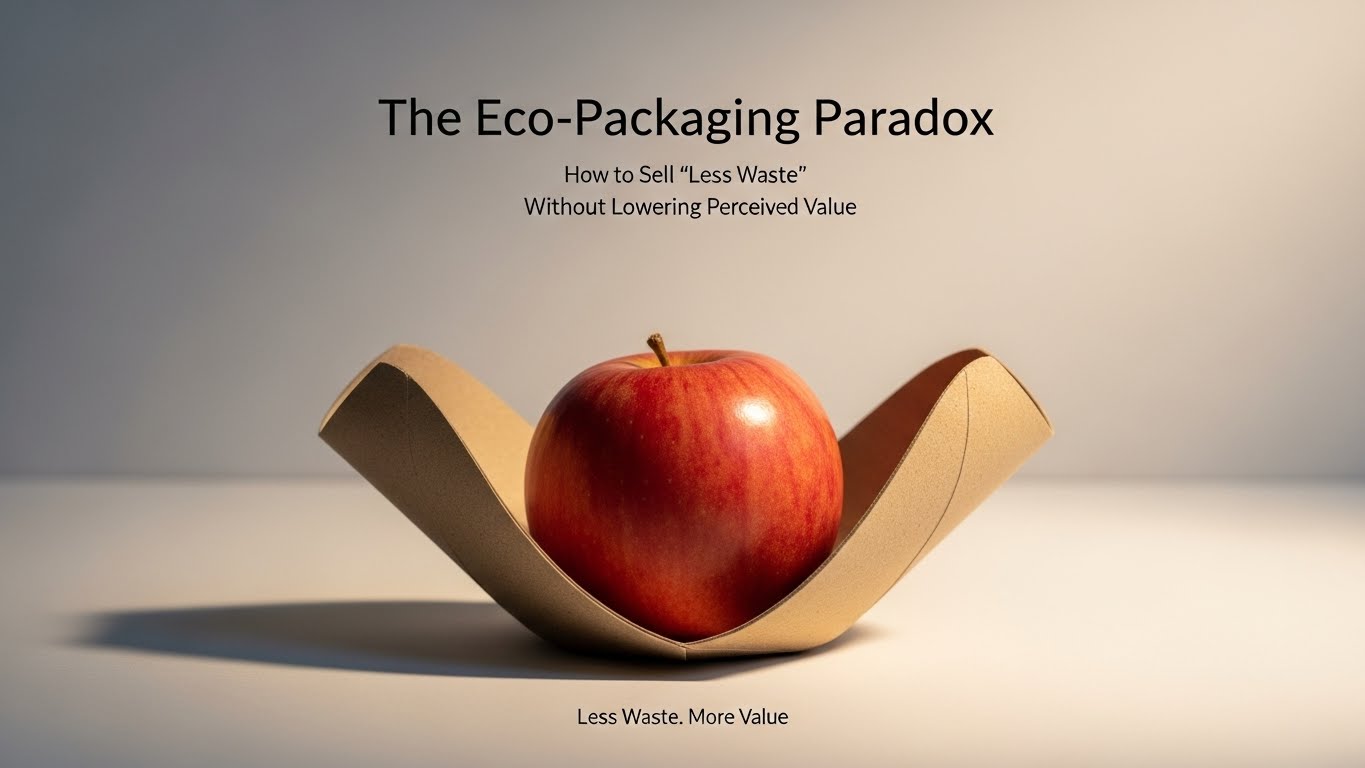
Why minimalist eco-packaging can feel cheap—and how to position sustainability as the ultimate luxury You’ve made the ethical choice. Your beauty brand uses recycled materials, biodegradable packaging, and minimal plastic. You’re proud of your environmental commitment. But there’s a problem: customers pick up your product, feel the kraft paper box, and their brain whispers, “This feels…cheap.” Welcome to the eco-packaging paradox. The very materials that signal environmental responsibility—unbleached cardboard, minimal printing, absence of glossy finishes—can accidentally signal low quality to consumers conditioned by decades of luxury beauty marketing. Your sustainable choice becomes a perceived downgrade. But here’s the truth: sustainability doesn’t have to mean sacrificing perceived value. In fact, when positioned correctly, eco-friendly packaging can command higher prices than conventional alternatives. The global sustainable beauty market is projected to reach $22 billion by 2031, with consumers actively seeking brands that align with their values—and willing to pay premium prices for them. This article will show you exactly how to navigate this paradox, elevate your eco-packaging, and position “less” as “more” in the eyes of conscious consumers. Before we solve the paradox, we need to understand it. Why do consumers perceive sustainable packaging as lower quality, even when they claim to value sustainability? According to research from McKinsey & Company, while 66% of consumers say they consider sustainability when making purchases, the actual purchase behavior shows a gap—particularly when sustainable options are perceived as lower quality or less aesthetically pleasing. The solution isn’t to abandon sustainability. It’s to reframe how we present it. We need to make eco-packaging feel like an upgrade, not a compromise. Key Insight: The difference between low and high perceived value eco-packaging isn’t the materials—it’s the intentionality, design sophistication, and storytelling around those materials. Not all eco-friendly materials are created equal. The key is choosing sustainable options that still deliver premium tactile and visual experiences. One of the fastest ways to elevate perceived value is through physical weight and thickness. Even with recycled materials, choosing heavier cardstock (18pt instead of 12pt), thicker glass, or more substantial fabric makes products feel significantly more premium. Weight = value in the consumer’s subconscious mind. Sustainability is a luxury. It costs more to source ethical materials, use responsible manufacturing, and minimize environmental impact. Stop apologizing for simplicity and start celebrating it as sophisticated design. Don’t let packaging look “plain” because you ran out of ideas. Instead, use deliberate white (or natural) space as a design element. Think Chanel, not Dollar Store. Generous spacing = confidence = luxury. When you can’t rely on color or embellishment, typography must carry the weight. Invest in custom or high-quality fonts. Use varied weights, sizes, and spacing to create visual hierarchy and interest. Beautiful typography screams premium. Since eco-packaging often lacks visual complexity, add tactile complexity. Embossing, debossing, letterpress, textured papers, or laser-cut details create premium experiences that photographs can’t capture but hands remember. Eco-conscious brands often limit color to reduce chemical usage. Perfect. Choose 1-2 colors maximum and use them strategically. Monochromatic or limited palettes are associated with sophistication when executed with precision. Even with minimal packaging, create a deliberate unboxing sequence. Outer wrap → inner box → tissue paper → product reveal. Each layer should feel purposeful, not excessive. Anticipation = perceived value. Look at brands like Aesop, Seed, or Ren Clean Skincare. They use minimal, sustainable packaging but command premium prices because their design is impeccable. The packaging itself becomes a testament to thoughtful curation. The biggest mistake eco-brands make? Positioning sustainability as sacrifice: “We use less packaging to reduce waste” feels like you’re giving customers less. Instead, frame it as: “We use thoughtfully sourced materials because we believe luxury shouldn’t cost the earth.” Now customers are getting more—more ethics, more intention, more alignment with their values. Include a beautiful printed insert (on recycled paper, of course) that tells your packaging story: When customers understand the “why,” minimal packaging transforms from “less” to “purposeful.” According to Nielsen research, 73% of global consumers say they would definitely or probably change their consumption habits to reduce environmental impact. But they need brands to help them feel good about those changes—not guilty or like they’re compromising. Let’s be honest: deodorant isn’t sexy. Neither is toothpaste, or body wash, or most of the products we use daily. These are functional, utilitarian items that most people buy on autopilot. And when you add eco-packaging to the mix? Now you’re selling an “unsexy” product in “plain” packaging. This is marketing on hard mode. But here’s the secret: visual storytelling can make anything compelling—even deodorant. The key is shifting focus from the product to the lifestyle, values, and identity the product represents. Instead of photographing deodorant tubes on white backgrounds, show them in context: These images aren’t selling deodorant—they’re selling a lifestyle where thoughtful, sustainable choices are seamlessly integrated into daily routines. Functional products are ingredient stories waiting to be told: Natural deodorant suddenly becomes interesting when customers see the beautiful ingredients that go into it. Position your product as an identity marker for conscious consumers: People don’t buy deodorant—they buy into being the type of person who chooses natural, sustainable deodorant. When the product itself is visually boring, make the packaging photogenic: Even if deodorant itself isn’t beautiful, your thoughtful, sustainable packaging can be. Native is a perfect example of making unsexy products sexy. They focused their visual storytelling on lifestyle integration, ingredient transparency, and colorful packaging design. Their Instagram feed rarely shows just deodorant tubes—instead, it’s morning routines, travel adventures, workout moments, and ingredient close-ups. Result? They sold to Procter & Gamble for $100 million. Deodorant can indeed be sexy—with the right visual strategy. The lesson? Don’t apologize for selling functional products. Instead, use visual storytelling to position them as essential elements of an aspirational, value-driven lifestyle. Make people want to be photographed with your deodorant, not hide it in their medicine cabinet. Learn the exact strategies top eco-conscious brands use to position sustainability as luxury, create compelling visual stories for “unsexy” products, and build thriving beauty businesses without compromising your values. Explore the Beauty Marketing Course → Transform your eco-brand from “trying to compete” to “impossible to ignore” One brilliant way to combat the “less packaging = less value” perception? Make your packaging itself valuable beyond its initial purpose. When customers keep and reuse your packaging, every encounter reinforces your brand—and justifies the price point. Design packaging that’s beautiful enough to repurpose. Glass jars become drinking glasses or storage containers. Tins become desk organizers. Boxes become jewelry storage. When packaging has second-life value, customers perceive it as an extra gift, not waste. Example: Kjaer Weis uses metal compacts designed to last a lifetime. Customers buy refills, keeping the original “packaging” forever. The high initial cost is justified because the compact is both package and keepsake. Offer refills at discounted prices, positioning the original purchase as an investment in a reusable system. This shifts the conversation from “Why is this cardboard so expensive?” to “I’m saving money long-term and reducing waste.” Pro tip: Make refill packaging just as beautiful as original packaging. Don’t punish customers for choosing sustainability by giving them ugly refill pouches. Print useful information inside packaging lids, on box interiors, or on tissue paper. Skincare tips, ingredient glossaries, meditation quotes, or even recipes. This content adds value and encourages customers to keep packaging around for reference. Bonus: Customers who keep your packaging around see your brand daily, increasing loyalty and repeat purchases. Create a mail-back system where customers return empty containers for proper recycling or composting, earning store credit. This positions you as taking responsibility for the full lifecycle and gives customers an incentive to stay engaged with your brand. Example: TerraCycle partnerships or in-house programs like MAC’s Back-to-MAC (return 6 empties, get a free lipstick). When packaging serves multiple purposes or has ongoing value, customers no longer view it as “just packaging.” It becomes part of the product experience, justifying premium pricing and reinforcing your commitment to sustainability. One of the most powerful ways to elevate perceived value is through community validation. When potential customers see others enthusiastically embracing your eco-packaging, it shifts from “plain” to “part of a movement.” Humans are tribal. When choosing your eco-packaged product, customers aren’t just buying skincare—they’re joining a community of conscious consumers. Make this explicit: “Join 50,000+ people choosing packaging that doesn’t cost the earth.” Suddenly, minimal packaging isn’t a compromise; it’s a badge of belonging to something bigger. Here’s a harsh truth: If you price your eco-packaged product too low, you reinforce the perception that eco-friendly means cheap quality. Premium pricing—when backed by premium positioning—actually increases perceived value. Your costs are higher—ethical sourcing, sustainable materials, responsible manufacturing. Don’t apologize for this. Position yourself as premium from the start. Customers choosing sustainability aren’t looking for the cheapest option; they’re looking for the most aligned option. Include educational content, access to a community, tips and tricks, or even small extras (seed paper, reusable cotton rounds) that make the total package feel worth the price—even if the physical packaging is minimal. If your product lasts longer, is more concentrated, or reduces need for other products, communicate this clearly. “$45 for 3 months of sustainable deodorant = $15/month. That latte you bought today? $6. Perspective.” Don’t position yourself against Dove or Neutrogena. Position against premium natural brands like Tata Harper or Vintner’s Daughter. Even if your price is lower, the comparison elevates perceived category. According to Forbes research, premium pricing can actually increase perceived quality and customer satisfaction when properly positioned. Don’t leave money on the table by underpricing your eco-conscious products. Even with the best intentions, eco-brands often make these critical mistakes that undermine perceived value. Avoid them at all costs: Never say “Sorry our packaging is simple” or “We know it’s not fancy.” This plants doubt. Instead: “We designed every element intentionally to minimize environmental impact while maximizing your experience.” Sustainable materials can look cheap if poorly designed. Invest in exceptional design. Hire a professional designer who understands how to make minimal aesthetics look intentional and premium. Consumers are savvy. Don’t claim to be “100% plastic-free” if your product has a plastic pump, or “zero waste” if you ship in plastic mailers. Be honest about your sustainability journey—including what you’re still working on. Even with minimal packaging, create a sequence. Don’t just throw a product in a cardboard box with no protection or presentation. Thoughtful arrangement, tissue paper, a handwritten note—these small touches maintain premium feel. Don’t assume customers automatically understand or appreciate your sustainable choices. Tell them explicitly what’s special about your packaging, why you made these choices, and how to properly dispose of or reuse each element. When you discount aggressively to compete with non-eco brands, you signal that your product isn’t worth full price. Maintain pricing integrity. Offer value through bundles, loyalty programs, or education—not desperate discounts. Consumer preferences are shifting. Gen Z and millennials increasingly view excessive packaging as wasteful, tone-deaf, and unacceptable. What once signaled luxury—layers of boxes, tissue paper, ribbons, plastic windows—now signals environmental irresponsibility. The brands winning in this new landscape aren’t those with the fanciest packaging. They’re the ones that make sustainability look sophisticated, that position “less” as “more evolved,” that make customers feel smart and aligned—not like they’re compromising. Five years ago: “Wow, this packaging is so luxurious!” (holding elaborate box with multiple layers) Today: “Why is there so much unnecessary packaging? This feels wasteful.” (same elaborate box) Your minimal, sustainable packaging is exactly what the future demands. Own it. According to Business Wire research, two-thirds of consumers globally would pay more for sustainable products, and this percentage is even higher among younger demographics. The eco-packaging paradox is solving itself—you just need to position yourself at the forefront of this shift. The eco-packaging paradox isn’t actually a paradox at all—it’s a perception problem that smart positioning can solve. When you: …Then suddenly, your minimal packaging doesn’t feel like less. It feels like the smarter, more evolved, more aligned choice. It feels like luxury that doesn’t cost the earth. “The most sustainable package is the one that customers keep, reuse, and remember fondly—not the one that gets thrown away after one use, no matter how ‘luxurious’ it looked for 30 seconds.” Your eco-packaging isn’t a compromise. It’s a competitive advantage. The brands that understand this—and position sustainability as the new luxury—are the ones that will dominate the beauty industry’s next chapter. Stop apologizing for doing the right thing. Start celebrating it as the sophisticated, forward-thinking, premium choice it truly is. Welcome to the future of beauty. It’s minimal, it’s sustainable, and it’s absolutely premium. 🌿Understanding the Psychology: Why “Eco” Can Feel “Cheap”
The Psychological Barriers
Luxury Conditioning: Decades of beauty marketing have trained consumers to associate luxury with weight, glossiness, intricate details, and excessive packaging layers. Strip those away, and the brain interprets it as “less valuable.”
The Matte Mistake: Eco-friendly materials often have matte, unfinished textures. These textures are cognitively linked to “unfinished,” “rough,” or “cheap” in consumer minds.
Greenwashing Backlash: Consumers have been burned by fake sustainability claims. They’re skeptical of eco-packaging that looks “too plain”—wondering if brands are just cutting costs and calling it environmentalism.
The Gift Test Failure: Would you feel proud giving this package as a gift? If eco-packaging doesn’t pass the “gift test,” customers perceive it as lower value—even if they support sustainability.The Eco-Packaging Value Perception Spectrum
❌ Low Perceived Value (What to Avoid)
⚠️ Medium Perceived Value (Getting There)
✓ High Perceived Value (The Goal)
Strategy #1: Elevate Material Quality Within Sustainability
The Weight & Thickness Rule
Strategy #2: Design Like a Luxury Brand (Because You Are One)
The Luxury Minimalism Design Principles
1. Intentional White Space
2. Typography as Hero
3. Tactile Embellishments
4. Limited Color Palette with Intention
5. The Unboxing Sequence
Strategy #3: Tell the Sustainability Story (Make It Aspirational, Not Apologetic)
❌ Apologetic Messaging
✓ Aspirational Messaging
The Story Insert Strategy
Marketing Unsexy Products Like Deodorant with Visual Storytelling
The Visual Storytelling Framework for Functional Products
Don’t Show the Product—Show the Moment
Show the Ingredients, Not Just the Outcome
Create Aspirational Identity Content
Make the Packaging the Hero
Case Study: How Native Deodorant Did It
Ready to Master Sustainable Beauty Marketing?
Strategy #4: Create Value Through Reusability & Multi-Purpose Design
The Container as Product
Refill Programs
Educational Second Life
Take-Back Programs
Strategy #5: Leverage Social Proof & Community
The Power of Belonging
Strategy #6: Price for Value, Not Cost
The Premium Eco-Brand Pricing Strategy
Don’t Compete on Price with Conventional Brands
Bundle Value Beyond the Product
Emphasize Cost-Per-Use
Compare to Luxury, Not Mass Market
Common Mistakes to Avoid
❌ Mistake #1: Apologizing for Your Choices
❌ Mistake #2: Sacrificing Design for Sustainability
❌ Mistake #3: Greenwashing or Exaggerating Claims
❌ Mistake #4: Forgetting the Unboxing Experience
❌ Mistake #5: Not Educating Your Customers
❌ Mistake #6: Competing on Price
The Future is Minimal (And That’s a Good Thing)
The Shift in Consumer Perception
Reframing the Paradox: Less IS More
Additional Resources on Sustainable Packaging