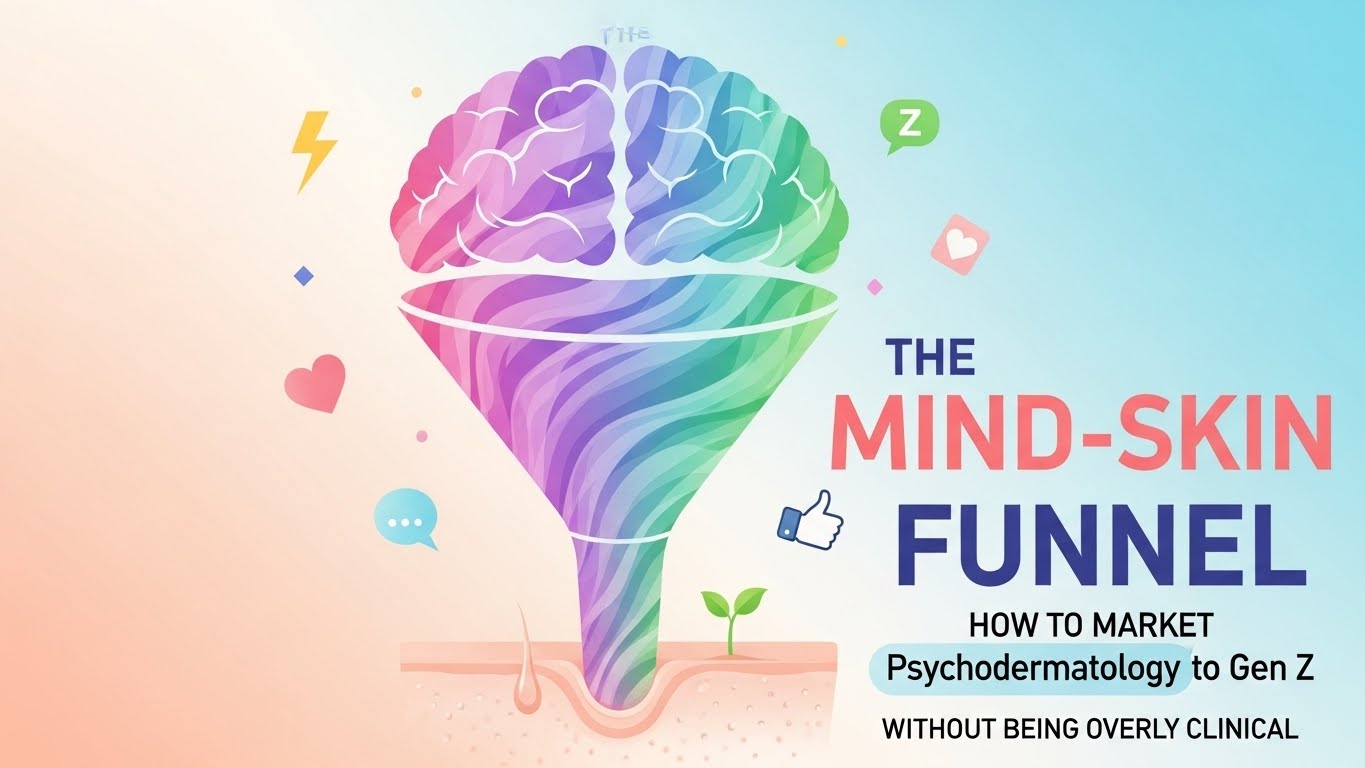
Building brands that honor the anxiety-skin connection without pathologizing self-care Your skin broke out the week before your presentation. Your eczema flared during finals. That stress rash appeared right before the wedding. If you’ve lived in a body with skin, you know: your emotions show up on your face. This isn’t mystical mind-body nonsense—it’s psychodermatology, the science of how psychological states affect skin conditions. Gen Z gets this intuitively. They grew up normalizing therapy, discussing mental health openly, and understanding that emotional wellness impacts physical health. They don’t separate “mental health” from “skin health”—they see them as interconnected. According to research, 72% of Gen Z report that stress directly affects their skin, and 65% specifically look for skincare that addresses stress-related concerns. But here’s the marketing challenge: How do you talk about the anxiety-acne connection without being overly clinical or triggering? How do you acknowledge that stress causes inflammation without making customers feel like their mental health is the problem? How do you sell stress-relief skincare without positioning it as therapy-in-a-bottle or undermining actual mental health treatment? Brands like Youth to the People (with their adaptogen-infused products), Alpyn Beauty (cortisol-reducing formulas), and Everyday Humans (anxiety-aware sunscreen messaging) are navigating this successfully. They acknowledge the mind-skin connection while keeping the tone accessible, empowering, and never pathologizing. This article will show you how to build the “Mind-Skin Funnel”—a marketing framework that honors psychodermatology science while speaking Gen Z’s language, translates complex psychological concepts into daily rituals, and builds brands that support both skin AND emotional wellness without pretending to be therapy. Gen Z’s approach to mental health is fundamentally different from previous generations. They destigmatize therapy, normalize anxiety, and openly discuss emotional struggles. This creates unique opportunities—and risks—for brands addressing the mind-skin connection. According to research published in Dermatology and Therapy, psychological stress triggers inflammatory cascades that exacerbate acne, eczema, psoriasis, and rosacea. This isn’t woo-woo—it’s documented neuroimmunodermatology. But Gen Z doesn’t need medical journals—they need this science translated into language that validates their experience without medicalizing their self-care. The key: treat the mind-skin connection as normal and universal, not as a “condition” requiring treatment. Everyone’s skin responds to stress—acknowledging this is validating, not stigmatizing. Strategy: “Ever notice your skin acts up during stressful weeks? That’s your nervous system talking through your skin.” Make it relatable, not clinical. Goal: Validation—they’re not imagining it, stress really does affect skin Strategy: “When stressed, your body releases cortisol. High cortisol = inflammation = breakouts. Our ingredients help calm inflammation.” Keep it brief. Goal: Understanding without overwhelm—they get the ‘why’ without needing a degree Strategy: Position skincare as intentional pause, not just task. “3 minutes of calm for your skin and mind.” Ritual = therapeutic. Goal: Reframe skincare from obligation to self-soothing practice Strategy: Clear boundaries—products address skin’s stress response, not underlying anxiety. Always mention therapy as real mental health support. Goal: Ethical positioning—complement wellbeing, don’t medicalize self-care Strategy: Create safe spaces for discussing stress breakouts, anxiety-eczema, emotional skincare. Reduce shame, increase connection. Goal: Build community around shared experience—”me too” moments foster loyalty Core Principle: Gen Z doesn’t want skincare that pathologizes stress or promises to cure anxiety. They want brands that acknowledge the mind-skin connection, provide tangible support through formulation and ritual, and honor the boundary between self-care and mental healthcare. Getting the language right is crucial. Say too much and you sound like you’re diagnosing customers. Say too little and you miss the emotional resonance that makes psychodermatology meaningful. Here’s the framework: Talk about skin’s response to stress, not mental health conditions. Address cortisol, inflammation, barrier disruption—these are physiological. Avoid positioning products as treatments for anxiety, depression, or trauma. That’s therapy’s job, not skincare’s. This is where mind-skin marketing gets powerful: taking abstract psychological concepts (nervous system regulation, cortisol management, stress-induced inflammation) and making them tangible through everyday skincare rituals. Gen Z wants practical tools, not theory. Here’s how to bridge that gap. The challenge: psychodermatology involves complex mechanisms—HPA axis activation, neuropeptide release, mast cell degranulation. Gen Z doesn’t need to understand these processes; they need to understand what to DO about them. The solution? Translate science into sensory rituals they can perform daily. The Science (brief): When your nervous system is dysregulated (fight-or-flight mode), your skin produces excess oil, inflammation increases, and barrier function weakens. The Ritual Translation: Why it works: You’ve translated “vagal tone stimulation” and “parasympathetic activation” into something Gen Z can DO: breathe, slow down, notice sensations. Ritual = accessible neuroscience. The Science (brief): Chronic stress elevates cortisol, which triggers inflammatory cascades in your skin. This leads to redness, breakouts, and barrier damage. The Ritual Translation: Why it works: “Cortisol cascade inhibition” becomes “stress armor you apply every morning.” Abstract endocrinology becomes tangible daily action. The Science (brief): Different emotional states create different skin needs. Anxiety = oil overproduction. Sadness = dullness. Anger = inflammation. The Ritual Translation: Anxious Day? “Use calming lavender cleanser + cooling gel. Light textures, grounding scents. You’re matching your skincare to your emotional needs.” Low-Energy Day? “Reach for brightening vitamin C + energizing citrus scents. Give your skin (and mood) a gentle lift.” Overwhelmed Day? “Minimize steps—just cleanser + moisturizer. Permission to do less when capacity is low. Self-care isn’t rigid.” Why it works: You’re teaching emotional intelligence through skincare. They’re learning to notice their state and respond with appropriate care—this IS nervous system regulation practice. The Science (brief): Interoception = awareness of your body’s internal state. Poor interoception = difficulty recognizing stress until skin is already breaking out. The Ritual Translation: Why it works: “Interoceptive awareness development” becomes “learning your skin’s language.” Psychological concept = daily mindfulness practice. The Science (brief): Self-criticism activates stress response, worsening skin conditions. Self-compassion reduces cortisol and inflammation. The Ritual Translation: Why it works: Self-compassion research becomes daily kindness practice. You’re literally reducing inflammation through gentler self-talk during skincare. Youth to the People successfully translates stress-skin science into Gen Z-friendly rituals with their adaptogen-infused products. Instead of lecturing about HPA axis dysfunction, they say: “Adaptogens help your skin adapt to stress—like emotional armor for your face.” Their marketing shows actual morning routines (“Apply before checking your phone—protect your skin from the day’s chaos”), sensory rituals (“Deep breath while massaging in—you’re calming your nervous system”), and realistic expectations (“Won’t eliminate stress, but helps skin handle it better”). They acknowledge mental health openly (“We support therapy! This complements it.”) and never promise skincare will fix anxiety. Result? Gen Z trusts them because they’re honest, science-backed, and emotionally intelligent. They’ve turned psychodermatology into accessible daily practice. When you translate complex psychological concepts into tangible daily rituals—breathing before application, mood-matching products, gentle self-talk, interoception building—you give Gen Z practical tools for the mind-skin connection. They don’t need to understand neurobiology; they need to know what to DO. Ritual = psychology made actionable. Learn the proven strategies successful wellness-focused brands use to honor the mind-skin connection, translate psychological concepts into accessible rituals, and build emotionally intelligent beauty brands Gen Z trusts. Explore the Beauty Marketing Course → Build brands that support emotional wellness without pathologizing self-care Mind-skin content needs to feel like a conversation with a knowledgeable friend, not a medical consultation. Here’s how to create engaging psychodermatology content: Real stories about stress-skin experiences: Example: “Finals Week Face: How I survived stress breakouts during exams without spiraling.” Personal narratives make psychodermatology relatable—Gen Z sees themselves in these stories. Simple visuals showing the mind-skin pathway: Example: Infographic: “Stress → Cortisol ↑ → Inflammation → Breakouts” with cute illustrations. Make complex pathways visual and shareable. Soft validation posts for mental health + skin struggles: Example: “Your skin isn’t ‘bad’—it’s responding to what you’re going through. That’s not failure, that’s biology. Here’s how to support it.” Empathy > advice. Show the calming rituals, not just the products: Example: ASMR-style video of slow skincare application with gentle narration: “Three breaths. Notice the texture. This is your moment.” The ritual IS the content. Marketing psychodermatology requires strong ethical guardrails. Here are the non-negotiables: Skincare complements mental health care—it doesn’t replace it. Always mention actual therapy/counseling as primary support for mental health concerns. Your products address skin’s stress response, not underlying psychological issues. “Treats anxiety” “Cures depression” “Eliminates PTSD symptoms”—all absolutely prohibited. You can say “supports skin during stress” but not “treats stress disorders.” Legal and ethical line in the sand. Avoid any messaging that implies anxiety/depression is a problem to “fix” or that mental health struggles are shameful. Normalize, validate, never pathologize. Mental health is health—period. Gen Z understands what previous generations are just discovering: your mind and skin aren’t separate—they’re in constant conversation. Stress shows up as breakouts. Anxiety manifests as eczema. Emotional overwhelm disrupts your barrier. This isn’t metaphorical—it’s measurable neurobiology. But Gen Z doesn’t want clinical lectures about psychodermatology. They want brands that acknowledge this reality with empathy, provide practical support through formulation and ritual, and honor the boundary between self-care and mental healthcare. “The future of skincare isn’t about products that promise to erase all stress or cure anxiety with a serum. It’s about brands emotionally intelligent enough to say: ‘Your skin is responding to what you’re going through. That’s normal. Here’s how we can support it—and here’s what’s beyond our scope.’ Gen Z respects honesty, values emotional awareness, and will build loyalty with brands that honor both their skin and their mental health journey.” So acknowledge the mind-skin connection openly. Translate psychology into daily rituals. Create sensory experiences that calm nervous systems. Build community around shared stress-skin experiences. And always, always make clear that skincare supports wellbeing—it doesn’t replace therapy. The mind-skin funnel isn’t about medicalizing self-care. It’s about honoring the full humanity of your customers—mind, body, and skin. Build brands that validate emotional experiences, support skin’s stress response, and respect the difference between self-care and mental healthcare. Gen Z will trust you—and choose you. 💜✨ Share this guide with wellness-focused beauty founders! Keywords: psychodermatology marketing, mind-skin connection, Gen Z skincare, stress-skin marketing, emotional wellness beauty, anxiety skincare, cortisol skincare marketing, mental health skincare, nervous system skincare, mindful beauty ritualsUnderstanding Gen Z’s Relationship with Mental Health + Skincare
What Gen Z Wants from Mind-Skin Brands
Acknowledgment without pathologizing: “Stress affects skin” not “Fix your anxiety to fix your skin”
Science-backed but accessible: Explain cortisol’s role without a biochemistry lecture
Empowerment, not solutions: Products support coping, they don’t cure mental health
Ritual over routine: Skincare as self-care moment, not just product application
Sensory intentionality: Textures, scents, application designed to calm nervous system
Honest limitations: Clear that skincare complements therapy, doesn’t replace itThe Mind-Skin Funnel: Emotional Wellness Meets Skincare
Awareness: Normalize the Mind-Skin Connection
Education: Simple Science, Not Medical Textbook
Ritual: Transform Application Into Self-Care Moment
Support: Products Aid Coping, Don’t “Fix” Mental Health
Community: Normalize Stress-Skin Conversations
The Language of Mind-Skin Marketing: What to Say (and Never Say)
The Golden Rule
Translating Complex Psychological Concepts Into Daily Beauty Rituals
The Ritual Translation Framework
Concept 1: Nervous System Regulation → The “3-Minute Reset” Ritual
Concept 2: Cortisol Management → The “Anti-Inflammation Shield” Routine
Concept 3: Emotional Regulation → The “Mood-Matching Skincare” Practice
Concept 4: Interoception Building → The “Body Listening” Routine
Concept 5: Self-Compassion → The “Kindness-Infused Routine”
Real Example: Youth to the People’s Adaptogen Approach
Ready to Master Mind-Skin Marketing?
Content Strategy: Making Psychodermatology Relatable
“Stress Skin Diaries” Series
“Brain → Skin” Explainer Graphics
“Gentle Reminder” Social Media Series
“Ritual Spotlight” Videos
Ethical Boundaries: What Mind-Skin Brands Must Never Do
The Ethical Framework
❌ NEVER Position Products as Therapy Replacement
❌ NEVER Make Medical Claims About Mental Health
❌ NEVER Shame Mental Health Struggles
The Mind-Skin Revolution: Where Emotional Intelligence Meets Skincare
Resources for Mind-Skin Brands