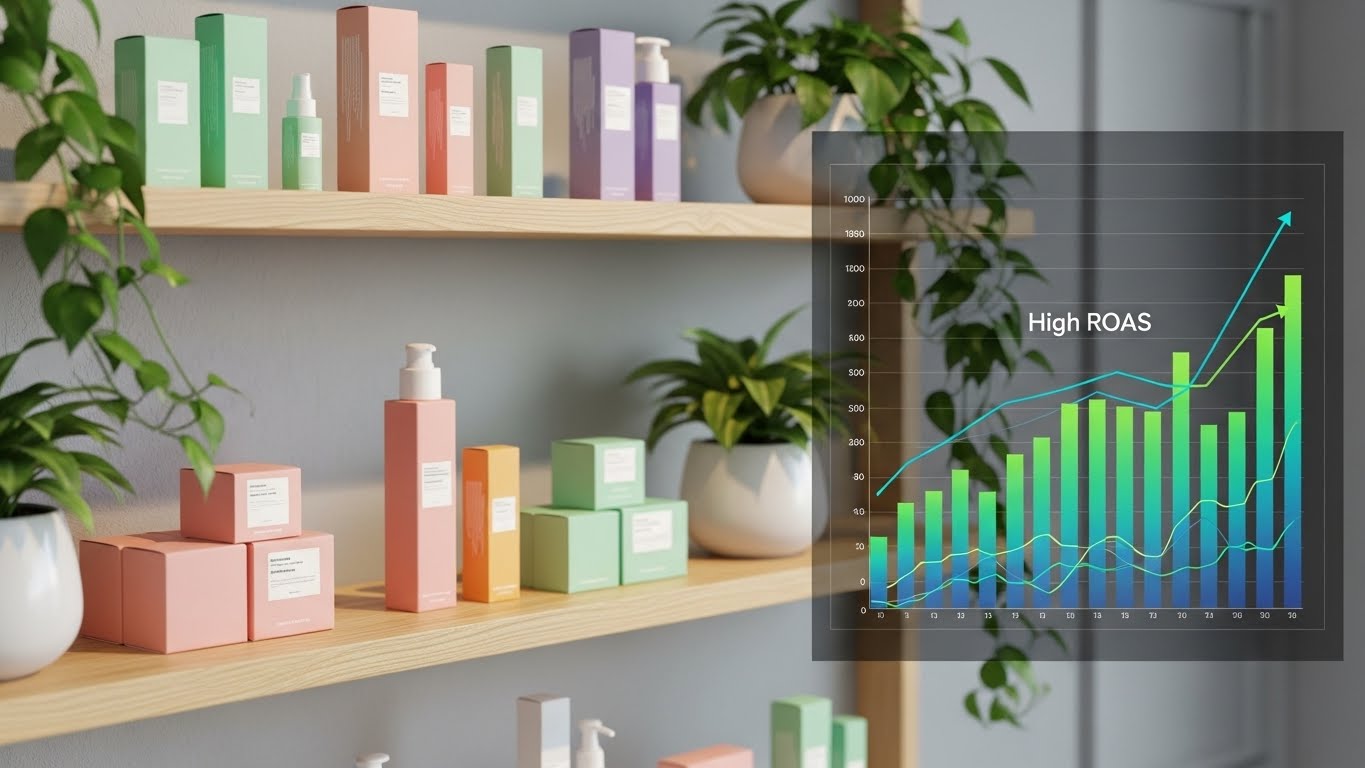
Your packaging looks good on Instagram, but does it convert in paid ads?
We live in the era of the “Shelfie”—a cultural phenomenon where skincare and makeup routines are curated not just for efficacy, but for display. For beauty founders, designing aesthetically pleasing packaging is no longer optional; it’s the price of entry.
However, a beautiful brand identity doesn’t automatically translate to a high Return on Ad Spend (ROAS). Cold traffic on TikTok or Meta doesn’t care how pretty your bottle is if they don’t understand what it does or why they need it now.
The challenge for modern beauty brands is bridging the gap between high-end aesthetic branding and hard-hitting, performance-driven ad creative. Here is how to leverage the “Shelfie” effect to stop the scroll and drive sales.
1. Moving Beyond the Static Shot
The mistake many aesthetic-focused brands make is relying on static product photography for paid ads. While a perfectly lit photograph of your serum on a pedestal works for your organic Instagram grid, it often falls flat as a paid advertisement.
To drive high ROAS, your creative needs movement, context, and a hook. You must take that beautiful “shelfie” asset and inject it with direct-response marketing principles. According to data from Meta Business Insights, mobile-first video creative significantly outperforms static imagery in driving conversions.
The Aesthetic-to-Performance Transformation Flow
(Static “Shelfie” Photo)
(Add Motion/Texture)
(Sales Conversation)
2. Translating Product Texture and Color into Video Ads
This is where aesthetic brands can truly shine. If you have invested in a unique product texture—a bouncy jelly, a rich whipped cream, or a shimmering oil—that is your strongest visual hook.
A static photo cannot convey the luxurious feel of a product. You must translate that sensory experience into video. High-converting beauty ads often trigger a pseudo-ASMR response; the viewer can almost feel the product through the screen.
- The Macro Scoop: Use a macro lens to get incredibly close as a spatula scoops into a thick moisturizer. The resistance and release of the texture are incredibly satisfying to watch.
- The Slow-Mo Swatch: Don’t just show the color; show the payoff. A slow-motion swipe of a pigmented lipstick or eyeshadow across skin demonstrates quality instantly.
- Texture Contrast: Show the before and after of the texture itself. For example, a cleansing balm transforming from a solid waxy puck into a silky oil upon contact with skin.
3. Comparing Standard vs. High-Performance Creative
How do you know if your creative is just “pretty” or actually performance-ready? It usually comes down to the presence of direct-response elements layered over your aesthetic branding.
Below is a comparison of how a standard brand asset differs from a creative asset optimized for ROAS.
| Ad Element | Standard “Shelfie” Asset | High-ROAS Creative Shot |
|---|---|---|
| Focus | The packaging design and setting. | The problem the product solves or the immediate benefit. |
| Text Overlay | Minimal or just the logo. | Benefit-driven headlines (e.g., “Instant Glow,” “No More Dry Patches”). |
| Action | Static, passive viewing. | Application footage, before/afters, active texture demonstration. |
Conclusion: Merging Art with Science
Your brand’s aesthetic is crucial for long-term recognition and loyalty, but it is not enough to sustain profitable customer acquisition on its own. By taking your beautiful assets and applying performance marketing lenses—focusing on texture, movement, and clear benefits—you turns heads and convert clicks.
Ready to Master Beauty Marketing?
You have the vision and the product. Now, learn the proven strategies to scale your brand profitably in the competitive beauty landscape. Bridge the gap between branding and performance.