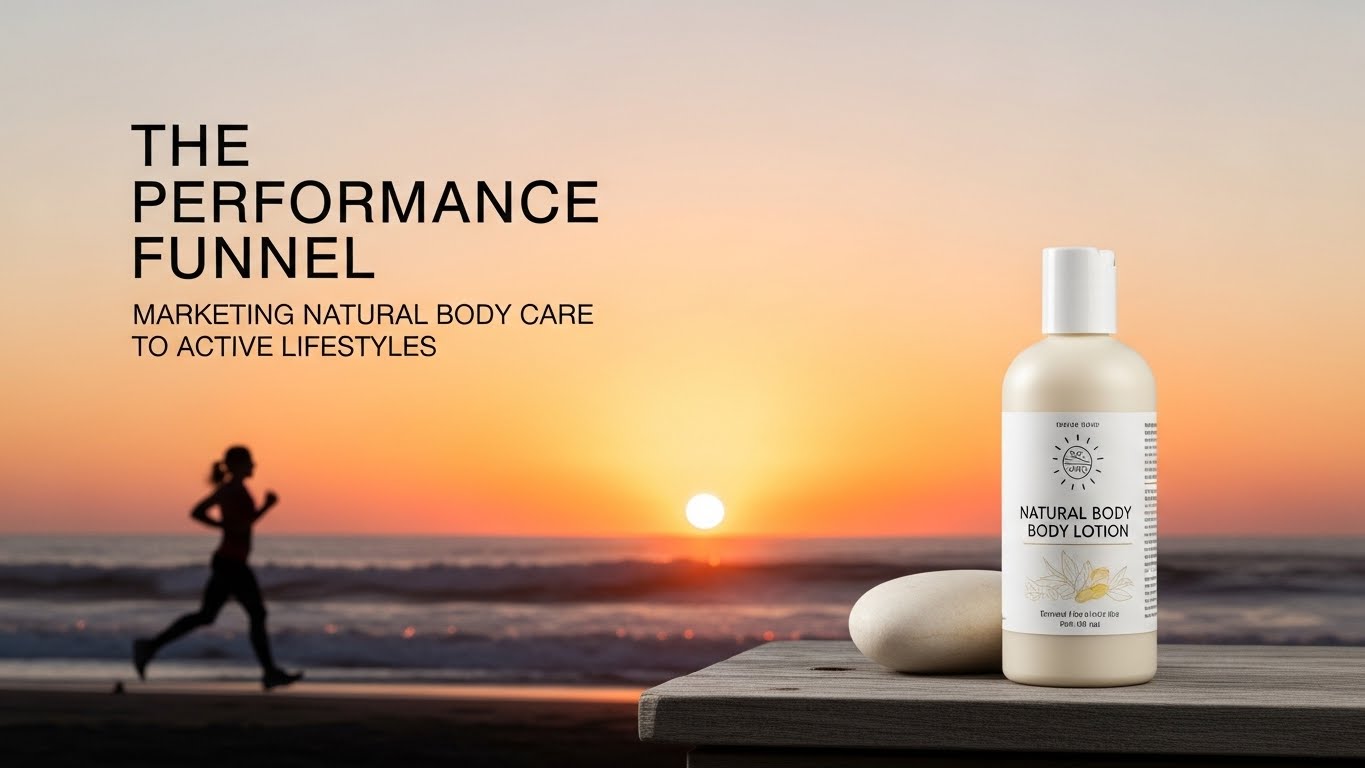
Building brands that bridge the gap between clean ingredients and athletic performance She finishes a 10K run, showers off the sweat, reaches for her body care. What does she want? Performance AND purity. Recovery without synthetic chemicals. Something that supports her athletic goals while respecting her clean-living values. This is the active consumer paradox—and it’s creating massive opportunity for natural body care brands. For decades, athletic body care meant chemical-heavy products: synthetic cooling agents, artificial fragrances, petroleum-based muscle rubs. The message was clear: if you want performance, you sacrifice clean ingredients. But active consumers today—runners, yogis, CrossFitters, outdoor enthusiasts—refuse this false choice. They want natural formulations that actually work for demanding physical lives. According to market research, the natural sports care segment is growing at 12% annually, outpacing both conventional athletic products and general natural beauty. Brands like Nécessaire (body care for active lives), Primally Pure (natural deodorant for athletes), and Dr. Bronner’s (post-workout cleansing) have proven that performance and natural formulation aren’t contradictory—when marketed correctly. But here’s the challenge: How do you market natural body care to people who prioritize function over philosophy? How do you prove that plant-based formulas can handle serious sweat? How do you position scent as performance tool, not just sensory pleasure? How do you appeal to athletes without alienating the wellness audience? This article will show you how to build the “Performance Funnel”—a marketing framework that positions natural body care as essential athletic equipment, translates botanical benefits into functional language, and builds brands that bridge the gap between clean living and active performance. Active consumers aren’t choosing natural body care primarily for environmental or ethical reasons—those are bonuses. They’re choosing it because they’ve experienced how synthetic chemicals affect recovery, skin health, and overall performance. Understanding this motivation is key to effective marketing. According to research from the Nutrition Business Journal, 68% of regular exercisers actively seek natural personal care products, and 74% prioritize performance over natural certification when choosing athletic body care. They want both—but performance must come first. The key insight: don’t lead with “natural” or “clean”—lead with what the product DOES for athletic performance. Natural formulation is the “how,” not the “why.” Strategy: “Reduce post-workout muscle soreness 40%” not “Made with natural magnesium.” Function first, natural second. Goal: Attract athletes seeking solutions, not just natural consumers Strategy: “Arnica reduces inflammation better than synthetic alternatives.” Translate plant power into performance language. Goal: Show natural isn’t compromise—it’s competitive edge Strategy: Show runners, climbers, yogis using products in actual training. Testimonials focused on performance improvements. Goal: Build credibility through athletic validation, not lab studies Strategy: Position products alongside training gear—”Pack your recovery kit: foam roller, compression socks, magnesium body butter.” Goal: Make body care essential part of athletic routine Strategy: Sponsor local races, create training content, feature customer athletic achievements. Brand as training partner. Goal: Transform customers into athletic brand ambassadors Core Principle: Active consumers don’t choose natural body care to make a statement—they choose it because it performs better for their bodies. Lead with function, back it with natural formulation, and you’ll win both the athletic and wellness markets simultaneously. Natural body care brands often get stuck in botanical poetry—”infused with calming lavender” or “enriched with nourishing shea.” Athletes don’t care about enrichment or infusion. They care about what it DOES. Here’s how to reframe: [Natural Ingredient] + [Specific Athletic Benefit] + [Measurable Result When Possible]. Example: “Arnica montana extract reduces post-exercise inflammation, shortening recovery time between training sessions.” Function-focused language converts athletes; botanical romance doesn’t. “Aromatherapy” and “wellness ritual” have become beauty marketing clichés—empty buzzwords that mean everything and nothing. But for active consumers, scent actually serves functional purposes: pre-workout energizing, post-workout calming, sleep preparation, focus enhancement. The challenge is making scent-as-tool specific and credible, not vague and aspirational. Most brands fail at scent marketing by being either too clinical (“olfactory system stimulation”) or too woo-woo (“energy-balancing aromatherapy blends”). Active consumers need practical, specific guidance on how scent supports their training and recovery. Instead of: “Our lavender body oil promotes relaxation and wellness.” Specific Ritual Marketing: Pre-Run Energy Ritual (6:00 AM) “Apply peppermint + eucalyptus body balm to chest before lacing up. The cooling scent opens airways and signals your nervous system: it’s go-time. Our runners report feeling ‘mentally sharper’ during early morning runs.” Post-Workout Recovery Ritual (7:00 PM) “After your evening gym session, shower with lavender + chamomile body wash. The scent triggers your wind-down response, transitioning from ‘training mode’ to ‘recovery mode.’ Apply matching body butter to lock in moisture and the calming scent—your nervous system’s bedtime signal.” Pre-Competition Focus Ritual “Before race day, apply rosemary + lemon body lotion. Athletes use scent to create mental anchors—this becomes your ‘performance mode’ trigger. The sharp, clear scent enhances alertness without anxiety.” Why this works: You’ve made scent tactical—tied to specific times, activities, and desired mental states. Not vague wellness, but functional training tool. Instead of: “Aromatherapy balances your energy and promotes wellbeing.” Simple Science Explanation: “Your olfactory system connects directly to your limbic system—the brain region controlling emotion, memory, and arousal. This is why smells trigger instant responses: peppermint → alert, lavender → calm. Athletes use this to create performance anchors.” Practical Application: Why this works: Brief science validates the practice, specific recommendations make it actionable. Athletes respect evidence-based approaches. Instead of: “Choose your favorite scent!” Structured Scent Protocol: The Training Week Scent System: Monday-Wednesday (High Intensity Days): Morning: Energizing blend (peppermint + citrus) before workout Evening: Calming blend (lavender + chamomile) to prevent overtraining stress Thursday-Friday (Moderate Days): Morning: Focus blend (rosemary + lemon) for technique work Evening: Neutral/unscented to let body regulate naturally Weekend (Recovery Focus): Both times: Deep recovery blend (arnica + eucalyptus + lavender) Extra: Pre-sleep muscle butter (magnesium + lavender) on rest days Why this works: You’re giving a system, not just selling products. Active consumers love protocols—this positions scent as training strategy. Instead of: “Our scents create a spa-like experience.” Scent Anchoring Technique: The Concept: Athletes use mental anchors to trigger desired states. Scent is one of the most powerful anchors because smell bypasses conscious processing. How to Create Your Performance Anchor: Pro tip: Elite athletes do this with pre-competition routines. You’re not just selling body care—you’re teaching sports psychology techniques. Why this works: You’ve elevated scent from pleasant to powerful. Athletes take this seriously because it’s framed as performance enhancement, not pampering. Instead of: Generic lifestyle imagery of people in bathtubs. Authentic Athlete Stories: “Sarah, Marathon Runner” “I started using the eucalyptus-peppermint butter on my chest before long runs. Something about that sharp, cool scent makes breathing feel easier—like my lungs open up. Now it’s part of my pre-race ritual. When I smell it, my body knows: it’s time to run.” “Marcus, CrossFit Athlete” “After heavy lifting days, I use the arnica-lavender recovery balm. The smell has become my ‘cool-down signal’—tells my nervous system to shift from ‘go’ to ‘recover.’ Plus my muscles actually feel better the next day. It’s become essential equipment.” Why this works: Real athletes describing actual rituals > generic wellness marketing. Peer validation converts athletic audiences. Nécessaire successfully markets scent-as-function to active consumers by avoiding generic aromatherapy language. Instead of “calming lavender,” they describe “post-workout recovery scent—lavender + eucalyptus combination that signals recovery mode to your nervous system.” They map specific scents to athletic moments: pre-workout energizing, post-cardio cooling, evening wind-down. Their marketing shows real runners and yoga practitioners describing how scent anchoring works in their training. They explain the olfactory-limbic connection briefly but credibly. Result? Athletes treat their products like training equipment, not just nice-smelling body care. They’ve made scent tactical, specific, and performance-enhancing—not vague wellness fluff. When you market scent as a functional wellness ritual—mapped to specific athletic moments, backed by simple neuroscience, taught as performance psychology technique—you transform “nice-smelling body care” into “essential training equipment.” That’s the difference between generic and converting. Learn the proven strategies successful natural brands use to position products as essential athletic equipment, translate botanical benefits into performance language, and build loyal communities of active consumers. Explore the Beauty Marketing Course → Build brands athletes trust and rely on Most natural body care marketing shows products in bathrooms, bedrooms, or spa settings. For active consumers, you need to show products in training context—gym bags, post-run showers, race-day prep. Make the setting athletic, not aspirational. Feature real athletes showing their essential gear: Example: “Sarah’s Marathon Essentials: Running shoes, foam roller, water bottle, electrolytes, and our arnica recovery balm. ‘If I had to cut down to 5 items, this would make the list.'” Position product as essential equipment. Show actual application in athletic context: Example: 60-second video: Runner wakes up, applies energizing body butter to chest, takes three breaths, laces shoes, heads out. No talking needed—just ritual in context. Athletes see themselves in this. Map products to training cycles: Example: “Monday: Heavy lifting day = arnica muscle balm. Wednesday: Long run = cooling peppermint gel. Friday: Yoga/recovery = lavender body butter. Show how products support periodized training.” Show pre-competition preparation: Example: “The night before: Deep sleep body butter. Race morning: Energizing chest rub. Post-finish: Recovery blend. Document actual race-day product use—athletes relate to high-stakes moments.” Active consumers are inherently community-oriented—they train with teams, join running clubs, connect through fitness challenges. Leverage this tribal nature: Provide recovery samples at finish lines, offer post-race massage stations with your products, sponsor aid stations. Athletes remember brands that show up where they train and compete. Partner with coaches to develop training plans, recovery protocols, mobility routines. Position brand as training partner, not just product seller. “8-Week Marathon Prep + Recovery Protocol” featuring your products strategically. Feature customer race results, PRs, training milestones. “Congrats to Maria on her first marathon! She trusted our magnesium recovery butter to get her through training.” Make customers the heroes, products the sidekick. The old dichotomy—choose performance OR natural—is dead. Active consumers want both, and they’re willing to pay premium prices for brands that deliver. Natural body care that actually supports athletic performance represents one of beauty’s fastest-growing segments. But succeeding in this space requires abandoning traditional natural beauty marketing. Botanical poetry doesn’t resonate with runners. Spa aesthetics don’t attract CrossFit athletes. Vague wellness claims don’t convince serious athletes to trust you with their recovery. “The future of natural body care isn’t about choosing between performance and purity—it’s about proving they’re complementary. Athletes already understand that what you put in your body affects performance. They’re ready to understand that what you put ON your body matters just as much. The brands that win will be those that speak the language of function while delivering the reality of natural formulation. Lead with performance, back it with botanicals, and build community around athletic achievement.” So translate botanical benefits into performance language. Map scents to specific training moments. Show products in gym bags, not just bathrooms. Feature real athletes, not models posing as them. And position your brand as essential training equipment—because for active consumers who’ve experienced how natural formulations enhance recovery, that’s exactly what it is. The performance funnel turns natural body care from lifestyle choice into athletic necessity. Build brands that athletes rely on. Function first, natural always. 💪🌿 Share this guide with natural body care founders targeting athletes! Keywords: performance body care, natural athletic products, sports recovery skincare, active lifestyle body care, athlete skincare marketing, scent wellness ritual, functional aromatherapy, natural sports care, botanical performance products, fitness body care marketingUnderstanding the Active Consumer: Performance First, Natural Second (But Both Essential)
What Active Consumers Want from Natural Body Care
Sweat-tested efficacy: Products proven to work during intense physical activity, not just daily life
Recovery support: Ingredients that actively aid muscle recovery, reduce inflammation, calm skin
No performance compromise: Natural doesn’t mean “less effective”—must perform as well as conventional
Functional scents: Aromatherapy that serves purpose—energizing, calming, focusing—not just pleasant
Clean but not precious: Natural formulations that can handle gym bags, travel, temperature extremes
Fast-acting results: Quick absorption, immediate relief, efficient application—active lives = time-pressedThe Performance Funnel: Function Meets Nature
Awareness: Lead with Performance Benefit
Education: Botanical Benefits as Athletic Advantage
Proof: Real Athletes, Real Results
Integration: Body Care as Training Equipment
Community: Build Athletic Tribe Around Your Brand
Translating Botanical Benefits Into Performance Language
The Translation Formula
How to Market ‘Scent as a Wellness Ritual’ Without Sounding Generic
The Specific Scent-Ritual Framework
1. Map Scents to Specific Athletic Moments (Not Generic “Self-Care”)
2. Explain the Neuroscience Simply (Make Scent Credible)
3. Create Scent Protocols (Not Just Products)
4. Teach Scent Anchoring (Performance Psychology Tool)
5. Show Real Athlete Rituals (Social Proof Matters)
Real Example: Nécessaire’s Performance Approach
Ready to Master Performance Body Care Marketing?
Content Strategy: Showing Natural Body Care in Athletic Context
“What’s in My Gym Bag” Series
“Pre/Post Workout Routines” Videos
“Training Week in Products” Series
“Race Day Ritual” Content
Building Athletic Brand Community
The Athletic Community Strategy
Sponsor Local Races & Events
Create Training Content
Celebrate Customer Achievements
The Performance Revolution: Where Natural Meets Athletic
Resources for Performance Body Care Brands