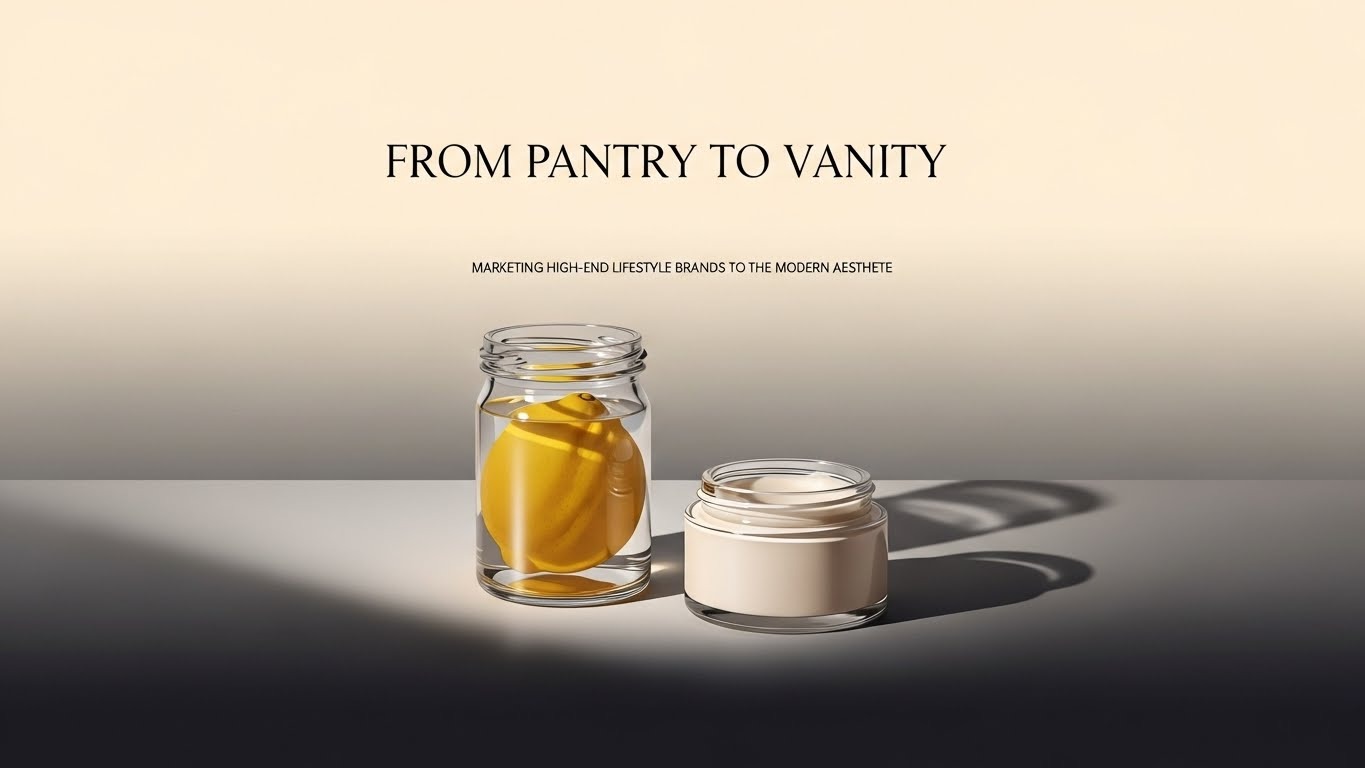
Building cohesive luxury ecosystems that seamlessly bridge consumption, wellness, and beauty Her kitchen counter: $48 organic olive oil from a third-generation Italian producer, $22 artisanal honey in minimal glass jar, $67 heirloom tomato sauce in museum-quality packaging. Her bathroom vanity: $95 face serum in identical aesthetic—amber glass, sans-serif typography, ingredient transparency. She doesn’t see food and beauty as separate categories. She sees a cohesive lifestyle philosophy. This is the modern aesthete—a consumer who approaches food and beauty with the same discerning criteria: ingredient sourcing, production ethics, design sophistication, wellness alignment. She reads beauty ingredient lists like nutrition labels. She expects her olive oil and her face oil to share the same values: organic, cold-pressed, traceable, beautiful. For her, luxury isn’t about separate purchases; it’s about building a complete aesthetic ecosystem from pantry to vanity. Brands like Flamingo Estate blur category lines intentionally—selling $38 garden-to-table olive oil alongside $68 body oil, positioned not as disparate products but as complementary pieces of “radically alive” living. Goop built a billion-dollar empire by refusing to separate wellness, food, beauty, and home—treating them as one integrated lifestyle. Aesop’s hand balm lives in kitchens as comfortably as bathrooms because the design language transcends category. According to research, 67% of luxury consumers now consider “lifestyle alignment” more important than product category when making purchasing decisions. The aesthete customer spends an average of $4,200 annually across food, beauty, wellness, and home categories—but increasingly from brands that speak a unified aesthetic language across multiple categories. The global “conscious luxury” market (which includes cross-category lifestyle brands) is projected to reach $403B by 2027. The challenge: how do you market products that span traditionally separate categories—food and beauty, wellness and home—without confusing customers or diluting brand identity? How do you create visual storytelling that makes a tomato sauce and a face cream feel like natural companions rather than bizarre bedfellows? How do you price premium across categories when customers have different mental budgets for food vs. beauty? This article will show you how to market high-end lifestyle brands to modern aesthetes—building cohesive visual identities that work across pantry and vanity, creating cross-category storytelling that positions diverse products as unified philosophy, and leveraging the “inside-out beauty” narrative that connects what you consume with how you care for your skin. Before building cross-category brands, understand who’s buying lifestyle ecosystems: According to McKinsey luxury consumer research, aesthete consumers represent 12% of the population but account for 38% of premium food + beauty spending. They’re not niche—they’re the most valuable customer segment in lifestyle categories. The key insight: aesthetes don’t shop by category—they shop by values, aesthetic, and lifestyle alignment. Your tomato sauce competes with your customer’s face serum for mental share of their “well-lived life” budget, not their grocery budget. Strategy: Define core values that transcend category—”radically alive,” “slow luxury,” “ingredient obsession.” Philosophy justifies diverse products under one brand. Goal: Customers buy philosophy, not isolated products Strategy: Identical design system across food and beauty—packaging, typography, color palette, photography style. Tomato sauce and face cream siblings, not strangers. Goal: Products grouped by aesthetic, not category Strategy: Position food products as internal beauty—”olive oil for radiant skin from within.” Beauty as external complement. Two sides of wellness coin. Goal: Logical connection—what you eat + what you apply = holistic glow Strategy: Same small-producer sourcing for food and beauty—Italian olive groves for oil AND skincare. Geography and craft unify disparate categories. Goal: Producer stories transcend what product IS, focus on where it’s FROM Strategy: “Complete your ritual” bundling—breakfast olive oil + morning face oil. Email featuring recipes alongside skincare routines. Category fluidity in marketing. Goal: Customers build complete lifestyle, not collect random products Core Principle: Cross-category lifestyle brands succeed by establishing unifying philosophy that transcends products, creating visual design coherence across food and beauty, building inside-out wellness narratives, sharing artisan origin stories, and merchandising ecosystem-wide. When aesthetes see tomato sauce and face serum as complementary expressions of the same values, category boundaries dissolve into lifestyle cohesion. Same quality products, different brand architecture. One limits growth; one expands naturally: Single-category brands limit themselves to one shelf (pantry OR vanity). Lifestyle brands occupy multiple spaces (kitchen, bathroom, bedroom, living room) through unified aesthetic and philosophy. When your brand identity transcends what you sell, you can sell anything aligned with your values to the same customer. The challenge of cross-category lifestyle brands: customers have been trained to mentally categorize food (grocery store) and beauty (Sephora) separately. Your marketing must visually communicate that these products belong together—not through force, but through natural aesthetic and philosophical cohesion. The opportunity: aesthete customers are actively seeking unified lifestyle brands that reduce decision fatigue and simplify curation. They WANT their olive oil and face oil to match. They’re drawn to brands that understand their desire for holistic, cohesive living. Your visual storytelling must make this connection obvious, aspirational, and emotionally compelling. The Strategy: Create identical visual language across all products regardless of category. The Design Elements That Must Match: Packaging Material & Color: “Amber glass for olive oil, amber glass for face oil. White ceramic jar for salt, white ceramic jar for face cream. Material consistency signals product family—customers recognize siblings immediately.” Typography & Label Design: “Same sans-serif typeface, same label layout, same text hierarchy across tomato sauce and face serum. Label size may differ (jar vs. bottle), but visual DNA identical. Customer reads labels same way.” Color Palette Consistency: “Earthy neutrals (cream, terracotta, olive green) across all categories. Food photography uses same backgrounds as beauty photography. Website color scheme matches product colors. Total visual ecosystem.” Photography Style Unity: “Same photographer (or identical style guide), same lighting (soft natural), same props (linen, stone, wood), same composition (minimal, airy). Food and beauty shots interchangeable—if you crop tight, can’t tell which category.” Ingredient Transparency Format: “List ingredients identically on food and beauty—’organic olive oil (Italy), vitamin E (sunflower-derived).’ Same format whether it’s sauce or serum. Treats both categories with equal transparency standards.” Real Example: Aesop’s hand soap lives in kitchens globally because their amber bottle + minimalist label design transcends bathroom category. Design language so strong, product purpose becomes secondary to aesthetic fit. Why this works: Consistent design eliminates category confusion, creates visual family recognition, signals unified brand philosophy, allows cross-category merchandising to feel natural, makes products shelf-compatible across kitchen/bathroom spaces. The Strategy: Use geographic sourcing as visual thread connecting food and beauty. The Provence Olive Grove Story Example: Homepage Hero: Sweeping shot of Provence olive grove at dawn. Text overlay: “One Grove. Two Rituals. From Our Trees to Your Table and Your Skin.” Below, two product shots side-by-side: Extra virgin olive oil (left), Face oil (right). Same groves. Same cold-press process. Different purposes, unified source. Product Page Connection: Olive oil page shows: “From these groves…” [grove photo]. “Also comes…” [link to face oil with same grove]. Geography creates logical product relationship. Instagram Story Series: “Harvest day in Provence. These olives become your breakfast oil AND your nighttime beauty ritual. Swipe to see both.” Visual progression: tree → harvest → press → split screen of bottle (food) + bottle (beauty). The Power: Geography transcends category. Provence isn’t “food” or “beauty”—it’s place, story, quality marker. When products share origin, they share values. Customer thinks: “If I trust their olive oil from these groves, I trust their face oil from same source.” Why this works: Shared geography creates narrative logic for disparate products, artisan sourcing stories work equally for food and beauty, place-based branding transcends category distinctions, origin becomes brand identity anchor. The Strategy: Show food and beauty products used together in daily rituals. The Split-Screen Video Format: LEFT: Morning Kitchen Hand drizzling olive oil on avocado toast, pouring into coffee (butter coffee style), stirring into smoothie. Slow, ritualistic movements. RIGHT: Morning Bathroom Same hands (same person) warming face oil between palms, massaging into skin, gua sha ritual. Identical pacing, movements mirror kitchen side. Text Overlay Throughout: “Your morning ritual: nourish inside + outside. Same olive groves. Same intention. Complete wellness.” The Evening Version: Left: Cooking dinner with tomato sauce, drizzling truffle oil. Right: Cleansing face, applying night serum, face massage. Same person, same aesthetic, unified evening wind-down ritual across kitchen and bathroom. Why this works: Shows products used together in real life, creates aspirational daily ritual customers want to replicate, temporal framing (morning/evening) makes cross-category logical, split-screen visually connects food + beauty without forcing, same-person continuity proves this is ONE lifestyle, not two separate routines. The Strategy: Showcase shared ingredients at botanical level—before they become “food” or “beauty.” The Rosemary Story Example: Frame 1: The Plant Macro shot of fresh rosemary sprig, morning dew. Text: “Fresh rosemary from our garden.” Frame 2: The Harvest Hand picking rosemary. Text: “Harvested for two purposes.” Frame 3: The Split Split screen—left shows rosemary being chopped for focaccia, right shows rosemary being distilled for face mist. Text: “For your table. For your skin. One plant, two rituals.” Repeat for Key Ingredients: Olive (oil + skincare oil), Lavender (honey + face serum), Lemon (salt + body scrub). Botanical level unification shows all products come from same philosophy: respect for plants, whole-plant use, nothing wasted. Why this works: Starts before category exists (just a plant), shows respectful, holistic use across purposes, creates ingredient-focused brand identity that transcends food/beauty division, appeals to botanically-minded aesthetes, demonstrates sustainability through whole-plant utilization. The Strategy: Style food and beauty products together in single compositions. The Instagram Grid as Ecosystem: Key: Never segregate food and beauty in photography. Always intermix. Train customer eye to see them as complementary, not separate. Why this works: Flat-lay styling makes category boundaries invisible, creates aspirational lifestyle aesthetic customers want to purchase completely, normalizes mixed-category buying behavior, shows products as curated collection not random assortment. The Strategy: Position food products as part of beauty transformation narrative. The 30-Day Glow Challenge Example: “For 30 days: Morning olive oil in smoothie + face oil massage. Evening anti-inflammatory tomato sauce + restorative night serum. Inside-out glow protocol.” Before/After photos show: improved skin radiance. Caption attributes results to BOTH food and beauty products working synergistically. The Science Backing: “Olive oil polyphenols consumed = internal antioxidant support. Olive oil applied = topical barrier repair. Together = comprehensive skin health.” Education makes food-beauty connection credible. Why this works: Wellness narrative legitimizes selling both categories, positions food as essential to beauty results (not optional), creates protocol that requires purchasing across categories, science backing prevents “woo-woo” skepticism, transformation results drive cross-category conversion. Flamingo Estate built a $20M+ lifestyle brand by treating tomato sauce and hand soap as siblings, not strangers. Their strategy: (1) Identical packaging design—vibrant illustrated labels whether it’s pasta sauce or body wash, same artistic style transcends category, (2) “Radically alive” philosophy applied to everything—garden-to-table olive oil and garden-to-skin body oil both fulfill same mission, (3) Instagram grid intermixes food and beauty seamlessly—one post shows chef using sauce, next shows bath ritual with salts, no category segregation, (4) Shared sourcing stories—California garden provides ingredients for both pantry and vanity products, geography unifies, (5) Gift sets combine food + beauty—”The Essentials” box has olive oil, honey, hand wash, body oil together, (6) Lifestyle photography shows products in actual homes—kitchen shelves with food + beauty intermixed, normalizes cross-category placement. Result: average order value $127 across categories (vs. typical $35-45 for single-category food or beauty), 43% of customers purchase from both food AND beauty collections, Instagram engagement 4.1% (industry average 1.2%) because content transcends category scroll-stopping. They proved that when visual storytelling is strong enough, customers don’t question why a tomato sauce brand sells hand cream—they just buy both because the aesthetic cohesion is irresistible. When you create unified design systems, share origin stories through geography, show morning/evening ritual split-screens, feature botanical ingredients before category division, style cross-category flat-lays, and build inside-out wellness narratives—food and beauty stop being separate purchases. They become complementary pieces of an aspirational lifestyle customers buy into completely. Visual storytelling doesn’t just sell products; it sells the vision of a well-curated, holistically healthy, aesthetically cohesive life. Learn the proven strategies successful cross-category brands use to build cohesive lifestyle ecosystems, master visual storytelling that bridges food and beauty, and create pantry-to-vanity marketing that converts aesthete customers across multiple product categories. Explore the Beauty Marketing Course → Build lifestyle brands that transcend categories Beyond product marketing, create content that builds complete lifestyle ecosystem: Show products used throughout entire day: Example: “6 AM: Face oil massage. 7 AM: Olive oil in coffee. 12 PM: Tomato sauce lunch. 8 PM: Hand cream ritual. 10 PM: Night serum.” Products appear naturally in daily rhythm—continuous lifestyle, not isolated moments. Food recipe alongside complementary beauty ritual: Example: “Sunday Reset: Make rosemary focaccia (recipe) while your rosemary hair mask soaks (30-minute ritual). Food for body, food for hair. Same botanical, two nourishments.” Temporal pairing makes cross-use natural. Explore single ingredient across all uses: Example: “Olive Oil 101: Cooking with it, consuming it, applying it to skin. History, health benefits, quality markers. Complete olive oil education spanning food + beauty + wellness.” Become authority on ingredients, not just products. Curated collections spanning categories: Example: “The Dinner Party Host Gift: Truffle salt, hand-poured candle, hand cream. For their table, their ambiance, their self-care after guests leave.” Thoughtful curation teaches customers to buy across categories for gifting. Aesthete customers accept premium pricing across categories when value is demonstrated: “$48 olive oil: small-batch, hand-harvested, cold-pressed within 2 hours. $95 face oil: same process, same care. Craft production justifies cost across all categories.” “Know your farmer. Know your grove. Know your harvest date. Transparency costs more—but you’re paying for peace of mind that extends from food safety to skin safety.” “You’re not buying olive oil + face oil separately. You’re investing in a cohesive aesthetic philosophy. The lifestyle package—curated, compatible, complete—has integrated value worth premium.” The modern aesthete doesn’t think in retail categories. They don’t mentally separate “grocery shopping” from “beauty shopping” from “home shopping.” They curate their entire lives—from kitchen counters to bathroom shelves to bedside tables—according to unified aesthetic, ethical, and wellness principles. Brands that win with aesthetes understand this holistic mindset and build accordingly. Flamingo Estate doesn’t struggle to explain why they sell both tomato sauce and body wash—they’ve established “radically alive living” as philosophy that logically extends to anything you consume or apply. Goop doesn’t apologize for mixing supplements, skincare, and candles—they’ve positioned wellness as lifestyle, not category. Aesop’s hand balm lives in kitchens because their design language transcends bathroom limitation. “The future of high-end lifestyle brands is cross-category cohesion. Build unifying philosophy first—define your values before your product range. Create visual design systems that work identically across food, beauty, wellness, home. Use shared origin stories—geography, artisan producers, botanical ingredients—to connect disparate products logically. Show products used together in daily rituals through split-screen morning/evening content. Style cross-category flat-lays that normalize mixed purchases. Build inside-out wellness narratives where food becomes beauty from within. When your tomato sauce and face cream share the same amber glass bottles, the same minimalist labels, the same Italian olive grove origin story, the same ‘radically alive’ philosophy—customers don’t see category confusion. They see lifestyle coherence. They buy your olive oil because it matches their face oil. They buy your hand soap because it completes their kitchen aesthetic. The aesthete customer spends $4,200 annually across lifestyle categories—but increasingly from brands that make curation effortless through cross-category fluency. Don’t limit yourself to pantry OR vanity. Own the entire lifestyle ecosystem from consumption to application, from table to skin, from kitchen to bathroom. Build brands where category boundaries dissolve into aesthetic unity.” So build your lifestyle ecosystem. Define philosophy first. Create unified design language. Share origin stories. Show ritual integration. Style category-agnostic. Build wellness bridges. Price premium consistently. Because the modern aesthete isn’t shopping for products—they’re curating lives. Give them the complete aesthetic they crave. Market lifestyle brands boldly. Bridge pantry and vanity. Build ecosystems that endure. ✨🌿 Share this guide with lifestyle brand founders! Keywords: cross-category lifestyle brands, food and beauty marketing, aesthete consumer, pantry to vanity brands, inside-out beauty, visual storytelling food beauty, luxury lifestyle ecosystem, conscious luxury brands, holistic wellness marketingUnderstanding the Modern Aesthete Customer
The Seven Traits of the Aesthete Consumer
Design-obsessed across categories: Curates Instagram-worthy spaces—kitchen, bathroom, bedroom all share cohesive aesthetic; product design matters as much as function
Ingredient-literate universally: Reads food labels, beauty labels, candle labels with equal scrutiny—seeks clean, transparent, traceable everything
Inside-out wellness believers: Connects what they eat to skin health, gut health to glow—holistic beauty philosophy where food IS beauty
Story-driven purchasers: Want to know producer, origin, process—artisan narrative as important as product quality
Experience over ownership: Buy products that enable ritual, pleasure, sensory joy—food and beauty both serve experiential needs
Anti-mass-market positioning: Actively avoid big brands; seek small-batch, independent, exclusive finds that signal taste and values
Premium-willing across board: Pay $48 for olive oil AND $95 for face oil without flinching—consistent luxury expectationsThe Pantry-to-Vanity Brand Architecture
Unifying Philosophy First (Not Product Range)
Design Language Unity (Visual Coherence)
Inside-Out Narrative (Food as Beauty)
Artisan Origin Stories (Shared Sourcing Ethos)
Lifestyle Ecosystem Merchandising (Cross-Sell Naturally)
Single-Category Brand vs. Lifestyle Ecosystem
The Ecosystem Expansion Rule
Visual Storytelling for Cross-Category Brands (Food & Beauty)
The Cross-Category Visual Storytelling Framework
1. The Unified Design System (Visual Family Identity)
2. The Shared Origin Visual Narrative (Geography as Bridge)
3. The Morning/Evening Ritual Split-Screen (Temporal Storytelling)
4. The Ingredient Close-Up Series (Botanical Unity)
5. The Flat-Lay Aesthetic (Category-Agnostic Merchandising)
6. The “Inside-Out” Before/After (Wellness Transformation)
Real Example: Flamingo Estate’s Cross-Category Visual Mastery
Ready to Master Lifestyle Brand Marketing?
Content Strategy: Building the Complete Lifestyle Narrative
“A Day in the Life” Cross-Category Series
“Recipe + Ritual” Paired Content
“Ingredient Deep-Dive” Educational Series
“Gift Guide” Cross-Category Curation
Pricing Cross-Category Premium (Value Perception Management)
The Premium Justification Framework
Artisan Production > Mass Manufacturing
Traceable Sourcing > Generic Ingredients
Complete Lifestyle > Isolated Products
The Future Is Lifestyle: Building Brands Beyond Category
Resources for Cross-Category Lifestyle Brands