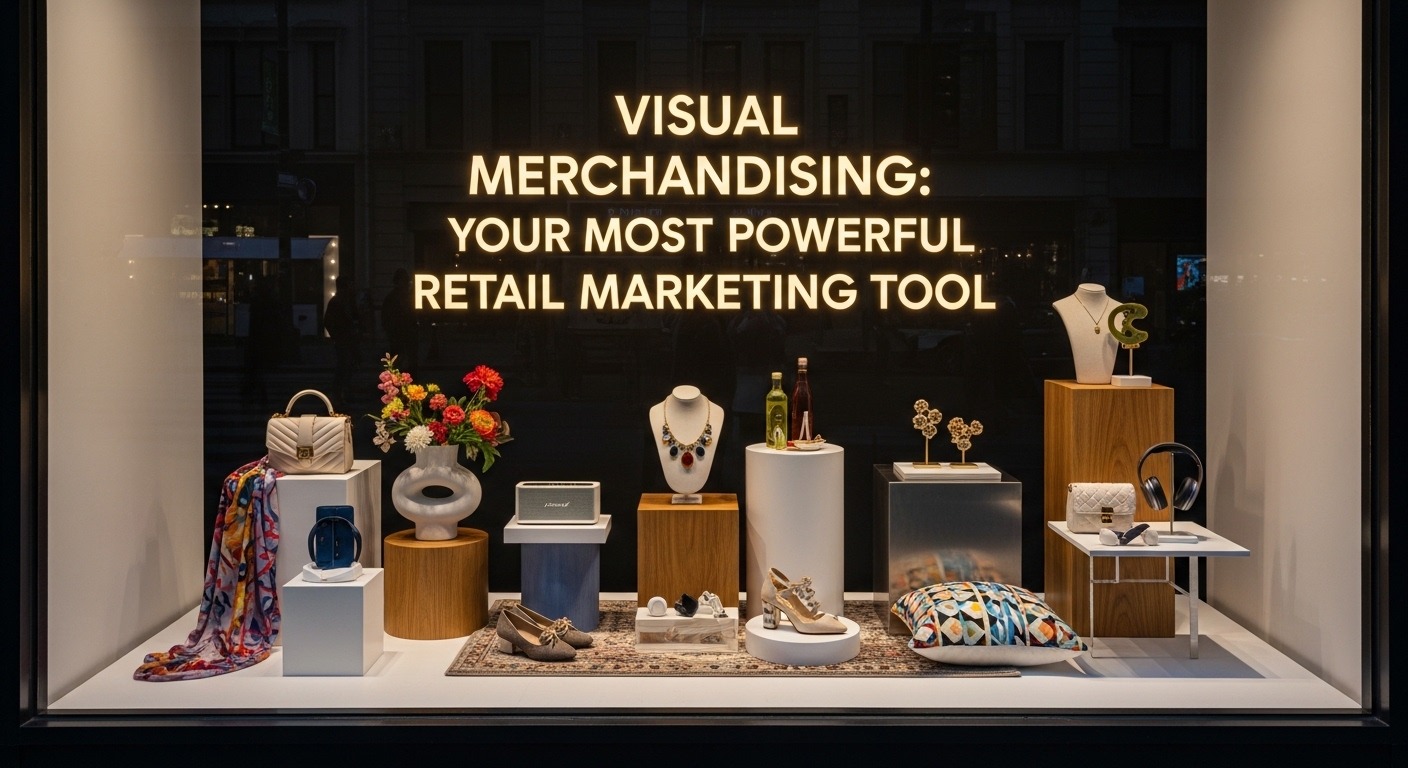
Turn your storefront into a silent salesperson that stops traffic and closes deals.
In the digital age of 2026, many retailers focus so much on their online ads that they forget their most valuable marketing asset: their physical space. Visual merchandising isn’t just about making things look “pretty”—it is a strategic marketing tool designed to influence customer behavior and maximize sales per square foot.
According to Shopify’s Retail Research, effective store layouts and displays can increase sales by as much as 20%. If your store looks like a warehouse, you are leaving money on the table. Here is how to weaponize your visual merchandising.
1. The “Decompression Zone” Strategy
The first 5 to 15 feet of your store is known as the “Decompression Zone.” This is where customers transition from the frantic outside world to your brand’s atmosphere.
The Marketing Secret: Don’t crowd this area with racks. Instead, use lighting and scent to signal a change in pace. A well-designed decompression zone lowers a customer’s heart rate, making them more likely to browse longer and spend more.
The “Rule of Three” in Displays
The human brain seeks patterns. Use these three elements to stop the scroll in real life:
Varying Heights
Keeps the eye moving across products.
Color Stories
Groups items that emotionally belong together.
Asymmetry
Creates visual tension that commands attention.
2. Guided Pathing: The IKEA Method
Most customers naturally turn right when entering a store (the “Invariant Right”). Smart retailers use this to lead shoppers on a journey. Use your high-margin items as “speed bumps” along this path. By controlling the flow, you control the narrative of your marketing.
| Merchandising Type | Marketing Goal | Best For |
|---|---|---|
| Window Displays | Stop foot traffic | New seasonal collections |
| Point of Purchase (POP) | Increase AOV (Upsell) | Impulse items/accessories |
| Dump Bins | Perception of value | Sales and clearance items |
Master the Full Retail Success Blueprint
Visual merchandising is only one piece of the puzzle. From advanced inventory psychology to high-converting local SEO, learn how to turn your small shop into a retail powerhouse.
3. Signage as Your “Silent Salesperson”
Good signage doesn’t just say “SALE.” It tells a story. Use signs to explain why a product is superior. According to Harvard Business Review, signage can act as a crucial psychological trigger that justifies the price point in the customer’s mind.
Pro-Tip: Use the 5-second rule. If a customer can’t understand the benefit of a display within 5 seconds, your merchandising is too cluttered.
Final Thoughts
Your store is a stage. Every product placement, light fixture, and sign is a line in your marketing script. By treating your visual merchandising with the same analytical rigor as your digital ads, you create an immersive experience that digital storefronts simply cannot replicate.
© 2026 Retail Marketing Insights. All rights reserved.