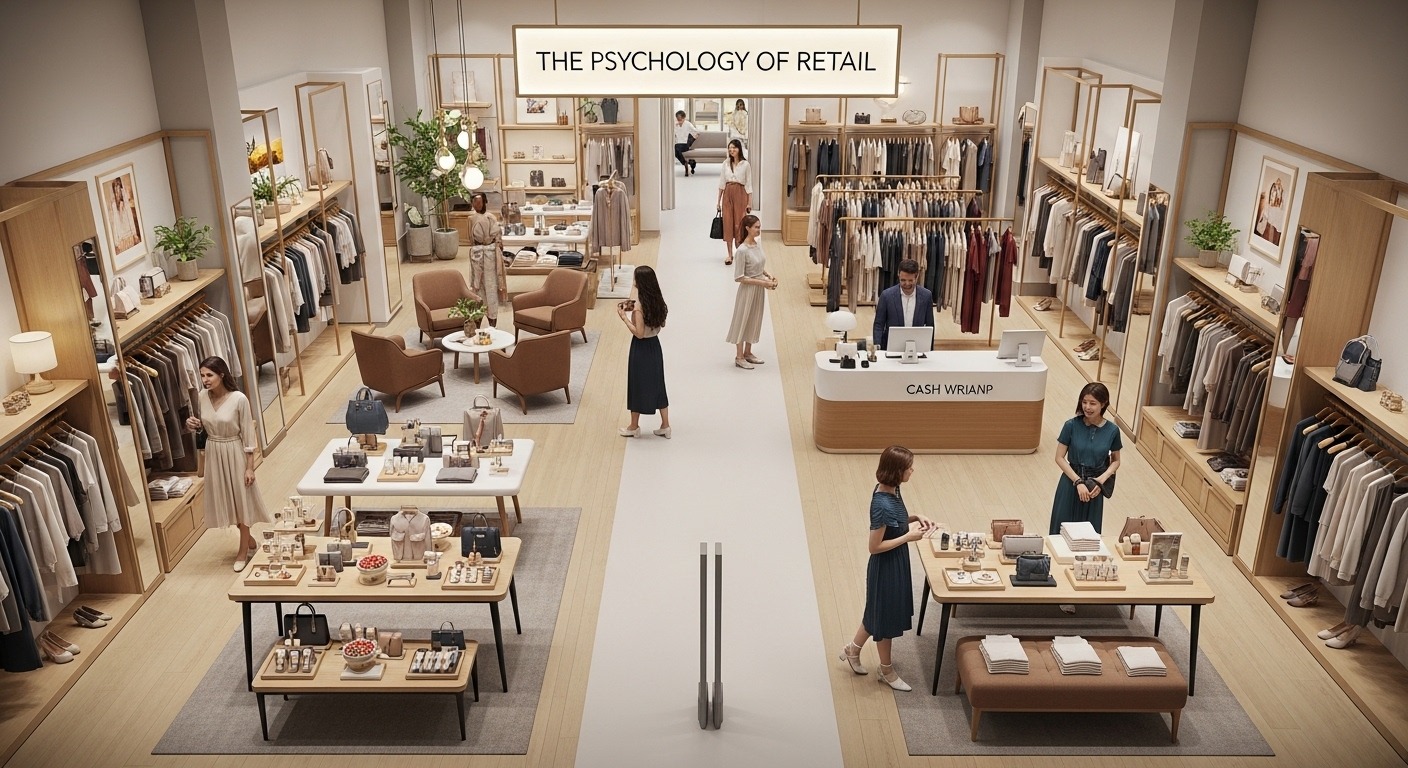
Why customers turn right, stay longer, and spend more: The hidden science of the shop floor.
Have you ever walked into a store for one specific item and walked out with a basket full of products you didn’t know you needed? That wasn’t an accident. It was environmental psychology at work.
In 2026, retail is no longer just about the products on the shelves; it’s about the emotional experience of the space. According to research from the Harvard Business Review, customers who have a positive emotional experience with a brand are 52% more valuable than those who are just “satisfied.”
1. The “Gruen Effect”: Why Layouts Are Loops
Named after architect Victor Gruen, this psychological phenomenon describes how a store’s layout can be intentionally confusing or “loop-like” to cause customers to lose track of time. When you are slightly disoriented, your brain switches from “targeted shopping” to “impulse browsing.”
This is why stores like IKEA use a “Long Loop” floor plan. By forcing you to see every department, they maximize the number of psychological “triggers” you encounter before you reach the checkout.
The 3 Core Sensory Triggers in Retail
Audio Tempo
Slower music increases dwell time by up to 38%.
Scent Marketing
Pleasant aromas increase purchase intent by 80%.
Luminous Contrast
Bright lights for value; warm lights for luxury.
2. Color Theory: More Than Just Aesthetics
Color is the first thing a human brain perceives when walking into your store. It sets the biological mood before the customer even sees a price tag. Retailers use color to tap into the subconscious:
| Color | Psychological Impact | Best Use Case |
|---|---|---|
| Red | Urgency, Hunger, Excitement | Clearance Sales / Food Retail |
| Blue | Trust, Calm, Security | Banks / High-End Electronics |
| Green | Health, Relaxation, Nature | Eco-friendly / Wellness Stores |
Master the Science of Retail Success
Store design is just the beginning. To truly compete in the 2026 market, you need a full-funnel strategy—from psychological layouts to advanced digital marketing.
3. The Power of “Touching” the Product
Psychologically, the moment a customer touches an item, they begin to feel a sense of psychological ownership. This is known as the “Endowment Effect.”
Smart retailers design their store to encourage interaction. Open displays, accessible samples, and “try-before-you-buy” stations are all designed to make the transition from “mine” (in their hand) to “purchased” (at the register) feel effortless. According to Shopify’s Retail Guide, tactile interaction increases the likelihood of purchase by over 40%.
Final Thoughts
Every light fixture, floor tile, and background song in your store is a silent salesperson. By understanding the psychology of retail design, you move away from “selling products” and toward “engineering behaviors.” When your store feels right, the sales happen naturally.
© 2026 Retail Marketing Insights. All rights reserved.